Hub-Centric vs Lug-Centric Wheels: Which is Safer for Towing?
You just dropped $1,500 on a gorgeous set of aftermarket wheels and fresh all-terrain tires. They look incredible in the driveway. But the second you merge onto the highway and hit 60 mph, your steering wheel starts shaking violently.
You take the truck back to the tire shop. They throw the wheels on the machine, but the balance reads perfectly zeroed out. So, what gives?
The difference between a buttery-smooth ride and a terrifying highway shake usually comes down to a single millimeter of empty space. Enter the great fitment debate: hub-centric vs. lug-centric wheels.
If you tow heavy loads or spend time at highway speeds, understanding exactly how your wheels carry the weight of your truck is critical. In this guide, we are going to break down the physics of wheel fitment, explain why aftermarket rims cause vibrations, and show you the $20 fix that will save your wheel studs from shearing off.
What Does Hub-Centric Mean? (The Factory Standard)
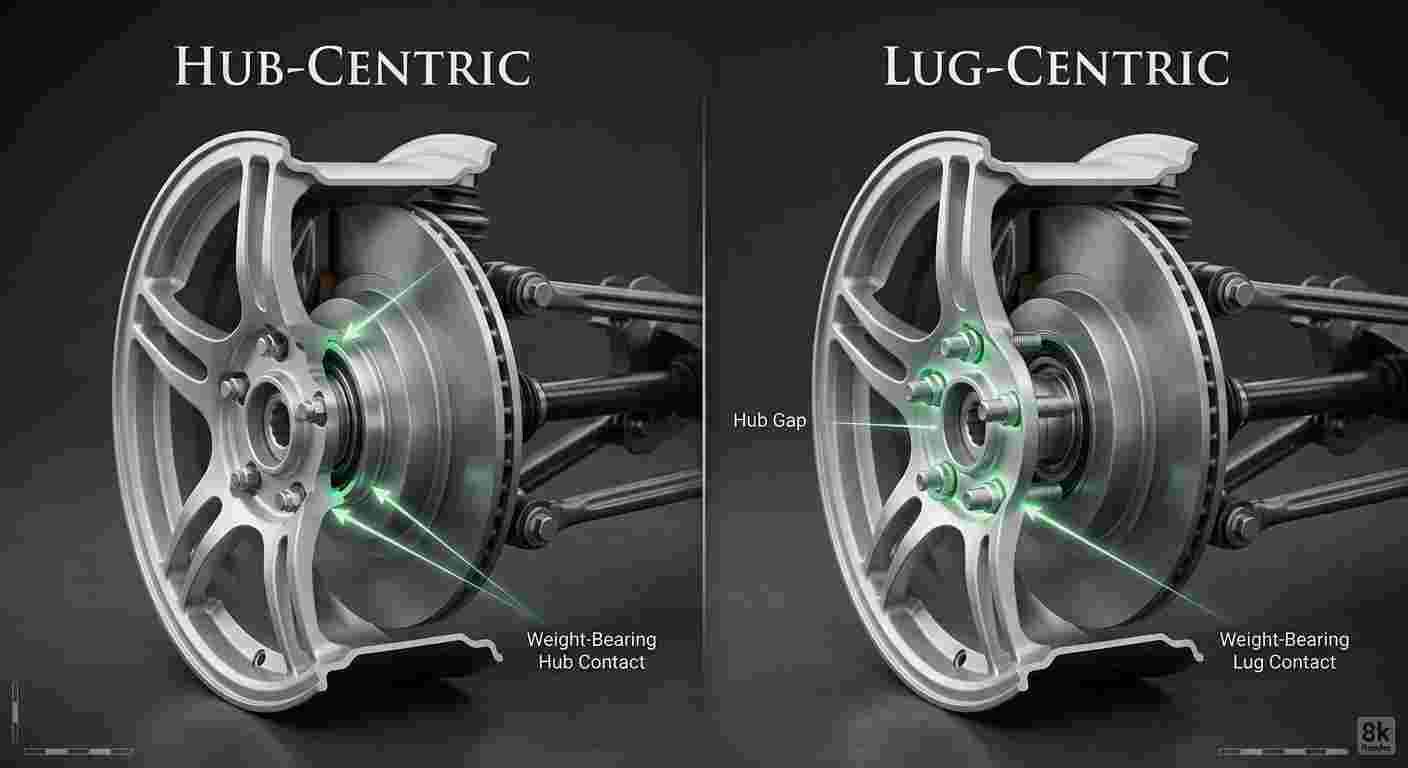
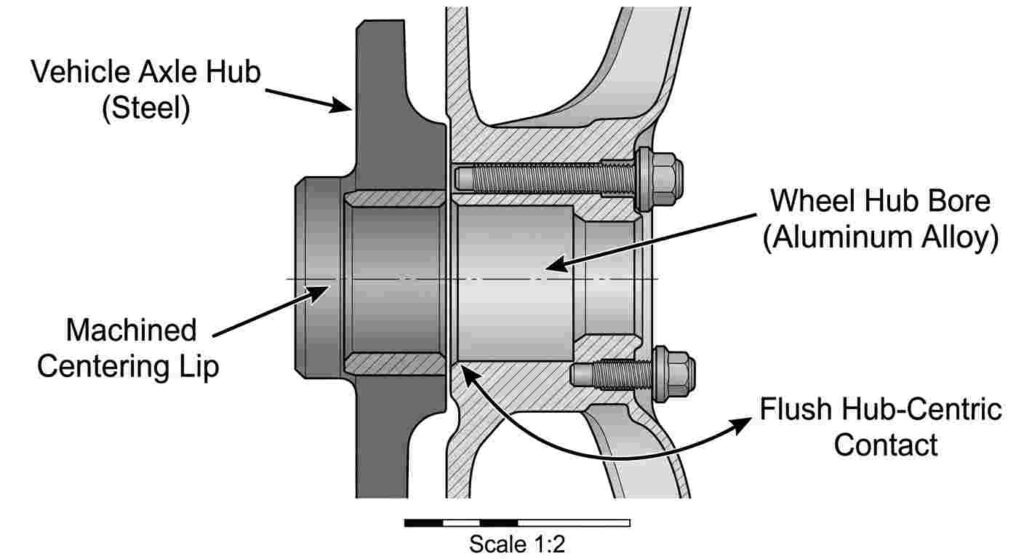
When a wheel is hub-centric, it means the large hole in the center of the wheel (the center bore) is machined to match the exact diameter of your vehicle’s axle hub.
If you drive a modern Chevy Silverado, your axle hub lip is exactly 78.1mm wide. A factory Chevy wheel has a matching 78.1mm hole. When you slide that wheel on, it fits like a glove.
The Physics of a Hub-Centric Fit: Because the wheel sits perfectly flush on that protruding metal lip, the actual physical weight of your heavy-duty truck rests entirely on the solid steel axle hub. That is exactly how the engineers designed it.
In a hub-centric setup, your wheel studs and lug nuts only have one job: to clamp the wheel flat against the mounting plate so it doesn’t fall off sideways. They do not bear the downward weight of the vehicle.
What Does Lug-Centric Mean? (The Aftermarket Reality)
When a wheel is lug-centric, the center hole of the wheel is physically larger than your vehicle’s axle hub. When you mount the wheel, there is a visible, empty gap between the hub lip and the wheel bore.
Why does this exist? It comes down to manufacturing costs. An aftermarket wheel company like Fuel or Moto Metal doesn’t want to make five different versions of the exact same wheel. Instead, they machine one wheel with a massive 106mm center bore so it can legally slide onto a Toyota, a Nissan, a Ford, or a Chevy.
The Physics of a Lug-Centric Fit: Because there is a gap at the center hub, the axle lip is no longer supporting the truck. The entire weight of your vehicle is now resting directly on your wheel studs.
In this scenario, your lug nuts are suddenly forced to do two very difficult jobs at the same time:
- Clamp the wheel to the truck.
- Perfectly center a 70-pound wheel-and-tire combo while fighting gravity.
If a lug-centric wheel is off-center by even a fraction of a millimeter when you tighten it down, it will rotate like an egg instead of a perfect circle—resulting in that dreaded highway “death shake.”
The Hidden Dangers of Running Lug-Centric Wheels
For a lightweight Honda Civic cruising around town, a lug-centric wheel setup might be perfectly fine. But when you are dealing with a 6,000-pound half-ton truck pulling a camper, relying entirely on your lug nuts to center your wheels introduces two massive risks.
1. The Highway “Death Shake”
When a wheel is lug-centric, gravity is constantly fighting you during installation. Even if you use the correct conical lug nuts and tighten them in a perfect star pattern while the tire is completely off the ground, the wheel can still shift by a fraction of a millimeter the second the truck’s weight hits the pavement.
That tiny misalignment multiplies exponentially as your speed increases. By the time you hit 60 mph, the wheel is rotating slightly off-center, sending a violent, rhythmic vibration straight up your steering column. No amount of wheel balancing at the tire shop will ever fix this, because the tire isn’t out of balance—it’s mounted off-center.
2. Stud Shearing (The Towing Hazard)
This is the danger that most tire shops won’t tell you about. Wheel studs are incredibly strong when dealing with tensile force (pulling). They are designed to stretch slightly as the lug nut clamps the wheel to the hub.
However, wheel studs are remarkably weak against shear force (a heavy, downward cutting motion). When you run a lug-centric wheel with a heavy payload or a trailer attached, every bump, pothole, and hard braking event acts like a pair of bolt cutters pushing down on your studs. Over time, this intense shear stress causes metal fatigue, which can lead to the studs snapping clean off and the wheel separating from the truck at highway speeds.
The Fix: What Are Hub-Centric Rings?
You don’t need to return your expensive aftermarket wheels just because they have a massive center bore. You just need to fill the gap.
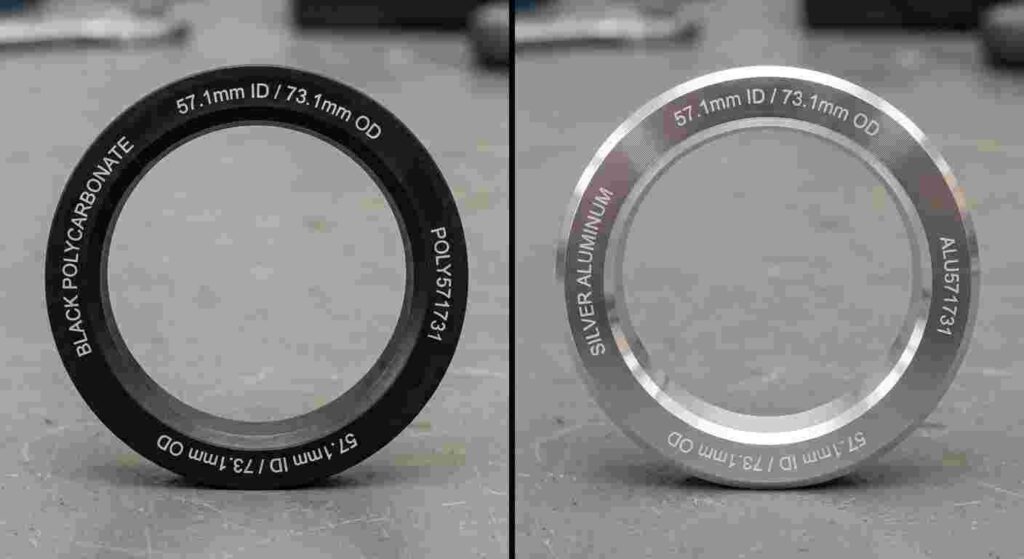
Hub-centric rings (sometimes called spigot rings) are inexpensive, precision-machined rings that slide into the back of your aftermarket wheel. They shrink the wheel’s center bore to perfectly match the diameter of your truck’s axle hub. By bridging that gap, the ring physically centers the wheel and transfers the weight of the vehicle back onto the solid steel axle where it belongs.
When buying hub-centric rings, you have two material choices:
- Polycarbonate (Plastic): The most common and affordable option. They will never rust or seize to your steel hub, making them perfect for daily drivers in states that use heavy road salt. Downside: They can melt under extreme track-day braking temperatures (though this is rarely an issue for trucks).
- Billet Aluminum: Incredibly strong and ideal for heavy-duty towing applications. Downside: If you live in a snowy climate, the aluminum ring can undergo galvanic corrosion and fuse permanently to your steel axle hub if you don’t coat it heavily with anti-seize paste during installation.
How to Measure and Buy the Right Hub-Centric Rings
Buying the correct rings is incredibly simple once you know the formula. You only need two numbers: the Outer Diameter (OD) and the Inner Diameter (ID).
- Outer Diameter (OD): This is the size of the hole in your aftermarket wheel. You can usually find this stamped on the back of the wheel spoke, printed on the original box, or listed on the manufacturer’s website. (Example: Many Fuel Off-Road wheels use a 106.1mm bore).
- Inner Diameter (ID): This is the size of your vehicle’s factory axle hub lip. (Example: A modern Chevy Silverado 1500 uses a 78.1mm hub).
To fix the vibration on that Chevy, you would simply go online and order a set of rings labeled: 106.1mm OD to 78.1mm ID. They snap right into the wheel, and your lug-centric nightmare instantly becomes a factory-smooth hub-centric ride.
Frequently Asked Questions (FAQ)
Do I absolutely need hub-centric rings for aftermarket wheels?
Technically, no. If you use the correct 60-degree conical lug nuts, meticulously tighten them by hand in a perfect star pattern while the tire is completely suspended in the air, you might center the wheel perfectly. Practically? Yes. Spend the $20 on rings to guarantee a smooth ride and save your sanity.
Are wheel spacers hub-centric or lug-centric?
Cheap, flat wheel spacers are completely lug-centric and highly dangerous for towing because they erase your factory hub lip entirely. If you must run spacers, only buy high-quality “hub-centric wheel spacers.” These feature a machined lip on the front face that replicates your factory hub, ensuring the wheel remains properly centered and supported.
Can I reuse my factory flat-flange lug nuts on lug-centric aftermarket wheels?
Absolutely not. Factory wheels that use flat-flange lug nuts rely entirely on the hub to center the wheel. Most aftermarket wheels require a conical (acorn-style) lug nut. The tapered cone shape physically forces the wheel toward the center of the stud as you tighten it. Using flat lug nuts on an aftermarket wheel is a guaranteed recipe for severe vibrations and stud damage.