
Service ESC Chevy Silverado Warning: Is It Safe to Drive?
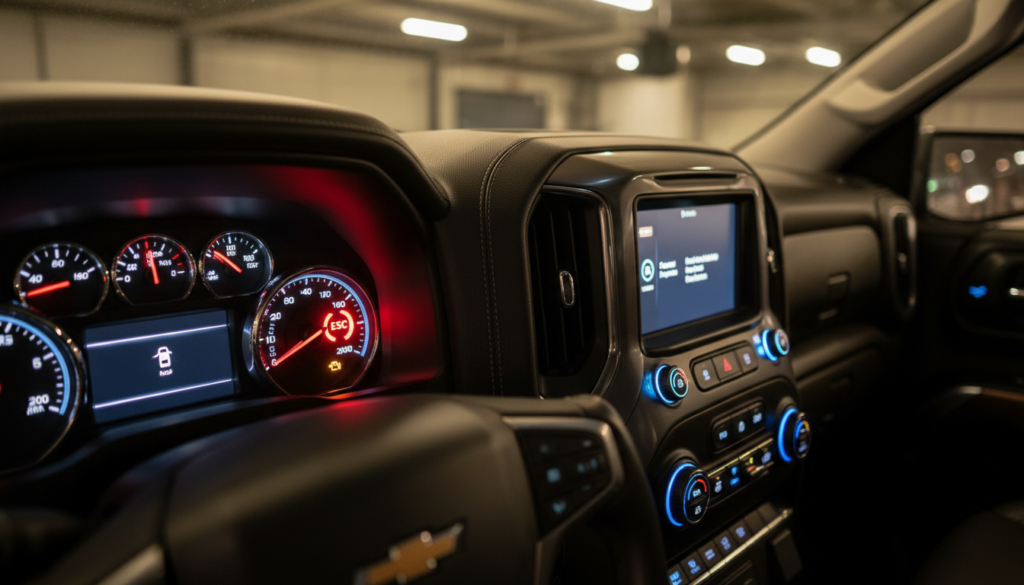
Seeing the ‘Service ESC’ warning on your Chevy Silverado dashboard?
First, take a breath. Your engine is fine. This message means your Electronic Stability Control (StabiliTrak) is disabled. Your truck is safe to drive, but you won’t have automatic traction help on slippery roads.
The Quick Diagnosis: Is your Cruise Control also not working? If yes, the culprit is likely a $20 Brake Light Switch stuck under your pedal—not a major engine failure.
Top 3 Common Causes (It’s rarely the computer):
- Faulty Wheel Speed Sensor: Often just dirty from mud/snow.
- Stuck Brake Light Switch: Confuses the ECU about whether you are stopping.
- Loose Ground Wire (G218): A notorious issue on Silverados near the dashboard.
This guide walks you through how to test these sensors and reset the light without a scanner.
What Exactly is ESC (and StabiliTrak)?
ESC (Electronic Stability Control) is the brain behind your Silverado’s safety. On GM trucks, you will often see it work hand-in-hand with the StabiliTrak system.
How it saves you: Imagine hitting a patch of black ice. Your steering wheel points left, but the truck slides right.
- Sensors React: The Steering Angle Sensor and Yaw Rate Sensor detect this mismatch instantly.
- The Fix: The computer applies the brake to just one specific wheel (like an anchor) to pull the truck back into a straight line.
Why the ‘Service ESC’ Light Matters: When this light pops on, that safety net is GONE. You still have normal brakes, but if you swerve to avoid a deer or hit a wet curve, the computer won’t step in to stop a spin-out.
Pro Tip for Diagnosis: Before visiting the shop, note when the light comes on. Does it trigger only on bumpy roads? Or during sharp turns? This info points directly to a loose wheel speed sensor or wiring harness issue, saving your mechanic hours of guesswork.
Decoding the Dashboard: Flashing vs Solid Light
The ESC light on your Silverado tells two very different stories. Knowing the difference keeps you safe.
1. The Light is FLASHING (The System is Working) If the light blinks rapidly while you are driving on wet or icy roads, do not panic.
- What’s happening: Your Silverado detects a slide. It is actively cutting engine power and applying brakes to specific wheels to pull you back on track.
- What you will feel: You might hear a grinding noise (ABS pump) or feel the engine ‘hesitate’ briefly. This is normal. Keep steering in the direction you want to go.
2. The Light is SOLID (The System is Disabled) If the light stays on constantly, even on dry pavement, the system has shut down.
Is it safe? You can drive, but remember: you have no electronic safety net. Drive cautiously until you can scan for codes..
What it means: A fault (like a bad wheel speed sensor) has forced the ESC/StabiliTrak to turn off.
Warning Light Patterns: Decoding the Combo
On a Chevy Silverado, the ‘Service ESC’ light rarely travels alone. Look at what else is lit up on your dash to find the culprit fast:
1. ESC Light + Check Engine Light (The Misfire Trap)
- The Pattern: You feel a rough idle, the Check Engine light flashes (or stays on), and suddenly the ‘Service StabiliTrak/ESC’ message appears.
- The Real Fix: Stop looking at your brakes. The computer disables stability control because it detects an engine misfire (P0300). Fix the spark plugs, coils, or AFM lifters, and the ESC light will turn off automatically.
2. ESC Light + ABS Light (The Wheel Sensor)
- The Pattern: Both lights stay solid. You might notice the ABS activates (grinding noise) on dry pavement at slow speeds.
- The Real Fix: This points to a faulty Wheel Speed Sensor or a rusted wheel hub assembly. The truck doesn’t know how fast the wheels are turning.
3. ESC Light + ‘Steering Assist Reduced’
The Real Fix: This is classic Silverado electrical gremlin behavior. Check your negative battery cable and ground straps (G218 ground on the dash) for corrosion.
The Pattern: You lose power steering momentarily along with the ESC warning.
Top Causes (Why Silverados Fail Here?)
It’s not always the brakes. On Chevy trucks, the stability system is sensitive to engine and electrical issues.
The Brake Light Switch: A cheap $20 sensor under your brake pedal. If it fails, the computer doesn’t know you are braking and throws an ESC code.
The Misfire Trap (Check Engine Light On?): If your Check Engine light is on (Code P0300), the computer automatically disables StabiliTrak/ESC.
The Fix: Don’t replace wheel sensors. Fix the spark plugs or coils. The ESC light will fix itself.
The “Ground G218” Issue: On 2014-2018 Silverados, the ground wire on the passenger side dashboard (G218) often corrodes. This causes the entire dash to freak out, triggering Service ESC.
The Fix: Clean and tighten this bolt before buying any parts.
Dirty Wheel Speed Sensors: Located on the wheel hubs, these magnets collect brake dust and rust. A dirty sensor sends “jumpy” signals, confusing the computer
Troubleshooting: The DIY Action Plan
Before paying a $150 diagnostic fee, try these steps in order.
Step 1: The “Key Cycle” Reset Pull over, turn off the engine, open the driver’s door (to kill the radio power), wait 60 seconds, and restart. Does the light stay off? If so, it was likely a glitch.
Step 1.5: The “Steering Angle” Relearn (After Battery Change)
Did this light appear right after a dead battery or an alignment? If the battery died or was disconnected, the Steering Angle Sensor (SAS) often loses its “zero point” memory. The truck thinks you are turning even when the wheel is straight, so it disables ESC to prevent errors.
- The 30-Second Fix:
- Start the engine and let it idle.
- Turn the steering wheel all the way to the Left until it stops (Full Lock).
- Turn it all the way to the Right until it stops (Full Lock).
- Bring it back to Center.
- Drive the truck in a straight line for about 100 yards.
- Result: This procedure forces the module to relearn the center position. If the light turns off, you just saved yourself a diagnostic fee!
Step 2: Check Brake Fluid & Tires Low brake fluid or mismatched tire pressures can trick the sensors. Top off the fluid and verify all tires are within 2 PSI of each other.
Step 3: Visual Harness Inspection Look at the wiring harness running along the driver-side frame rail. Road debris often cuts these wires. Also, check the wires connecting to the front wheel hubs for chafing.
Step 4: Scan for Codes If the light persists, use an OBD2 scanner.
- C0035-C0050: Wheel Speed Sensor faults.
- P0300: Engine Misfire (Fix the engine first).
- P2135/P2138: Throttle/Pedal sensors (Causing Reduced Power).
Conclusion: Drive It or Tow It?
The “Service ESC” message is a warning, not a death sentence. Here is your final checklist:
- ✅ Safe to Drive (Proceed with Caution): If the ESC light is solid but the truck drives smoothly, you can finish your trip. Just remember: your electronic skid protection is gone. Drive slower on curves and wet roads.
- ❌ Tow It (Stop Immediately): If you see “Engine Power Reduced” or the Check Engine Light is flashing (indicating a severe misfire), pull over. Continuing to drive with a flashing light can melt your catalytic converter and ruin the transmission.
Final Mechanic’s Tip: Before you hand the keys to the dealer, write down exactly when the light appeared (e.g., “Only happens on bumps” or “Triggered during a sharp left turn”). This simple clue can save hours of diagnostic labor fees.
FAQ
What does the Service ESC light mean for stability and control?
The warning signals a problem with the electronic stability system that helps prevent skids by using wheel sensors, selective braking, and engine torque control. When it appears, the truck may lose some automated intervention that corrects oversteer or understeer, so drive cautiously and avoid aggressive maneuvers until resolved.
Can the ESC light come on during normal driving conditions?
Yes. The lamp can illuminate after heavy rain, icy patches, or driving on loose gravel where wheel slip is detected. It may also come on briefly during hard acceleration or when a wheel sensor reads inconsistent speed. If it turns off after a restart or driving a short distance, the cause was likely temporary.
What’s the difference between a blinking ESC light and one that stays on?
A blinking indicator usually means the system is actively intervening to regain traction. A steady light indicates a fault that has disabled part or all of the stability control system and requires diagnosis. Both deserve attention, but a steady fault often needs parts, wiring repair, or a control module scan.
Why does “Engine Power Reduced” appear with a stability warning and what causes the power drop?
The power limit mode is a protective measure. When the stability or traction system detects a serious fault or conflicting signals — from wheel sensors, ABS, or engine controls — it may reduce torque to keep the vehicle controllable. Fix the underlying fault to restore full performance.
What can intermittent ESC problems with no stored codes indicate?
Intermittent faults often point to wiring harness issues, loose connectors, or contamination on sensors rather than a failed module. Heat, road vibration, or corrosion can cause brief signal losses that don’t always set a persistent trouble code, so visual inspection and wiggle tests help locate the issue.
How do wheel speed sensors cause stability control problems?
Sensors measure each wheel’s rotational speed. If a sensor gets dirty, damaged, or its tone ring is chipped, it sends erratic signals. The control unit then can’t compare wheel speeds accurately, which confuses traction control and ABS functions and can trigger the warning lamp.
Can ABS faults trigger the ESC light?
Absolutely. The ABS and stability systems share sensors and hydraulic components. A low brake fluid level, failing ABS pump, or a bad valve can disrupt the anti-lock function and, in turn, set a stability warning. Checking the brake system is an important troubleshooting step.
How do wiring, harness, and connector problems present themselves?
Look for chafed wires, loose terminals, or corroded connectors especially near wheel wells and underbody routes. Symptoms include intermittent lights, faults that clear after tapping a connector, or codes that come and go. Repairing the harness often restores reliable system operation.
Can tires or tire pressure cause the stability control lamp to come on?
Yes. Uneven tread, mismatched tire sizes, or underinflation change wheel speed readings and traction characteristics. That can trick the control system into thinking a fault exists. Keep tires matched, rotated, and inflated to the manufacturer’s specs to avoid false activations.
What role do road and weather conditions play in triggering the warning?
Slippery surfaces, deep ruts, or sudden changes in traction will cause the system to intervene and may illuminate the indicator. These are normal responses rather than faults. If the light persists after conditions normalize, then a diagnostic check is needed.
What quick checks should a driver do before seeking repairs?
Verify tire pressure and condition, check brake fluid level, and scan for obvious wheel-area damage or debris covering sensors. Note when the light appears (rain, towing, off-road) and whether the engine power reduction coincides. This information helps a technician pinpoint the cause faster.
How should one inspect wheel areas and sensors safely?
Park on level ground with the engine off and parking brake applied. Visually inspect sensor wiring and tone rings for dirt, salt build-up, or damage. Avoid forcing connectors; if a sensor looks contaminated, gentle cleaning with a soft brush and brake cleaner can help—but replace damaged parts rather than risking a poor repair.
When should a professional scan and road-test be prioritized?
If the light stays on, engine power remains reduced, or the problem recurs after basic checks, schedule a shop visit. Technicians can run a full ABS/traction scan, test wheel sensors under load, and monitor live data during a road test to capture intermittent faults and confirm repairs.
Are there common parts that typically need replacement for these issues?
Frequently replaced items include wheel speed sensors, connector blocks, sections of damaged wiring harness, ABS module components, and occasionally the control module. Brake pads, rotors, and fluid should be inspected too, since their condition affects system performance.





Thanks for highlighting this! You are absolutely right—the link between the steering faults and the ‘Service ESC’ warning is a major headache on those 2008–2010 models.
Because of your comment, I’ve actually just updated the section above to include a link to our troubleshooting guide for that specific Service ESC light. I appreciate you helping make this guide more accurate!