How Much Does a Chevy Silverado Weigh? 1500, 2500, and 3500 Compared
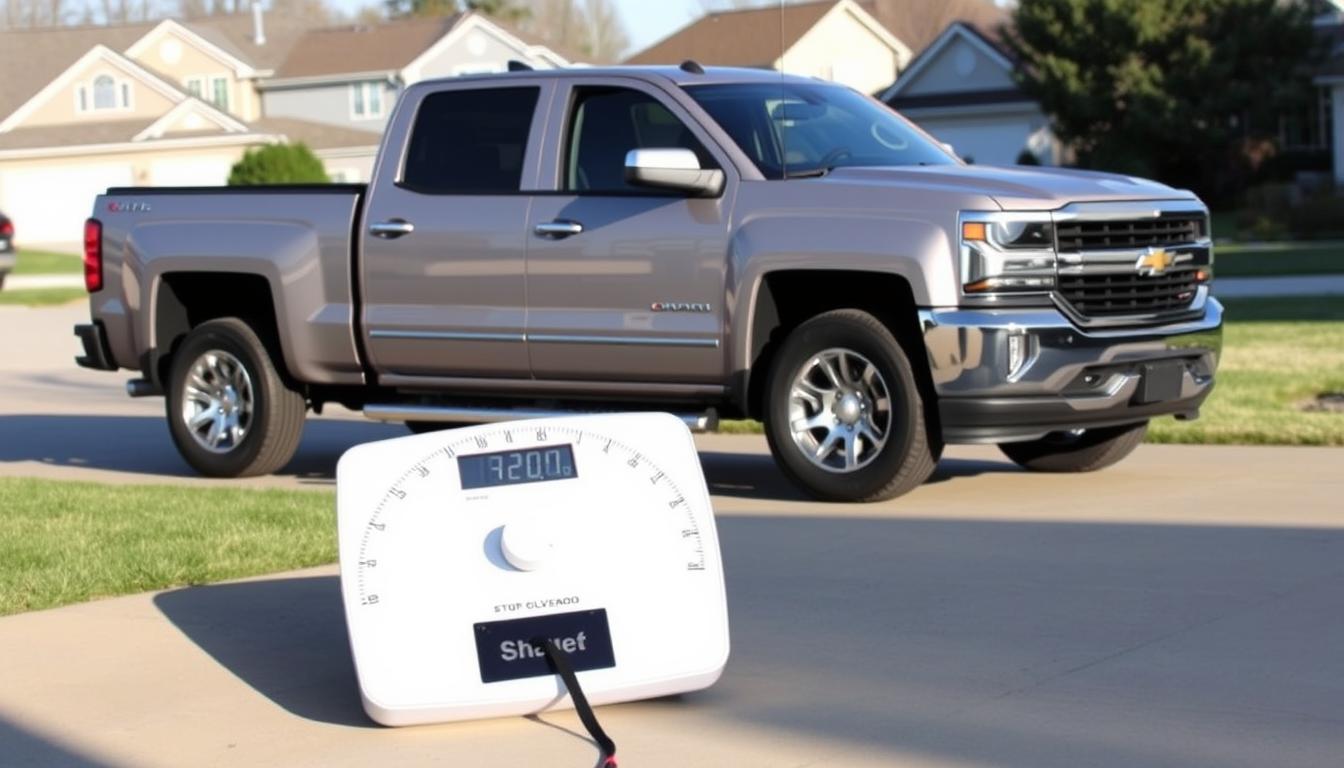
Asking ‘How much does a Chevy Silverado weigh?’ is tricky because the answer depends heavily on the model, engine, and bed size.
The Short Answer (Curb Weight):
- Silverado 1500: Ranges from 4,400 lbs (Base 2WD Work Truck) to 5,600 lbs (Fully Loaded 4WD High Country).
- Silverado 2500HD/3500HD: These heavy-duty giants start around 6,100 lbs and can weigh over 8,000 lbs for a 3500 Dually.
Why It Matters (The Safety Factor): Knowing your truck’s Curb Weight (empty weight) is the first step to calculating your Payload Capacity.
- Formula: GVWR (Max Legal Weight) – Curb Weight = Payload.
If you don’t know your truck’s actual weight, you are likely overloading it. Whether you are registering your vehicle or loading up a camper, this guide breaks down the weight specs for every generation—so you can haul safely without breaking the suspension (or the law).
1. Chevy Silverado 1500 Curb Weight (Estimated)
The weight of a Silverado 1500 changes drastically based on cab size and drivetrain (2WD vs. 4WD). A base model Work Truck is light and nimble, while a fully loaded High Country or ZR2 adds over 1,000 lbs of luxury features and off-road armor.
| Configuration (Cab / Bed) | Approx. Curb Weight (2WD) | Approx. Curb Weight (4WD) |
| Regular Cab / Long Bed | 4,410 lbs | 4,630 lbs |
| Double Cab / Standard Bed | 4,720 lbs | 4,940 lbs |
| Crew Cab / Short Bed | 4,800 lbs | 5,050 lbs |
| Crew Cab / Standard Bed | 4,850 lbs | 5,100 lbs |
| ZR2 (Off-Road) | N/A | 5,620 lbs |
Note: Adding the 3.0L Duramax Diesel engine adds approximately 200–300 lbs compared to the 2.7L TurboMax or 5.3L V8.
2. Chevy Silverado 2500HD & 3500HD Weight
In the Heavy Duty world, options are heavy. The biggest weight factor here is the engine. The 6.6L Duramax Diesel engine weighs significantly more than the gas V8 due to its cast-iron block, turbo piping, and emissions equipment (DEF system).
| Model & Engine | Single Rear Wheel (SRW) Weight | Dual Rear Wheel (DRW) Weight |
| 2500HD (6.6L Gas V8) | 6,400 – 6,950 lbs | N/A |
| 2500HD (6.6L Diesel) | 7,300 – 7,850 lbs | N/A |
| 3500HD (6.6L Gas V8) | 6,500 – 7,000 lbs | 7,100 – 7,500 lbs |
| 3500HD (6.6L Diesel) | 7,400 – 7,900 lbs | 8,000 – 8,400 lbs |
Key Takeaway: If you choose the Diesel engine, you are adding roughly 900 lbs to the nose of the truck. This reduces your payload capacity compared to the Gas model, even though the Diesel can tow more.
If you’re looking for something smaller than a Silverado but still capable, check out the Chevy Colorado towing capacity guide.
Curb Weight Overview by Model?
The Chevy Silverado’s weight changes based on the model year, trim, drivetrain, and options. Knowing the Silverado 1500 is lighter than the 2500HD and 3500HD is helpful. Here are quick details to help you understand the typical weights and where to find the exact numbers for towing or loading.
Here’s a quick overview of the curb weight ranges for recent model years. It also highlights the main factors that affect the listed weight.
Overview of weight ranges across model years
The curb weight of the Silverado 1500 usually falls between 4,500 and 5,800 lbs. Many 2021 models fall within this range. The 2025 models show similar variations due to new trims and packages.
To give you a concrete number, a 2025 Chevy Silverado 1500 Crew Cab 4×4 (Short Bed) equipped with the 5.3L V8 engine has a curb weight of approximately 5,150 lbs.
If you upgrade to the heavy-duty Silverado 2500HD Crew Cab 4×4 with the Duramax diesel engine, that weight jumps significantly to around 7,600+ lbs due to the heavier frame and engine block.
The Silverado 2500HD and 3500HD have much higher weights. Dealer payload charts show the 2500HD’s payload at around 2,968–3,900 lbs. The 3500HD’s payload ranges from 3,283 to 6,288 lbs in certain setups.
Dealer charts from 2020–2021 show the Silverado 1500’s payload at about 1,750–2,280 lbs. The 2500HD’s payload was 3,614–3,900 lbs, and the 3500HD’s was around 4,353–4,572 lbs.
Factors that determine the listed weight
- Drive type: 4WD systems add 200–300 lbs over 2WD.
- Cab and bed layout: Regular cab trims weigh less than Double or Crew cabs. Long boxes weigh more than short boxes.
- Trim level and equipment: Work Truck is light. Trail Boss, ZR2, and High Country add weight with off-road gear, suspension, or luxury features.
- Powertrain and packages: Larger engines, automatic transmissions, towing packages, and axle upgrades increase curb weight and GVWR.
- Aftermarket accessories: Toolboxes, bed liners, racks, and bumpers add pounds that affect payload calculations.
Where to find official curb weight and GVWR data?
Chevrolet’s official specs and the owner’s manual’s Trailering section list GVWR, curb weight, and towing limits for each model and trim. These figures are key for safe loading and towing.
The vehicle placard on the driver’s door jamb gives legally binding GVWR and GAWR values for a specific truck. Dealership spec sheets and trusted automotive sites offer model-specific examples and comparison tables to help estimate the Chevy Silverado’s weight by configuration.
| Model | Typical Silverado Curb Weight (lbs) | Typical Payload Range (lbs) |
|---|---|---|
| Silverado 1500 (2019–2025) | 4,500–5,800 | 1,750–2,280 |
| Silverado 2500HD (2019–2025) | 5,800–7,500 | 2,968–3,900 |
| Silverado 3500HD (2019–2025) | 6,500–9,000 | 3,283–6,288 |
Curb weight and why it matters for the Silverado?
Curb weight is the mass of a vehicle ready to drive. It includes a full fuel tank, engine oil, coolant, and standard equipment. It doesn’t count passengers, cargo, or aftermarket gear. Dealerships and manufacturers use this number for chevy silverado weight figures.
The silverado curb weight impacts daily use. A heavier truck uses more fuel and accelerates slower. It feels steadier at high speeds and handles crosswinds better.
Weight also affects braking and suspension tuning. It’s key for ride comfort and load control.
Knowing curb weight is vital for planning payloads and towing. Chevy silverado payload capacity is the truck’s GVWR minus curb weight. Owners can estimate how much gear fits without going over safe limits.
Examples show differences in curb weights. For 2020–2025 models, Silverado 1500 curb weights range from 4,500 to 5,800 lbs. A 4×2 Work Truck short box is about 4,700 lbs, while 4×4 trims are closer to 4,950 lbs or more.
Heavy-duty 2500HD and 3500HD models start much higher. Their curb and operating weights are tied to higher GVWRs. This supports larger chevy silverado payload capacity numbers.
Gross Vehicle Weight Rating (GVWR) and gross axle weight ratings (GAWR)
The Chevy Silverado’s placard and owner’s manual explain legal limits for carrying people and cargo. These limits help avoid damage to the truck’s frame, brakes, or drivetrain. Knowing the silverado gross vehicle weight is key to matching hauling plans with the truck’s design.
What GVWR means and how it relates to payload capacity?
GVWR silverado is the maximum safe total weight for the truck, passengers, fuel, cargo, and any trailer tongue load. To find payload, subtract curb weight from the GVWR.
Going over the silverado gross vehicle weight can cause mechanical failure and unsafe handling. Following chevy silverado weight restrictions protects warranties and ensures safe driving.
How GAWR splits GVWR between front and rear axles?
GAWR assigns a maximum load for each axle. The door placard shows the front and rear GAWR. This helps owners know how to distribute weight.
Uneven weight distribution can lead to reduced traction, premature tire wear, and uneven suspension wear. It’s important to balance cargo between the cab and bed, and account for passengers.
Typical GVWR ranges for Silverado 1500, 2500HD, and 3500HD with examples
Light-duty Silverado 1500 models usually have GVWRs near 6,800–7,400 pounds for many 2025 configurations. These numbers set the ceiling for daily hauling and determine maximum payload after curb weight is subtracted.
Silverado 2500HD and 3500HD models have higher GVWRs to support larger payloads and towing loads. Dealer charts and spec sheets show payloads in the multi-thousand-pound range for HD trucks. For example, 2500HD payloads are around 2,968–3,900 pounds, and 3500HD payloads range roughly 3,283–6,288 pounds.
Check the truck’s placard to confirm specific GVWR silverado and chevy silverado weight restrictions. This depends on cab, bed, axle ratio, and suspension package before loading or towing.
Payload capacity explained and Silverado payload specs
The payload capacity of a pickup shows how much it can carry safely. When comparing the chevy silverado payload capacity and weight, it’s important to understand the difference between gross and curb weights. This guide will help you understand the math and give tips on loading the bed versus the cab.
How to calculate payload?
Use the standard industry formula: Payload Capacity = GVWR − Curb Weight.. Remember to include everyone, factory options, aftermarket accessories, and fluids in the subtraction. This ensures the advertised payload matches real-world use.
2020–2021 and 2015–2021 payload highlights
| Model Range | Representative Payload (lbs) | Notes |
|---|---|---|
| Silverado 1500 (2020–2021) | 1,750–2,280 | Light-duty crew and regular cabs offer higher bed capacity on shorter frames |
| Silverado 2500HD (2020–2021) | 3,614–3,900 | HD chassis and axle upgrades boost payload for work use |
| Silverado 3500HD (2020–2021) | 4,353–4,572 | Dual-rear-wheel versions increase payload stability |
| Silverado 1500 (2015–2021 summary) | ~1,734–2,543 | Variation depends on trim, cab, bed length, and drivetrain |
| HD models (2015–2021 summary) | Varies widely; some 3500 entries exceed 6,000 | Heavy-duty configurations produce a broad spectrum of capacity |
Practical steps to determine bed vs cab capacity
- Find GVWR and curb weight on the owner’s manual and the driver door placard. These numbers reflect the truck’s certified limits and its empty mass with standard equipment.
- Subtract curb weight from GVWR to calculate total payload. That yields the maximum combined mass of passengers, cargo and accessories.
- Subtract occupants’ combined weight and any known in-cab cargo to estimate remaining capacity for the bed.
Example: a 2021 Silverado 1500 with a listed payload of 1,750 lbs minus two occupants at 400 lbs leaves about 1,350 lbs for the bed. Remember that toolboxes, ladder racks, and aftermarket bumpers reduce available capacity, so factor them into the chevy silverado weight calculation before loading the bed.
When planning loads, keep the silverado payload capacity and curb weight figures handy. They help avoid overload, preserve handling and protect the drivetrain while keeping operations within legal limits.
Silverado curb weight vs competitors: comparison and context
The Chevy Silverado usually falls in the middle when comparing curb weights among full-size pickups. It weighs between 4,500 to 5,800 lbs, depending on the trim and options. This makes it similar in weight to the Ford F-150 and Ram 1500 in many cases. But, the choice of trim and equipment can change this.
How the Silverado stacks up?
The 1500 is a good choice for those who want a mix of power and efficiency. It has lightweight parts in some trims to keep the weight down. But, adding heavy-duty packages can make it as heavy as rivals for towing and off-road use.
Material and design influences
The Silverado’s mixed materials, like aluminum and high-strength steel, affect its weight. This design makes it lighter without losing strength. The engine, drivetrain, cab size, and trim all play a role in the final weight.
Off-road and tow packages add features like skid plates and stronger axles. These upgrades improve performance but increase the weight.
When lighter is better?
Lighter trucks are better for fuel economy and handling in the city. They offer more payload and better gas mileage for daily driving and occasional towing.
When heavier is better?
For those who tow often or work in construction, a heavier Silverado is better. It provides stability and lasts longer under heavy loads.
Choosing the right setup
It’s important to match the Silverado’s weight to your needs. Lighter trims are best for daily driving and light towing. Heavy-duty options are better for heavy-duty work and off-road adventures.
How Silverado weight affects towing, payload, and performance?
The weight of a Chevy Silverado affects how it tows and carries loads. Knowing the truck’s weight is key for safe towing and avoiding overloading. The truck’s GVWR is influenced by its curb weight, so trailer tongue weight impacts payload and limits.
Relationship between curb mass and trailer tongue weight
Tongue weight is usually 10–15% of the trailer’s mass. This weight is part of the truck’s payload, sitting on the hitch. If the truck’s payload is used up, towing capacity drops, even if the engine can handle more.
How 2WD, 4WD and cab/bed choices change performance?
Choosing 4WD adds 200–300 lbs compared to 2WD. This extra weight reduces payload but improves traction on slippery roads. A longer bed or crew cab also increases curb weight.
For example, a 4×2 Work Truck short box weighs about 4,700 lbs. A comparable 4×4 weighs around 4,950 lbs.
Payload ranges for many Silverado 1500 models are between 1,750 and 2,280 lbs. Payload depends on engine, axle ratio, cab, and box size. Buyers need to compare configurations to meet hauling needs.
Operational impacts: brakes, suspension, tires, and safety
Heavy or uneven loads increase braking distances and strain suspension components. Tires wear faster under constant heavy loads and can overheat, raising the risk of blowouts. Exceeding GVWR stresses drivetrain and frame parts over time.
Dealerships and manufacturers warn against surpassing payload limits. Staying within the rated chevy silverado towing capacity and watching silverado weight distribution promotes safer handling and extends vehicle life.
| Configuration | Approx. Curb Weight (lbs) | Typical Payload (lbs) | Notes on Towing Impact |
|---|---|---|---|
| 1500 4×2 short box | 4,700 | 1,900 | Higher payload, best for light towing and hauling |
| 1500 4×4 crew cab long box | 4,950 | 1,750 | Reduced payload due to 4WD weight, better traction |
| 2500HD 4×2 crew cab | 6,000 | 3,200 | Higher GVWR, designed for heavier trailer loads |
| 3500HD dual rear wheel | 7,500 | 4,000 | Max payload and towing when properly equipped |
Weight distribution and chassis considerations for the Silverado
The Chevy Silverado’s handling and safety depend on where weight sits. Proper loading keeps the truck balanced. This ensures predictable steering, braking, and ride quality.
How payload placement affects balance?
Heavy items over the rear axle improve stability for full-bed loads. But, this can reduce front wheel traction and increase braking distance.
Cab loads and passengers move weight forward. This can help steering. But, it must stay within axle limits to avoid overloads.
Recommended loading practices for safe handling
Distribute cargo evenly front-to-back and side-to-side when possible. Spread heavy items across the bed, not on one side.
Keep weight low and close to the cab. This lowers the center of gravity. Tall stacks make the truck feel top-heavy and increase rollover risk.
Check the door placard and owner’s manual for silverado curb weight, GVWR, and GAWR numbers before loading. Use those figures to confirm no axle is overloaded.
When to consider upgrades: suspension, brakes, and towing packages?
If regular loads approach payload limits, consider heavy-duty springs or helper air bags. Factory/ dealer towing packages can also raise GVWR or tune suspension response. These upgrades protect the frame and maintain ride height under load.
Upgraded brakes and a trailer brake controller are essential for heavy towing. A weight-distributing hitch helps manage tongue weight and keeps the truck’s balance close to its designed silverado weight distribution.
Testing with a scale and routine inspections of tires, suspension mounts, and brake components will extend service life. This keeps the Silverado safe under varied loads.
Real-world Silverado weight specifications by configuration
Knowing the weight of a truck is key for buyers. The weight of a Chevy Silverado varies based on cab, bed, drivetrain, and trim. Here are some ranges and examples from dealer data and factory specs.
2025 Silverado 1500 curb weight ranges
The curb weight of the 2025 Silverado 1500 ranges from 4,500 to 5,800 lbs. A 4×2 Work Truck with a 5.8-foot short box weighs around 4,700 lbs. Moving to 4×4 adds weight, bringing it to about 4,950 lbs.
4×2 vs 4×4 and trim-specific differences
Two-wheel-drive models are 200–300 lbs lighter than four-wheel-drive trucks. The Trail Boss and ZR2 trims add 100–200+ lbs for better suspension and off-road features. ZR2 options, often 4WD crew cab setups, push the curb weight up.
Silverado 2500HD and 3500HD payload and GVWR examples
Heavy-duty models have higher GVWRs for bigger payloads and towing. Dealer payload charts show many 2500HD builds with payloads around 2,968–3,900 lbs. The 3500HD can range from 3,283 lbs to over 6,000 lbs in heavy-duty setups. These numbers reflect stronger frames and higher axle ratings.
When comparing models, remember curb weight affects payload. Subtract the Chevy Silverado weight from GVWR to estimate usable payload. Use the truck’s placard and owner’s manual to confirm exact weight specifications before loading or towing.
Silverado weight restrictions, legal limits, and safe loading practices
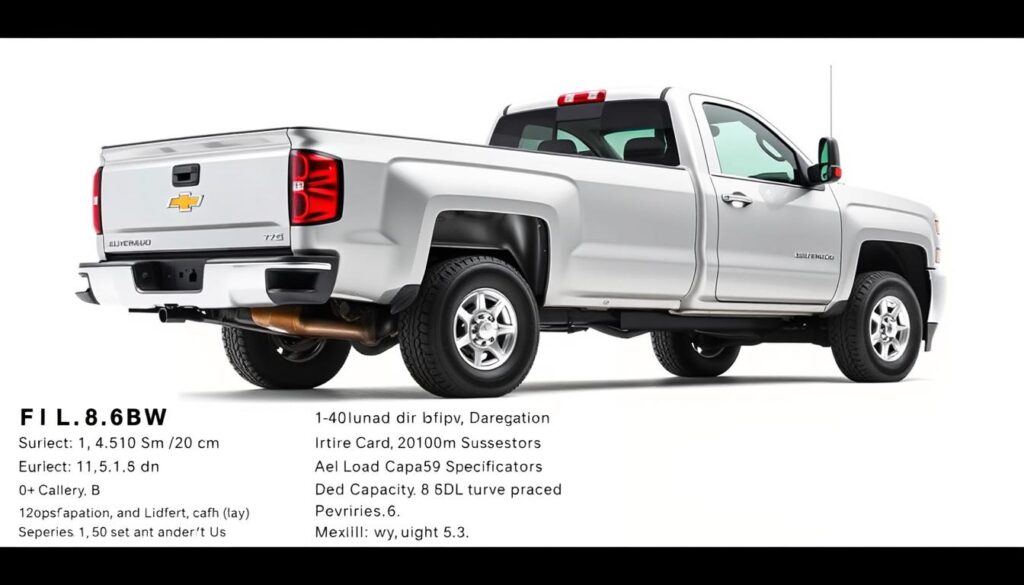
Knowing the legal weight limits is key to staying safe on the road. Going over the payload or gross vehicle weight can damage the truck. It can warp the frame and overload the brakes.
Stressed tires and suspension can lead to blowouts and longer stops. Dealers suggest HD models for heavy hauling.
Look at the driver’s door jamb for GVWR and GAWR numbers. The owner’s manual has towing limits and tongue weight advice. Model-specific data is in spec sheets and dealership publications.
Do these quick checks before loading or hitching a trailer:
- Compare estimated payload to the curb weight and gross vehicle weight on the placard.
- Weigh the truck with cargo at a public scale to confirm you remain under rated limits.
- Factor passengers, aftermarket gear, and fuel when calculating available payload.
Use proven towing gear for safe towing. Trailer brake controllers and supplemental braking systems reduce stopping distance. Weight-distribution hitches move tongue load across axles and limit rear sag.
Automatic battery disconnects help with four-down flat towing behind RVs when recommended by the manufacturer.
Routine maintenance is vital for safe loads. Check tire pressure, brake pads, wheel bearings, and suspension mounts before long trips. Tighten lug nuts and check hitch hardware. Replace worn springs or shocks if you carry heavy payloads regularly.
Follow these practical loading rules for balanced handling and legal compliance:
- Load heavy items low and over the rear axle when possible to stabilize weight distribution.
- Secure gear to prevent shifting that can change tongue weight and axle loads.
- Keep total weight below the chevy silverado weight restrictions shown on the placard and in the manual.
Conclusion
The weight of a Chevy Silverado depends on its setup and options. The curb weight for Silverado 1500 models is about 4,500–5,800 lbs. On the other hand, 2500HD and 3500HD models are much heavier.
Adding four-wheel drive or off-road trims increases the weight. This extra weight impacts fuel efficiency, handling, and how the truck distributes its weight.
When figuring out payload, remember: payload equals GVWR minus curb weight. Don’t forget to include passengers, cargo, and any aftermarket gear. Going over GVWR or GAWR can damage the truck and is dangerous.
To get exact weights, check Chevrolet’s official specs, the door placard, and the owner’s manual. Dealers like Dyer Chevy, Ewald Chevrolet, and DELLA Chevrolet can also help with towing packages and model setups. This way, you can choose the right truck for your needs, keeping weight distribution and limits in mind.
FAQ
How much does a Chevy Silverado weigh?
A Silverado 1500 weighs between 4,500 to 5,800 lbs. This depends on the year, cab type, bed size, drivetrain, and trim. The 2500HD and 3500HD models are much heavier. They can handle bigger payloads and have higher GVWRs.
What is the difference between curb weight, GVWR, GAWR, and payload?
Curb weight is the truck’s weight with fuel and fluids but without people or cargo. GVWR is the maximum total weight of the truck, people, cargo, and trailer tongue load. GAWR is the maximum load each axle can carry. Payload is GVWR minus curb weight, which is how much weight you can add safely.
Where can I find the Silverado’s official weight and GVWR numbers?
Look for the vehicle placard on the driver’s door jamb for GVWR and GAWR. This is the legal reference. The owner’s manual and Chevrolet spec sheets have curb weight and towing figures. Dealerships like Dyer Chevy, Ewald Chevrolet, and DELLA Chevrolet provide real-world examples.
How do 2WD and 4WD affect Silverado weight and payload?
Switching from 2WD to 4WD adds 200–300 lbs. This is because of the transfer case, front differential, and related hardware. The added curb weight reduces payload by the same amount. But 4WD improves traction and off-road capability.
How do I calculate how much I can put in the bed?
Find GVWR and curb weight on the door placard or owner’s manual. Subtract curb weight from GVWR to get total payload. Then subtract the weight of occupants and any in-cab cargo. Include aftermarket gear in your math.
What are typical payload ranges for Silverado models?
Recent data shows Silverado 1500 payloads between 1,700 and 2,300 lbs. Silverado 2500HD payloads are around 2,968–3,900 lbs. 3500HD payloads range from 3,283 up to and above 6,000 lbs, depending on configuration and model year.
Why is it dangerous to exceed GVWR or GAWR?
Exceeding these limits can damage the frame, drivetrain, brakes, and tires. It increases stopping distances and can cause unsafe handling or axle failure. Always follow the door placard and owner’s manual. If your regular loads approach limits, consider an HD model or upgrades.