
Chevy 5.3 Firing Order Guide – Optimize Your Engine
We explains the chevy 5.3 firing order and its importance. It shows how it ensures smooth operation, reliability, and power. The chevy 5.3 V8 firing order is used in most LS-family engines.
It also explains how the new sequence improves balance and reduces vibration. This is compared to older small-block patterns.
GM uses the 1-8-7-2-6-5-4-3 pattern for many Gen III/IV and Ecotec3 V8s. This pattern is for the 5.3 firing order in iron-block LM7, aluminum LH6/LC9, and Ecotec3 L86/L83 families. Each type has the same firing sequence but differs in block material and other features.
It will cover what is the firing order for a 5.3 chevy engine. It will also discuss cylinder numbering, coil and spark layouts, and timing relationships. Model notes for Silverado, Sierra, Tahoe, Yukon, and Avalanche are included.
Practical maintenance tips, troubleshooting steps, and upgrade considerations are provided. These are based on technical references from Summit Racing, OnAllCylinders, and LS-family histories to ensure accuracy.
Understanding the Chevy 5.3 Firing Order
The firing order is the sequence in which an engine’s cylinders ignite. It tells the crankshaft when to expect combustion. This sequence is key for smooth operation and less stress on engine parts.
Swapping coil packs or wiring errors can lead to misfires and a rough idle. This results in a loss of power.
What the firing order is and why it matters?
The firing order acts like a timing map, spreading combustion evenly. This prevents big pulses that shake the car and stress engine components. For a V8, the firing order is critical for torque delivery and breathing under load.
The official sequence for most LS/5.3 V8 engines
General Motors standardized the firing order for Gen III/IV LS-based small blocks. The common 5.3 firing order is 1-8-7-2-6-5-4-3. Generation V Ecotec3 5.3 engines follow this pattern to maintain balance and packaging benefits.
How the firing order affects balance, vibration, and power delivery?
The LS-style firing order improves secondary balance, leading to a smoother idle and cruise. It also delivers steadier torque through the rev range. This reduces vibration, lowering fatigue on bearings and the crank. It enhances reliability for daily drivers and performance builds.
| Aspect | Effect | Practical Note |
|---|---|---|
| Firing pattern | Even firing intervals | 5.3 firing order sequence 1-8-7-2-6-5-4-3 used on LS/5.3 engines |
| NVH | Lower vibration and noise | chevy 5.3 firing order helps smoother idle and cruising |
| Rotating assembly stress | Reduced peak loads | Proper 5.3 chevy engine firing order protects crank and rods |
| Ignition layout | Supports coil-near-plug/coil-on-plug | LS family moved away from distributors for packaging and timing control |
Chevy 5.3 firing order
The Gen III and Gen IV 5.3 V8 engines have a single ignition pattern. This pattern is key for technicians and DIYers. It helps when fixing misfires, installing coil packs, or swapping engines.
Exact firing order sequence for Gen III/IV 5.3 engines
The firing order is 1-8-7-2-6-5-4-3. This is true for common 5.3L truck engines like LM7, LH6, and LC9. Mechanics use this when setting ignition timing and mapping coil outputs.
How GM standardized the 1-8-7-2-6-5-4-3 pattern across LS-family engines?
General Motors changed to the Gen III LS architecture in the mid-1990s. This move unified the firing order across many LS variants. It made engine control simpler, improved balance, and made parts swapping easier.
Differences between iron-block LM7 and aluminum LC9/LH6 variants
The firing order stays the same for LM7, LH6, and LC9. The main differences are in materials and features, not the firing order. LM7 is an iron-block Gen III engine without early AFM or VVT on many models. LC9 and LH6 are Gen IV aluminum-block engines with AFM and sometimes VVT or flex-fuel capability.
These changes affect fueling, tuning, and parts selection when upgrading. But the spark sequence, spark plug locations, and coil numbering stay the same. This means technicians can swap parts or troubleshoot with confidence across these 5.3 platforms.
5.3 Chevy engine firing order and cylinder numbering
The Chevy 5.3 engine has a clear layout for cylinders and firing order. This makes it easier for maintenance and troubleshooting. Knowing this layout helps when working with spark plug wires, coil packs, or fixing misfire codes.
Cylinder bank layout on V8 GM truck engines
GM V8 truck engines follow a standard numbering system. Cylinder #1 is at the front of the driver’s side bank. Numbers go down to the rear on that side. The passenger side starts with #2 at the front and ends with #8 at the rear.
How to identify cylinder numbers on your Chevy 5.3 (driver vs passenger bank)?
The driver’s side has cylinders 1, 3, 5, 7 from front to rear. The passenger side has cylinders 2, 4, 6, 8 in the same order. If you’re unsure, check the service manual or look for marks on the cylinder head.
Visual guide for locating cylinders when routing spark plug wires or coil packs
Coil-on-plug engines have coils directly above spark plugs. Make sure to replace them in the same position. For older setups, follow the 1-8-7-2-6-5-4-3 sequence to avoid misfires.
Label coils and wires before taking them out. This helps prevent mistakes and fixes misfire codes. Always check the service manual for correct routing.
The firing order of the Chevy 5.3 engine is important for repairs. Swapping parts can cause misfires and a rough engine. Always match the firing order with the OEM pattern before reassembling.
Ignition system specifics for Chevy 5.3 V8 firing order
The Chevy 5.3 family changed to coil setups from distributors. This made spark energy and timing better. It also made the engine cleaner and easier to fix.
Coil‑near‑plug and coil‑on‑plug designs
Early LS trucks had coil‑near‑plug setups. Later, Gen III/IV and Gen V engines went to coil‑on‑plug. This design gives each cylinder its own coil, matching the firing order with precise timing.
Common ignition components across platforms
LM7, LH6, LC9, and Ecotec3 5.3 engines share parts. These include ignition coils, spark plugs, and wiring harnesses. The ECU controls the firing order.
Differences exist. LM7 uses truck-focused coils and longer injectors. LC9 and LH6 have different coil mounts and active fuel management. Ecotec3 Gen V engines have direct injection and new ignition timing.
Troubleshooting misfires tied to firing order and ignition failure
Misfires show up as codes like P0301 through P0308. They also cause rough idle and loss of power. Ignition faults or sensor issues are often the cause.
Simple steps can help. Swap a coil to see if the misfire moves. Check connectors and harnesses for damage. Use a scan tool or oscilloscope to check sensor signals.
Confirm the coil-to-cylinder mapping matches the 1-8-7-2-6-5-4-3 sequence. Live data and cylinder contribution tests help diagnose ignition problems. This saves time and parts when fixing misfires.
Chevy 5.3 spark plug firing order and spark plug maintenance
The chevy 5.3 spark plug firing order is key to keeping your engine running smoothly. Choosing the right spark plugs, setting the correct gap, and tightening them just right are all important. These steps help prevent misfires and keep your engine running well.
Recommended spark plugs, gap, and torque
Most Chevy 5.3 V8s need iridium or platinum plugs. The gap should be about 0.040 in, but always check your service manual. Use AC Delco or NGK plugs and follow their heat-range advice for high-performance engines.
When tightening plugs, do it to the factory’s specs. Over-tightening can damage the threads in aluminum heads. Don’t use anti-seize compounds unless your manual says it’s okay.
Replacing coils and plugs without disturbing firing order
Work on one cylinder at a time. Remove a coil, swap the plug, and then put the coil back. Label coils if you’re doing a lot of work. This way, you avoid messing up the firing order and causing misfires.
If your truck has spark plug wires, replace them one by one. Keep the 1-8-7-2-6-5-4-3 pattern in mind. This ensures the wires are connected correctly and prevents arcing.
Symptoms of wrong installation or swapped coils
- A check-engine light with codes that point to a swapped coil.
- A rough idle, hesitation, and poor fuel economy if the firing order is off.
- Uneven acceleration and surging that changes when coils are moved, showing a swapped coil pack.
Practical service notes
LM7 truck engines and later LS variants have different connectors and injector lengths. Use the right AC Delco or OEM parts, or reliable adapters, to avoid fitment issues. When diagnosing misfires, swapping coils can help you figure out if it’s an ignition problem or something else.
5.3 firing order sequence and timing considerations
The 5.3 firing order sequence is linked to cam and crank timing. It ensures valves open and close at the right time for each cylinder. If timing is off, the engine will misfire, lose power, and risk damage.
Relationship between firing order and cam/crank timing
The firing order tells us when each cylinder needs to breathe. Camshaft timing controls valve opening and closing. Crankshaft position determines piston location. If the timing is wrong, the engine will run rough and show trouble codes.
How to verify camshaft alignment and Top Dead Center for proper timing?
Begin by turning the crank to TDC for cylinder 1. Look for timing marks on the crank and cam sprockets. Use alignment pins on Gen III/IV LS cams if needed.
After setting marks, turn the engine a few times. Then, check the marks again to make sure they haven’t moved.
Common timing-chain service items for Gen III/IV 5.3 engines
Timing service usually includes replacing the timing chain, guides, tensioner, and cam sprockets. For Gen IV engines with AFM or VVT, extra steps are required. Signs of wear include a rattling chain, timing noise, and misfire codes.
- Inspect tensioner and guide wear before reuse.
- Replace sprockets and dampers during major cam or chain service.
- Verify chevy 5.3 firing order after assembly by confirming TDC and rechecking cam marks.
For those asking about the firing order for a 5.3 Chevy engine, remember that timing must match the firing order. This ensures valves and pistons work together. Always replace chain components as a set for reliable performance.
Chevy Silverado 5.3 firing order and model-specific notes
The 5.3 liter V8 engine is found in many Chevrolet and GMC models. This includes Silverado, Sierra, Tahoe, Yukon, Avalanche, and Express. Knowing the chevy silverado 5.3 firing order is key for repairs and upgrades.
Applications: trucks and SUVs that use the 5.3
The 5.3L Vortec and Ecotec3 engines power several models. These include Silverado and Sierra 1500 trucks, as well as Tahoe, Suburban, Yukon, Yukon XL, Avalanche, Express, Savana, and some Cadillac Escalade models. This makes troubleshooting easier when you know the chevy 5.3 firing order.
Generation-specific differences to watch for
The LM7 engine, used from 1999 to 2007, has an iron block. It lacks AFM and VVT, making it popular for swaps and boosts. Its toughness and low cost are big reasons for its popularity.
LH6 and LC9 engines, from 2005 onwards, have aluminum blocks. They include Active Fuel Management and flex-fuel capability. Some Gen IV variants have variable valve timing, affecting calibration more than the firing sequence.
Ecotec3 engines, like L86 and L83, have direct injection and advanced VVT systems. These upgrades change fueling and timing, but the chevy 5.3 firing order remains the same.
Practical tips for Silverado owners during swaps, repairs, and upgrades
When swapping an LM7 into a Silverado, check injector lengths and electrical connectors. Adapters can fix harness mismatches. Remember the 5.3 chevy engine firing order when moving coil packs or wiring.
For boosted or high-power builds, inspect the block’s strength and plan machine work. Iron LM7 blocks can handle more boost than some aluminum blocks. Proper bore and hone clearances are needed when increasing pressure.
Upgrade fuel system components early. Factory LM7 injectors flow around 22–25 lb/hr. Choose camshafts for truck use and midrange torque. Calibrate the PCM with a professional tuner to keep drivability and firing order integrity.
Quick checklist for model-specific service
- Verify engine family (LM7, LH6, LC9, L86/L83) before ordering parts.
- Match injector type and connector to the vehicle harness or use quality adapters.
- Confirm coil pack placement and routing to avoid swapped coils and misfires.
- Plan fuel pump and injector upgrades when targeting power above stock limits.
- Consult torque specs and use proper head and main studs for high-horsepower builds.
How firing order interacts with performance upgrades?
Upgrades like new airflow, cam profiles, or boost levels change how each cylinder works. The 5.3 firing order sequence plays a key role in how well cylinders work together. Tuners need to consider both hardware and software to keep the engine running smoothly.
Changing the cam affects valve timing and overlap. A more aggressive cam can improve midrange torque. It also changes how the chevy 5.3 firing order works, affecting pressure waves during intake and exhaust.
Intake and exhaust changes improve flow. Better headers or a freer intake help cylinders work better together. The 5.3 firing order affects which cylinder benefits first from these improvements.
Forced induction increases cylinder pressure. Superchargers and turbos need stronger fueling and precise ignition timing. The firing order doesn’t change, but the ignition map must adapt to the higher pressures.
Upgrading injectors and the fuel pump is key when increasing power. Stock parts can’t handle high horsepower. Choose high-flow injectors and a strong fuel pump, and upgrade wiring if needed.
Tuning is essential after big upgrades. ECU recalibration adjusts spark timing and fuel delivery. A professional can ensure the 5.3 firing order and timing work well with the engine’s dynamics.
Use a dyno to check performance and safety. A dyno session shows knock limits and torque curves. Consider upgrading parts like head studs for high power levels.
| Upgrade | Effect on combustion | Recommended support |
|---|---|---|
| Cam swap (aggressive) | Alters valve timing, increases overlap, shifts torque band | ECU tune, check VVT/AFM settings, dyno tune |
| Intake/exhaust | Improves flow and scavenging, changes cylinder filling | Fuel calibration, intake air temp monitoring, catalytic considerations |
| Forced induction | Raises cylinder pressure, changes burn speed and knock sensitivity | High-flow injectors, stronger fuel pump, intercooling, professional tune |
| Injector & pump upgrades | Maintains stoichiometry under increased airflow | Matched injectors, pump with adequate headroom, wiring upgrades |
| Tuning & validation | Aligns ignition, fueling, and cam timing with hardware | Reputable tuner, dyno session, knock control tuning |
Diagnosing and fixing firing order related problems
Spotting a firing order issue begins with noticing symptoms. Look for a single-cylinder misfire, a rough idle, hesitation when accelerating, or a sudden fuel economy drop. These signs often point to ignition problems. Use an OBD-II scanner to check for codes P0301–P0308.
If a misfire code shows up after swapping coils, it’s likely a coil or wiring issue. Remember the 1-8-7-2-6-5-4-3 pattern when tracing faults on a Chevy 5.3 firing order engine.
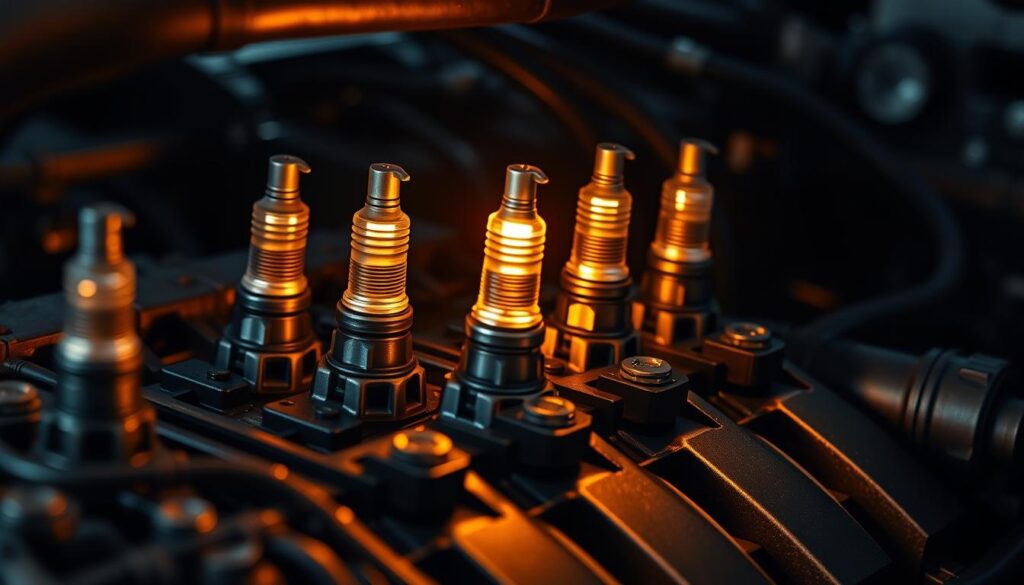
Begin by following a step-by-step check routine. First, use a scan tool to get live data and note misfire counts per cylinder. Then, test coil resistance with a multimeter and compare it to GM specs.
Use an inline spark tester or oscilloscope to check spark under load. If everything looks good, do compression or leakdown tests to check for mechanical issues.
Check connectors and harnesses for corrosion, broken pins, or loose clips. Make sure coil packs and spark plugs are installed correctly, following the 5.3 chevy engine firing order. Swapping a coil pack will move the misfire. Swapping a plug wire or placing spark plugs incorrectly will cause similar issues.
Check crank and cam sensor signals if misfires are intermittent. Timing problems can also mimic firing order faults. Look at cam and crank timing marks, listen for a timing-chain rattle, and check for slack or stretched guides. If timing is off, it can affect firing events, even if the chevy 5.3 spark plug firing order is correct.
Use the list below for practical DIY versus pro decisions.
- DIY: coil swap tests, replacing coils and spark plugs, wiring inspections, basic spark tests, and primary compression checks.
- Professional: timing-chain replacement, head gasket or valve work, ECU reprogramming, and diagnosing intermittent crank/cam sensor faults with advanced tools.
When fixing issues, document your findings and label parts by cylinder. This helps avoid mistakes when reinstalling items in the correct 5.3 chevy engine firing order. For complex diagnostics, get a technician with factory-level scan tools or an oscilloscope to find elusive faults.
Conclusion
The chevy 5.3 firing order is key for fixing and improving GM V8 truck engines. Knowing this order helps find misfires, place coil packs right, and check timing during repairs.
Even though different models like LM7, LH6, LC9, and Ecotec3 L86/L83 have unique features, their firing order stays the same. This makes swapping parts and fixing issues easier for everyone.
For upkeep, change plugs or coils one at a time and label parts to avoid mistakes. For performance boosts, match cam choices, fuel upgrades, and ECU tuning to keep timing right. If you’re unsure about timing or engine issues, get a pro to check cam and crank alignment to avoid big problems.
FAQ
What is the firing order for a Chevy 5.3 V8 engine?
Most GM 5.3‑liter V8s, like Gen III/IV and Ecotec3 Gen V, follow the firing order 1‑8‑7‑2‑6‑5‑4‑3. This pattern is key for smooth engine operation and correct ignition timing.
Why does the firing order matter for smoothness and reliability?
The firing order affects when each cylinder fires. The LS pattern ensures even firing intervals. This reduces engine noise and stress, making the engine run smoother.
Wrong firing order can cause misfires, a rough idle, and power loss.
How are cylinders numbered on a Chevy 5.3 engine?
Looking at the engine from the front, cylinder #1 is on the driver side. Driver side cylinders are 1, 3, 5, 7 from front to rear. Passenger side cylinders are 2, 4, 6, 8 from front to rear. Always check the factory service manual if unsure.
Do LM7, LH6, LC9 and Ecotec3 5.3 engines use the same firing order?
Yes. Despite differences in materials and technology, the firing order is the same for all these 5.3 engines: 1‑8‑7‑2‑6‑5‑4‑3.
How should coils and spark plugs be handled to avoid messing up the firing order?
Change plugs and coils one cylinder at a time. For coil‑on‑plug engines, remove one coil, change the plug, and put back the same coil. Label parts when needed.
For older engines, swap and route one wire at a time following the 1‑8‑7‑2‑6‑5‑4‑3 sequence.
What are common symptoms when the firing order or coil mapping is wrong?
Look for cylinder‑specific misfire codes (P0301–P0308), a rough idle, hesitation, uneven acceleration, and lower fuel economy. If a misfire moves with a swapped coil, the coil or mapping is likely wrong.
How do cam/crank timing and the firing order interact?
The firing order tells when each cylinder fires. Cam and crank timing ensure valves open and close correctly. Wrong timing can cause misfires, low power, and engine damage.
What basic tests isolate firing‑order related misfires?
Use a scan tool to read misfire counts. Swap coils to see if the misfire moves. Check coil resistance and spark with an inline tester.
Perform compression or leak‑down tests to check for mechanical issues. Verify wiring, crank/cam sensor signals, and correct coil‑to‑cylinder mapping.
Are there recommended spark plugs and gaps for the 5.3 engines?
Use OEM‑specified plugs, like iridium or platinum, and the gap in the factory service manual—usually around 0.040 in. Confirm the gap for your year and model.
Follow the manufacturer’s torque value for plugs. Avoid anti‑seize unless allowed. For performance builds, follow NGK or AC Delco recommendations.
When should a DIYer call a professional for firing‑order or timing issues?
DIY work is okay for coil swaps, plug changes, basic spark tests, and simple wiring checks. But, call a professional for complex timing‑chain repairs, internal mechanical failures, ECU reprogramming, or tuning.
Also, seek help for intermittent crank/cam sensor faults and any diagnostic needing an oscilloscope or factory‑level scan tools.