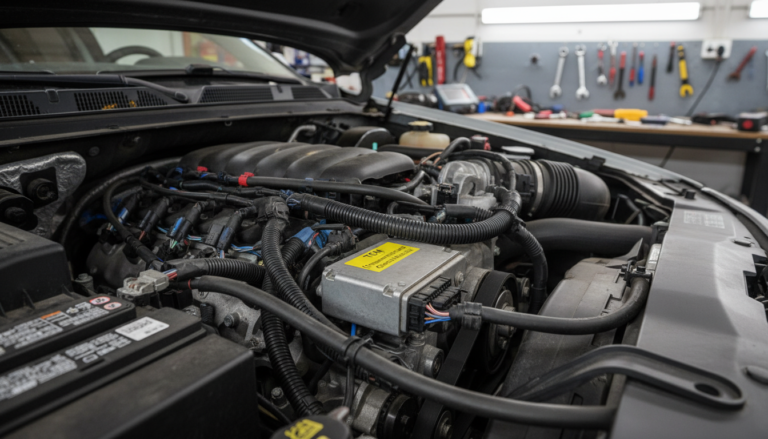
The Definitive Guide to Chevy 5.3 firing order, Cylinder Layout, and Ignition Timing
What is the Chevy 5.3 Firing Order?
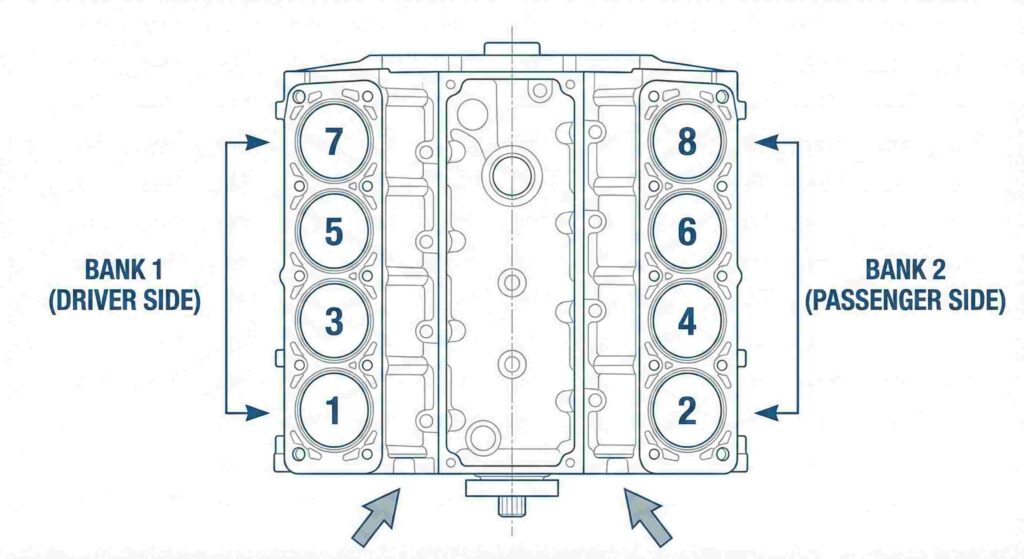
For almost every Chevrolet 5.3L V8 engine produced from 1999 to present (including the Vortec 5300 and EcoTec3 families), the firing order is identical. This sequence is controlled by the Powertrain Control Module (PCM) and executed by the coil-near-plug ignition system.
The Firing Sequence:
1 — 8 — 7 — 2 — 6 — 5 — 4 — 3
Unlike older Small Block Chevys (Gen I) which used the 1-8-4-3-6-5-7-2 order, the modern LS-based architecture swaps cylinders 4/7 and 2/3. This change was engineered to smooth out crankshaft harmonics and improve engine balance at higher RPMs.
Cylinder Numbering and Bank Layout
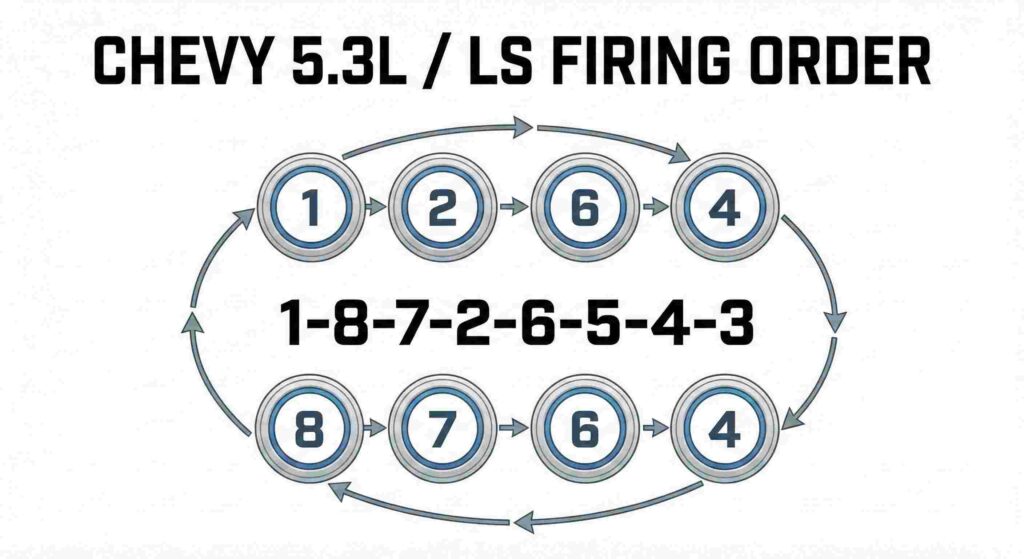
Correctly identifying cylinder locations is critical before removing any spark plug wires or coil packs. GM uses a standard numbering convention that differs from Ford or Dodge.
Bank 1 (Driver Side)
- Located on the left side of the vehicle (when sitting in the driver’s seat).
- Contains all Odd numbered cylinders.
- Cylinder 1 is the furthest forward (closest to the radiator).
- Sequence (Front to Rear): 1, 3, 5, 7.
Bank 2 (Passenger Side)
- Located on the right side of the vehicle.
- Contains all Even numbered cylinders.
- Cylinder 2 is the furthest forward.
- Sequence (Front to Rear): 2, 4, 6, 8.
Tech Tip: If you are diagnosing a “P0303 Misfire,” you immediately know to check the second cylinder back on the driver’s side.
Ignition System: Coil-Near-Plug Explained
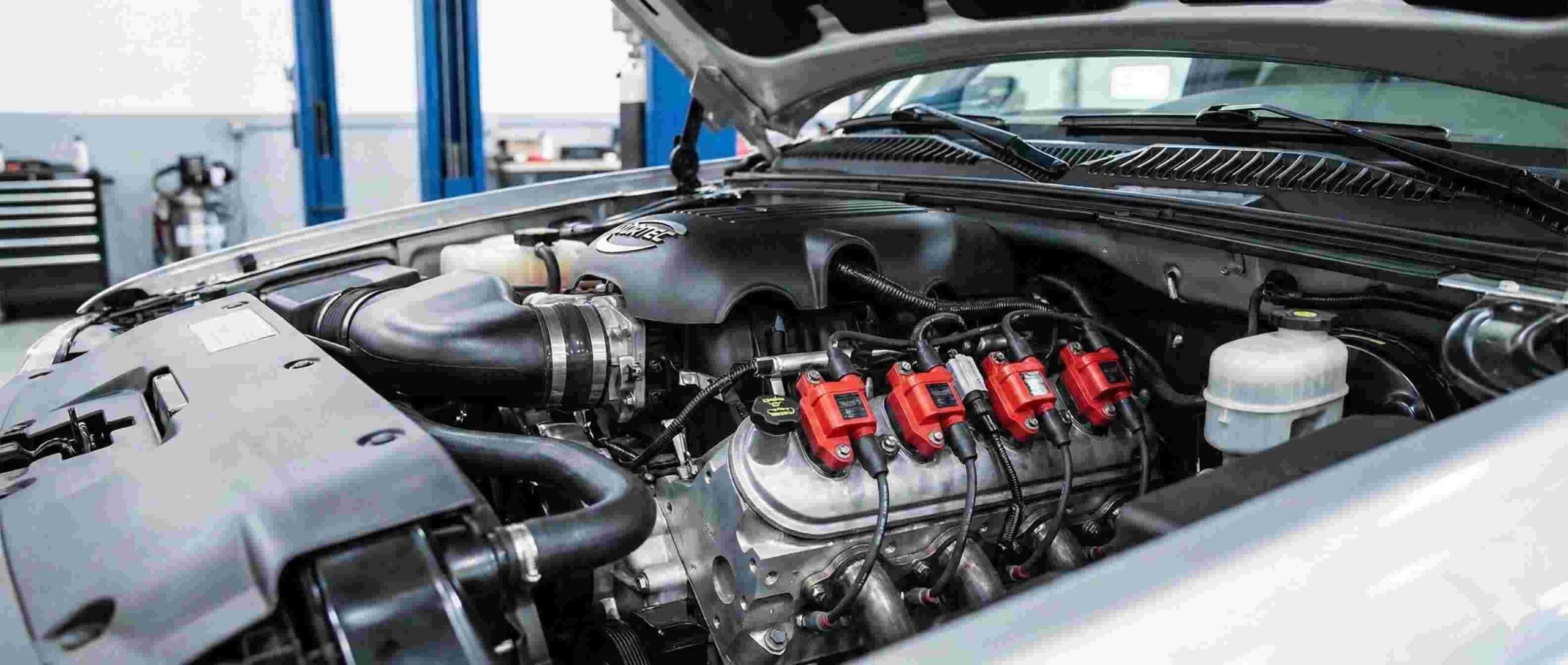
The Chevy 5.3 utilizes a Distributorless Ignition System (DIS) known as “coil-near-plug.” Instead of a central distributor sending spark through long wires, eight individual ignition coils sit directly on the valve covers.
This setup increases reliability, but it also introduces specific failure points. The PCM relies on the Crankshaft Position Sensor (CKP) and Camshaft Position Sensor (CMP) to determine exactly when cylinder #1 is at Top Dead Center (TDC) on the compression stroke. If these sensors fail or fall out of sync, the firing order cannot be executed correctly, often resulting in a “crank-no-start” condition.
Common Signs of Improper Wire Routing
If you have recently performed a tune-up and the engine is running rough, check for these symptoms of crossed wires:
- Backfiring: Loud popping sounds from the intake or exhaust.
- Rough Idle: The engine shakes visibly in the bay.
- Flashing Check Engine Light: Indicates a severe catalyst-damaging misfire.
🔧 Chevy 5.3L (Gen III/IV/V) Quick Torque & Gap Specs
- Spark Plug Gap: 0.040″ (1.016 mm) — Use Iridium plugs (ACDelco 41-110 or 41-162)
- Spark Plug Torque: 11 lb-ft (15 Nm) — Do not over-tighten into aluminum heads!
- Ignition Coil Bracket-to-Valve Cover Bolts: 89 lb-in (10 Nm)
- Ignition Coil-to-Bracket Bolts: 89 lb-in (10 Nm)
- Intake Manifold Bolts (if checking injectors): 44 lb-in (First Pass) -> 89 lb-in (Final Pass)
🛠️ Required Tools for 5.3L Ignition Service
- 10mm Socket & Ratchet: For removing the ignition coil brackets and coil packs.
- 5/8″ Spark Plug Socket: Highly Recommended: Use a swivel/magnetic socket. The passenger side rear cylinders (#8) are tight against the firewall, and a standard socket is difficult to maneuver.
- Torque Wrench (in-lbs & ft-lbs): Essential. The 5.3L has aluminum cylinder heads—over-tightening spark plugs by hand can strip the threads, turning a $50 job into a $2,000 cylinder head repair.
- Spark Plug Gap Tool: To verify the 0.040″ gap before installation (even on “pre-gapped” plugs).
- Dielectric Grease: Apply a small bead inside the spark plug wire boot to prevent it from fusing to the ceramic insulator.
- OBDII Scanner: To identify specific cylinder misfire codes (e.g., P0301 vs P0300).
- Note on Anti-Seize: Do not use Anti-Seize on modern ACDelco Iridium plugs. They feature a special zinc-coating that prevents corrosion. Adding anti-seize alters the torque friction and leads to over-tightening.
Troubleshooting Misfires on the 5.3 Vortec
When the firing order is disrupted—either by incorrect wiring or a failed component—the diagnosis process should be systematic:
- Verify Wire Routing: Ensure the short spark plug wire connects the coil directly above the plug to that specific plug. On the 5.3L, it is physically difficult to cross wires due to their short length, but aftermarket wires may allow for errors.
- Swap Coils: If Cylinder 1 is misfiring, swap the coil pack with Cylinder 2. If the misfire moves to Cylinder 2, the coil is bad.
- Check Injector Harness: Ensure the fuel injector connectors correspond to the correct cylinders. These can sometimes be swapped during intake manifold reinstallation.
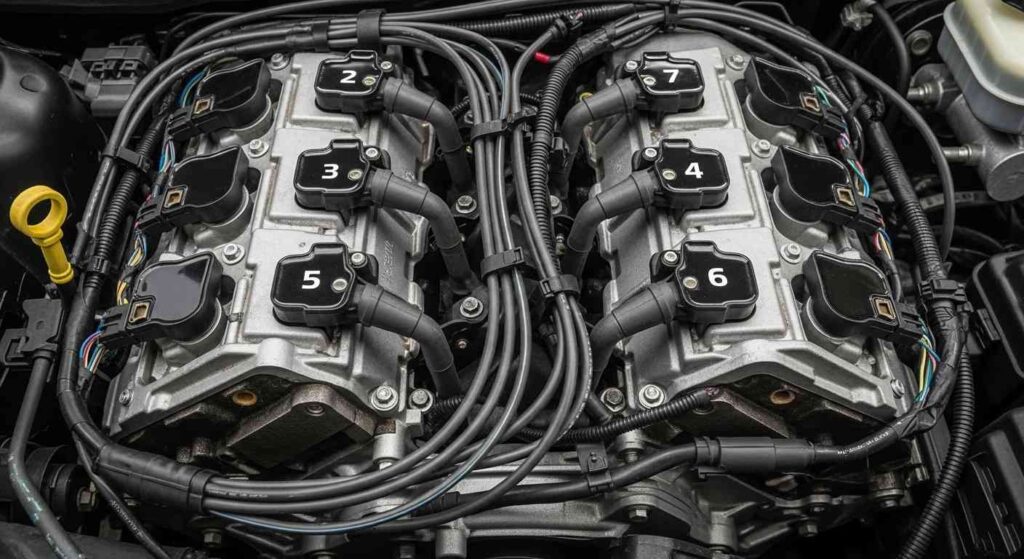
The “5.3L Misfire Cheat Sheet”
| Trouble Code / Symptom | Likely Culprit | The “Swap Test” (How to Verify) | Difficulty |
| P0301 – P0308 (Specific Cylinder) | Bad Ignition Coil or Spark Plug | Swap the coil pack with the cylinder next to it. Clear codes and drive. If the code moves (e.g., P0301 becomes P0303), the coil is bad. | 🟢 Easy |
| P0300 (Random/Multiple) | Vacuum Leak or Low Fuel Pressure | Spray carb cleaner around the Intake Manifold Gaskets (common 5.3L failure) while idling. If RPM spikes, you found the leak. | 🟡 Moderate |
| Misfire + Ticking/Chirping Noise | AFM Lifter Failure | Stop immediately. If the ticking is loud and coming from one side, a lifter may have collapsed (common on AFM engines). Swap test won’t fix this. | 🔴 Hard |
| Misfire Under Load (Driving up hills) | Spark Plug Wire or Clogged Injector | Inspect plug wires for white burn marks or cracks. If wires look good, swap the fuel injector to another cylinder to see if the miss follows. | 🟡 Moderate |
Pro Tip: If you have a 2007-2013 model (Gen IV) and see a misfire on Cylinder 1, 4, 6, or 7, be very careful. These are the AFM (Active Fuel Management) cylinders. A misfire here combined with oil consumption often means a stuck lifter, not just a bad spark plug. Check your oil level first!
The “AFM” Nightmare: Repair or Delete?
If your misfire is on Cylinders 1, 4, 6, or 7 and you hear a ticking sound, your Active Fuel Management (AFM) system has likely failed.
The AFM system works by collapsing the lifters on these specific cylinders to shut them off and save fuel. However, these lifters are the weak point of the 5.3L engine. When they get stuck or collapse permanently, they can wipe out your camshaft.
You have three options. Here is the honest breakdown of what actually works:
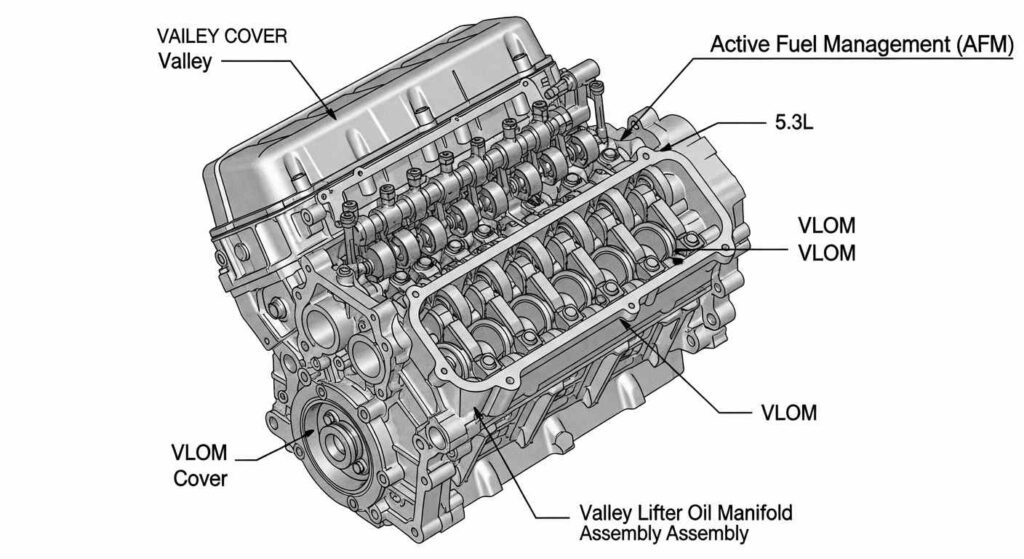
Option 1: The “Band-Aid” (Software Disable)
- What it is: Using an OBDII plug-in device (like Range Technology) or a custom tune to tell the computer “Never turn off cylinders.”
- Cost: Low ($200 – $400)
- Verdict: Preventative Only. If your lifter has already failed (ticking noise), this will not fix it. This only stops healthy lifters from cycling and failing later.
Option 2: The “Factory Reset” (Stock Repair)
- What it is: Replacing the bad lifters and camshaft with standard GM parts.
- Cost: High ($1,500 – $2,500 Parts & Labor)
- Verdict: Risky. You are replacing a failed part with the exact same design that failed in the first place. Many owners report the same issue returning 50,000 miles later.
Option 3: The “Forever Fix” (Full DOD/AFM Delete)
- What it is: Physically removing the AFM hardware. This requires a “Delete Kit” which includes:
- Non-AFM Camshaft
- Standard LS7 Lifters (Non-collapsible)
- Non-AFM Valley Cover
- ECU Reprogramming
- Cost: Moderate to High ($800 Parts + Labor)
- Verdict: The Winner. This effectively turns your engine into a standard, bulletproof LS motor. It will never suffer an AFM failure again.
Expert Advice: If you plan to keep the truck for another 5 years, do the Full Delete. Don’t waste money putting stock AFM lifters back in. It’s like fixing a flat tire with duct tape—it will leak again. Just convert it to a standard V8 and enjoy the peace of mind.
Frequently Asked Questions
1. Is the firing order different for the 5.3L EcoTec3 (2014+) vs. the older Vortec?
No. The firing order remains 1-8-7-2-6-5-4-3 for both Gen IV (Vortec) and Gen V (EcoTec3) engines. The cylinder numbering layout is also identical.
2. Can I use the old Small Block Chevy firing order on a 5.3L LS swap?
No. The camshaft grind on the 5.3L LS engine determines the valve events. Using the old 1-8-4-3… order would result in the engine not running and potential internal damage.
3. Which cylinder is Cylinder #1 on a Chevy 5.3?
Cylinder #1 is the front-most cylinder on the Driver’s Side. It is usually slightly forward of Cylinder #2 on the passenger side due to the connecting rod offset on the crankshaft.
4. Does the distributor rotation matter on a 5.3L?
The 5.3L engine does not have a distributor. It uses a computer-controlled coil-on-plug system. Therefore, “distributor rotation” is not applicable.
5. What causes a P0300 Random/Multiple Cylinder Misfire code?
This code usually indicates a systemic issue rather than a single cylinder failure. Common causes on the 5.3L include low fuel pressure, a vacuum leak (often intake gaskets), or a faulty Mass Air Flow (MAF) sensor, affecting the entire firing sequence.