2012 Chevrolet Cruze Oil Capacity & Oil Type (1.4L vs 1.8L)
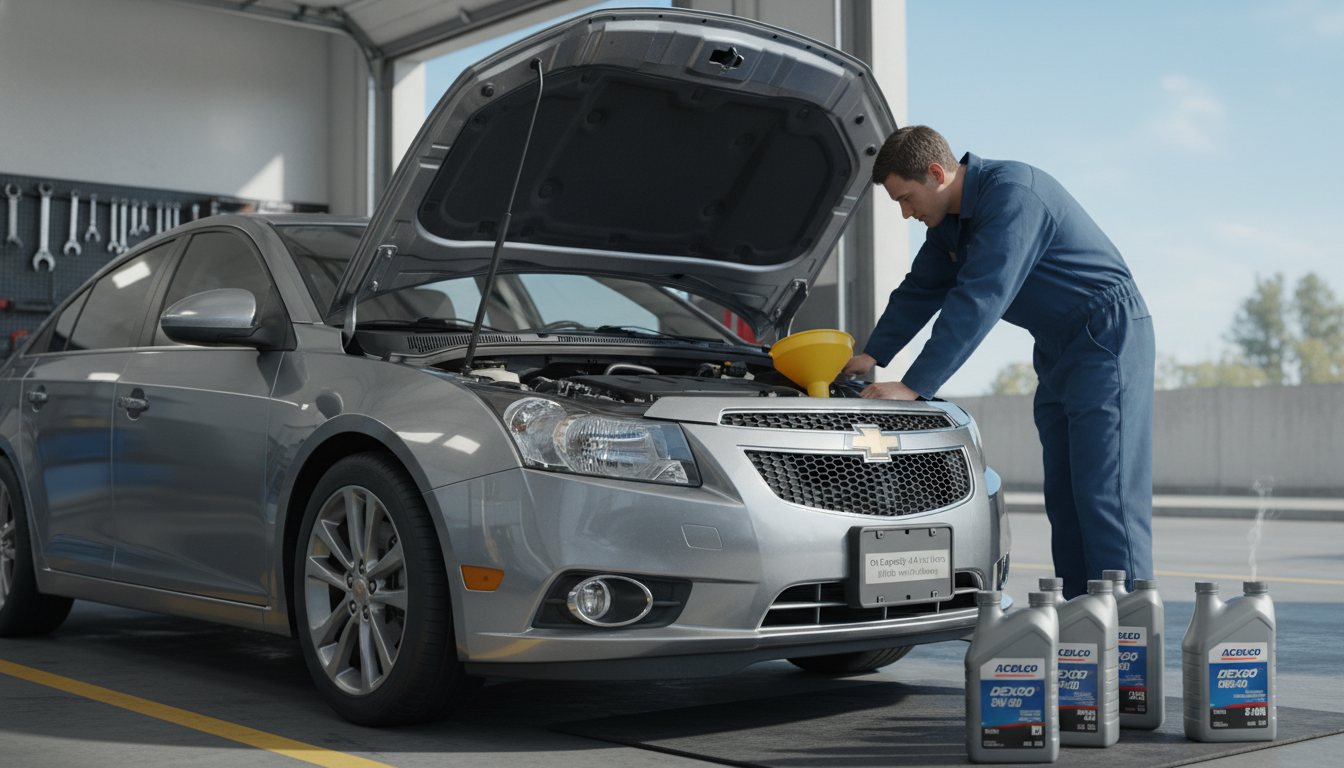
Before you pull the drain plug on your 2012 Chevy Cruze, you need to know exactly which engine is under the hood. Chevrolet offered two different 4-cylinder engines this year, and guessing your oil capacity is a fast way to overfill the crankcase and blow out the notorious Ecotec PCV valve.
The Exact Oil Capacities (with filter change):
- 1.4L Turbo Engine (Ecotec): Requires 4.2 Quarts (4.0 Liters).
- 1.8L Engine (Naturally Aspirated): Requires 4.8 Quarts (4.5 Liters).
The Right Oil Type: Regardless of which engine you have, GM strictly requires 5W-30 Full Synthetic motor oil. More importantly, you must look for the “dexos1™ Gen 2 or Gen 3” certification logo on the bottle. Using conventional oil or non-dexos approved fluids can lead to rapid turbocharger failure and excessive timing chain wear.
Pro Tip: Never blindly dump all 5 quarts from the jug into the engine. Pour in 4 quarts, start the engine for 30 seconds to fill the new oil filter, turn it off, and use the dipstick to top off the exact remaining amount.
2012 Chevrolet Cruze Oil Capacity
Keeping the correct fluid level in your Cruze engine is critical to avoid premature wear and costly repairs. The vehicle was engineered with tight tolerances, so the recommended volume must be followed to maintain performance and longevity.
Why precision matters: Proper lubrication prevents metal-on-metal contact and reduces sludge buildup. That lowers the long-term price of engine repairs and keeps service intervals predictable.
Owners should monitor levels between fill-ups and follow manufacturer guidance at every scheduled service. Simple checks prevent many common failures and help the engine run efficiently under varied driving conditions.
| Focus | Action | Benefit |
|---|---|---|
| Level accuracy | Check with dipstick before and after drive | Prevents overfill or low-lube wear |
| Regular service | Follow scheduled maintenance | Extends engine life and lowers price of repairs |
| Product choice | Use recommended grade and type; see guidance | Optimal protection and performance |
For guidance on recommended product types and detailed specs, consult the linked resource on chevy cruze oil type before your next service.
Engine Specifications and Fluid Requirements
Each engine variant in the Cruze lineup requires a precise fluid fill to maintain reliability and efficiency. Below are the common specs for the two main powerplants and a quick service note to help plan maintenance.
1.4L Turbo Engine Specs
The 1.4L turbo engine found in many 2012 chevrolet cruze models takes 4.2 quarts of high‑quality synthetic engine oil for a standard change. This turbo unit is sensitive to the selected oil type, so use the manufacturer‑recommended viscosity to protect the turbocharger and bearings.
1.8L Naturally Aspirated Engine Specs
The 1.8L naturally aspirated engine requires 4.8 quarts of oil to ensure full lubrication during service. For the 1.8L LTZ Sedan, note the coolant fill of 6.3 liters when doing broader cooling system work.
| Engine | Type | Quarts Required | Service Note |
|---|---|---|---|
| 1.4L | Turbo | 4.2 quarts | Use recommended synthetic viscosity |
| 1.8L | Naturally aspirated | 4.8 quarts | Verify level after warm idle |
Tip: Confirm the exact engine code before topping off to avoid the high price of incorrect fills during service.
Why Full Synthetic Oil is Essential for Your Engine
Engines with tight tolerances need advanced lubricants to stay clean and perform as designed under stress.
Full synthetic motor oil offers superior heat resistance and keeps moving parts protected during hard driving. Modern engines benefit from this stability because conventional motor oil can break down faster at high temperatures.
The GM dexos1 gen 3 approval matters. It confirms the synthetic oil meets strict tests for sludge control and turbocharger bearing protection. Using an approved product reduces the chance of costly engine service later.
Consistent use of high‑quality synthetic oil extends component life and cuts long‑term price of repairs. That makes the right lubricant a practical investment in reliability and resale value.
| Benefit | Why it matters | Result |
|---|---|---|
| Heat stability | Synthetic resists breakdown | Cleaner engine, fewer deposits |
| Turbo protection | Stable film at high RPMs | Longer turbo life |
| Service cost control | Less wear and sludge | Lower repair price over time |
Selecting the Right Motor Oil Brand
C. Not all synthetic products are equal; brand approvals and testing make a big difference for engine longevity.
Choose brands that carry dexos1 gen approval to ensure proper protection for Chevrolet vehicles. Trusted names like Mobil 1 and Valvoline supply high‑performance synthetic motor oil that meets those standards.
Top-rated options give better thermal stability and keep deposits low. That protects the engine during highway runs and city stop‑and‑go driving.
Top Rated Synthetic Options
Why pick a dexos1-approved brand: it reduces the risk of premature wear and avoids costly repairs later. Premium products also help maintain performance across different models and driving styles.
| Brand | Approval | Benefit |
|---|---|---|
| Mobil 1 | dexos1 gen | High heat resistance, long drain intervals |
| Valvoline | dexos1 gen | Strong detergency, consistent protection |
| Other OEM-approved | dexos1 variants | Matched specs for factory service |
For recommended oil guidance and comparisons, review the recommended oil guidance before your next service to select the best oil and avoid higher repair price later.
Importance of Using Quality Oil Filters
A quality oil filter is the unsung part that keeps contaminants out and pressure steady during every run. It affects lubrication, wear rates, and long‑term engine protection.
Cartridge Filter Design
Cartridge filters use replaceable media inside a housing. They provide stable flow and better sealing than older spin‑on types.
Benefit: Cartridge designs reduce collapse risk and help maintain correct oil pressure for modern engines.
OEM Versus Aftermarket
For the 2012 chevrolet cruze the ACDelco PF2257G is the recommended OEM filter to ensure proper pressure and fit.
Many aftermarket filters may not meet factory specs, which can cause leaks or failed filtration and raise repair price over time.
Replacing the O-Ring
Always replace the rubber O‑ring when doing a cruze oil change. A fresh O‑ring prevents leaks and keeps pressure steady after service.
Neglecting this small step can lead to oil loss, engine damage, and higher service costs.
| Filter Type | Model Example | Service Life | Key Advantage |
|---|---|---|---|
| OEM Cartridge | ACDelco PF2257G | 7,500 miles | Exact fit, reliable pressure |
| Premium Aftermarket | Branded alternatives | 5,000–7,500 miles | Cost savings, variable specs |
| Economy Aftermarket | Low-cost options | 3,000–5,000 miles | Lower price, higher risk |
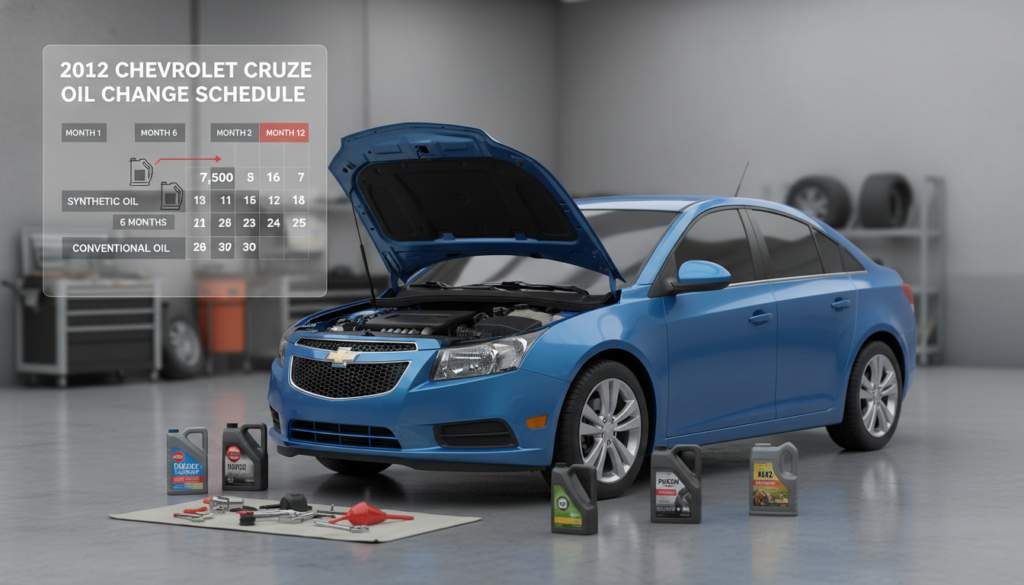
Recommended Oil Change Intervals for Peak Performance
Sticking to recommended mileages for oil changes protects the turbo and preserves fuel economy.
1.4L engine: Change the oil every 5,000 miles to prevent turbocharger feed‑line clogging and keep performance consistent.
1.8L engine: Under normal driving, the engine can go about 7,500 miles between service intervals with quality synthetic oil and a proper oil filter.
Driving conditions affect how often you should change motor oil. Short trips, heavy towing, or frequent idling shorten oil life. Monitor engine behavior and check levels more often in harsh use.
| Engine | Recommended Interval | Key Benefit |
|---|---|---|
| 1.4L turbo | 5,000 miles | Protects turbo feed lines and fuel economy |
| 1.8L naturally aspirated | 7,500 miles | Longer intervals with synthetic oil |
| All vehicles | Adjust by driving conditions | Immediate savings by avoiding major repairs |
Tip: Use a dexos1 gen‑approved synthetic oil and a high‑quality oil filter to reduce the price of future engine service and keep the cruze oil change routine simple and effective.
Monitoring Your Oil Level with the Dipstick
Using the dipstick correctly gives a clear snapshot of the engine’s lubrication health after a service. Always park the car on level ground and let the engine sit for several minutes after shutdown. This yields the most accurate reading.
Pull the dipstick, wipe it clean, reinsert fully, then remove it to read the marks. If the engine requires 4.2 quarts, confirm the mark rests between the minimum and maximum. Do this after an oil filter change to avoid underfilling.
Why check often: Regular dipstick checks catch leaks early and prevent the high price of engine damage caused by low oil. A quick look before longer trips protects components and supports reliable driving.
| Action | When | Benefit |
|---|---|---|
| Dipstick check | Weekly or before long trips | Detects low level and leaks early |
| After filter change | Immediately post-service | Ensures correct volume and avoids overfill |
| Top off if low | As needed | Saves on future repair price |
Common Signs of Oil Leaks and Engine Wear
A quick daily check can reveal leaks or wear long before they become costly repairs. Watch for blue smoke from the exhaust, new stains under the vehicle, or a steady drop in fuel economy.
If you spot stains or smell burning, the motor oil may be escaping from a seal or hose. Get prompt service to protect the engine and avoid a high repair price.
Listen for unusual noises and note any loss of power during normal driving. These are practical signs the engine is suffering wear or that a clogged filter is reducing performance.
A degraded motor oil or blocked filter raises operating temperature and harms fuel economy. Addressing issues early keeps running costs down and preserves long‑term protection.
| Sign | Likely Cause | Recommended Action |
|---|---|---|
| Blue exhaust smoke | Burning oil in combustion | Inspect seals; schedule service |
| Oil spots under car | Leaky gasket or hose | Repair leak to avoid engine wear |
| Drop in fuel economy | Degraded oil or clogged filter | Change motor oil and filter; test performance |
Tip: Regular visual checks of the engine bay are a low‑effort way to catch problems early and reduce the chance of a major price increase for repairs.
Cruze Oil Filter & Drain Plug Size Guide
Knowing the oil capacity is only half the battle. Before you slide under the car, make sure you have the exact tools required for the 2012 Chevy Cruze, as it uses some specific European-style fasteners.
- The Oil Filter Socket (24mm): Both the 1.4L and 1.8L engines use a top-mounted cartridge-style oil filter. You will need a 24mm socket to safely remove the plastic filter cap. Warning: Do not use adjustable pliers, or you will crack the plastic housing, resulting in a massive oil leak.
- The Drain Plug (T45 Torx or 10mm): Unlike standard hex bolts on older trucks, the 1.4L Ecotec engine typically uses a T45 Torx bit for the oil pan drain plug. Some variations (especially the 1.8L) may use a 10mm Allen/Hex bit. Check your oil pan before starting to ensure you have the right bit.
- Torque Specs: When putting things back together, do not overtighten. The plastic oil filter cap only requires about 18 ft-lbs (25 Nm), and the drain plug should be snugged to just 10 ft-lbs (14 Nm).
Conclusion
Using the right motor oil and a quality filter is the single best step to extend engine life.
Keep to recommended quarts for your model, pick a dexos1 gen‑approved synthetic oil, and replace the oil filter at each service. These simple choices support performance and reduce long‑term repair cost.
Routine changes protect turbochargers and help many vehicles reach intervals like 7,500 miles with confidence. Follow the owner’s manual for exact service specs for each engine and consult trusted brands when selecting products.
Correct maintenance delivers immediate savings by avoiding major work later. With steady care, your 2012 chevrolet cruze will remain reliable and efficient for years to come.
FAQ
How much oil does a 1.4L turbo Cruze take?
For the 1.4L turbo engine, fill the crankcase with about 4.2 quarts (with filter change). Use the dipstick to confirm level after warm-up and short idle; top off if needed.
What about the 1.8L naturally aspirated engine — how many quarts?
The 1.8L naturally aspirated engine typically requires around 4.0 quarts with a new filter. Always check the dipstick and follow the owner’s manual for exact fill and level procedure.
Is full synthetic oil necessary for these engines?
Yes. Full synthetic oils improve cold starts, thermal stability, and turbo protection while reducing wear. They also help maintain fuel economy and interval performance compared with conventional oils.
What oil specification should I look for?
Choose an oil meeting Dexos1® Gen 2 (or later) where available and SAE viscosity recommended in the owner’s manual, commonly 5W-30. That standard ensures compatibility with emissions systems and turbochargers.
How often should I change the oil and filter?
Under normal driving, change full synthetic oil and the filter every 7,500 miles or 12 months. For severe conditions — frequent short trips, towing, or lots of stop-and-go — shorten intervals to 3,000–5,000 miles.
Should I use OEM or aftermarket oil filters?
OEM filters match the factory cartridge design and specifications, offering reliable sealing and bypass characteristics. High-quality aftermarket filters can be acceptable if they meet OEM specs and use proper O-rings.
What maintenance steps prevent oil leaks after a filter change?
Replace the filter O-ring and lightly oil it before installation, torque the housing to spec, and inspect the drain plug and gasket. Check for leaks after a short drive and re-torque if the manufacturer advises.
How can I monitor oil level correctly?
Park on level ground, run the engine until warm, shut off and wait a few minutes, then use the dipstick. Wipe, reinsert fully, and read the level between the low and full marks. Add small amounts if required.
What are common signs of low oil or engine wear?
Warning signs include the low-oil indicator, knocking or ticking noises, increased oil consumption, visible leaks under the vehicle, and reduced performance. Address these early to prevent severe damage.
Can using wrong viscosity harm the engine?
Yes. Using oil that’s too thin can reduce protection at high temperatures; too thick oil can increase drag and reduce fuel economy. Stick to the recommended SAE grade and Dexos1 compliance when possible.