2002 Chevy Silverado Transmission Control Module Location (The PCM Secret)
If your 2002 Chevy Silverado is slamming into gear, stuck in “limp mode,” or refusing to shift, you are likely hunting for the Transmission Control Module (TCM). However, many owners spend hours searching under the dash or passenger seats for a module that doesn’t actually exist.
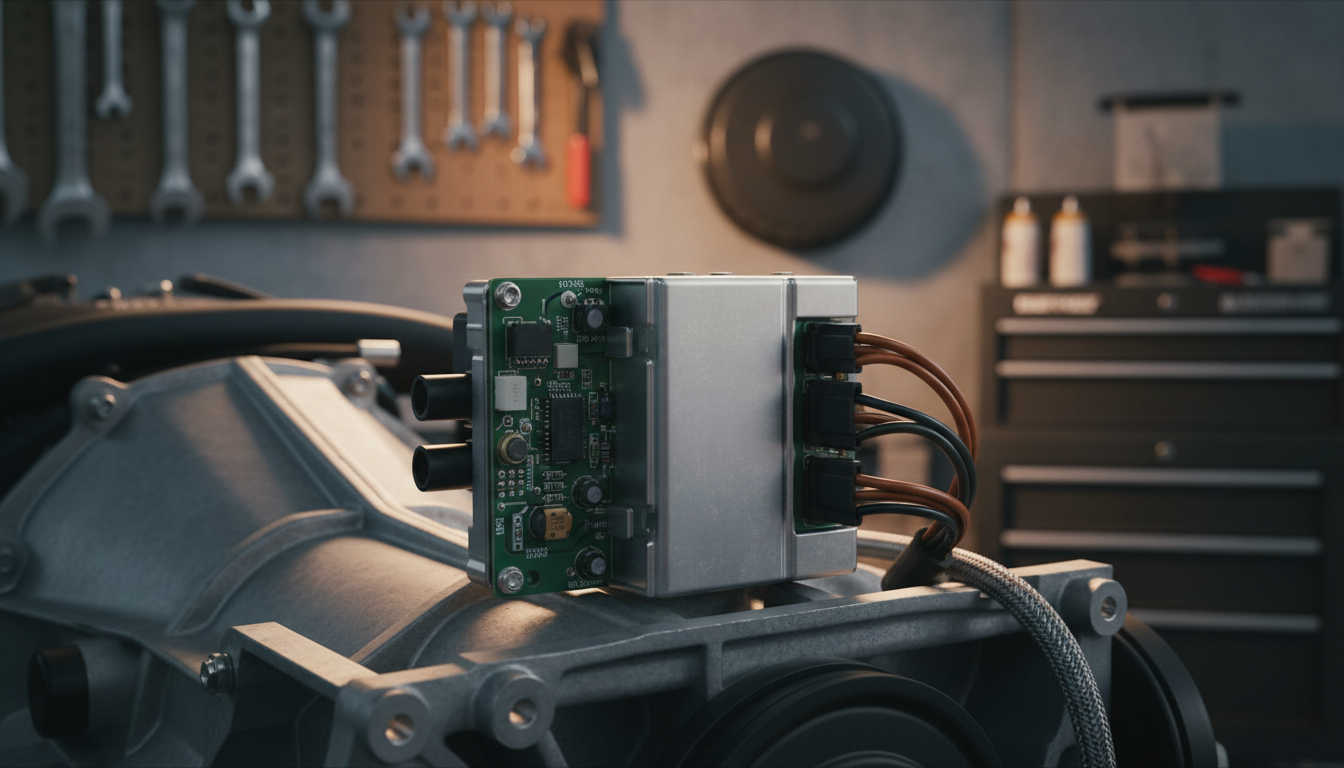
The Big Secret: The 2002 Chevy Silverado does not have a standalone Transmission Control Module. Instead, the transmission is controlled directly by the Powertrain Control Module (PCM), which serves as the electronic brain for both the engine and the transmission.
Where to Find It: To inspect, test, or replace the unit controlling your transmission, you need to locate the PCM.
- Location: Under the hood, on the driver’s side.
- Specific Spot: Tucked vertically between the battery and the radiator fan shroud, usually protected by a black plastic dust cover. It has two large wiring harness connectors (typically one red/green and one blue).
Before You Replace the Computer: PCM failures are relatively rare. Before you spend hundreds of dollars on a newly flashed computer, remember that harsh shifting on the 4L60E or 4L80E is much more commonly caused by a failing ground wire, a blown ignition fuse, or bad shift solenoids located inside the transmission pan.
Top Symptoms of a Bad Silverado PCM
Because the 2002 Silverado uses the PCM to control both the engine and the 4L60E/4L80E transmission, a failing computer will usually trigger multiple chaotic symptoms at once. Before replacing the unit, look for these telltale signs:
- No “Check Engine” Light at Key-On: When you turn the key to the “ON” position (without starting the engine), the Check Engine light should illuminate. If the dash is completely dark, the PCM might not be getting power, or the unit is dead.
- Stuck in “Limp Mode”: The transmission refuses to shift out of 2nd or 3rd gear, locking you into a single gear to prevent further mechanical damage.
- Erratic Shifting & Engine Stalling: You experience harsh, banging shifts accompanied by random engine stalling or sputtering at highway speeds.
- U-Codes (Communication Errors): If you plug in an OBD2 scanner and get a “U0100” code (Lost Communication with ECM/PCM), the computer is failing to talk to the rest of the truck.
How to Test the 4L60E Shift Solenoids (Before Blaming the PCM)
If your Silverado is shifting harshly or refusing to go into specific gears (like missing 1st and 4th), the issue is almost always a faulty shift solenoid inside the transmission, not the PCM.
Here is how you can verify it:
- Drop the Pan: You will need to drain the transmission fluid and drop the transmission pan to access the valve body.
- Locate the Solenoids: At the rear of the valve body, you will see two identical plastic cylindrical parts plugged in side-by-side. These are the 1-2 (A) and 2-3 (B) shift solenoids.
- Use a Multimeter: Set your digital multimeter to test for resistance (Ohms/Ω). Touch the probes to the two metal pins inside the solenoid connector.
- Read the Numbers: A healthy OEM shift solenoid should read between 20 and 30 Ohms. If you get a reading of “OL” (Open Line) or something below 20 Ohms, the solenoid is shorted or fried and must be replaced.
Chevy Silverado U0100 Code: Lost Communication with PCM (How to Diagnose)
The U0100 code on a Chevy Silverado is an absolute heart-sinker. You turn the key, the dash lights up with warnings like “Service StabiliTrak” or “Engine Power Reduced,” the PRNDL gear indicator completely disappears, and the truck refuses to crank. This code means that the other computers in your truck (like the Body Control Module or ABS) have entirely lost communication with the Powertrain Control Module (PCM) via the CAN bus network.
⚠️ The Golden Rule of U0100: Do Not Buy a New PCM Yet When faced with a U0100 code, the immediate reaction of many mechanics is to condemn the PCM and order a $500 replacement. Stop. A totally dead computer is rarely the root cause. In 90% of Silverado cases, the PCM is perfectly fine, but it is effectively “offline” because it is missing power, missing a ground, or has a severed communication wire.
The Silverado U0100 Diagnostic Checklist
Before you even think about replacing modules or towing the truck to a dealership, grab a multimeter and check these three notorious Silverado weak points:
- The Under-Hood Fuses: The PCM needs power to wake up. Open your under-hood fuse box and test the ECM/PCM fuses and relays (often labeled ECM-B, ECM-1, or IGN). A $2 blown fuse will completely shut down the PCM network.
- The Frame and Block Grounds: Silverados (especially the 1999–2013 generations) are famous for rotting ground straps. Inspect the main ground wire connecting the back of the engine block to the firewall, and the grounds mounted to the frame directly under the driver’s side door. If the PCM cannot ground out, it cannot turn on.
- Corroded PCM Connectors: Locate the PCM under the hood. Disconnect the negative battery terminal, then unplug the large connectors at the PCM. Look for green corrosion, water intrusion, or bent pins. Water dripping into the harness is a common killer of CAN bus communication.
The Role of the Transmission Control Module
A vehicle’s shift behavior comes from a small electronic unit that reads engine and transmission fluid sensors. It collects data from the throttle, brakes, and speed sensors and then decides when to change gears.
What is a TCM?
The transmission control module is the system brain that links sensors to actuators. The TCM interprets signals and sends precise commands so the gearbox shifts at the right time. If you do not even know what a TCM does, it is a critical module for your car’s performance over the years.
How it impacts shifting
When the unit reads a faulty sensor or a burnt smell appears, shift timing can go wrong. Poor fuel economy, hard shifts, or missed gear changes often trace back to a failing control module.
| Input | Processed By | Typical Effect |
|---|---|---|
| Engine RPM / Throttle | TCM | Smoother gear changes |
| Brake / Speed Switch | Control logic | Downshift or hold gear |
| Transmission fluid temp | Adaptive timing | Protects gearbox life |
When a problem arises, a trained technician will first check the transmission control module for diagnostic answers. For more detail on where the unit sits and how to access it, see where the transmission control module sits.
Identifying the 2002 Chevy Silverado Transmission Control Module Location
Locating the TCM early helps narrow down many shift and gear issues fast. Start with a visual sweep on the driver side under the hood near the windshield and fuse box.
Some trucks hide the unit under the left battery box up front. In other models the TCM is combined with the powertrain computer and sits near the engine computer or the transmission case.
Quick checks: inspect the fuse box for relays tied to transmission control. If you cannot see the unit, check near the valve body — that area often requires special tools and service time.
| Common Mounting Spot | Access Difficulty | Estimated Time | Notes |
|---|---|---|---|
| Driver side, near windshield / fuse box | Low | 10–20 minutes | Easy visual locate; check relays and fuses |
| Under left battery box, front of truck | Medium | 20–40 minutes | May be integrated with powertrain computer |
| Near engine computer / transmission case | Medium | 30–60 minutes | Watch connectors and mounts |
| Near transmission valve body (internal) | High | 1–2 hours | Requires special tools and professional service |
To locate TCM components accurately and avoid damage, consult your vehicle service manual before you start. That step answers many questions and saves time and headaches.
Common Symptoms of a Malfunctioning Control Module
A failing shift computer often shows itself through clear, repeatable driving issues.
Watch for warning lights and codes. An engine light with diagnostic trouble codes such as P0613, P0700, or P0706 is a primary signal that the transmission control module may be at fault.
If the vehicle refuses to leave neutral or stays stuck in first gear, this is an urgent sign. Slow or delayed shift feel and a drop in fuel economy are frequent symptoms that the control unit is not communicating with the engine and other systems.
A burning smell from the gearbox area is serious. That odor can mean overheating or slipping parts and needs professional service right away to avoid total failure.
Diagnostic trouble codes to watch for
| Symptom | Likely Code | Urgency | Suggested Action |
|---|---|---|---|
| Engine light on | P0700 / P0613 | Medium | Scan codes; clear and recheck |
| Stuck in neutral or 1st gear | P0706 | High | Inspect wiring; seek repair |
| Slow shifting / poor fuel economy | Various adaptive faults | Medium | Monitor; test communication |
| Burning smell from gearbox | No code often | Very High | Stop driving; get immediate service |
When these codes appear, the common answer is to test, reset, or replace the faulty transmission control module after confirming wiring and sensor health. Tracking symptoms over time helps pinpoint the number and root causes of problems and gives clear repair directions.
Methods for Resetting Your Transmission System
Reset steps often fix minor electronic shift issues fast. Try two simple methods before deeper diagnostics. Each takes only a few minutes and can answer whether you need further repair.
Accelerator pedal reset
Turn the key to the “On” position without starting the engine. Hold the accelerator fully for 15 seconds to activate the kickdown switch.
Release, then wait 2–3 minutes on some models before starting. This gives the transmission control module time to register the change.
Battery disconnection method
Always disconnect the negative battery cable first for safety. Leave the battery off for 20 minutes to clear learned settings in the tcm.
Reconnect the battery, start the car, and drive for at least 15 minutes. This lets the system relearn shift points and adapt to normal driving.
Safety precautions
Wear gloves and eye protection when handling the battery. Avoid shorting terminals and follow manufacturer guidance for your vehicle.
| Method | Key Step | Time | When to Use |
|---|---|---|---|
| Pedal reset | Key On + Hold pedal | 15 seconds | Minor shift hesitation |
| Battery reset | Disconnect negative cable | 20 minutes | Memory faults, adaptive issues |
| Relearn drive | Normal driving after reconnect | 15 minutes | Restore shift mapping |
Accessing the Transmission Valve Body and Solenoids
Gaining safe access to the valve body and its solenoids starts with draining fluid and removing the pan. This exposes the valve assembly inside the case, often found on the driver side.
Step essentials: drain the fluid, unbolt the pan, and lower it carefully. Use a clean drain pan and wear gloves to avoid contact with hot fluid.
Once the pan is off, inspect every valve and solenoid for debris or damage. Clean or replace any clogged valve to restore proper shift function.
The control module communicates with the valve body to manage gear changes. If a solenoid or valve shows wear, removing the module within the assembly requires the right tools and steady hands.
| Action | Why it matters | Estimated time |
|---|---|---|
| Drain fluid & remove pan | Exposes solenoids and valve body | 20–40 min |
| Inspect valves/solenoids | Find clogs or damage | 15–30 min |
| Remove internal module | Needed for repair or replacement | 30–60 min |
This repair is complex. For clear answers to a persistent shift problem, proceed only if comfortable with mechanical work or seek professional repair help.
When to Seek Professional Diagnostic Services
When quick fixes fail, a trained technician can reveal deeper electronic or mechanical issues. If problems return after a reset, take the vehicle to a certified mechanic for a professional diagnostic service.
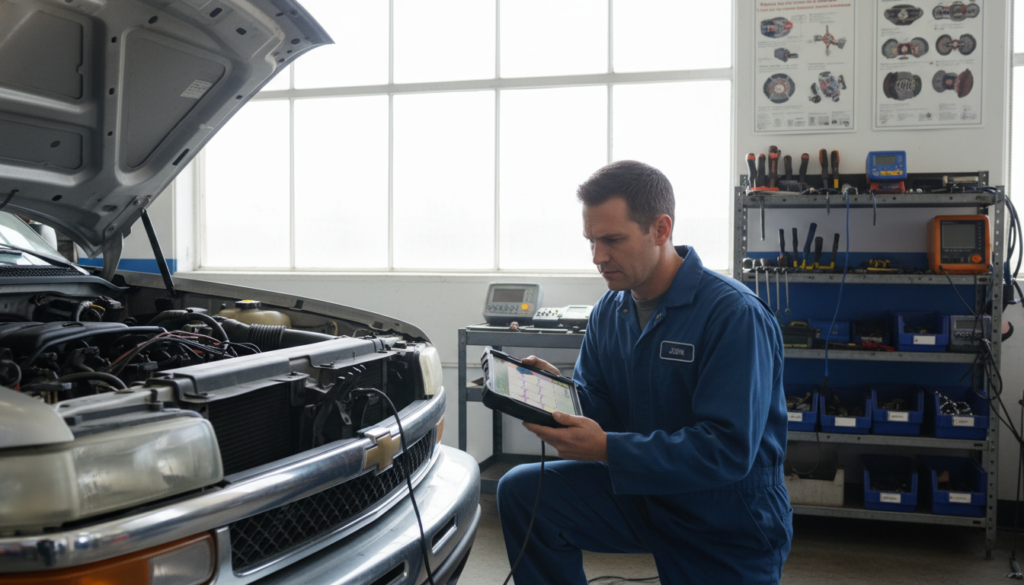
A pro can check transmission fluid levels, scan for codes, and test sensors. They use advanced tools that a basic reset cannot match. Over the years, complex failure in the control module may need full replacement rather than a simple repair.
If you have any question about car safety, the right way to find answers is to consult a licensed technician. A mechanic can count abnormal gear shifts and spot a deeper shift or engine problem before it worsens.
| When to Seek Help | What a Technician Does | Likely Outcome |
|---|---|---|
| Problems persist after reset | Advanced scanner and fluid check | Clear diagnosis and repair plan |
| Burning smell or stuck gear | Hands-on inspection and test drive | Immediate safety fix or tow |
| Intermittent codes or odd shift count | Module and wiring tests | Repair or module replacement |
When in doubt, stop DIY. For further service advice, see service ESC Chevy Silverado to learn more about professional options and answers.
Conclusion
This guide delivers clear answers so you can spot common shift faults and act with confidence.
Follow the simple troubleshooting steps here to maintain your car and reduce surprises on the road.
DIY resets work for minor faults, but seek a professional for persistent or complex problems to avoid bigger repairs.
Keep fluid clean and update electrical firmware or parts when needed to protect driveline life.
We hope these answers solved your key questions and helped you plan the next steps. Thank you for trusting this guide.
FAQ
Where is the transmission control module located on a 2002 Chevy Silverado?
The control unit sits on the driver’s side of the engine bay, typically mounted near or on the valve body or fender apron and often adjacent to the battery. Access may require removing trim or the battery to see and reach the connector and mounting bolts.
What does the transmission control module (TCM) do and how does it affect shifting?
The TCM processes inputs from sensors like vehicle speed and throttle position to command shift timing and solenoid operation. Faulty signals or a failing unit can cause harsh shifting, delayed engagement, or gear hunting.
What diagnostic trouble codes indicate a problem with the control module or valve body?
Look for codes related to solenoid circuits, line pressure, communication faults, and shift timing (P07xx, P07xx series, and communication codes). A scanner that reads transmission codes will help pinpoint valve or TCM issues.
How can I reset the transmission control system at home with the accelerator pedal method?
Park on level ground, apply the parking brake, start the engine, then with the foot on the brake press the accelerator to full throttle for a few seconds until the engine reaches a higher idle, then release and let the ECU/TCM relearn shift points. Follow model-specific steps if available.
Will disconnecting the battery reset the control module, and how long should the battery be off?
Yes, removing the negative cable for 15–30 minutes can clear learned adaptive values. Some units need longer to fully drain capacitors; if the issue persists after reconnection, further diagnosis is required.
What safety precautions should I take when working near the valve body or TCM?
Work with the engine off and battery disconnected when accessing internal valve body components. Use proper jack stands if under the vehicle, wear gloves and safety glasses, and keep a clean workspace to avoid contaminating fluid passages.
How do I access the valve body and solenoids for inspection or service?
Drain the fluid, remove the transmission pan and filter, then the valve body is exposed. Solenoids are mounted on or near the valve body and may be fastened with bolts and electrical connectors. Reassemble with a new filter and correct fluid volume.
When should I take the truck to a professional for diagnostic services?
Seek professional help if you get persistent codes, if electrical tests show intermittent TCM communication, or when internal valve body work, module replacement, or reprogramming is needed. A shop has lift access, scan tools, and calibration files.
Can a blown fuse cause TCM-related problems and where is the fuse usually found?
Yes—blown fuses or poor grounds can interrupt power to the module. Fuse panels are commonly in the engine bay or under the dash; consult the vehicle’s fuse diagram to check the transmission/TCM fuse before deeper troubleshooting.