
What Does LS Stand for Chevy? (Hint: It’s Not Luxury Sport)
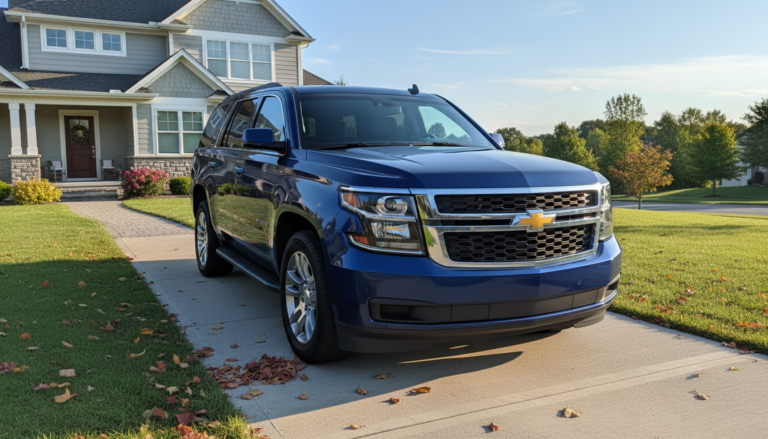
If you ask a casual driver what “LS” stands for on the back of their Tahoe, they’ll probably tell you it means “Luxury Sport.” But if you ask a gearhead with their head under a hood, they aren’t thinking about trim levels—they are talking about one of the most legendary engine families in automotive history.
The Short Answer: Officially, LS does not stand for anything. It isn’t an acronym for “Luxury Sport” or “Low Standard.” Instead, it originated as a General Motors RPO (Regular Production Option) code. When the LS1 engine debuted in the 1997 Corvette, the “LS” was simply the alphanumeric designation assigned to the new Gen III small-block architecture.
Why the Name Became a Legend
Enthusiasts don’t love the LS because of the name; they love it for the architecture. The LS engine family—spanning from the aluminum LS1 to the iron-block Vortec truck engines—became the gold standard for performance because of three key features:
- Bulletproof Pushrod Layout: A compact Overhead Valve (OHV) design that fits in almost any engine bay.
- Deep-Skirt Block: A rigid design that provides incredible structural integrity.
- Six-Bolt Mains: A high-performance crankshaft mounting system that allows these engines to handle massive amounts of boost and horsepower without breaking.
Trim Level vs. Engine Family
It is important to make the distinction: on a vehicle’s tailgate, “LS” usually denotes a base or entry-level trim. But in the world of performance, “LS” refers to a massive family of Gen III and Gen IV engines. Whether it’s a true LS7 or a salvaged 5.3L truck engine, if it shares this architecture, it’s an LS.
In this guide, we’ll break down the history of the LS designation, the different engine codes you need to know, and why “LS swapping” became the most popular modification in the world.
What does ls stand for chevy and why the name matters?
Many buyers and forum posters mix the engine name with trim badges, so the label sparks confusion.
Luxury Sport is a common guess because Chevrolet used the same two letters as a trim code on many cars. Dealers and listings sometimes show that badge, and readers assume it applies to the engine.
GM never defined the engine family as “Luxury Sport.” The nickname grew from the RPO code LS1 and then stuck as enthusiasts applied it to Gen III/IV mills. That shorthand helps quick identification but can blur exact parts and specs.
- Trim badge = vehicle option; engine label = family architecture.
- Mixing them up can lead to wrong parts, bad tunes, or wiring hassles when planning a swap.
- Ask whether “LS” refers to an LS-family engine or a trim level before buying or comparing performance claims.
| Item | Trim Badge | Engine Shorthand | Real-world impact |
|---|---|---|---|
| Origin | Marketing/option pack | RPO code LS1 → nickname | Mistaken identity in listings |
| Typical use | Sales, trim level on cars | Gen III/IV small-block reference | Parts ordering, swap planning |
| Buyer tip | Check equipment lists | Confirm exact engine code | Avoid wrong harnesses or tunes |
The real origin of LS in GM terminology
A one-off option code on early Gen III cars became the shorthand used by owners. That single label came from a Regular Production Option, and it shaped how people refer to the whole family today.
RPO codes explained and why LS1 set the nickname
RPO codes are simple internal tags used by General Motors on build sheets, parts lists, and service guides. They identify options, transmissions, and the original engine installed.
The first clean-sheet Gen III V8 carried the RPO code LS1. Enthusiasts found the tag easy to repeat, so the LS nickname spread across forums and shops.
Why not every Gen III/Gen IV engine code starts with LS?
Not every related block uses the same two letters. Trucks and SUVs often used different RPOs even when the same architecture was installed.
- Treat “LS” as an informal architecture label, not a final parts spec.
- Always verify the exact RPO before ordering parts or planning a tune.
- The nickname is useful but imprecise across years and models.
| RPO | Meaning | Common use |
|---|---|---|
| LS1 | First Gen III V8 | Sports cars, early swaps |
| Alternate codes | Truck/special variants | Different wiring or mounts |
| Practical tip | Check build sheet | Confirm exact engine used |
Where the LS fits in Chevrolet small-block history?
The Chevrolet small‑block story spans from 1955 roots to a modern reboot that reshaped V8 packaging.
1955 introduced the original small‑block and set the tone for decades of reliable V8s in cars and trucks. By the 1970s and early 1980s, emissions rules and fuel economy needs cut power and changed how engines were tuned.
From classic era to emissions-driven changes
Emissions constraints reduced peak output across years, forcing designers to focus on clean operation and drivability. That shift set the stage for later updates rather than simple bolt-on fixes.
The Gen II LT1 bridge to a clean-sheet redesign
The 1992 Corvette introduced the Gen II LT1 with features like reverse‑flow cooling. It improved the old platform while keeping some compatibility.
- Timeline, in brief: 1955 classic small‑block → emissions-era detune → 1992 LT1 bridge → 1993 Gen III clean‑sheet work.
- Why not another update? Tighter emissions and modern drivability needs required new architecture, not just tweaks.
- Corvette role: The Corvette often launched V8 tech, making it a clear reference point for changes in design and power output over time.
| Era | Key change | Impact |
|---|---|---|
| 1955–1960s | Original small‑block | High popularity in cars and racing |
| 1970s–1980s | Emissions-era tuning | Lower peak power, focus on drivability |
| 1990s | LT1 → Gen III | Modern design, improved packaging and performance |
LS engine family overview from 1997 to the present
From 1997 onward, a shared small-block architecture powered a wide range of General Motors vehicles.
Core layout:
Core architecture: 90° V8 and related V6 offshoots
The family centers on a 90° V8 layout with some 90° V6 derivatives. That angle favors packaging and parts commonality across models.
Displacement and practical size choices
Displacement spans roughly 293–511 cu in (4.8–8.4L). Smaller displacements improve fuel economy and fit compact cars.
Larger sizes target tow rating and low-end torque for trucks and heavy-duty use.
Power and torque ranges
Typical power output sits between 255 and 755 hp. Measured lb-ft torque ranges from about 285 to 715.
Label confusion: family names versus later RPOs
Everyday talk often calls Gen III/IV mills “LS” while Gen V machines get “LT” tags. RPO names varied, so verify the exact engine before buying parts or planning a swap.
Confirm generation and RPO to match parts, tunes, and mounts.
| Attribute | Range | Why it matters |
|---|---|---|
| Displacement | 293–511 cu in (4.8–8.4L) | Towing, economy, or high‑rev performance |
| Output | 255–755 hp | Street use to track-ready builds |
| lb-ft torque | 285–715 lb-ft | Trailer pull and everyday drivability |
Generations explained: Gen III, Gen IV, and Gen V small-blocks
Knowing the generation clarifies compatibility and parts planning. Gen III is the baseline most people mean when they refer to an LS-style build. It was a clean-sheet design with few carryover parts from earlier small-blocks. That fresh start improved packaging and serviceability.
Gen III foundations
Gen III set the basic design and many early swap-friendly features. Its modular approach made many parts interchangeable across years and models. For owners, this means easier sourcing and common upgrade paths.
Gen IV evolution
Gen IV kept the core block and added modern control systems and refined features. Improved engine management helped drivability and tuning. Electronics and accessory layouts changed enough that swaps may need updated harnesses.
Gen V differences
Gen V shares less with earlier engines. The block form remains similar and some rods carry over, but many components and calibration approaches are new. Expect changes in sensors, fueling, and internals that affect interchangeability.
- Rule of thumb: Gen III↔IV parts often cross‑fit; Gen V needs closer verification.
- Diagnostics: Later systems require modern scan tools and tuned software.
- Upgrade path: Swap-friendly bolt-ons work best on Gen III/IV donor engines.
| Generation | Key change | Owner impact |
|---|---|---|
| Gen III | Clean-sheet design | High parts interchange |
| Gen IV | Modern controls added | Improved tuning, wiring updates |
| Gen V | New internals and calibration | Verify compatibility before buying |
Engineering design that defines LS engines
Key mechanical choices made this platform compact and durable. The layout favors a low profile and a strong foundation. That mix helps fit power under low hoods and survive heavy use.
Pushrod OHV layout and the packaging advantage
The cam sits in the block and uses short pushrods to operate valves. This keeps overall height lower than OHC designs. Low height helped fit V8s into sports cars like the Corvette and into tighter engine bays for swaps.
Deep-skirt block strength and rigidity benefits
A deeper skirt on the block ties both halves of the crankcase together. Builders notice less flex and better torque handling. That rigidity makes the platform more tolerant of higher power and sustained loads.
Six-bolt main bearing caps and bottom-end durability
Six-bolt main bearing caps add clamping force around the crank. More bolts per cap mean better cap retention under stress. For street builds, towing, or track laps, this reduces crank walk and boosts longevity.
Bore spacing and modularity across models and years
Bore spacing sits at 4.4 in (112 mm). That “hidden” dimension allows many blocks and parts to share geometry. Rods, rotating assemblies, and accessory fitment stay similar across models and years, easing swaps and upgrades.
- Result: a compact, strong engine that adapts to power adders and long-term use.
- Practical note: verify generation specifics when sourcing caps, rods, or block replacements.
| Feature | What it is | Benefit | Owner impact |
|---|---|---|---|
| Pushrod OHV | Cam in block, short pushrods | Lower engine height | Easier swaps into tight bays |
| Deep-skirt block | Extended crankcase walls | Higher rigidity | Better tolerance for power upgrades |
| Six-bolt caps | Extra fasteners per main cap | Stronger bottom end | Improved longevity for towing/track |
| Bore spacing | 4.4 in (112 mm) | Shared geometry across parts | Simplifies parts sourcing and builds |
Materials and construction: aluminum block vs cast iron blocks
Material choices shaped how these V8s were used, from light sports cars to heavy-duty pickups.
Aluminum blocks were common in passenger cars to cut front-end weight and improve handling. Lighter mass boosts power-to-weight and gives a sharper driving feel. Heat moves differently in aluminum, so cooling and gasket choices matter more during high-load use.
Cast iron blocks stayed popular in many trucks and suvs for perceived durability and lower cost. Heavier iron soaks heat and resists wear in long-haul, towing, and commercial cycles. That extra weight trades off nimble handling for endurance and repair simplicity.
Aluminum cylinder heads and airflow-focused design
Most engines used aluminum cylinder heads to improve flow and combustion efficiency. Heads were redesigned with evenly spaced valves and better ports, which helped breathing more than just saving mass.
- Owner comparison: aluminum = lighter, quicker response; iron = tough, cheaper to repair.
- Practical tip: block material affects accessory brackets, rebuild choices, and driving feel—pick based on use, not myth.
| Feature | Aluminum | Cast Iron |
|---|---|---|
| Weight | Lower, better for cars | Higher, stable for trucks |
| Heat handling | Fast transfer, needs careful cooling | Slower soak, tolerant under load |
| Common use | Performance cars | Trucks and suvs |
Material is a foundation. Later sections show how head flow, compression, and valvetrain choices turn that foundation into real-world power and durability.
Valvetrain, compression ratio, and cylinder head airflow
A compact valvetrain with two valves per cylinder keeps complexity low while letting heads do the heavy lifting.
The LS family uses a 16-valve OHV layout: one intake and one exhaust valve per cylinder. This setup has fewer moving parts. Fewer parts mean easier service and strong reliability under daily driving and towing.
How head flow links to usable performance?
Redesigned cylinder heads improved port shape and valve sizing. Better airflow helps both low-rpm torque and high-rpm output depending on cam and intake choices.
Compression ratio basics and real-world effects
Compression ratio compares the swept and clearance volumes in a cylinder. Higher ratios make more thermal efficiency and more power but need better fuel and tuning. Lower ratios tolerate boost and cheaper fuel.
- Range: 9.08:1 to 13.1:1 across variants, from truck-friendly to race-ready.
- Higher compression → more peak performance, tighter tuning.
- Lower compression → safer for forced induction and mixed fuel quality.
| Feature | Low-end setup | High-performance setup |
|---|---|---|
| Compression ratio | ~9.1:1 | up to 13.1:1 |
| Cylinder heads | Moderate flow, torque focus | High-flow ports, top-end power |
| Practical result | Forgiving for boost and towing | Requires better fuel and tuning |
Next, fuel delivery and ignition control explain how these mechanical choices behave on the street. Proper fueling and timing let the valvetrain and heads reach their potential without compromise.
Fuel, ignition, and modern engine system upgrades
Fuel and spark control evolved quickly once electronic management became standard.
Fuel injection and everyday drivability
Fuel injection gave smoother cold starts, cleaner idle, and steadier throttle response. It adapts to temperature and altitude better than old mechanical setups.
Coil-near-plug ignition gains
Gen III/IV engines moved to coil-near-plug units and retired the distributor. That change improved spark precision and cut routine maintenance.
Variable valve timing basics
Variable valve timing shifts when valves open and close. The result is more usable power across the rev range and better low-speed torque without sacrificing top-end performance.
Active Fuel Management and cylinder deactivation
Active Fuel Management shuts cylinders under light load to save fuel. It helps highway economy but can affect tuning choices and diagnostics later.
- These systems change tuning strategy and cam selection.
- Diagnostics require modern scan tools when present.
| Feature | Benefit | Owner impact |
|---|---|---|
| Fuel injection | Smoother starts, adaptive tuning | Better daily drivability |
| Coil-near-plug | Precise spark timing | Less maintenance, easier tuning |
| Active Fuel Management | Improved highway mpg | Watch for lifter or oil issues on modified engines |
Oiling and cooling systems built for real-world performance
Good oiling and cooling design are core to real-world engine reliability under stress. Solid oil control keeps bearings fed, protects cams and rods, and preserves output during long sessions on track or during spirited road driving.

Wet sump vs dry sump basics
A wet sump stores oil in a pan under the engine. A scavenge pump returns oil to a reservoir, but the pickup can starve during heavy cornering.
A dry sump moves oil to an external tank and uses multiple scavenges to keep pressure stable. That system prevents oil starvation during high lateral loads and repeated hard braking.
Why oil control matters on track?
When a car runs long turns or repeated hard laps, poor oil control means brief drops in pressure. Drivers feel this as loss of lubrication, reduced performance, and rising temperatures.
- Checklist for builders: choose the right oil pan, verified pickup, baffling, and a high-flow scavenge if needed.
- Monitor oil pressure and temperature at all times; upgrades are not optional at higher performance levels.
| Component | Typical role | Why it matters |
|---|---|---|
| Oil pan / sump | Reservoir for oil | Prevents pickup starvation |
| Scavenge pump | Moves oil to tank | Keeps pressure stable under G |
| Cooling system | Water-cooled radiator loop | Manages heat as output and rpm rise |
All engines here are water-cooled, so cooling upgrades often pair with oiling changes. In short, oiling system choices define how long an engine can sustain high power and track time. Signature performance variants later in the article show how upgraded systems separate base engines from halo builds.
Signature LS engines and what each is known for
Several factory V8s became touchstones that help buyers and builders compare real-world capability.
LS1: the icon that launched modern small‑block appeal
The LS1 debuted in the 1997 Chevrolet Corvette C5 and in F-body cars shortly after. It typically made about 345–350 hp and roughly 350–375 lb‑ft of torque depending on year and tune.
Known for: balanced power output, light weight, and becoming the face of the modern small‑block for aftermarket swaps.
LS6: airflow and sustained track performance
Found in early 2000s Corvette Z06 models, the LS6 pushed output to roughly 385–405 hp with strong low‑ and midrange torque. Cylinder heads, cam, and oiling changes helped it breathe and hold performance under repeated laps.
Known for: improved airflow, better sustained output, and a more track‑ready baseline for upgrades.
LS7: big displacement, naturally aspirated benchmark
The LS7 is a 7.0L displacement statement. It emphasizes large swept volume, high rev capability, and robust internals that reward tuning and high‑speed work.
Known for: displacement‑driven performance and a clear path to high naturally aspirated output without forced induction.
LS9: factory boost with durability upgrades
The LS9 pairs a supercharger with strengthened internals and often a dry‑sump oil system in ZR1 applications. Factory tuning delivered very high output and repeatable performance at sustained loads.
Known for: supercharged peak power, durability‑focused components, and strong real‑world reliability under stress.
| Engine | Typical peak hp | Signature trait |
|---|---|---|
| LS1 | 345–350 | Lightweight, swap-friendly |
| LS6 | 385–405 | Airflow and track endurance |
| LS7 | Large displacement | High rev naturally aspirated |
| LS9 | Supercharged high output | Durable, repeatable boost |
- Reference points: these engines anchor conversations about power, displacement, and upgrade choices.
- Practical tip: pick the factory example that matches desired performance and swap complexity.
Performance metrics that made LS a popular choice
Owners picked these V8s for usable street manners as much as headline horsepower numbers. The family pairs strong low-end torque with usable horsepower higher in the rev range. That combo makes daily driving feel responsive without sacrificing top-end output for spirited runs.
Horsepower vs torque: how these engines deliver usable power?
Torque provides the shove you feel when accelerating from a stop. Horsepower keeps speed climbing at higher rpm. Many builds favor torque-heavy cams and heads so the engine feels strong in everyday traffic.
Power-to-weight advantages and why aluminum matters?
Dry weight for common builds sits near 402–464 lb. Aluminum blocks and heads cut mass vs. iron. Less weight improves acceleration and handling for the same power output.
Why these engines balance cost-effectiveness and output?
Availability in junkyards, crate engine options, and a massive aftermarket lower the cost to reach strong performance. Results still depend on matching cam, heads, and fueling to the goal.
- Value points: ready parts, proven combos, and lots of tuning info.
- Reality check: high output needs proper cooling and oiling upgrades.
| Metric | Typical Range | Owner impact |
|---|---|---|
| Dry weight | 402–464 lb | Lighter for better handling and acceleration |
| Usable torque | Strong low to mid-range | Better everyday drivability |
| Aftermarket | Extensive parts & tuning | Lower cost to reach goals |
Factory applications across cars, trucks, and SUVs
From race-ready coupes to heavy-duty pickups, the same small‑block core powered many factory vehicles. Engineers tuned intake, gearing, and calibration to match each vehicle’s role. That made a familiar engine feel very different depending on fitment.
Sports cars and muscle cars: Corvette, Camaro, and related models
Sports applications like the chevrolet corvette and Camaro prioritized peak rpm response and top‑end power. Intake design and cam profiles aimed at faster revs and sharper throttle feel. These builds deliver the aggressive performance enthusiasts expect.
Trucks and SUV use cases: towing, torque, and transmissions
Trucks and suvs received torque‑focused calibrations and stronger cooling. Manufacturers paired these engines with durable transmissions and lower gearing for towing. The result is reliable low‑rpm pull and long service life under load.
Luxury performance examples: Cadillac V‑Series and related models
Luxury variants mixed refinement with high output. Cadillac V‑Series cars combined upscale tuning, refined intake and exhaust paths, and performance transmissions to balance comfort and speed.
- Why it matters: intake, gearing, and calibration change drivability.
- Swap upside: broad factory use means more donor cars and parts availability.
| Application | Focus | Typical pairing |
|---|---|---|
| Sports cars | Top‑end power | Close‑ratio transmission |
| Trucks/SUVs | Low‑end torque | Heavy‑duty transmission |
| Luxury/performance | Refined power delivery | Tuned transmission & calibration |
Why the LS swap became a phenomenon?
The LS swap grew into a movement because it mixes practical benefits with wide aftermarket support. Owners and shops found a clear mix: engines are common, parts are plentiful, and serviceability is straightforward.
Compact pushrod packaging helps fit these blocks into older vehicles. Low overall height eases hood and firewall clearance. That physical size saves time and fabrication cost on many classic models.
Parts availability, serviceability, and interchangeability
Gen III/IV engines share many common parts and rods across years. That modularity makes repairs faster and less costly.
Compact size advantages for older engine bays
The short deck and narrow profile simplify swaps into tight engine bays. Street rods and vintage cars benefit most from this fit.
Common compatibility hurdles
Mounts, wiring, and transmission pairing are the usual headaches. ECU integration, fuel delivery upgrades, and adapter bellhousings often need attention.
- Quick tips: confirm mount points, match sensor signals, and select a compatible transmission before buying a donor engine.
| Challenge | Impact | Solution |
|---|---|---|
| Engine mounts | Fitment delays | Swap-specific brackets |
| Wiring/ECU | Startup and drivability | Standalone or harness adapters |
| Transmission pairing | Gearing and bolt pattern | Adapters or matched donor transmission |
Aftermarket support makes upgrade paths simple. Builders start with cams and headers, then move to boosted setups as needed. The deep parts network keeps costs lower than rarer platforms, which is why this engine family remains a popular choice for swaps.
Reliability and ownership considerations over years of use
Long-term ownership success comes down to honest maintenance and realistic expectations. LS-family engines have a strong reputation, but condition, care, and modifications set real outcomes.
Heat management for high-output builds?
Heat is the silent limiter on many high-performance engines. Cooling capacity, airflow, and correct calibration all reduce stress on parts and help sustain power and output.
- Upgrade radiator capacity and electric fans to match duty cycle.
- Improve ducting and thermostat selection to keep consistent flow.
- Ensure proper tuning so combustion temps do not spike under load.
Oil consumption realities and monitoring best practices
Some engines show higher oil use as they age or after mods. Regular level checks catch trends early and prevent costly failure.
- Track oil level between fills and log changes.
- Use the right viscosity and change intervals for your use case.
- Address leaks, PCV function, or worn rings before they worsen.
| Concern | Typical fix | Owner action |
|---|---|---|
| Overheating | Cooling upgrades | Monitor temps, add fans |
| Rising oil use | Inspection & tuning | Record level, inspect PCV |
| High output duty | Oiling/cooling system upgrade | Match mods to goal |
Practical summary: match your upgrades to intended use track, towing, or daily driving and keep basic checks, fluids, and scan logging part of routine care. That approach maximizes reliability and lets the engine deliver predictable performance for many years.
Conclusion
The phrase “what does ls stand for chevy” traces to a single RPO tag that became shorthand among owners and shops. Use that phrase to find origin info, then confirm exact build details before buying parts.
Core takeaway: the name grew from the LS1 code and not from a marketing badge. The clean-sheet small‑block gave compact packaging and strong upgrade potential. That design helped general motors place these V8s in many models.
Treat “LS” as shorthand for a family of V8 engines, then verify the specific RPO or code when sourcing parts or tuning. Understanding generations, materials, and systems makes maintenance and swaps easier.
Whether it’s a chevrolet corvette, a truck, or a retrofit, the platform offers proven performance and durable power when matched to the right build and care.
FAQ
What does the LS label mean in Chevrolet engine naming and why does it matter?
LS began as an internal RPO-style identifier for Chevrolet’s Gen III V8 family. It became shorthand for a group of modular, compact pushrod engines known for strong power-to-weight ratios and ease of modification. The name matters because it signals a particular architecture — 90° V8 roots, shared bore spacing and main-bearing design — which affects interchangeability, aftermarket support, and performance potential.
Is LS short for “Luxury Sport” or other marketing terms?
No. Common myths like “Luxury Sport” are marketing shorthand, not the technical origin. LS grew from GM’s internal code usage (starting with designations like LS1) and stuck because enthusiasts used it to refer to the whole Gen III/IV engine family. The label reflects lineage and architecture, not a market segment.
How did LS1 influence the nickname for the entire engine family?
LS1 was the breakout Gen III engine in the 1997 Chevrolet Corvette C5 and later F-body cars. Its visibility and performance made the LS1 name familiar, so enthusiasts and the industry adopted “LS” to describe the broader family of Gen III/Gen IV V8s, even when later engines carried different RPO prefixes like LM or LY in some cases.
What are the main engineering traits that define an LS engine?
Key traits include a pushrod OHV layout, 90° V8 architecture, common bore spacing, deep-skirt or semi-skirt block designs, and six-bolt main bearing caps on many variants for bottom-end strength. These features yield a compact package that’s relatively light, durable, and easy to modify.
Why are some LS-family blocks aluminum while others are cast iron?
Aluminum blocks appear mainly in passenger cars and performance models to reduce weight and improve power-to-weight ratio. Cast iron blocks remain common in trucks and SUVs for durability and higher-load applications, where towing duty and long-term robustness outweigh the weight penalty.
How wide is the LS family in displacement and power output?
Displacements range from small V6 offshoots up to large V8s like the LS7. Horsepower and torque span broad bands: from modest OEM outputs in truck engines to high-performance variants (including supercharged LS9) that deliver supercar-level power and lb‑ft torque. Exact numbers depend on displacement, heads, induction and tuning.
Why did the LS swap become so popular for restomods and performance builds?
Popularity stems from strong aftermarket support, compact dimensions that fit many engine bays, robust bottom-end design, and wide parts availability. Builders value straightforward wiring, plentiful performance heads and cam options, and the ability to pair these engines with many transmissions for varied applications.