
Chevy Silverado Trucks Brake Defect Recall
General Motors has issued an urgent brake defect recall for specific Chevy Silverado Medium-Duty trucks due to a critical fire risk.
The culprit is a brake pressure sensor assembly that allows fluid to leak into the switch. This can cause an electrical short-circuit and ignite an underhood fire—even while the vehicle is parked and turned off.
This affects 2019–2023 Silverado 4500HD, 5500HD, and 6500HD chassis cabs. It does not impact the standard Silverado 1500 or 2500 pickups.
Safety Warning: Until the repair is complete, owners are advised to park outdoors and away from structures. Here is how to check your VIN and what the free dealership repair involves.
What GM and NHTSA Announced About the Medium-Duty Silverado Recall?
It’s official: The NHTSA isn’t calling this a minor service update. It’s a serious fire hazard.
Following a review of build records, investigations confirmed that brake fluid can leak from the pressure sensor assembly in specific Silverado Medium-Duty models.
If that corrosive fluid hits the electrical components (specifically the brake pressure switch), it creates a short circuit. The result? An underhood fire that can ignite even while the keys are in your pocket and the truck is parked.
Why the traffic safety administration flagged a fire risk?
The danger is real: The NHTSA warns of a “risk of fire while driving or parked.”
Here is the physics behind the panic: Brake fluid is highly corrosive and conductive. When it drips onto exposed wiring or switches, it doesn’t just dry up.
Instead, it creates a bridge for electricity. This “parasitic draw” generates intense heat buildup, eventually melting the insulation and igniting the plastic components surrounding the engine block.
How many vehicles are included and why records matter?
GM has pinpointed exactly 62,468 vehicles based on specific manufacturing windows.
Why this matters: Just because you own a ‘2019 Silverado’ doesn’t mean you are safe (or affected). Recall eligibility often comes down to the exact week your truck rolled off the line.
Don’t guess. Open your driver’s side door and check the production date (MM/YY) on the jamb sticker. Compare that date with the recall window below to know for sure.
| Item | Detail | Owner impact |
|---|---|---|
| Number affected | 40,428 vehicles (Exact count) | High demand may cause dealer scheduling delays |
| Regulator | NHTSA Safety Recall | Mandatory free fix (Federal Law) |
| Timeline | Interim vs Final Remedy | Expect two separate letters in your mail |
The silver lining? As of now, General Motors reports zero accidents or injuries linked to this defect.
While this implies that not every brake sensor is destined to fail, this is not a pass to ignore the warning. We are talking about a fire risk, not a loose trim piece.
Bottom line: You don’t need to panic, but you do need to act. When GM contacts you, schedule the remedy immediately—don’t wait for a leak to start.
Chevy Silverado trucks brake defect recall: Which Vehicles and Model Years Are Affected?
The golden rule for this recall: Trust the VIN, not the Model Year.
Why? Because manufacturing dates overlap. One 2021 Silverado 5500HD might be recalled, while another built a month later is perfectly safe.
The Affected Lineup:
- Models: Silverado 4500HD, 5500HD, and 6500HD (Heavy Chassis-Cabs).
- Production Window: May 2018 through September 2024.
You are likely EXCLUDED if:
- Your truck was built before the 2019 design overhaul.
- You can visually confirm your truck already has the silicone-sealed pressure switch wire harness. (Check this first to save a trip to the dealer!)
What owners who were previously repaired should know?
Warning: Previous repairs do NOT guarantee safety.
Even if you have already replaced the brake pressure switch under a previous service visit, do not assume you are in the clear.
The NHTSA explicitly states that earlier fixes may not meet the standards of this new safety recall. The old replacement parts could still be prone to leakage and fire.
Don’t rely on your memory or service history. The only way to confirm if your truck needs the updated remedy is to run a fresh VIN lookup today.
What’s Causing the Brake Pressure Sensor Assembly Leak and Fire Hazard?
The Mechanics of the Meltdown: How a Seal Failure Sparks a Fire.
1. The Root Cause (The Unauthorized Chemical): GM traced the defect back to a single manufacturing error: an unauthorized chemical used in the rubber diaphragm. Over time, this chemical reacts with the brake fluid, slowly dissolving the seal from the inside out.
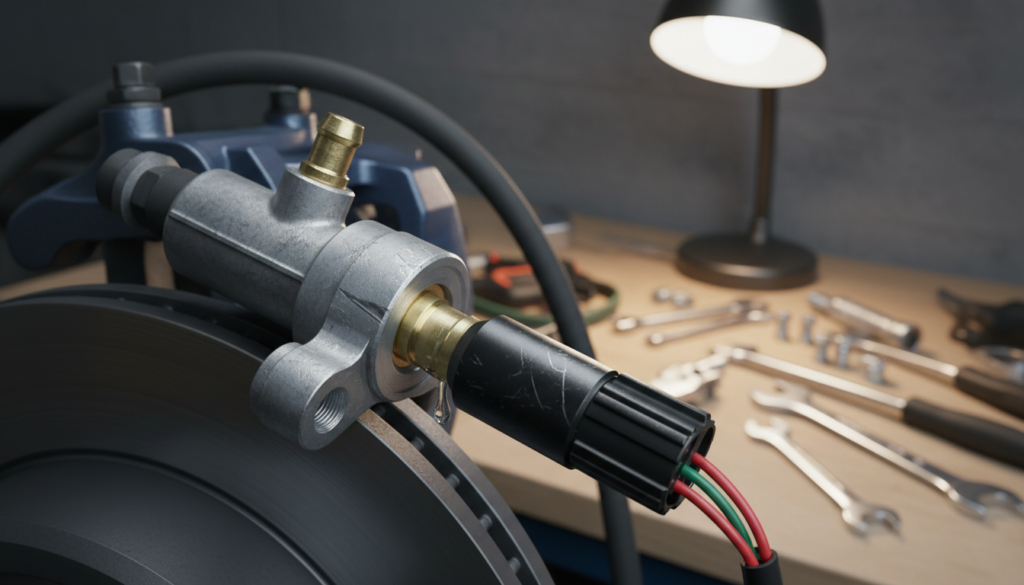
2. The “Wicking” Effect: Once the diaphragm breaches, brake fluid escapes the hydraulic system and enters the electrical side. Here is the scary part: the fluid travels along the wiring harness like wax up a candle wick, reaching deep into electrical contacts where it doesn’t belong.
3. The Ignition Point: It’s not just a short circuit. The conductive fluid can trick the brake assist pump into activating unintentionally. This phantom activation causes massive current draw and heat buildup. Combine that heat with flammable fluid and plastic wiring, and you have a recipe for an underhood fire.
| Item | Detail | Impact (Why it matters) |
|---|---|---|
| Supplier | Kodiak Controls Inc. | Identified as the source of the unauthorized chemical leak |
| Timeline | Aug 2022–Jun 2025 | Why the solution took 3 years to authorize |
| Repeat repairs | Old switch vs New Remedy | Previous repairs are VOID; updated fix required |
The Verdict: This wasn’t bad luck; it was bad chemistry.
The lab results confirmed that the compromised diaphragm seal from Kodiak Controls created a ticking time bomb of fluid migration and electrical exposure.
This explains exactly why GM expanded the recall: Quick patches didn’t work. The root cause was deep inside the supplier’s manufacturing process.
Final Takeaway: Don’t gamble on an old repair. Since the defect was baked in at the factory level, the only safe bet is the official, updated remedy authorized by this recall.
Remedy, Owner Notifications, and Immediate Safety Steps to Take Now
The Official Fix: Silicone vs The Leak.
GM isn’t just swapping one plastic part for another. Dealers will replace the vulnerable wire harness with a new silicone-sealed harness.
Why this works: Unlike the old rubber that dissolved, silicone creates an impenetrable barrier against brake fluid, permanently stopping the “wicking” effect that leads to fires.
Cost to you: $0. This is a federal safety recall, meaning the repair is 100% free, but it must be performed by an authorized GM dealer to be certified safe.
What the fix does?
Think of the new harness as a fluid firewall.
While the old harness acted like a wick, drawing flammable liquid straight into the electrical system, the upgraded replacement uses a specialized silicone sealant.
The Result: Even if the sensor seal fails again, the brake fluid hits this silicone barrier and stops dead. It physically blocks the path to the connectors, cutting the fuse on the fire risk completely.
Safety steps to follow now
- Park outside and away from structures until the new silicone harness is installed.
- Avoid enclosed parking. Check the ground under the driver’s side chassis (near the master cylinder) for any signs of leaking fluid..
- If you spot a leak, DO NOT start or move the vehicle. Turning the ignition can energize the short circuit and spark a fire. Call your dealer or Chevy Roadside Assistance for a tow immediately.
Notifications and VIN checks
The Notification Timeline: Watch Your Mailbox Twice.
- July 28, 2025 (Interim Notice): This first letter is a safety warning. It confirms your truck is affected but means parts may not be ready yet. Do not rush to the dealer unless you see a leak.
- The Remedy Notice (Parts Available): You will receive a second letter when the silicone harnesses are in stock. This is your signal to schedule the repair.
Note: Dealers have already been briefed. If you are currently experiencing a leak, do not wait for the mail—contact your dealer immediately for emergency instructions.
| Action | How to Verify | Contact / Resource |
|---|---|---|
| VIN check | NHTSA.gov/recalls or by phone | 1-888-327-4236 (NHTSA Hotline) |
| GM Support | Ask for “Medium Duty Brake Recall” info | 1-866-467-9700 (Chevy Customer Service) |
| Previous Repairs | Ensure recall status is NOT “Open” | Call Dealer with your VIN |
The Final Verdict: Prevention is Key.
This recall is not a routine service update—it fixes a known fire pathway caused by a faulty pressure sensor. Whether you own one truck or manage a fleet of fifty, the risk is the same: an electrical short that can ignite while parked.
Your Action Plan:
- Owners: Don’t wait for a letter. Check your VIN online immediately. If your truck is on the list, park it outside and away from structures until the free silicone harness is installed.
- Fleet Managers: Coordinate repairs early. A planned dealer visit is cheaper than unexpected downtime or a compromised vehicle putting your crew at risk.
Stay safe, verify your VIN today, and get that free repair scheduled.
FAQ
What did GM and the National Highway Traffic Safety Administration announce about the medium-duty Silverado recall?
GM and the NHTSA identified a safety issue with certain medium-duty Chevrolet Silverado models where a pressure sensor assembly and associated switch wiring can leak brake fluid. That leak may lead to an electrical short and underhood fire risk, prompting a safety action and a dealer remedy for affected vehicles.
Why did the National Highway Traffic Safety Administration flag a fire risk?
NHTSA flagged the risk after reports and an investigation showed brake fluid could travel from the pressure sensor assembly into the brake pressure switch area. The fluid can contact wiring, cause a short circuit, generate heat, and in rare cases ignite underhood components.
How many vehicles are included and why do manufacturing records matter?
The action covers a specific production run of medium-duty Silverado 4500HD, 5500HD, and 6500HD models. Precise manufacturing records determine which VINs used the affected sensor assembly and diaphragm seal; those records let GM and NHTSA identify vehicles that need the remedy.
Which vehicles and model years are affected?
The recall applies to certain model years of the Chevrolet Silverado 4500HD, 5500HD, and 6500HD medium-duty line produced during a defined production window. Owners should check their VIN with GM or NHTSA to confirm if their truck is included.
Why are some trucks excluded even if they seem similar?
Exclusions come down to supplier parts and assembly dates. Trucks built outside the affected production window or fit with a different pressure sensor assembly or diaphragm seal were not exposed to the unauthorized chemical and are therefore not included.
If my truck was previously repaired for a related issue, do I still need the new remedy?
Yes. Vehicles with prior repairs tied to the earlier brake pressure switch action may still require a new dealer remedy if they used the affected sensor assembly or if the fix didn’t address the diaphragm seal contamination confirmed in later testing.
How can brake fluid move from the pressure sensor to the brake pressure switch?
A compromised rubber diaphragm seal or a degraded sealant path lets hydraulic fluid migrate from the pressure sensor assembly along the switch wire harness. Once fluid reaches electrical connections, it can create conductive paths that lead to shorts.
What caused the rubber diaphragm seal issue?
Lab testing found the diaphragm material had been exposed to an unauthorized chemical during production. That chemical degraded the seal, reducing its ability to isolate brake fluid and allowing leaks to develop over time.
How can a fluid leak trigger a short circuit, heat, and an underhood fire?
Brake fluid contacting bare or compromised wiring can bridge circuits, creating high current paths. Excessive current produces heat, which can damage nearby components and, in rare cases with combustible materials present, cause an underhood fire.
Who supplied the problematic pressure sensor assembly and what parts are involved?
The supplier identified is Kodiak Controls. The affected assembly includes the pressure sensor, diaphragm seal, and the brake pressure switch wire harness that interfaces with the vehicle’s electrical system.
What is the investigation timeline from the initial claim to lab confirmation?
The probe began after a 2022 fire-related claim. Engineers conducted field inspections and lab analysis over months. By 2025, testing confirmed diaphragm contamination by an unauthorized chemical, linking it to the leak pathway and fire risk.
How does this issue relate to the prior brake pressure switch action and repeat repairs?
Earlier actions focused on the switch itself. This follow-up found the root cause in the pressure sensor assembly and seal contamination. Some vehicles received the earlier fix but still retained the faulty assembly, so a new remedy is necessary for full protection.
What is GM’s dealer remedy for affected vehicles?
Dealers will perform a free repair that replaces, or modifies, the brake pressure switch wire harness and applies a silicone-based sealant around the affected connection to restore isolation and prevent fluid intrusion.
What immediate safety steps should owners take now?
Owners should park outside and away from buildings until the dealer repair is completed. Inspect under the hood for fluid odors or visible leaks and avoid driving if you see leaking fluid, smoke, or electrical burning smells. Contact your dealer for priority scheduling.
How can I check my VIN and get recall assistance through GM and NHTSA?
Visit GM’s official recall lookup page or the NHTSA recall website and enter your VIN. You can also contact your authorized dealer or GM customer service for confirmation and to schedule the free remedy.