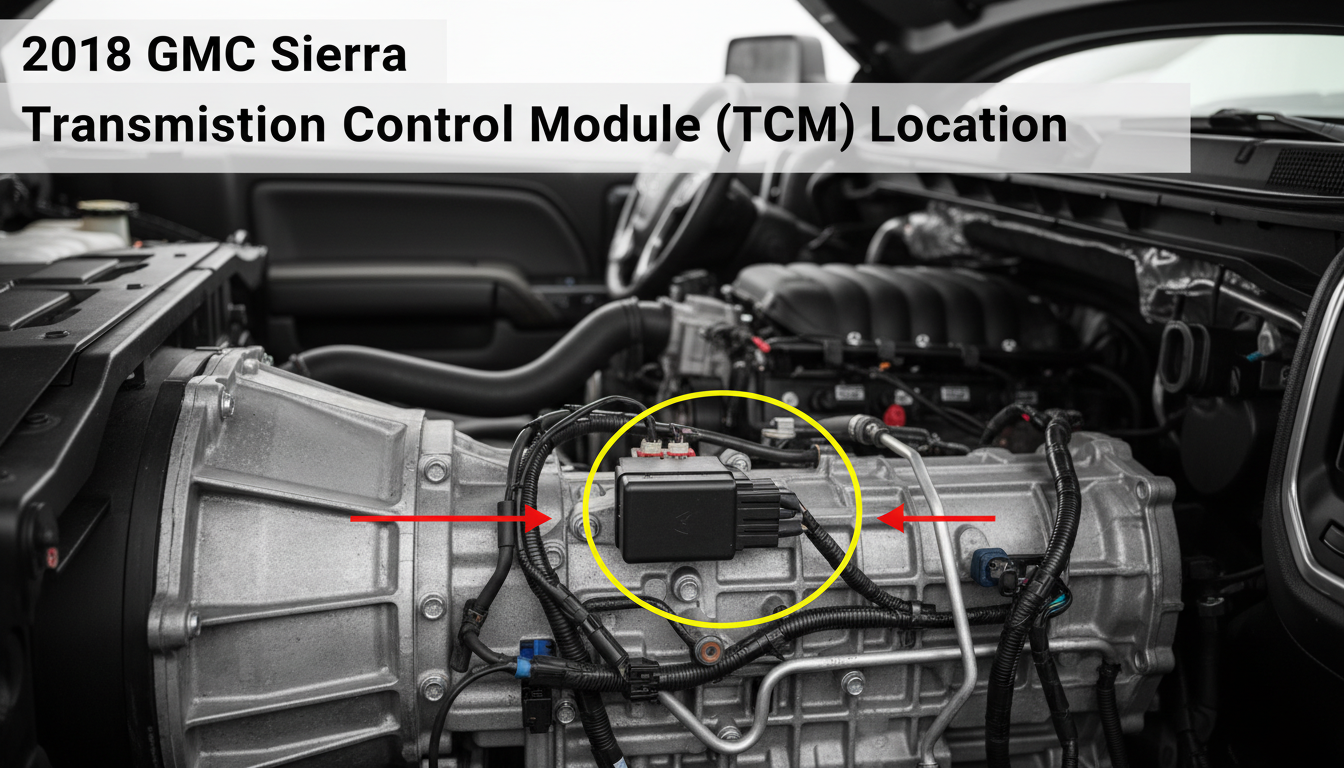
2018 GMC Sierra Transmission Control Module Location (Inside the Pan)
If your 2018 GMC Sierra is experiencing hard shifts, getting stuck in Limp Mode, or throwing transmission codes, your first instinct might be to pop the hood and look for the Transmission Control Module (TCM). Many owners waste hours searching the engine bay or under the dashboard for a standalone computer box.
The Exact Location (The TEHCM):
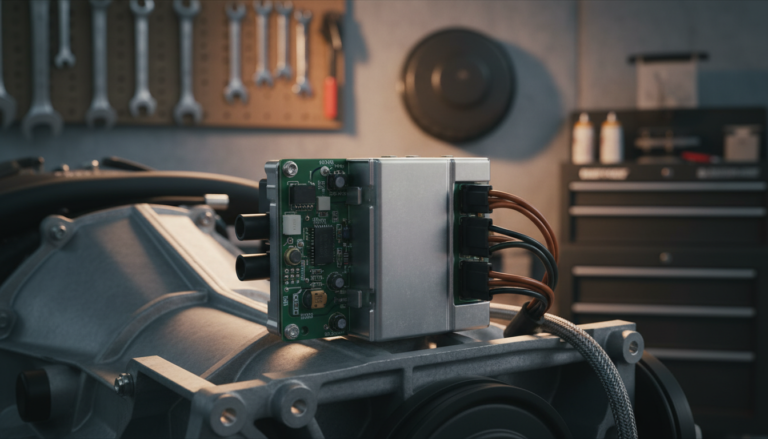
On the 2018 GMC Sierra (whether equipped with the 6-speed 6L80 or the 8-speed 8L90 transmission), there is no external TCM. The transmission control module is integrated directly into the valve body inside the transmission fluid pan.
General Motors refers to this combined internal unit as the TEHCM (Transmission Electronic Hydraulic Control Module). To physically inspect or service this unit, you cannot simply look under the hood. You must lift the truck, drain the transmission fluid, and drop the bottom transmission pan.
Understanding the Sierra’s Integrated TEHCM
Older GM trucks used a standalone TCM bolted to the firewall or near the battery, making replacements incredibly simple. However, modern Sierra transmissions rely on a much more complex internal network to manage heavy towing and fuel-efficient gear logic.
Why is it inside the transmission?
Housing the computer, shift solenoids, and pressure switches in one single unit directly on the valve body allows for lightning-fast, precise gear changes.
The Hidden Drawback (Thermal Stress):
Because the TEHCM is completely submerged in hot transmission fluid, it is subjected to extreme thermal cycles. This constant heat is the number one cause of module failure. Over time, the internal computer fries or the laminated pressure switches become brittle and break, leading to harsh shifting and P0700 codes.
TCM Evolution & Service Impact:
Before you attempt a DIY repair, understand how the design affects your labor time and costs:
| System Design | Typical Location | Service & Repair Impact |
| Older External TCM | Engine Bay / Firewall | Plug-and-play replacement; fast access without getting dirty. |
| 2018 Sierra TEHCM | Inside Transmission Pan | Requires fluid drain, pan removal, new gaskets, and mandatory dealer VIN programming. |
When you ask where to find the part, consider that some models still vary. For a close look at similar designs and guidance, see where to find the transmission control.
Identifying Symptoms of a Failing Transmission Computer
Notice odd shifting or a sudden drop in power while driving; these are common first clues of an electronic fault in the gearbox computer.
The check engine light often appears alongside a P0700 code, which signals a communication error between the engine and transmission control systems. A quick scan tool read by a mechanic provides those codes in minutes and points to likely faults.
Limp mode may engage and lock the vehicle into a single gear to protect internal parts. You might also smell burning or struggle to downshift—symptoms that mean sensors or the unit are failing to process data correctly.
A failing transmission control module can reduce gas mileage and cause the car to get stuck in neutral or first gear. Disconnecting the battery for a few minutes can clear temporary glitches, but persistent issues need professional diagnosis.
| Symptom | Likely Cause | Immediate Action | When to Call a Mechanic |
|---|---|---|---|
| Check engine light / P0700 | Communication error between engine and tcm | Scan for codes | If codes return after reset |
| Erratic shifting / downshift trouble | Faulty sensors or failing control module | Note when it happens; avoid hard driving | If shifting worsens |
| Limp mode / stuck in 1st gear | Safety default to prevent damage | Drive slowly to a safe location | Immediate repair recommended |
| Burning smell / poor gas mileage | Overheating clutch packs or mismanaged shifts | Stop and inspect fluids | If smell persists or performance drops |
Safety Protocols and Diagnostic Preparation
Power down the vehicle and wait several minutes after unplugging the battery to avoid accidental shorts. This protects the sensitive tcm and reduces the risk of sparks while you work.
Always remove the negative battery terminal first, then wait at least five minutes to let residual energy bleed off. Wear safety glasses when working under the car, especially if you will drain transmission fluid to reach an internal valve body.
Disconnecting the Battery
Use a wrench on the negative post and secure the cable away from the terminal. Confirm the ignition is off and keys are removed. For resets, the ignition on plus pressing the gas pedal for 15 seconds may be required later.
Tracing the Wiring Harness
Use a flashlight to follow the harness from the valve body toward the engine bay. Older designs may have an external module; tracing wires helps locate it without guessing.
Using Diagnostic Tools
Scan for codes such as P0700 to see if the transmission control is reporting faults. Low-cost OBD-II scanners identify communication errors and verify whether the tcm is at fault.
| Step | Why it matters | Quick action |
|---|---|---|
| Disconnect negative battery | Prevents shorts and protects the tcm | Remove cable, wait 5 minutes |
| Trace wiring harness | Locates external or hidden module paths | Use flashlight, follow wires to engine bay |
| Use diagnostic scanner | Reads codes like P0700 and confirms faults | Scan, record codes, research fixes |
| Protect from fluid exposure | Transmission fluid can harm electronics | Wear gloves and eyewear; catch fluid |
Professional Repair and Replacement Considerations
Replacing an internal transmission control module often requires dropping the pan, changing fluid, and fitting new pan gaskets. A skilled mechanic will drain the transmission fluid and remove the valve body to access the embedded electronics. This adds time and labor versus swapping an external unit.
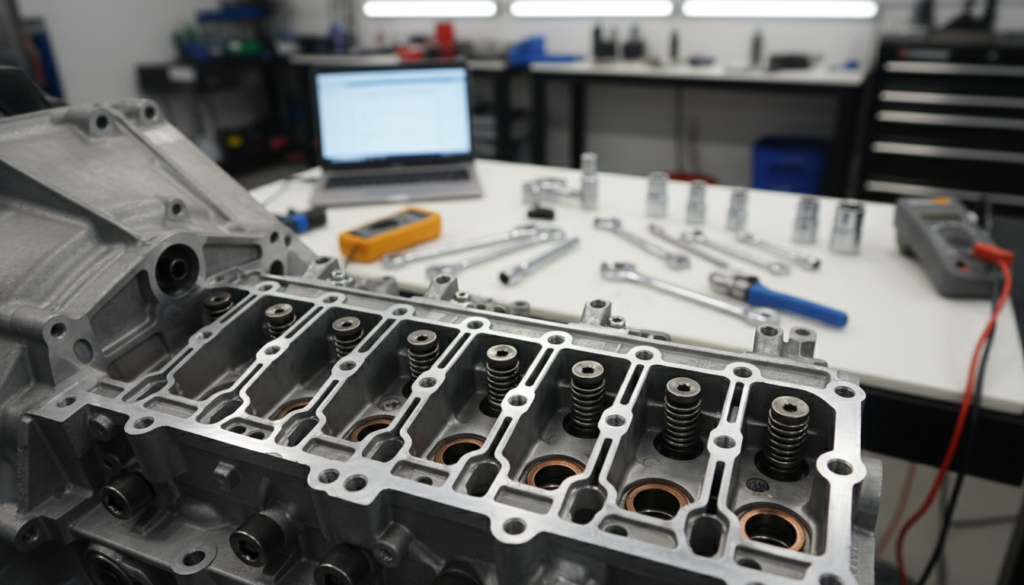
If internal electronics are damaged, shops sometimes replace the entire valve body assembly. Choosing OEM parts raises cost but gives factory-fit reliability. Remanufactured parts can lower the parts amount but may affect long-term performance.
After installation, the vehicle needs at least 15 minutes of road time so the new tcm can calibrate. Always budget for fresh transmission fluid and a new filter when planning this repair.
| Item | Impact on Cost | Owner Action |
|---|---|---|
| Internal valve body replacement | High — doubles labor time | Choose trusted shop |
| OEM vs remanufactured parts | OEM higher; remanufactured lower | Weigh warranty vs savings |
| Fluid, filter, gaskets | Moderate — expected additional cost | Include in estimate |
Pro tip: For related engine power issues, check a diagnostic guide like engine power is reduced troubleshooting to see if symptoms overlap before committing to major valve work.
Comparing Dealership Services and Independent Shops
Choosing between a dealer and an independent shop affects cost, warranty, and the chance of a correct immobilizer pairing. Dealers have direct access to proprietary GM software needed to pair a new control module with the vehicle’s security system.
Dealership advantage: factory software, certified technicians, and a warranty on the service. That combination reduces risk when expensive electronics and valve body programming are involved.
Independent shops: often offer lower labor cost and may have specialists who handle valve repairs and offer remanufactured parts. Confirm they possess pass-through programming tools that match factory-level capability.
The Importance of Immobilizer Pairing
If the new unit is not paired with the engine computer and immobilizer, the car will not start. Proper programming is a required step, not an optional extra.
| Service Type | Programming Access | Cost Range | Best for |
|---|---|---|---|
| Dealership | Latest GM software; direct immobilizer pairing | Higher labor; includes factory warranty | Owners seeking factory-backed repair and warranty |
| Independent (specialist) | Pass-through tools or OEM-level programmers | Moderate labor; may use reman parts | Budget-conscious owners needing transmission valve work |
| Independent (general) | May lack full programming tools | Lower labor but risk of extra visits | Simple maintenance, not module pairing |
Conclusion
Conclude your inspection by recording any fault codes and the exact conditions when they occurred. Confirm the battery is safe and note how many minutes the test took. This makes follow-up service faster and clearer.
The transmission control module often sits inside the valve body, so expect careful handling and a likely transmission fluid service. Check related sensors and the vehicle computer before ordering parts.
If a problem persists, contact a mechanic with experience in modern tcm systems. A gas pedal and ignition reset can clear minor glitches, but it is not a long‑term fix. Verify your model and years, weigh cost versus repair options, and drive with confidence once issues are resolved.
FAQ
Where is the transmission computer located on a 2018 GMC Sierra?
On many late-model pickups the transmission computer sits near or on the transmission valve body, often mounted inside the transmission pan or bolted to the valve body housing. Some models use an integrated valve body with the control unit sealed to it, which keeps the assembly compact and protected from road debris.
What symptoms indicate the transmission computer is failing?
Typical signs include erratic shifting, harsh gear changes, the vehicle staying in limp mode, unexpected gear hunting, and dashboard codes such as P0700. Drivers may also notice a delayed response when pressing the gas pedal and uneven fuel economy.
How should a driver prepare before diagnosing the control unit?
Start by parking on a level surface, engaging the parking brake, and removing ignition key. Disconnect the battery per manufacturer procedure to prevent shorts. Gather a scan tool that reads transmission codes and live data, gloves, drip pan for fluid checks, and basic hand tools for access panels.
Is it safe to access the valve body and control unit at home?
Access can be done at home if you have mechanical experience, the right tools, and follow safety steps. Always disconnect the battery, support the vehicle safely if lifting, and avoid contaminating the valve body with dirt. If unsure, consult a professional to avoid costly errors.
When should a mechanic trace wiring harnesses versus replacing the module?
If codes point to communication faults, damaged connectors, or corrosion, tracing and repairing harnesses is the first step. Replace the module only after confirming it’s not receiving proper signals or after bench testing. Wiring issues are a common, cheaper fix compared with full unit replacement.
What diagnostic tools help identify TCM faults?
A bi-directional scan tool that reads transmission-specific codes and live data helps pinpoint solenoid operation and pressure readings. Multimeters, wiring diagrams, and pressure gauges are useful for testing continuity and hydraulic function at the valve body.
Do replacement units need programming or pairing?
Yes. Many vehicles require immobilizer pairing or module programming to match the vehicle’s engine control unit and transmission calibrations. Dealerships have OEM software for this; some independent shops offer compatible programming services at lower cost.
Should I choose a dealership or an independent shop for repair?
Dealerships offer OEM parts and guaranteed programming but typically charge more. Independent shops can provide quality service and lower labor rates, especially if they specialize in transmissions and have proper diagnostic equipment. Verify warranties and technician experience before deciding.