Chevy S10 Years to Avoid & Best Years to Buy
The Chevy S10 is a classic compact pickup that remains a favorite for DIYers and budget-conscious buyers. But after decades on the road, not every S10 is a bargain. Some models are affordable upfront but become ‘money pits’ due to systemic mechanical failures.
The Short List: Chevy S10 Years to Avoid
If you are scanning the classifieds, be extremely cautious with the 2000–2003 models and early second-generation (1994–1996) trucks.
Why the Warning?
- Transmission Failure: The 4L60E automatic transmissions in the early 2000s are notorious for premature slipping.
- Cooling & Engine: The 4.3L V6 is legendary, but the ‘Dex-Cool’ sludge issues and intake manifold gasket leaks can lead to catastrophic engine damage if neglected.
- ABS & Electrical: Aging wiring harnesses and faulty ABS modules often turn the dashboard into a Christmas tree of warning lights.
Whether you’re looking for a work truck or a project vehicle, this guide identifies the specific years that will cost you the most in downtime. We’ll break down the ‘Red Flag’ years and highlight the best Chevy S10 years to buy for long-term reliability.
Chevy S-10 at a Glance for Used Truck Buyers
GM’s compact pickup gamble in 1982 reshaped the U.S. small-truck market. The 1982 model year introduced a domestically built compact pickup truck that replaced imported light trucks. That move gave buyers a simpler, serviceable alternative for light work and daily use.
Why the 1982 model year mattered?
The 1982 model marked GM’s switch from importing Isuzu-built LUVs to building its own compact pickup. That change meant body-on-frame construction, domestic parts, and wider dealer support for repairs and service.
Generations and naming changes
The first generation (1982–1993) wore the chevrolet s-10 badge. The second generation (1994–2004) dropped the hyphen and became chevrolet s10, with updated styling and stronger components.
Cab, bed, and drivetrain basics
Buyers will see regular cab and extended (Maxi) cab trucks, plus short and long beds. Bed length affects hauling and resale.
Rear-wheel drive is simpler and cheaper to maintain. Four-wheel drive adds capability but also extra mechanical parts that may need attention later.
- Trim notes: Xtreme and ZR2 alter ride height and wear patterns.
- Shopping reality: Condition and maintenance history matter more than options; two identical models can have very different ownership costs.
| Generation | Badge | Notes |
|---|---|---|
| First generation | chevrolet s-10 | Basic, serviceable, simple parts |
| Second generation | chevrolet s10 | Modernized, more options, late-run refinements |
| Final models | S10 family | Replaced by Colorado after 2004 |
Complaint-heavy model clusters will appear later in the guide, mostly in early 2000s production and certain four-cylinder pairings. Overall, the platform earned a reputation for durability when well maintained.
Chevy s10 years to avoid and the Problems That Drive Up Repair Costs
Not all used pickups age the same; several model years stand out for repeat, costly repairs.
2001 trouble spots: high complaint volume and electrical headaches
2001 recorded the highest number of reported issues, many electrical in nature. Owners describe intermittent faults that are hard to replicate and costly to diagnose.
That pattern raises labor bills. Technicians often test parts rather than find a single failing module.
2002 red flags: severe complaints and transmission failure risk
The 2002 chevy s10 shows more serious complaints and the top incidence of transmission failure. A failing transmission can be the most expensive fix for this model run.
1994–1997 Vortec 2200: low power and head-gasket risk
Trucks with the Vortec 2200 feel underpowered and have notable head-gasket issues. What seems like a bargain can become an engine rebuild bill.
Four-cylinder with automatic transmission: real-world driveability
Any four-cylinder paired with an automatic transmission often struggles on merges and inclines. Expect more downshifts, slower acceleration, and a strained feel when loaded.
Older trucks, bigger risk: rust, neglect, and high mileage realities
As miles and mileage climb, deferred maintenance shows. Cooling neglect, worn ignition parts, and fuel system complaints (rough idle, hard starts) are common.
Rust can be the deal-breaker. A dry-state late-run truck may be a better buy than a cleaner-looking vehicle from a salt-belt yard.
- Quick buying tip: higher complaint counts usually equal more repeat repairs and higher ownership costs.
- Inspection focus: electrical scans, transmission shift check, coolant condition, and signs of head-gasket failure.
| Issue | High-risk model years | Typical cost impact |
|---|---|---|
| Electrical/diagnostic faults | 2001 | Moderate labor, repeated shop visits |
| Transmission failure | 2002 | High — rebuild or replacement |
| Head gasket / low power | 1994–1997 (Vortec 2200) | High — engine repair or replacement |
Even good model years share generation-wide weak points like fuel pump and distributor wear. A careful inspection matters no matter which final model you consider.
Common Chevy S10 Issues by Generation
Grouping common faults by generation cuts through forum noise and highlights practical warning signs buyers can check quickly.
Second generation fuel system and fuel pump
2nd generation trucks often show fuel pump wear. Typical signs are extended crank, intermittent start, or a no-start after sitting. Key-cycling the ignition sometimes restores pressure briefly.
HVAC and heater core failures
Heater core clogs or leaks cause no heat, fogged windows, a sweet smell, or damp carpet on the passenger side. Dash removal makes this repair costly.
Intake manifold gasket and coolant contamination
Watch for low coolant with no external leak, milky oil, or rising oil level. These are classic intake manifold gasket symptoms and risk engine contamination.
Ignition and misfire
Distributor cap and rotor wear cause misfires, rough idle, and crank-no-start events. Routine cap/rotor service is an inexpensive prevention step.
Front-end wear and 4WD quirks
A growl at ~30+ mph often points to worn wheel bearings. Loose steering links matter for safety. For four-wheel drive, a bad vacuum switch can leak transfer case fluid into vacuum lines and HVAC actuators.
- Quick checks: listen for growls, smell for coolant, watch start behavior, and inspect carpet/drip signs.
| Issue | Typical sign | Repair impact |
|---|---|---|
| Fuel pump | Extended crank/no-start | Moderate–high |
| Heater core | Fogging, sweet smell | High (labor) |
| Intake gasket | Milky oil/low coolant | High (engine risk) |
Best Chevy S10 Model Years to Consider Instead
Some model runs simply hold up better in daily use and cost less over time; this section highlights those sweet spots.
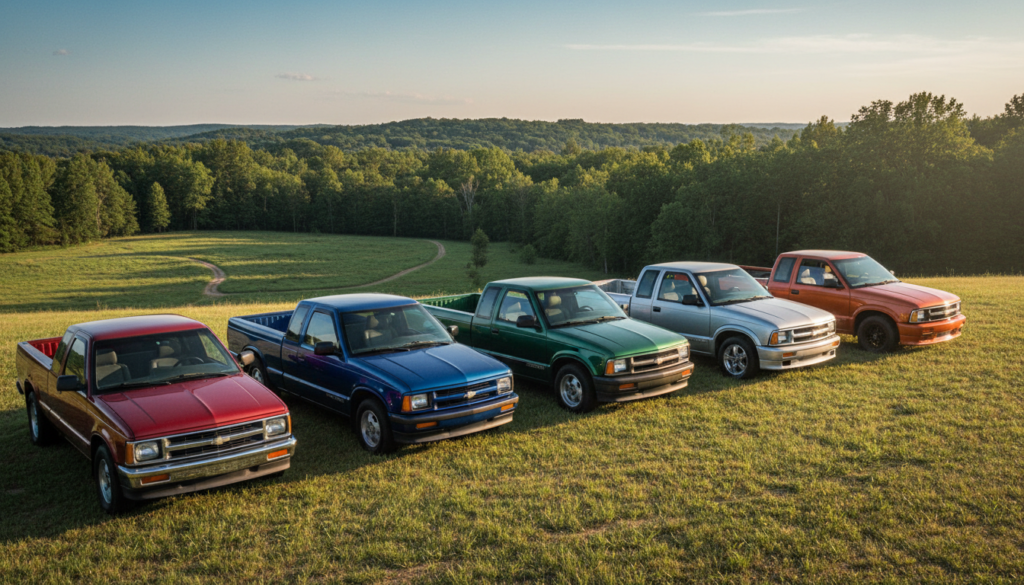
1988–1993: first generation with the 4.3L V6
Why buy: the 4.3L V6 arrived in 1988 and proved durable. These trucks use simpler systems and widely available parts, making repairs straightforward.
For light-duty work, a well-serviced example is a reliable everyday workhorse.
1995–2004: a practical safety baseline
From 1995 the lineup gained a driver-side airbag. Later brakes and ABS upgrades improved everyday confidence compared with earlier models.
1998 refresh: interior and Vortec 4300 gains
The 1998 update brought dual airbags, a tidier interior, and Vortec 4300 improvements. These trucks feel more modern and are easier to live with.
2003–2004: late-run refinement and final model year appeal
Late production often means fewer small bugs and incremental fixes. The final model year benefits from factory refinements and can be a smart buy if condition checks out.
- Powertrain tip: for towing or hauling, prioritize the V6 with an automatic transmission over a four-cylinder.
- Fuel economy: these pickups are reasonable for their era, but mpg varies by drivetrain and drive mode.
- Buy smart: a well-maintained recommended model beats a neglected newer one every time.
| Range | Highlight | Practical benefit | Notes |
|---|---|---|---|
| 1988–1993 | 4.3L V6 | Durable, simple repairs | Best for light work and parts availability |
| 1995–2002 | Driver airbag, ABS upgrades | Improved safety baseline | Safer daily driving than pre-1995 models |
| 1998 | Interior refresh, Vortec 4300 | More comfort and power | Feels less dated; better highway manners |
| 2003–2004 | Late-run refinements | Smoother ownership | Final model year improvements before replacement |
How to Shop a Used Chevrolet S10 and Avoid Expensive Surprises?
Start every used-truck search with clear priorities: budget, duty cycle, and a realistic repair cushion. That roadmap directs which models and trims make sense for the job.
Pre-purchase checklist
Confirm service records, check coolant level and color, and look for overheating signs like warped radiator caps or fresh paint near the head. Low coolant or milky oil can point to gasket trouble.
Test-drive cues
Note extended crank, rough idle, stalling, or delayed engagement. Feel for slipping, harsh shifts, or inconsistent shift points in the transmission — these map to common problems and higher repair bills.
Match the truck to the job
For towing, the 4.3L V6 with an automatic transmission can tow up to about 6,000 lbs (regular cab) or 5,800 lbs (extended). The V6 with a manual drops near 4,500 lbs. The four-cylinder tops out near 2,000 lbs.
| Item | Typical expectation | Why it matters |
|---|---|---|
| Fuel economy | ~20 city / 26 highway best-case; V6 ~14–17 combined | Sets running costs |
| Drive choice | RWD simpler; 4WD costlier to repair | Maintenance and resale impact |
| Mileage check | Verify records and CEL history | Reduces surprise repairs |
Conclusion
Think in terms of risk clusters, condition, and a realistic repair budget when choosing a pickup.
Lean away from early-2000s model runs that drew the most complaints and from underpowered four-cylinder setups. Prefer well-kept examples with clear service records and fewer cooling or electrical red flags.
For many buyers, a clean chevrolet s-10 from the recommended runs is a practical compact pickup for light hauling and daily use. Budget for basic updates like fluids, ignition wear parts, and heater-service when needed.
If a seller cannot prove maintenance, a test drive shows warning signs, or rust looks structural, keep shopping. Use the inspection cues in this guide as a simple repeatable process for every vehicle you view.
FAQ
Which S-10 model years had the most transmission and electrical complaints?
The early 2000s show higher complaint volumes, with 2001 noted for electrical headaches and 2002 for serious transmission failures. Look for harsh shifting, delayed engagement, and warning lights during a test drive. Ask the seller for repair records and transmission fluid change history.
Why are 1994–1997 Vortec 2200 trucks often less desirable?
These years used the Vortec 2200 four-cylinder that proved underpowered and more failure-prone compared with later V6 options. Owners report drivability issues, frequent maintenance, and lower resale value. For regular highway use or towing, a larger V6 is usually a better choice.
What common fuel system problems affect second‑generation S-10s (1994–2004)?
Fuel pump failures and clogged filters are common. Symptoms include hard starts, sputtering at speed, and loss of power under load. A failing pump often causes intermittent stalling; replacement and checking the fuel pressure are standard fixes.
How can I spot intake manifold gasket or coolant contamination issues?
Watch for white exhaust smoke, milky oil, low coolant without visible leaks, and overheating. These signs suggest coolant getting into oil or combustion chambers. Have a compression test and coolant system pressure test performed before buying.
Are heater core leaks and HVAC failures a frequent problem? What should I check?
Yes—heater core failures cause sweet-smelling coolant inside the cab, fogged windows, and loss of heater function. Inspect the carpet for dampness and check cabin air temperature during a test drive. Repair can be labor-intensive on older trucks.
What first‑generation (1982–1993) issues should buyers watch for?
Expect age-related wear: rust on the frame and bed, deteriorated wiring, and aging suspension and braking components. Verify underbody condition, wheel bearing play, and evidence of previous rust repairs or patch panels.
Which model years are recommended if I want a durable V6 work truck?
Late first‑generation trucks with the 4.3L V6 (1988–1993) are praised for simplicity and durability. For modern safety and refinement, 1998 and later second‑generation examples with the Vortec 4300 offer better performance and dual airbags.
How should I evaluate a used S‑10’s transmission and engine during a test drive?
Check for smooth, quick shifts and steady idling. Note any delayed engagement, slipping, hard shifts, extended cranking, or misfires. Under load, the engine should not hesitate or lose power. Listen for abnormal noises and monitor gauge readings for overheating.
What 4WD‑specific problems occur and how do they present?
Common 4WD issues include defective vacuum switches, binding front hubs, and transfer case fluid migration causing contamination. Symptoms are inability to engage 4WD, grinding noises, or fluid leaks. Inspect hub operation and listen for drivetrain noises in both modes.
What basic pre‑purchase checks reduce the risk of costly repairs?
Request service records, inspect coolant and oil for contamination, check for uneven tire wear and suspension play, and get a professional compression and leak‑down test if possible. A vehicle history report and a pre‑buy inspection are highly recommended.