
2015 Chevy Malibu Fuel Rail Pressure Sensor Limp Mode Explained
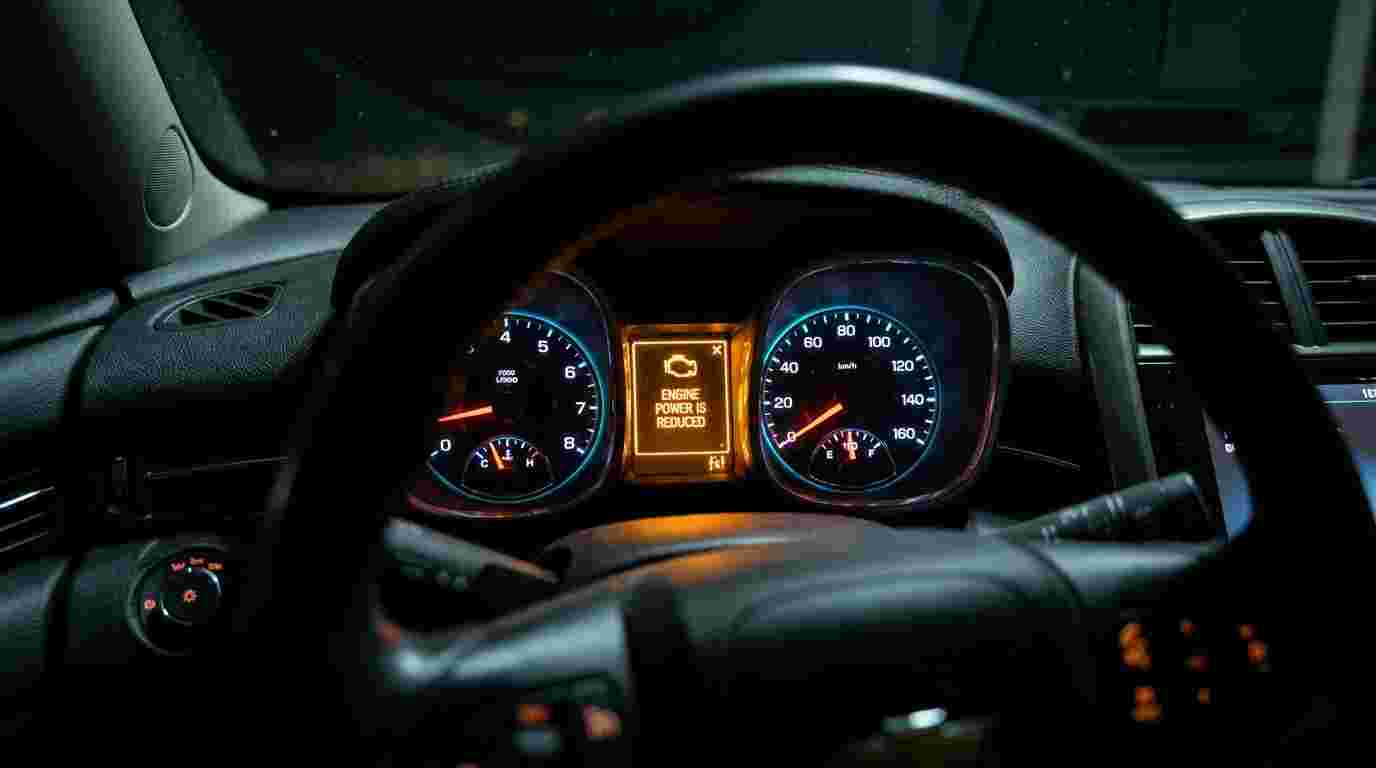
Seeing the “Reduced Engine Power” message flash on your 2015 Chevy Malibu dashboard while the car suddenly loses acceleration is terrifying. Your vehicle has just triggered “Limp Mode”—a software failsafe designed to prevent catastrophic engine damage.
If your OBD2 scanner is pulling codes like P0089, P0191, or P0192, the Engine Control Module (ECM) has detected a critical problem with your fuel pressure data.
The Role of the Fuel Rail Pressure Sensor (FRPS)
The 2015 Malibu utilizes a Direct Injection (DI) fuel system. Unlike older cars, this system relies on a mechanical High-Pressure Fuel Pump (HPFP) driven by the camshaft, compressing fuel to well over 2,000 PSI before it enters the cylinders.
The Fuel Rail Pressure Sensor sits directly on the fuel rail to monitor this extreme pressure. If the sensor reports that the pressure is dropping or spiking erratically, the ECM instantly restricts throttle response and cuts engine power to prevent two deadly scenarios:
- Fuel Starvation (Lean Condition): Not enough fuel causes extreme cylinder temperatures and detonation, which can quickly melt the pistons.
- Fuel Flooding (Rich Condition): Too much fuel washes the vital lubricating oil off the cylinder walls, leading to instant metal-on-metal friction.
Diagnostic Pro Tip: Do not immediately replace the sensor just because of a code! In the 2015 Malibu, a fuel pressure limp mode is very frequently caused by a failing High-Pressure Fuel Pump (HPFP) losing its mechanical pressure, a worn camshaft follower, or a frayed wiring harness connector at the sensor itself.
What is the fuel rail pressure sensor on a 2015 Chevy Malibu?
The 2015 Chevy Malibu 2.5L Ecotec engine utilizes a direct injection system. This system requires fuel to be delivered at incredibly high pressures directly into the combustion chamber.
The Fuel Rail Pressure Sensor monitors the exact pressure of the fuel inside the high-pressure fuel rail. The Engine Control Module relies on this real-time data to calculate how long to keep the fuel injectors open. If the fuel pressure is too high, the engine runs rich. If the fuel pressure is too low, the engine runs lean.
Where is the FRPS located?
On the 2015 Chevy Malibu 2.5L engine, the Fuel Rail Pressure Sensor is located directly on the high-pressure fuel rail, which sits under the intake manifold. Because of its location, accessing the sensor requires removing the intake manifold, making it a moderately labor-intensive component to inspect manually.
What are the symptoms of a failing 2015 Chevy Malibu FRPS?
Aside from triggering limp mode, a failing Fuel Rail Pressure Sensor often produces several noticeable drivability issues. You will likely experience hard starting, a rough idle, engine stalling at stoplights, and significantly reduced fuel economy.
Why does the 2015 Chevy Malibu fuel pressure sensor cause limp mode?
The Engine Control Module constantly compares the “Desired Fuel Rail Pressure” to the “Actual Fuel Rail Pressure” reported by the sensor. When the FRPS sends erratic, frozen, or out-of-range signals, the ECM cannot accurately control fuel delivery.
To prevent the engine from destroying itself due to extreme lean or rich conditions, the ECM instantly triggers limp mode. This restricts the throttle body operation and limits engine RPMs, forcing you to pull over safely.
What diagnostic trouble codes indicate a fuel pressure issue?
When the ECM triggers limp mode due to fuel pressure irregularities, it stores specific Diagnostic Trouble Codes (DTCs). According to GM diagnostic parameters, the most common codes for the 2015 Chevy Malibu include:
- P0089: Fuel Pressure Regulator 1 Performance. This frequently points to a failing high-pressure fuel pump, which is a documented weak point on the 2.5L engine.
- P0191: Fuel Rail Pressure Sensor Circuit Range/Performance.
- P228C: Fuel Pressure Regulator 1 Exceeded Control Limits – Pressure Too Low.
- P228D: Fuel Pressure Regulator 1 Exceeded Control Limits – Pressure Too High.
How can you diagnose a faulty 2015 Chevy Malibu fuel pressure sensor?
Before throwing parts at the vehicle, accurate diagnosis is critical. Replacing the sensor without testing the high-pressure fuel pump can lead to wasted money, as the pump is statistically more likely to fail on the 2015 Chevy Malibu than the sensor itself.
Initial visual and electronic checks
Begin by connecting an OBD-II scanner to the vehicle’s diagnostic port under the dashboard. Retrieve all active and pending codes. Inspect the electrical connector for the high-pressure fuel pump and the FRPS wiring harness for visible fraying, corrosion, or loose grounds (specifically ground G122 at the rear of the cylinder head).
Advanced data stream diagnostics
Use an advanced scan tool that can display live data. Monitor the “Desired Fuel Rail Pressure” and “Actual Fuel Rail Pressure” while the engine is running.
At idle, the 2015 Chevy Malibu 2.5L should show around 400 to 700 PSI. If you increase engine RPMs and the actual pressure severely lags behind the desired pressure, the high-pressure fuel pump is likely failing. If the sensor reading is completely frozen or reads an impossible number, the Fuel Rail Pressure Sensor or its wiring circuit is the primary suspect.
What are the steps to replace the 2015 Chevy Malibu fuel rail pressure sensor?
Choose an OEM ACDelco sensor if longevity and precise ECM calibration matter more than saving a few upfront dollars on aftermarket parts.
Step-by-step replacement guide
- Depressurize the fuel system: Locate and remove the fuel pump fuse from the fuse box. Start the engine and let it run until it stalls out to relieve fuel pressure. Disconnect the negative battery terminal.
- Remove the intake manifold: Because the Fuel Rail Pressure Sensor sits under the intake manifold on the 2.5L engine, you must unbolt and remove the manifold assembly to gain access.
- Disconnect the electrical harness: Carefully unclip the wiring harness from the Fuel Rail Pressure Sensor.
- Remove the sensor: Use a deep socket to unthread the old sensor from the fuel rail. Place a rag underneath to catch any residual fuel.
- Install the new sensor: Thread the new ACDelco sensor into the fuel rail and torque it to the factory specifications outlined in your repair manual.
- Reassemble components: Reinstall the intake manifold using new gaskets to prevent vacuum leaks. Reconnect the fuel pump fuse and the battery terminal.
- Clear codes: Use your OBD-II scanner to erase the stored engine codes and take the 2015 Chevy Malibu for a test drive to confirm the limp mode condition is resolved.
How can you prevent future fuel system issues in your 2015 Chevy Malibu?
Routine maintenance significantly extends the life of direct-injection fuel components. Always use Top Tier gasoline to prevent carbon buildup on the intake valves and fuel injectors. Perform regular oil changes using the correct synthetic oil weight, as the high-pressure fuel pump is driven by the engine’s camshaft. Poor lubrication accelerates camshaft lobe wear, which directly ruins the fuel pump’s ability to generate high pressure.
If your 2015 Chevy Malibu ever enters limp mode, pull over to a safe location immediately. Do not attempt to force the vehicle to highway speeds, as this risks severe internal engine damage.
Moving forward with your Chevy Malibu repairs
Understanding the relationship between the Fuel Rail Pressure Sensor, the high-pressure fuel pump, and the Engine Control Module is the key to successfully fixing your 2015 Chevy Malibu. By utilizing live scanner data to pinpoint the exact failure point, you can avoid unnecessary parts replacement and get your vehicle safely out of limp mode and back on the road.
Frequently Asked Questions (FAQ)
What causes a 2015 Chevy Malibu to go into limp mode?
The 2015 Chevy Malibu enters limp mode when the Engine Control Module detects a critical fault that could damage the engine or transmission. Common causes include erratic fuel pressure readings, failing throttle position sensors, or severe engine misfires.
How much does it cost to replace a fuel rail pressure sensor on a Chevy Malibu?
Replacing the fuel rail pressure sensor on a 2015 Chevy Malibu typically costs between $180 and $250 at an independent repair shop. The part itself costs roughly $40 to $70, while labor accounts for the remainder due to the need to remove the intake manifold.
Can you drive a 2015 Chevy Malibu with a bad fuel pressure sensor?
You should not drive a 2015 Chevy Malibu with a bad fuel pressure sensor. The vehicle will likely remain in limp mode, restricting your speed to unsafe levels for highway driving, and running the engine with incorrect fuel pressure can cause severe internal damage over time.
Is code P0089 the sensor or the fuel pump?
On the 2015 Chevy Malibu 2.5L engine, code P0089 almost always indicates a failing high-pressure fuel pump rather than a bad sensor. Mechanics highly recommend diagnosing the fuel pump’s actual output pressure before simply replacing the sensor.