Chevy 3500 Towing Capacity: Heavy-Duty Hauling
Lets talks about the Chevy Silverado 3500’s towing power. It explains what drivers can expect for heavy-duty towing. It covers towing specs, payload, and trailering features in simple terms for everyone in the U.S.
It offers practical tips for hauling, RV trips, transporting equipment, and livestock trailers. It shows how dually setups, engine choices, and drivetrains impact performance. It’s all about real-world use.
The guide compares the 3500 to the Silverado 2500. It discusses Duramax diesel and V8 gas engines, chassis, and suspension. It also covers maintenance and resale. You’ll get clear, useful info to pick and use a truck for heavy-duty towing.
Overview of Chevy 3500 Towing Capabilities
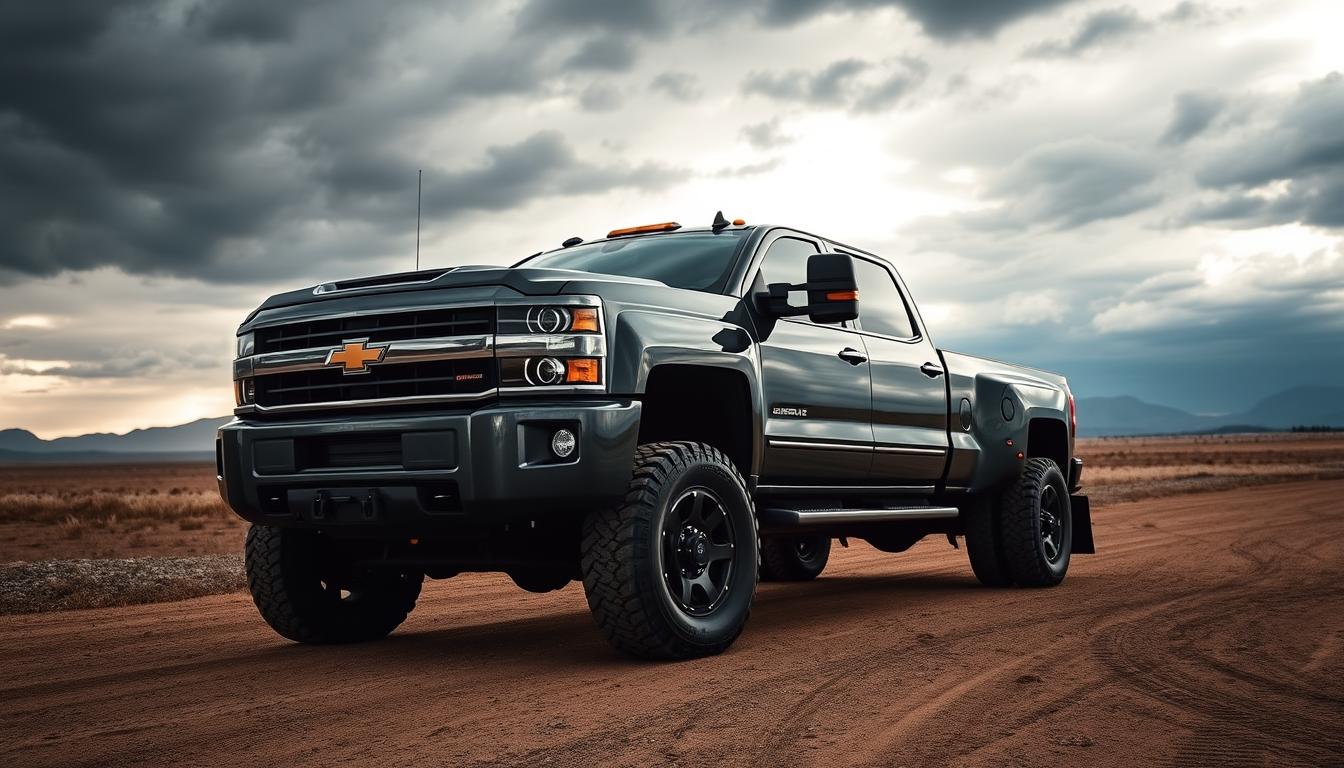
The Chevrolet Silverado 3500 is made for tough work and heavy loads. It has a strong steel frame, sturdy axles, and heavy-duty brakes and suspension. This makes it stable and reliable for towing.
Local dealers in Oklahoma, Michigan, and Texas often suggest the 3500 for those who need a truck that can handle heavy loads.
What makes the Silverado 3500 a heavy-duty towing truck?
The 3500 is built with heavy-duty parts. Its frame is boxed to resist twisting when pulling long trailers. The axles and brakes are strong to slow down heavy loads without losing power.
Dually rear wheels add stability when towing wide or heavy trailers. This makes the 3500 powerful for towing on steep hills and long trips.
Top headline towing and payload specs at a glance
When equipped right, the 3500 can tow up to 36,000 lbs with gooseneck or fifth-wheel setups. Conventional towing reaches near 20,000 lbs. Payload can go over 7,000 lbs, with some reports of up to 7,234–7,442 lbs.
The towing specs depend on the engine, drivetrain, and other factors. Always check the exact numbers for your setup before towing.
Typical buyers and use cases for the 3500 (commercial, RV, fifth-wheel)
Commercial users like the 3500 for moving heavy equipment. Contractors use it for hauling materials and tools. RV owners need it for towing large fifth-wheels.
Ranchers and those hauling livestock prefer the dual-rear-wheel models for better trailer stability.
Dealers often see repeat customers who need a reliable truck for daily work. The Chevy 3500’s towing capabilities and power make it a go-to choice for them.
Chevy 3500 towing capacity
The Chevy Silverado 3500 is made for heavy hauling. This section gives real numbers and setups that achieve them. It helps owners match trailers to the truck’s safe limits, not just chase big numbers.
Max gooseneck and fifth-wheel ratings are key for heavy-duty users. With the Duramax 6.6L turbo-diesel and the right setup, the truck can tow up to 36,000 lbs. Dealers and factory specs confirm this for the best configurations. Owners of large, multi-axle fifth-wheels will find the chevy 3500 towing performance most useful.
Conventional hitch towing has different numbers. In top setups, it can tow up to 20,000 lbs. This limit depends on hitch type, weight distribution, and tongue weight rules. For many, the chevy silverado 3500 towing capacity for conventional trailers is enough for heavy equipment and large cargo trailers.
The best setups for peak numbers are consistent. A Duramax 6.6L diesel with the Allison 10-speed, a dually chassis, and the Max Tow package offer the highest ratings. Choosing single-rear-wheel models or a gas V8 will lower the ceiling, but these setups can handle everyday tasks well.
Real-world hauling shows the value of these numbers. Large fifth-wheel RVs fit best behind a properly equipped 3500. Commercial equipment haulers use the truck’s gooseneck advantage for skid steers or mini-excavators. Livestock trailers benefit from dually stability and higher payload, making long hauls safer and less stressful for drivers.
Practical advice for owners: always compare the trailer’s gross vehicle weight and tongue or king-pin load to the truck’s published ratings. Matching trailer weight to the chevy 3500 towing capacity and the truck’s payload rating keeps towing safe and legal. Proper hitch selection, brake controllers, and weight-distribution gear improve chevy 3500 towing performance on real roads.
Engine and drivetrain options that drive towing performance
The engine and drivetrain are key to the Chevy 3500’s towing power. The right mix affects how it pulls, stays cool, and performs in real-world towing. We’ll look at different powertrains to help you choose the best for your needs.
Duramax 6.6L Turbo-Diesel: horsepower, torque, and towing benefits
The Duramax 6.6L turbo-diesel engine makes about 445 hp and 910 lb-ft of torque. This high torque at low rpm is perfect for heavy trailers and steep hills.
Diesel engines offer the highest towing capacity for the Chevy 3500. They provide consistent power, better cooling, and less strain on the drivetrain. This makes them ideal for heavy loads and long trips.
6.6L V8 gas option: where gas shines for towing
The 6.6L V8 gas engine produces 401 hp and 464 lb-ft of torque. It may not match diesel torque, but it has its own advantages.
Gas trucks are cheaper to buy and lighter. This means more payload and easier loading for work. They’re also better for daily driving when towing is moderate. This makes them a good choice for occasional haulers.
Allison 10-speed transmission and driveline components for heavy towing
The Allison 10-speed automatic is designed for heavy use with the Duramax. It keeps rpm in the best range and reduces wear on the clutch when starting heavy loads.
Heavy-duty axles, reinforced driveshafts, and adjustable axle ratios are essential for meeting towing specs. The right axle ratio and cooling system are critical for reaching published ratings. Avoid overheating or reduced performance on steep hills by choosing the right spec.
For maximum towing capacity and long trips, go with Duramax and Allison. For more payload, lower cost, and everyday driving, choose the 6.6L gas V8.
| Component | Duramax 6.6L Diesel | 6.6L V8 Gas |
|---|---|---|
| Typical horsepower | ~445 hp | ~401 hp |
| Typical torque | ~910 lb-ft | ~464 lb-ft |
| Best for | Maximum towing, long grades, heavy fifth-wheel loads | Moderate towing, higher payload, lower purchase cost |
| Transmission pairing | Allison 10-speed for smooth, durable shifts | 10-speed automatic available, tuned for lighter curb weight |
| Real-world benefit | Higher duramax chevy 3500 towing capacity; steady chevy 3500 towing power on long hauls | Better daily driving and payload flexibility when chevy 3500 towing specs are not maxed |
Chassis, suspension, and dually configurations for extreme loads
The Silverado 3500 has a strong frame and suspension tuned for heavy loads. It’s great for towing big fifth-wheels or heavy payloads. When choosing a truck, consider the chassis, axle ratios, and wheel setup.
Dual rear wheel advantages for stability and max payload
Dually trucks have wider rear tracks and use four tires instead of two. This reduces roll and improves stability. It also lets dealers adjust the suspension and axles for more towing capacity.
Dually trucks are better at handling large trailers. They reduce sway when a trailer shifts or hits a gust. This makes them essential for commercial haulers and fifth-wheel owners.
Frame, axles, brakes, and suspension features engineered for towing
The truck has a fully boxed high-strength steel frame and heavy-duty rear axles. Brake upgrades are part of towing packages to prevent fade on long descents.
Leaf springs are standard for durability. Some trims offer auxiliary air-ride suspension to control squat and keep the trailer pin weight stable. These features protect the chassis and maintain braking performance.
How bed length and cab choice affect payload and towing setup?
Bed options include a 6.6-foot box and an 8-foot box. The 8-foot bed adds more cargo area, perfect for dually models.
Cab selection impacts payload. Crew Cabs add weight and interior features, reducing payload. Choose Crew Cab for comfort, longer bed for bulky cargo, and dually for top-end towing stability.
| Configuration | Best for | Impact on payload | Effect on towing |
|---|---|---|---|
| Regular Cab + 8-ft bed | Maximum payload, single-crew crews | Highest payload available | Optimized for heavy conventional loads |
| Double Cab + 6.6-ft bed | Balanced cargo and seating | Moderate payload, flexible use | Good for equipment haulers |
| Crew Cab + 6.6-ft bed | Passenger comfort, family or crew transport | Lower payload due to heavier cab | Better for towing with more occupants |
| Dually (dual rear wheels) | Large fifth-wheels, commercial towing | Increases usable payload and stability | Maximizes chevy 3500 towing capabilities and reduces sway |
Chevy 3500 towing specs comparison with Silverado 2500
Choosing between a Silverado 2500 and a 3500 depends on what you need. This comparison looks at towing and payload, daily driving, and when one is better than the other.
The numbers show big differences in what these trucks can do. The Silverado 2500 can tow up to 22,430 lbs for gooseneck or fifth-wheel setups. The 3500 can tow up to 36,000 lbs when set up right, and about 20,000 lbs for conventional towing.
Payloads also vary a lot. The 2500 can carry up to 3,700–3,980 lbs. The 3500 can carry up to 7,200–7,440 lbs in heavy-duty setups. These numbers are important for carrying tools, concrete, or heavy work bodies.
chevy 3500 towing capacity is great for commercial and heavy RV use. It offers stability and extra capacity for big fifth-wheels or heavy gear. Always check payload and hitch ratings, not just peak tow numbers, for proper setup.
Head-to-head numbers: max towing and payload differences
The table below shows the main differences for easy comparison.
| Specification | Silverado 2500 (typical max) | Silverado 3500 (typical max) |
|---|---|---|
| Max gooseneck / fifth-wheel towing | Up to ~22,430 lbs | Up to 36,000 lbs |
| Max conventional towing | About 18,500–18,700 lbs | About 20,000 lbs |
| Max payload | ~3,689–3,979 lbs | ~7,234–7,442 lbs |
| Best suited for | Contractors, ranchers, weekend towing | Commercial haulers, large RV owners |
When to choose a 2500 vs. a 3500 based on typical towing needs?
Go for a 2500 if you value a smooth ride and easy handling. It’s perfect for contractors and ranchers who tow often but don’t need extreme weights. The 2500 is easier to park and maneuver, yet it offers strong towing for most users.
Opt for a 3500 when you need to tow near-maximum weights or carry very heavy payloads. Fleet managers and RV owners with large fifth-wheels will appreciate the higher towing margin and payload. The 3500 handles heavy loads better and reduces drivetrain strain.
Everyday drivability trade-offs between 2500 and 3500 (ride, parking, dually size)
The 2500 has a smoother ride and tighter turning circle in the city. It’s better for daily driving and mixed-use owners.
The 3500, and dually versions in particular, feels heavier at low speeds and is wider. Parking and navigating narrow spaces require more planning. But, it offers better stability under load and less trailer sway with big weights.
Consider both sides when deciding. Match the truck to your typical loads, not just peak specs. A right-sized 2500 can save time and money for many. A 3500 is essential when maximum towing and payload are common, not rare.
Towing technology and trailering features that improve safety and control
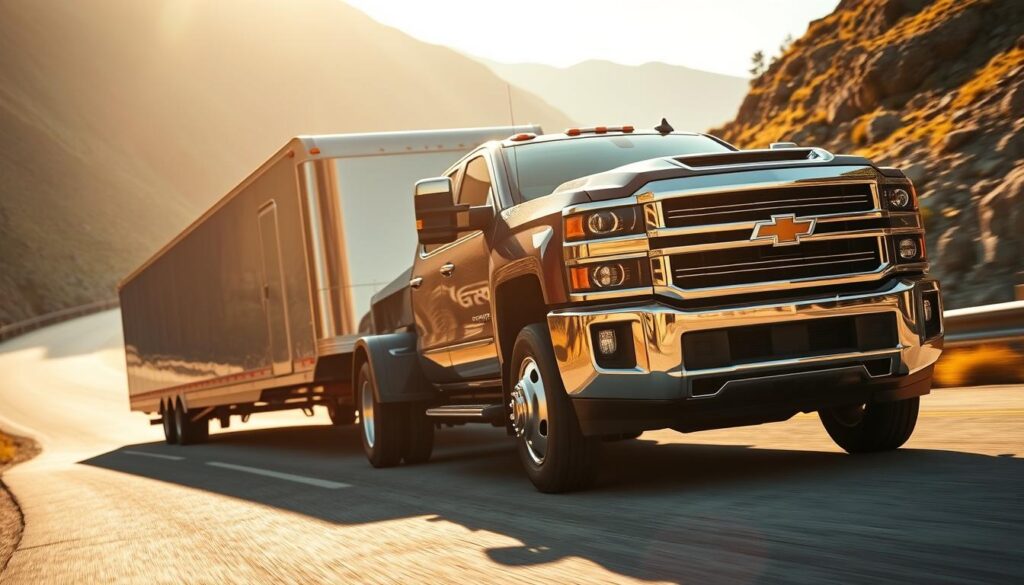
The Silverado 3500 comes with tools that make towing easier. It has digital checklists, trailer profiles, and real-time diagnostics. These features help set up your trailer without guesswork, making towing safer.
Advanced Trailering System
This system stores details about your trailers, like length and weight. You can save many trailers and pick the right one for each trip. The app also runs a checklist before you leave, checking lights and brakes.
It also tests electrical connections, helping you avoid problems on the road. This makes towing easier for everyone.
Camera systems for precise maneuvering
Up to 15 camera views help with tight spots and lane changes. The transparent trailer view makes hitching easier. These cameras reduce blind spots, making towing safer.
Tire monitoring and electrical checks
It watches trailer tires for heat or low pressure, preventing blowouts. It also checks electrical connections, so you can fix issues before driving. These features make towing safer for everyone.
Practical setup tip
- Program each trailer profile before the first trip.
- Run the pre-departure checklist every time you hook up.
- Verify tire pressure and run the electrical diagnostic after connecting the seven-way plug.
| Feature | What it does | Benefit |
|---|---|---|
| Trailer profiles | Stores length, weight, brake type and settings | Speeds setup and ensures correct brake calibration |
| Pre-departure checklist | Step-by-step items for safe hookup and departure | Reduces missed checks and prevents roadside fixes |
| Transparent trailer view | Simulated “through-trailer” camera perspective | Makes hitching and slow maneuvers safer |
| Tire pressure/temperature monitoring | Monitors trailer tires and alerts on heat or low pressure | Prevents blowouts and maintains handling |
| Electrical diagnostics | In-cab tests for wiring, bulbs and connectors | Helps find faults before leaving the lot |
Payload, bed options, and real-world hauling performance
The Silverado 3500 is great for contractors, landscapers, and RV owners. It balances payload and towing capacity well. Before buying, check the chevy 3500 towing specs for exact numbers.
Max payload can go over 7,000 pounds in some gas-powered, single-rear-wheel setups. It ranges from 7,234 to 7,442 lbs, depending on the cab, bed length, axle ratio, and engine. The Duramax diesel engine boosts torque, making it better for heavy trailers. But, it slightly lowers payload due to the extra weight of the engine and transmission.
Bed length and layout affect how work gear fits. Short beds are good for toolboxes and small pallets. Long beds, like the 8.2-ft option, are better for carrying longer lumber or small machines. Dual rear wheel setups are best for commercial hauling, as they improve bed stability and trailer control.
Real-world use shows the truck’s capability. Construction crews carry tools, lumber, and concrete mix in the bed while towing a trailer. Landscapers haul sod and supplies, and also carry trimmers and a compressor in the bed. Small machinery, like compactors or generators, fits in the bed, while larger loads go on a trailer.
Before loading, drivers should add cargo, passengers, fuel, and hitch mass to the truck’s weight. This ensures safe operation and maintains chevy 3500 towing performance for different jobs.
| Configuration | Typical Max Payload (lbs) | Bed Options | Notes on Towing |
|---|---|---|---|
| SRW Gas, crew cab | 7,200–7,442 | 6.6-ft or 8.2-ft | Highest payload numbers; strong chevy 3500 towing specs for moderate trailers |
| SRW Duramax Diesel, crew cab | 6,800–7,100 | 6.6-ft or 8.2-ft | Best torque and chevy 3500 towing performance for heavy fifth-wheels; slight payload penalty |
| DRW (dually) Gas or Diesel | 6,500–7,000 | 8.0-ft long bed common | Improved trailer stability; payload varies with axle ratio and dual-rear-wheel components |
| Commercial chassis cab | Varies by upfit, often lower cab payload | Custom upfits | Designed for vocational equipment and body mounts; consult chevy 3500 towing specs for GCWR limits |
Ownership considerations: maintenance, dealer support, and resale
Buying a heavy-duty truck is just the start. The Chevy 3500 needs regular care to tow safely. Owners who keep up with service and choose the right gear avoid downtime and keep costs steady.
Heavy-duty trucks need a detailed service plan. Check cooling systems, brakes, and suspension after heavy loads. Diesel engines require special care, like fuel-filter changes and DEF management.
Dealerships are key for long-term support. Chevrolet dealers in places like Owasso, Terrell, and Lake City offer skilled technicians and parts. These services make warranty work and upgrades easier.
Choosing the right towing options at purchase saves time. Max Tow or upgraded axle ratios help with heavy hauling. Factory prep kits for fifth-wheel and gooseneck trailers make installation easier.
Match the truck’s specs to your needs. Over-spec’ing adds weight and costs more. Under-spec’ing can lead to wear and safety issues. Choose a package that fits your regular loads.
Resale values depend on maintenance and towing gear. Trucks with service records and proper gear sell for more. Buyers pay more for diesel/Allison combos that show good care.
Plan the total cost of ownership carefully. Consider fuel type, maintenance, insurance, and repairs. Diesel engines may cost more upfront but save on towing and boost resale when maintained well.
Simple steps protect your investment: follow schedules, use certified service centers, and only add needed accessories. These actions reduce downtime and support positive ownership experiences.
| Ownership Area | Key Actions | Impact on Cost & Resale |
|---|---|---|
| Engine & Driveline | Regular oil/filter changes, Allison service, DEF checks | Lower long-term repair costs; improves chevy 3500 towing resale |
| Cooling & Brakes | Frequent inspections after heavy loads; replace fluids and pads as needed | Prevents downtime; reduces repair severity and preserves value |
| Suspension & Axles | Monitor bushings, shocks, and axle seals; align and balance tires | Maintains ride and handling; supports safe chevy 3500 towing ownership |
| Dealer Support | Use factory-trained techs and documented service centers | Stronger resale appeals; easier warranty claims |
| Towing Packages & Accessories | Choose Max Tow, axle ratios, factory prep kits, and proper hitches | Improves real-world utility; increases chevy 3500 towing maintenance efficiency |
| Operational Planning | Match spec to typical loads; track fuel and insurance costs | Optimizes total cost of ownership; supports better resale outcomes |
Conclusion
The Chevy Silverado 3500 is designed for heavy-duty tasks. It comes with a Duramax 6.6L diesel engine and an Allison 10-speed transmission. These features help it reach top towing capacities, with fifth-wheel towing over 36,000 pounds.
It also has dual rear wheels and upgrades for the frame, axles, and brakes. These improvements make it perfect for both road and job site use.
Choosing the right configuration is key for everyday use. Pick cab and bed sizes based on your hauling needs. Decide between the diesel and the 6.6L gas V8, considering stability and ease of use.
Trailering tech, like cameras and tire monitors, enhances safety. The Advanced Trailering System makes towing more confident.
Before buying, check the tow and payload ratings for your package. Test drive a 2500 and a 3500 to compare. Talk to a Chevrolet dealer about Max Tow packages and hitching for your trailer.
This ensures your truck meets your real-world towing needs. It keeps your loads moving safely and efficiently.
FAQ
What is the maximum gooseneck/fifth-wheel towing capacity for the Chevy Silverado 3500?
The Chevy Silverado 3500 can tow up to 36,000 lbs. This is for gooseneck or fifth-wheel applications. It needs the Duramax 6.6L turbo-diesel engine and the Allison 10-speed transmission.
How much can the Silverado 3500 tow with a conventional hitch?
The towing capacity with a conventional hitch is about 20,000 lbs. This is less than gooseneck/fifth-wheel because of how the hitch loads the rear bumper and frame.
What payload can I expect from a Silverado 3500?
Some Silverado 3500s can carry over 7,000 lbs. This depends on the engine, cab, bed length, and drivetrain. Diesel engines might carry a bit less because they are heavier.
Which engine and drivetrain combination is best for maximum towing?
The Duramax 6.6L turbo-diesel engine with the Allison 10-speed automatic is the best. It has a lot of torque and is built for heavy towing.
When is the 6.6L V8 gas engine a better choice?
The 6.6L V8 gas engine is good for lower upfront cost and lighter weight. It’s better for towing moderate loads, not the heaviest.
What are the real-world use cases where a 3500 is recommended?
The 3500 is great for commercial use, like hauling heavy equipment. It’s also good for fifth-wheel RVs, contractors, and ranchers who need a lot of payload.
What advantages does a dually (dual rear wheel) configuration provide?
Dual rear wheels make the truck more stable and can handle more weight. They also help with long hauls by spreading the load better.
How do cab and bed choices affect towing and payload?
Larger cabs have more room but weigh more, reducing payload. Longer beds offer more space and are often used for heavy hauling. Choose based on your needs, not just specs.
How does the Silverado 3500 compare with the 2500 for towing?
The 3500 is built for heavy duty, with max towing of 36,000 lbs and payloads over 7,000 lbs. The 2500 is better for everyday driving. Choose the 3500 for extreme towing.
What trailering technology does the 3500 include to improve safety?
The 3500 has advanced trailering tech like trailer profiles and pre-departure checklists. It also has camera systems for better hitching and backing. Trailer tire monitoring is available for safety.
What maintenance should heavy towing owners prioritize?
Heavy towing owners should regularly service their cooling systems, brakes, and drivetrain. Diesel owners need to manage DEF and fuel systems. Preventive maintenance is key, with dealer support.
Are there factory towing packages or dealer options to improve capability?
Yes, there are Max Tow packages and upgrades like axle ratios and fifth-wheel prep kits. Bed-mounted wiring and hitch hardware can also be added. Accessories like bed toolboxes improve usability.
How should I decide whether to spec a 3500 for my needs?
Choose a truck based on your trailer and payload needs. Consider engine options, cab/bed choices, and towing tech. Test both 2500 and 3500 and talk to a dealer about Max Tow packages.