
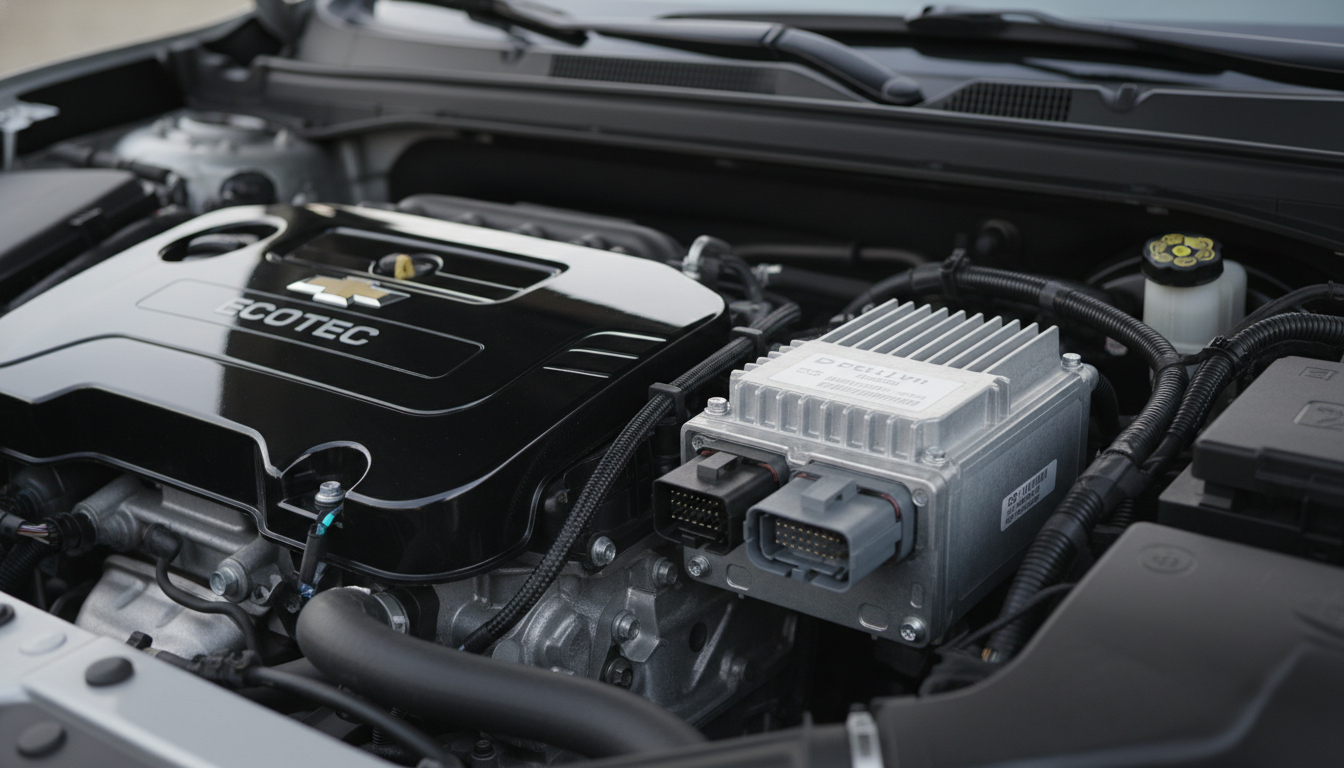
2016 Chevy Equinox TCM Location (The TEHCM Secret)
If your 2016 Chevy Equinox is slamming into gear, losing reverse, or throwing transmission codes, you are probably hunting for the Transmission Control Module (TCM). Many owners waste hours tearing apart the dashboard or searching the engine bay for a silver box. Stop looking. The Exact Location:
On the 2016 Chevy Equinox, there is no standalone TCM on the outside of the vehicle. Instead, Chevrolet uses a highly integrated unit called the TEHCM (Transmission Electronic Hydraulic Control Module).
- The TEHCM is located internally, bolted directly to the valve body inside the transmission.
- To access it, you must drain the transmission fluid, remove the driver’s side front wheel, and unbolt the black plastic transmission side cover.
Because the computer is completely submerged in hot transmission fluid, it is subjected to extreme thermal stress, which is a leading cause of shifting failures in this generation of the Equinox.
Understanding the Role of the Equinox TEHCM
To understand why Chevy put the computer inside the transmission, you need to know how it works. The TEHCM is not just a circuit board; it is an “all-in-one” unit.
- The Brains (TCM): It processes data from the engine (RPM, throttle position) to determine the exact millisecond to shift gears.
- The Muscle (Solenoids): Unlike older transmissions where the TCM and shift solenoids were separate, the Equinox TEHCM houses all the shift solenoids within the same plastic block.
- The Nerves (Pressure Switches): It contains laminated pressure switches that monitor the exact hydraulic fluid pressure inside the transmission.
When a 2016 Equinox starts shifting harshly, it is rarely a mechanical gear failure. Usually, the laminated pressure switches inside this TEHCM break apart, or the internal computer fries from the heat, requiring a complete replacement and dealer reprogramming.
Top Symptoms of a Failing 2016 Equinox TEHCM
Because the TCM, shift solenoids, and pressure switches are all packaged together into the TEHCM, a failure in this unit creates a cascade of shifting nightmares. If your module is cooking itself to death inside the transmission fluid, you will notice these specific warning signs:
1. The “Loss of Reverse” or Delayed Engagement One of the most classic signs of a failing Equinox TEHCM (specifically affecting the 6T40/6T45 transmissions) is a severe delay when shifting from Park to Reverse or Drive. You may shift into gear, press the gas pedal, and the engine will just rev for 2 to 3 seconds before violently “slamming” into gear. Sometimes, Reverse stops working entirely.
2. Stuck in “Limp Mode” If the computer detects that it cannot safely control hydraulic pressure, it will enter “Limp Mode” to protect the transmission from catastrophic mechanical failure. The vehicle will lock itself into a single gear (usually 3rd gear). You will experience terrible acceleration from a stop and high RPMs at highway speeds.
3. The Dreaded P0700 & Pressure Codes A bad TEHCM will instantly trigger a Check Engine Light. If you plug in an OBD2 scanner, you will almost always see a P0700 code. This is a generic code meaning “The TCM has requested the Check Engine Light to turn on.” However, if you scan the TCM module directly, you will find the real culprits, such as:
- P0776: Clutch Pressure Control Solenoid 2 Stuck Off
- P0711: Transmission Fluid Temperature Sensor Performance (The sensor is built into the TEHCM)
- P0842 / P0843: Transmission Fluid Pressure Sensor Circuit codes (Indicating the laminated discs inside the TEHCM have broken apart).
Important Note on Replacement: If you determine the TEHCM is bad, you cannot simply buy a used one from a junkyard and plug it in. A new TEHCM is completely blank and must be programmed/flashed by a dealership or a shop with GM’s Techline Connect software to match your exact VIN.
Common Symptoms of a Failing Control Module
A failing control module often announces itself through sudden driving quirks and diagnostic trouble codes.
Warning light events are common. The check engine light may illuminate and store codes like P0612, P0613, P0700, or P0706. Scanning these codes is the first step to an answer.
Drivers might experience the vehicle getting stuck in a gear or having unexpected shifts. That creates a dangerous situation, especially during highway driving. Difficulty shifting gears or a burning smell also signals a power-management issue that needs prompt service.
Ignoring these transmission problems over years can lead to total system failure and higher repair costs. A qualified mechanic can read the codes, test the module, and recommend repair or replacement to restore proper control and power.
| Symptom | Common Code | Suggested Action |
|---|---|---|
| Check engine light | P0700 | Scan codes and verify transmission data |
| Stuck in gear | P0612 | Consult mechanic; avoid driving |
| Erratic shifting / poor fuel economy | P0613 / P0706 | Inspect module and wiring; test power delivery |
Identifying the 2016 Chevy Equinox TCM Location
Begin by securing the car and gathering the right tools — this makes access to the module safer and faster.
Module placement differs by model; for example, a 2014 Spark mounts the control module under the left side of the instrument panel. That shows how the control unit can sit in varied spots inside the vehicle.
At home, work only with clear wiring diagrams and proper tools. Attempting access without training can damage delicate electrical connections and create a bigger transmission issue.
When to call a mechanic: if you have a question or lack the service manual, consult an expert. A trained technician has service information and can avoid harm to power distribution systems.
| Access Method | Difficulty | Estimated Time |
|---|---|---|
| Dashboard side panel removal | Moderate — needs trim tools | 30–60 minutes |
| Underbody or engine-bay access | High — electrical harness routing | 1–3 hours |
| Professional service bay | Low for owner — expert handling | 30–90 minutes |
Troubleshooting and Resetting Your Transmission System
A few simple resets can clear temporary transmission faults and get your car shifting normally again. Start with low-risk steps at home to see if the control box simply needs to relearn shift patterns.
Performing a Hard Reset
Disconnect the negative battery cable and wait 10–30 minutes to drain stored power from the transmission control module. This timeframe helps clear transient codes and resets the module’s memory.
After reconnecting, let the vehicle sit a minute, then start the engine and let it idle for a short time before driving.
Using the Accelerator Pedal Method
With the engine running, press and hold the accelerator for 15 seconds. This signals the module that the engine needs more power and can prompt a relearn of shifting behavior.
Then drive the car for at least 15 minutes so the system can calibrate through all gears and adapt to normal driving loads.
When to Seek Professional Help
If the check engine light stays on or transmission problems persist, stop home troubleshooting. A trained mechanic may need to access the module behind the oil pan or valve body to test wiring, power delivery, and internal faults.
Home resets are a valid first attempt, but if the issue remains, professional service and diagnostic equipment are the reliable answer to avoid further damage.
| Action | Expected Result | When to Call Experts |
|---|---|---|
| Hard reset (10–30 minutes) | Clears temporary codes; resets memory | If light remains on after drive |
| Accelerator hold (15 seconds) | Prompts relearn of shift mapping | If shifting is still erratic after 15 minutes of driving |
| Professional inspection | Pinpoints electrical or hardware faults | Persistent symptoms or diagnostic codes present |
Risks of Driving with a Malfunctioning Module
A failing control module can make a vehicle respond unpredictably. That unpredictability is dangerous, especially at speed.
One clear danger is limp mode, where the transmission is limited to one or two gears. In this situation, the car loses normal power and acceleration. It is unsafe to keep driving; seek a mechanic for prompt repair.
Software faults have caused real recalls where cars shifted into neutral or lost power while moving. Sudden deceleration or a roaring engine can mean the module is not managing transmission power. Unexpected jumps or kicks while shifting are another major warning sign of deep problems.
Ignoring these symptoms risks catastrophic failure and endangers the driver and others. A quick diagnosis reduces the chance of severe damage and costly repair later.
| Risk | What it Feels Like | Immediate Action |
|---|---|---|
| Stuck in limp mode | Limited speed, weak acceleration | Stop driving; arrange towing and repair |
| Sudden deceleration or neutral shift | Power loss, engine revs high | Pull over safely; do not continue driving |
| Erratic shifting / kicks | Jolts, unexpected gear changes | Have a mechanic inspect wiring and module |
| Complete transmission failure | No drive, loud engine noise | Tow to shop; avoid further engine stress |
Professional Repair and Replacement Considerations
A correct diagnosis starts with thorough testing, not just reading a single stored trouble code. A skilled mechanic will run live-data checks and specialized tests to pinpoint the issue. This avoids wasted time and incorrect parts.
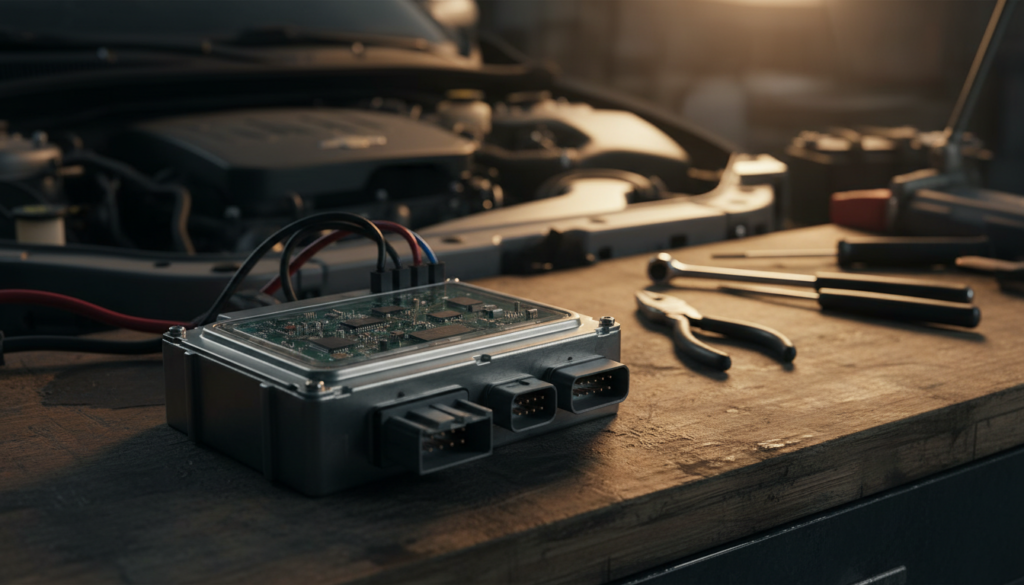
Replacing a control module often requires work inside the transmission body. Labor can start around $300 because the module sits in a hard-to-reach box or body cavity. Imported parts may take two to four weeks to arrive, leaving you without your car for significant time.
Having an expert install and program the new module ensures the unit manages power and gear changes correctly. Quality parts and proper programming cut down repeat problems and extend service life by years.
If you consider a DIY repair at home, remember access is difficult and a simple code reader may not provide the information needed. Always heed dashboard warning lights and seek professional service for a safe, lasting answer.
| Task | Why it matters | Expected time |
|---|---|---|
| Diagnostic scan & live data | Finds true electrical or software faults | 30–90 minutes |
| Module replacement & programming | Restores correct power and shift mapping | 1–4 hours plus programming |
| Parts procurement | Delays may extend repair time | 2–4 weeks for imported parts |
Conclusion
Routine checks on the module and wiring cut the chance of sudden transmission trouble while driving.
Maintain regular service and address warning lights promptly. Small repairs now will prevent larger, costlier failures later.
Use professional diagnostics when shifts feel wrong or lights stay on. Trained technicians can pinpoint electrical faults, program replacements, and restore safe operation.
These articles aim to give clear, practical steps so owners know when to act and when to call a pro. Safety and timely repairs keep your vehicle reliable and extend its service life.
FAQ
Where is the transmission control module located on a 2016 Equinox?
The control module sits inside the vehicle near the transmission assembly. On this model it’s typically mounted in the passenger-side engine bay area, attached to or near the transmission housing under a protective cover. Access often requires raising the vehicle and removing a few fasteners.
What does a transmission control module (TCM) actually do?
The module manages gear shifts by reading sensors for speed, throttle position, and engine load, then commands the transmission’s solenoids. It optimizes shift timing and torque converter lockup for smooth performance and fuel economy.
How does the module communicate with the engine control unit (ECU)?
Communication happens over the vehicle’s data bus (CAN bus). The module exchanges sensor data and commands with the ECU so shift strategy matches engine torque and driver input, keeping drivability and emissions in check.
What are common signs the control module is failing?
Look for rough or delayed shifts, stuck gears, limp-home mode, sudden loss of drive, and an illuminated transmission or check engine light. Intermittent stalls or poor fuel economy can also point to control issues.
How can I access the module safely to inspect or replace it?
Park on level ground, disconnect the battery negative terminal, and use jack stands if you must go under the vehicle. Wear safety gloves and eye protection. Remove any splash shields or covers and label connectors before disconnecting them.
Can I reset the transmission control module myself?
Yes. A basic hard reset involves disconnecting the battery for about 10–15 minutes, then reconnecting it. Another method uses a diagnostic scanner to clear transmission codes. Follow safety steps and be aware this may clear other learned settings.
What is the accelerator pedal method for resetting adaptive shifts?
With the engine warmed up and parked, press the accelerator to the floor for 10–15 seconds, then release and turn off the engine. This can prompt the module to relearn throttle and shift mapping. It’s a simple, noninvasive step before deeper diagnostics.
When should I take the vehicle to a professional mechanic?
Seek a shop when resets don’t fix symptoms, when codes point to internal module faults, or if the car enters limp mode or loses drive. A technician can perform bench tests, use OEM-level scanners, reprogram or replace the module, and address related transmission hardware.
Is it risky to keep driving with a malfunctioning control module?
Yes. Continued driving can cause erratic shifting, reduced power, or complete transmission failure. These issues may create unsafe driving conditions and lead to more expensive repairs, so limit driving until diagnosed.
What should I consider when replacing the control module?
Use a genuine or high-quality remanufactured unit, ensure correct part numbers, and confirm programming needs. Many modules require vehicle-specific calibration or VIN programming performed with proper diagnostic tools by a qualified technician.
Will replacing the module fix all transmission problems?
Not always. Faulty sensors, wiring, solenoids, or internal transmission damage can produce similar symptoms. A proper diagnosis that includes scanning codes, inspecting wiring, and testing components helps avoid unnecessary replacement.