Troubleshooting P1516 Code Chevy Silverado Issue
This is about fixing the P1516 code on Chevy Silverado. It’s for owners and DIY fans who want easy steps to solve the problem. We aim to help you get your truck running smoothly again.
The P1516 code makes your truck go into limp mode. This means it won’t accelerate well. To fix it, you need to check the wiring, the throttle actuator, and the sensor that watches the accelerator pedal.
GM has found that loose wiring, broken wires, and corroded grounds can cause this code. These issues are common in the throttle body connector and grounds like G103/G104 on some trucks.
First, read the codes and data your truck saved. Look at the throttle body connector and wiring. Try a wiggle-test to see if the problem comes back. Cleaning the throttle actuator might also help, as suggested by 2CarPros.
We want to make the TAC system easy to understand. We’ll guide you on how to fix the problem. You might need to repair the wiring or replace parts. We’ll help you decide what to do next.
The P1516 Code and What It Means?
The P1516 code means there’s a problem with the Throttle Actuator Control. It shows the throttle position isn’t right. This is because the throttle actuator or its signals don’t match what the engine control module expects.
The Throttle Actuator Control (TAC) system in many Chevrolet Silverado’s is electronic. The accelerator pedal sensor sends a signal to the engine control module. The module then tells the throttle actuator to move the blade. A sensor reports the actual blade angle back to the module.
Some models have a separate TAC module. Others have it integrated into the throttle body. When the system finds a big mismatch, it goes into reduced power mode. This is to protect the vehicle and prevent the throttle from moving unexpectedly.
Reduced power mode can cause the engine to idle differently. It can also make the throttle less responsive and lower performance. The vehicle might also show other codes like P0120, P0220, P2101, or P2135. This is because these monitors share circuits and sensors with the TAC.
Technicians often find that the P1516 code is caused by wiring, connectors, or grounds issues. Internal wire breaks, loose crimps, and corroded grounds are common problems. So, it’s important to check the harness and signals carefully before replacing parts.
Common symptoms of a P1516 code and related issues
The P1516 code symptoms start with a warning on the dash. Drivers see a “Reduced Power” message and notice a drop in throttle response. This makes the truck run slow but safe.
Drivers also notice intermittent misfires and a rough idle. The engine might idle high or hunt between speeds. The problem can change from drive to drive.
Misfires often show up on specific cylinders, like 3 and 4 in some 5.3L Silverado’s. These can be separate issues or linked to the throttle actuator control. Both need attention when symptoms overlap.
Other codes often appear with P1516. These include P1515, P0120, P0220, P2101, and P2135. GM service bulletins and wiring checks point to the TAC harness and ground circuits.
| Symptom | What a driver sees | Likely related codes |
|---|---|---|
| Reduced throttle authority | “Reduced Power” message, limited acceleration | P1516, P2101 |
| Limp mode activation | Engine runs at low power, safe limp settings | P1516, P1515 |
| Rough idle or high idle | Idle around 1500 rpm or erratic hunting | P0120, P0220 |
| Intermittent misfires | Loss of power, stuttering, cylinder-specific misfire codes | P0300–P0308, P2135 |
| Instrument cluster warnings | Check Engine light with driveability loss | P1516, P0120, P0220 |
P1516 code Chevy Silverado
People looking for P1516 code Chevy Silverado want specific answers. This exact phrase connects community threads, GM service bulletins, and repair parts for Silverado models with electronic throttle control. Using the right search terms helps in troubleshooting and finding model-specific fixes.
Why this exact phrase matters for owners and search queries?
Search engines match phrases from technical service bulletins and forum posts. A search for Chevy Silverado P1516 code leads to threads about harness repairs, pigtail swaps, and voltage drop tests. This matching improves the chance of finding the right wiring diagrams and GMSPO part references.
Model years and engines commonly affected
Reports mainly focus on C/K series and early 2000s Silverado’s, like the 1500 with 4.8L and 5.3L V8 engines. These trucks had the first generation of GM throttle actuator control. Later models might also have similar faults, but service bulletins often highlight the early 2000s C/K platform.
How manufacturer service info describes TAC-related DTCs?
GM technical documents link TAC diagnostic trouble codes to wiring faults, poor ground integrity at G103 and G104, and internal strand breaks near the throttle body connector. The guidance suggests specific checks: inspect 1–4 inches from the connector, perform voltage drop testing, and consider the GMSPO throttle body pigtail as a repair option. Technicians are advised to verify 5V reference and ground stability before replacing major components.
Primary causes of the P1516 code: wiring, grounds, and throttle components
When a Chevy Silverado shows a P1516 code, it usually points to three main areas. These are wiring and crimps, engine grounds, and throttle parts. It’s important to check each area carefully because one problem can hide another.
Loose wiring crimps and internal wire breaks near the throttle body
GM service bulletins often mention loose crimps at the throttle body. They also talk about internal wire breaks inside the insulation. These breaks are usually 1–4 inches from the throttle body connector and can’t be seen easily.
Worn crimps can send mixed signals to the TAC system. This can cause the P1516 code to appear randomly to drivers.
Corroded or loose grounds (G103, G104) and voltage drop issues
Grounds are key for the 5V reference and TAC control circuits. On older C/K trucks and early Silverado models, G103 and G104 grounds are often the problem. Corrosion or a loose ground can cause voltage drop, upset the APP and throttle sensors, and lead to a P1516 code.
Before replacing parts, check voltage drop at each ground point. A small issue with the ground can seem like a part failure.
Faulty throttle body, TAC module, or APP sensor and connector problems
A bad throttle body or TAC module will show the same error codes as wiring faults. Some shops found that even remanufactured throttle bodies didn’t fix the problem. This shows the importance of checking wiring and grounds first.
APP sensor failures, damaged connectors, and pin drag are less common but can also cause a P1516 code. Upgrading pigtails and using factory TSB parts can help fix connector issues on certain models.
- Loose crimps and hidden strand breaks — frequent and subtle causes of P1516 code causes.
- G103/G104 ground problems — linked to voltage drop and intermittent TAC faults.
- Component faults — throttle body, TAC module, or APP sensor can trigger Chevy Silverado P1516 code when wiring checks are clear.
Diagnostic steps to find the root cause of P1516
When you see a P1516 code on your Chevy Silverado, start with a plan. First, capture a freeze frame and scan for all related DTCs. Older tools might miss quick issues, so take multiple captures. A good scan tool gives you live data and readiness status for accurate diagnosis.
Reading freeze frame and full scan data for related DTCs
Record the freeze frame values for P1516 and related codes like P1515 and P0120. Look at engine speed, pedal position, and system voltage. Take multiple captures to find intermittent faults that only show up under certain conditions.
Wiggle testing harnesses and connectors to reproduce the fault
Do a wiggle test while watching live data or waiting for a DTC. Move harnesses and connectors at stress points. This often reveals internal breaks and poor connections that only show up when moving.
Performing voltage drop and load tests on the 5V supply and ground circuits
Measure voltage drop on grounds G103 and G104 under load. Static resistance tests might miss high-resistance connections. Use a Fluke multimeter for steady readings and an oscilloscope to catch transient 5V supply issues.
Inspecting for hidden damage such as rodent-chewed wiring and pin drag
Check the harness from the UBEC to the TAC module, through firewall hinge pockets. Look for areas where the harness flexes or is exposed to heat or abrasion. Inspect 1–4 inches from the throttle body connector for internal breaks and pin drag at connectors.
Tools and verification
Use a professional scan tool to clear codes and monitor readiness. A Fluke multimeter gives precise voltage and resistance values. An oscilloscope is useful for transient 5V drops. After repairs, verify the fix by monitoring live data and repeating wiggle and voltage tests to confirm the fault no longer appears.
Detailed inspection checklist for the throttle body and harness
This checklist helps you inspect the throttle body harness on a Chevy Silverado. It’s for both technicians and DIYers. Use it to find issues that cause a P1516 code and narrow down the causes.
Access and visual inspection
First, remove the intake ducting to see the throttle body connector. Check the housing for cracks, a broken tab, or heat damage. Also, look at the wire insulation for discoloration, melted spots, or corrosion.
Fingernail test for internal breaks
Next, run a fingernail or finger along each wire. Check for soft or flattened spots 1–4 inches back from the connector. A wire might look fine outside but have a broken conductor inside, causing faults.
Check crimps and terminal integrity
Then, inspect the terminals for loose crimps, pulled strands, or corrosion. A bad crimp might look tight but fail inside. Wiggle the wires near the terminal while watching for code responses.
Pin retention and connector pin drag
Pull gently on each terminal to test its retention. If terminals move or show pin drag, they might lose contact. Compare this to OEM standards. If pins are loose or worn, replace the pigtail with GM Genuine Parts.
Where to focus your inspection (1–4 inches from connector)?
- Look 1–4 inches back from the connector for crimps that have separated from copper strands.
- Check for abrasion points where harness ties contact metal or moving parts.
- Search for signs of rodent damage or chemical exposure along that short length.
Practical test sequence
- Clear access: remove intake ducting and illuminate the area.
- Visual check: housing, locking tab, wire insulation, and terminals.
- Fingernail run: feel each wire 1–4 inches back for soft spots.
- Wiggle test: move wires while watching live data or codes.
- Pin retention: test terminals and replace suspect pigtails.
By following this checklist, you can focus your inspection. It helps you find marginal connections that often cause a P1516 code. It also helps you identify common causes of the code.
How to fix P1516 code: repairs, parts, and best practices?
First, make sure you know exactly what’s wrong before you start replacing parts. This saves time and money. Look at the scan data and freeze-frame info to find the right circuits to fix.
Repairing damaged wiring and using OEM pigtails
When fixing wires, cut out the bad parts instead of just splicing. Use GM or GMSPO-style pigtails for the throttle body. Make sure to use the right crimp tool and quality terminals for reliable connections.
Seal your repairs with heat-shrink tubing. Use conduit or loom to protect the wiring. Keep track of what you fixed and the OEM part numbers for later.
Cleaning the throttle bore and servicing the actuator
Carbon and debris can block the throttle plate and sensors. Clean the throttle actuator to fix position feedback issues. This might solve the problem without needing to replace parts.
Use approved cleaners for the throttle. Avoid harsh cleaning that could damage the plate or sensors.
When to replace the throttle body or TAC module?
Only replace the throttle body or TAC module after checking wiring and grounds. If the module fails on a bench test, it’s time for a new one. But first, check for wiring issues to avoid the problem coming back.
Swapping parts without fixing wiring issues can lead to the same problem again.
Grounds, voltage drop, and load testing
Clean and tighten engine grounds like G103 and G104. Replace any corroded straps. Then, do voltage drop tests under load to check for good ground continuity.
Test the 5V supply and ground circuits with both simulated and real driving loads. Make sure they stay stable during a road test to confirm the fix.
Practical protection and validation tips
Check for rodent damage and keep repaired wiring away from heat and abrasion. Use loom or conduit and secure it well. After fixing, clear codes with a scan tool and test the fix on the road for several cycles.
Following these steps helps fix the Chevy Silverado P1516 code effectively and prevents it from coming back.
Clear P1516 code Chevy Silverado: how to reset and verify the repair?
After fixing wiring, grounds, or the throttle, it’s key to check the repair. A simple clear of DTCs isn’t enough. Technicians need to do a quick check to make sure the fix works under real driving conditions.
Proper code clearing with a scan tool and readiness monitors
Use a professional scan tool to clear the P1516 code Chevy Silverado and related DTCs. Make sure repairs are done before clearing codes. The scan tool will show readiness monitors and stored data.
Check the monitor status fully before finishing the job. Clearing codes without checking readiness can hide electrical faults. This might cause the fault to come back.
Road test procedures to ensure the code does not return
Plan a road test that mimics the reported symptoms. Test the truck under various conditions like warm-up, steady throttle, and load. Watch live data during the test.
Look at APP sensor values, throttle position, and TAC motor feedback. Log data during any limp-mode events. This helps confirm the fault is fixed and supports warranty or customer records.
What to watch for on subsequent drive cycles and intermittent failures?
Tell the owner to drive normally for a few days. Watch for signs like reduced power, rough idle, or sudden limp-mode. Intermittent problems might take several drive cycles to show up again.
If the P1516 code returns, check crimps, grounds, and the 1–4 inch region at the connector for hidden breaks.
Tips for confirming a lasting repair
- Verify readiness monitors complete within three to five drive cycles.
- Re-scan after extended highway and city driving to catch intermittent faults.
- Use a scope on the 5V supply and sensor traces if odd behavior persists.
By following a detailed approach to clear P1516 code Chevy Silverado and validate the repair, you can avoid comebacks. Proper verification ensures the job is done right. This gives owners confidence in fixing P1516 code issues for good.
Preventive maintenance and tips to avoid recurrence of P1516
Regular care stops unexpected limp mode and keeps throttle systems working well. A simple checklist for wiring, throttle cleanliness, and connector health lowers the risk of P1516 code. Taking small steps at set times saves time and money.
Inspect harness routing and protect vulnerable runs
Look at harnesses near hinges, heat sources, and the frame during oil changes. Use split loom or conduit where wires rub or bend. In rural and suburban areas, use rodent deterrents or conduit to protect wires from damage. These steps help prevent P1516 code for a long time.
Maintain a clean throttle body and related parts
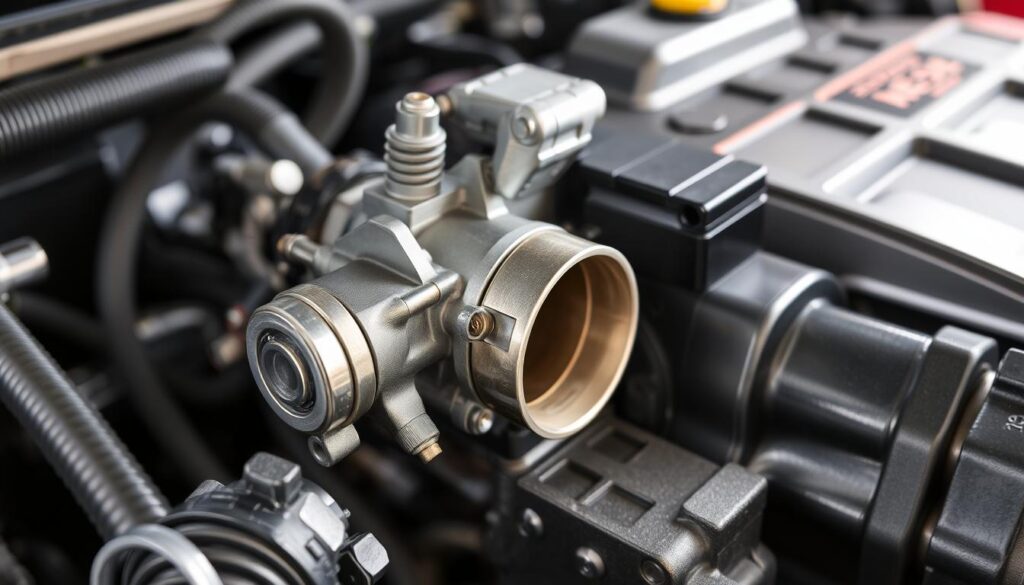
Check the throttle bore during routine service. Clean off carbon buildup to ensure accurate throttle feedback. A clean bore keeps the TAC system working right and lowers P1516 code trips for Chevy Silverado owners.
Care for connectors and reduce corrosion risk
Check connector locks and terminals during intake or battery service. Apply dielectric grease where needed. Replace damaged pigtails with GM-style parts and secure terminals to avoid intermittent faults.
Use proper crimping and sealing techniques
Use OEM-style terminals and a quality crimper for repairs. Avoid twisting strands before crimping. Seal the joint with heat-shrink tubing after crimping to keep moisture out. Good technique helps prevent P1516 code and reduces repeat repairs.
Document repairs and recheck on next service
Keep a record of replaced circuits, connector types, and protective measures in the vehicle file. Reinspect those areas at the next service to confirm they’re good. Simple documentation helps technicians check if preventive steps were taken and are working.
- Inspect harness routing every 6 months or during major service intervals.
- Clean throttle bore at routine intake service or every 30,000 miles if driving conditions are harsh.
- Replace suspect pigtails when corrosion or loose terminals appear.
- Seal and protect all repaired crimps to prevent future faults.
Conclusion
The P1516 code in Chevy Silverados often points to wiring and ground issues near the throttle body. Common problems include loose connections, broken wires, or corrosion. Sometimes, the throttle actuator control or the throttle body itself might be the cause.
To fix this, start by scanning for the P1516 code and looking at the freeze-frame data. Next, do a wiggle test on the harness and visually inspect the area around the connector. Also, test the voltage and ground circuits.
Clean the throttle bore as part of the repair. Only replace pigtails or the throttle body if wiring checks show no issues. After fixing, use a scan tool to clear the code and test the vehicle under real conditions.
Protect the repaired wiring from damage and rodents. For complex issues, consider using an oscilloscope. The aim is to help owners and DIYers fix the problem without spending too much. If unsure, get help from a professional with the right tools.
FAQ
What exactly does the P1516 code mean on a Chevy Silverado?
P1516 is a Throttle Actuator Control (TAC) — Throttle Actuator Position Performance/Position fault. It means the TAC module or throttle position feedback isn’t matching expected values. The engine control module detects a position/performance problem in the electronic throttle system.
Why does P1516 usually cause a “Reduced Power” warning and limp mode?
GM programs the vehicle to enter reduced power to protect drivability and prevent damage when TAC faults occur. Limp mode limits throttle motor authority. This results in reduced acceleration, altered idle behavior, and restricted performance until the issue is fixed.
What are the most common root causes of P1516 on Silverados?
Most cases are electrical: loose wiring crimps, internal wire breaks 1–4 inches from the throttle body connector, corroded or loose grounds (G103/G104), and poor connector contacts. Less commonly, a faulty throttle body, TAC module, or APP sensor can be the culprit.
Which related trouble codes often appear with P1516?
P1516 commonly appears with P1515, P0120, P0220, P2101 and P2135. These codes share throttle/APP/TAC circuits and monitoring routines.
Which Silverado model years and engines are most often affected?
C/K series and early 2000s Silverados (examples: 1500 series with 4.8L/5.3L V8s) show frequent reports. TAC-related faults can occur on any model year that uses electronic throttle control.
What initial diagnostic steps should owners or DIY technicians take for P1516?
Read all DTCs and freeze-frame data, visually inspect throttle body connectors and harness routing, wiggle-test wiring while monitoring live data, and check grounds for corrosion or looseness. Follow up with voltage drop and load testing on the 5V supply and ground circuits.
How does GM service information guide P1516 troubleshooting?
GM highlights loose crimps at throttle body terminals, internal wire breaks near the connector, and poor grounds (G103/G104) as frequent causes. Service guidance recommends inspecting 1–4 inches from the throttle body connector, voltage drop tests, and replacing pigtails where warranted.
How can I check for hidden wiring damage that might cause P1516?
Inspect firewall hinge pockets, harness routes across the engine bay, and areas prone to chafing or rodent damage. Run a fingernail along each wire from the connector back 1–4 inches to feel for soft or flattened spots that indicate internal strand breaks.
What tests reliably reveal intermittent or high-resistance faults tied to P1516?
Wiggle testing while watching live data or codes, voltage drop testing under load on grounds and the 5V supply, and oscilloscope traces of the 5V reference are most revealing. Resistance checks alone can miss intermittent or high-resistance connections.
When should the throttle body or TAC module be replaced?
Replace the throttle body or TAC module only after wiring and ground integrity are confirmed or the module fails bench/functional tests. Many technicians recommend exhausting wiring, connector, and ground diagnostics first because reman throttle bodies sometimes fail to cure P1516 when the harness is the root cause.
Are pigtail connectors available and recommended for repair?
Yes. GM/GMSPO offers updated throttle body pigtails. Replacing a suspect pigtail can eliminate marginal connector contacts and loose terminals and is preferred over swapping expensive throttle bodies when the harness is at fault.
What are best practices for repairing affected wiring?
Repair only the affected circuits, replace internal-broken wires (not just end splices), use OEM-style pigtails and terminals, employ proper crimping tools and techniques, and seal connections with heat-shrink to prevent corrosion and strain.
Should the throttle body be cleaned as part of P1516 diagnosis?
Yes. Throttle actuator service, including cleaning the throttle bore and valve mechanism, is recommended. Carbon and debris can affect position feedback and homing behavior, so cleaning can sometimes resolve feedback-related faults.
How should I clear P1516 and confirm the repair is permanent?
Use a quality scan tool to clear P1516 and related codes, then perform voltage/load tests and a road test reproducing original conditions while monitoring live APP and throttle feedback. Confirm readiness monitors complete over subsequent drive cycles to ensure the fault does not return.
What common symptoms indicate an intermittent P1516 problem?
Intermittent reduced power, sporadic limp mode entries, rough or high idle (sometimes near 1500 rpm), and occasional misfires reported concurrently are common. Intermittent faults often point to wiring or grounding issues.
Can poor engine grounds cause P1516 and how are they checked?
Yes. Corroded or loose grounds G103 and G104 can create voltage drop and intermittent 5V supply errors. Verify grounds with voltage drop testing under load and visually inspect and clean or replace ground straps as needed.