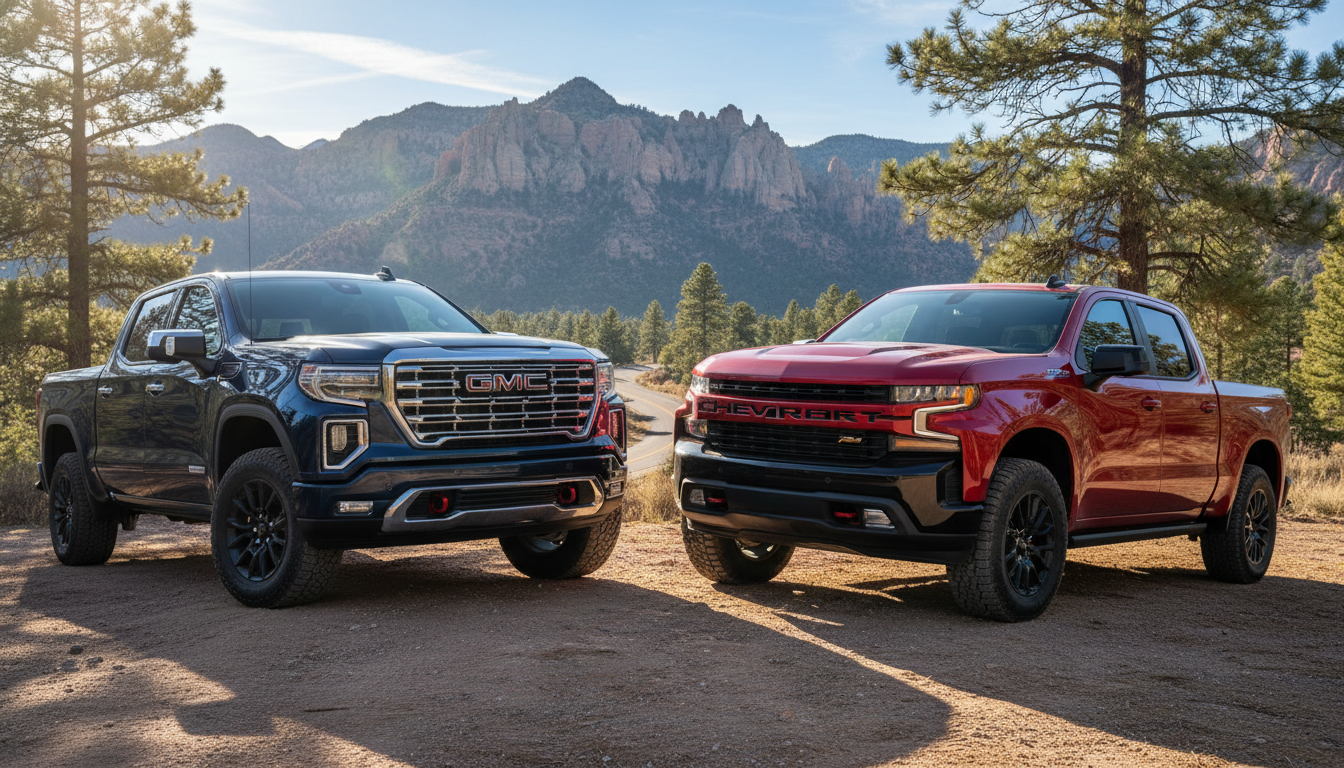
Difference Between GMC and Chevy: Which Truck Brand Is Better?
The phrase difference between GMC and Chevy often pops up when shoppers hunt for trucks and SUVs. Both names sit under General Motors, and many models share platforms and engines. Yet the two brands aim at different buyers.
Chevrolet focuses on accessible, work-ready models. GMC leans toward a more premium image, with upscale trims like Denali. That positioning affects pricing, materials, and standard equipment.
The practical differences include styling, trim levels, and interior fit. Shared hardware means many performance traits are similar, but you will see unique touches in tailgates, cabin materials, and tech names.
It will guide U.S. buyers on what truly matters for their needs. Expect a clear look at how market positioning shapes value. It won’t pick a winner. Instead, it will help readers match a vehicle to worksite utility, family use, towing, off-road goals, or luxury preference.
GMC vs Chevy in the U.S. today: the quick way to tell them apart
In today’s U.S. showrooms, a simple look tells you which way each brand leans. One aims for broad value and utility. The other pushes a more upscale presence with richer trim choices.
Same parent company, different market positioning
General Motors shares platforms and engines across its lineups. That lets each division use the same mechanical parts while tuning style, trim packages, and option bundles.
Chevrolet’s value focus vs the premium twin approach
Think of chevrolet gmc as two paths: one with many entry points for budgets and fleets, the other that lifts mid-level trims toward a nicer cabin feel.
- Rule of thumb: chevy gmc targets value; gmc chevrolet leans upscale.
- Shoppers see richer materials, bolder styling, and luxury badging on higher GMC trims.
- If you want a straightforward work truck, start with Chevrolet. If elevated comfort matters, start with GMC.
Denali acts as GMC’s signature luxury trim, showing how presentation and packaging shape choice more than core engineering. The rest of this article will unpack those packaging decisions and how they show up in real-world vehicles.
Brand history and how General Motors shaped both names?
A short timeline shows how two now-familiar truck names grew from separate roots into brands under a single corporate roof.
- 1908: General Motors forms.
- 1911: Chevrolet Motor Company is co-founded.
- 1912: GM’s truck group adopts the GMC name.
- 1918–1943: Chevy merges with GM; GM completes purchase of GMC.
These milestones explain why the two brands did not begin as identical badges. Over decades, GM let each division keep a unique image while sharing the same engineering base.
Design differences once showed up in small cues, like headlight layout and grille trim. Today those legacy cues survive as styling and packaging choices rather than wholesale mechanical separation.
Modern Silverado/Sierra and Colorado/Canyon pairs share a common platform and many powertrains. Still, marketing keeps Chevrolet focused on everyday capability while GMC leans toward premium or commercial-ready presentation.
| Year | Event | Impact |
|---|---|---|
| 1911 | Chevrolet founded | Consumer-focused model entries |
| 1912 | GMC named | Truck and commercial identity |
| 1943 | GM owns GMC | Shared engineering, separate messaging |
Why history matters: understanding past choices clarifies current showroom variations, trim names, and how feature sets are packaged for different buyers.
Difference between GMC and Chevy: the real-world differences shoppers notice
A quick walk around a pickup reveals how each brand aims at different drivers. One line speaks to jobsites and utility; the other leans into comfort, upscale trims, and lifestyle appeal.
Target buyer: worksite utility vs leisure and luxury
Chevrolet Silverados often show work-ready options and straightforward pricing that appeal to fleet buyers and contractors. GMC Sierra models push premium touches, with Denali signaling clear luxury intent.
Exterior design and body details
Look for distinct sheet metal, unique grilles, and lighting signatures. These styling choices are more than badges; they give each truck a different presence on the road.
Tailgate, bed, trailering, and safety
- Tailgate: Chevy Multi-Flex tailgate vs GMC Multi-Pro™ tailgate — both add loading flexibility and easier reach into the bed.
- Bed: GMC offers an optional carbon-fiber truck bed for lower weight and corrosion resistance.
- Trailering: Advanced Trailering System (Chevy) and ProGrade™ Trailering System (GMC) use similar tech under different names.
- Safety: Chevrolet Safety Assist is standard on key models, while comparable safety features on GMC trucks may require higher trims.
| What to check | Why it matters | Window sticker label |
|---|---|---|
| Tailgate type | Loading versatility | Multi-Flex / Multi-Pro™ |
| Bed material | Durability and weight | Carbon-fiber option |
| Trailering package | Towing convenience | Advanced Trailering / ProGrade™ |
| Standard safety | Feature value | Chevrolet Safety Assist |
Model lineups: trucks, SUVs, and the “wider range” advantage
Model breadth matters: Chevrolet covers more segments, from corner-carving sports cars to work-ready pickups and family SUVs. For many buyers, that wider range means they can stay loyal to one brand as household needs change.
Chevrolet offers sports cars like the Camaro and Corvette, which shows how the brand stretches beyond trucks. That matters if a buyer wants mixed vehicle types under one maker.
- Pickup families: Chevrolet’s Silverado and Colorado vs GMC’s Sierra and Canyon — both pairs share platforms but target different buyers.
- SUV roles: Chevrolet SUVs often emphasize practical family value and broad trim choices. GMC SUVs focus more on premium finishes and tighter equipment tiers.
- Shopping tip: Compare trims, not just badges; a mid-level Chevrolet truck can match some GMC features, and vice versa.
| Category | Chevrolet | GMC |
|---|---|---|
| Full-size pickup | Silverado — wide trim ladder, work and comfort | Sierra — premium trims, Denali focus |
| Midsize pickup | Colorado — practical utility, many options | Canyon — upscale options, simpler lineup |
| SUVs | Broad range of family-oriented models and trims | Smaller SUV range with premium packaging |
For garages that need the most models and price steps, Chevrolet offers a clear advantage in range. If a buyer prefers an upscale, simplified lineup, GMC may fit better.
Next up: direct head-to-head matchups of platform twins give the clearest comparisons for capability and value.
Head-to-head truck matchups: Sierra vs Silverado, Canyon vs Colorado, and HD twins
Head-to-head matchups highlight how closely related pickup twins perform on work and daily drives.
Full-size light-duty: Chevrolet Silverado 1500 vs GMC Sierra 1500
Match cab, bed, and drivetrain first when comparing the chevrolet silverado to the gmc sierra. That ensures towing and payload ratings line up.
Tip: then compare trims and standard gear to see where premium materials or tech change real value.
Midsize platform twins: Chevrolet Colorado vs GMC Canyon
Colorado and Canyon share the same platform and many engines. The main differences are styling, interior feel, and package options.
Heavy-duty and commercial: Silverado HD and 4500 HD vs Sierra HD and 4500 HD
Pick HD if frequent towing or heavy hauling is the norm. Duramax® 6.6L diesel with Allison® 10-speed can push trailering near 36,000 lb and conventional tow up to 20,000 lb.
Capability benchmarks from shared engineering
- Light-duty output: roughly 277–420 hp and 383–460 lb-ft.
- Max towing/payload: about 13,300 lb towing and 2,300 lb payload for top configs.
- Note: engine choice and axle ratios change ratings—verify on the sticker for the exact build.
| Class | Common twins | When to pick |
|---|---|---|
| Light-duty | Silverado 1500 / Sierra 1500 | Balanced daily use + work |
| Midsize | Colorado / Canyon | Smaller towing, utility, city fit |
| HD | Silverado HD / Sierra HD | Frequent heavy towing, commercial upfits |
Practical method: choose the required capability first, then pick comfort and tech level, and finally decide if the extra price step for badges or trim makes sense for your goals.
What GMC and Chevy share under the skin: platforms, engines, and capability
Under the sheet metal, many core systems are shared, which is why these trucks can feel so alike on the road.
The Silverado and Sierra use the same chassis and the same cab and bed menu: Crew Cab, Double Cab, Regular Cab with short (70″), standard (80″), and long (98″) bed choices. That shared platform keeps towing, ride and payload predictable across trims.

Shared powertrains
Both lines offer Duramax® turbodiesel inline‑6 options, multiple V8s, and turbocharged inline engines. These powerplant choices deliver similar torque and tow ratings, so pick the configuration that fits your needs.
Trailering tech and hands‑free aids
Trailering features include up to 15 camera views and Super Cruise™ hands‑free towing where available. Those features reduce stress when hitching and make long tows easier—gmc offers these on higher trims.
Off‑road trims that mirror one another
The Silverado Trail Boss/ZR2 line and Sierra AT4 aim at similar terrain use. They share suspension hardware and skid protection, while styling and trim choices set them apart.
- Core takeaway: many perceived similarities come from shared mechanics, not identical designs.
| Shared area | What shoppers get | Why it matters |
|---|---|---|
| Chassis & configs | Crew/Double/Regular; 70″/80″/98″ beds | Consistent capability |
| Powertrains | Diesel inline‑6, V8s, turbo 4‑cyl | Similar performance choices |
| Trailering | 15 camera views, Super Cruise™ | Easier hitching and long‑haul comfort |
Because the platform and engine choices are shared, pricing gaps usually reflect trim content, materials and how each brand positions its vehicles.
Price, quality, and value: why GMC often carries a higher price?
Shoppers often find that pricing reflects more than horsepower — it signals how each brand packages comfort and tech.
Premium interiors and higher equipment levels as a core value point
Price gaps usually buy nicer materials, not extra drivetrain parts. Expect softer seat surfaces, upgraded trim, and larger or more advanced infotainment as standard on premium trims.
Those features reduce the need to add options one-by-one. That bundled approach creates a quicker path to a near-luxury cabin at a higher out-the-door cost.
Quality control claims and what inspection counts can mean?
Reports note that a standard chevrolet gmc assembly may use different final checks. One example claim shows a Chevy passing a 60–100 point test while a GMC might see roughly 110 inspection points.
Extra inspections add labor and cost. They can also shape buyer confidence in perceived quality, even if mechanicals stay the same.
How to compare value: apples-to-apples strategy?
Compare a base GMC to a mid-level Chevrolet to line up similar gear. Then stack top trims side-by-side to see where each brand maxes out on comfort and safety.
Shopping tip: prioritize towing, comfort, and safety needs over badges to find the best real-world value.
| What to check | Why it matters | Typical label or note |
|---|---|---|
| Standard safety suite | Protects occupants, adds resale value | Package or standard on higher trims |
| Trailering package content | Real towing convenience and camera views | Named trailering systems |
| Interior comfort features | Daily comfort and long-trip fatigue | Premium seats, larger screens |
| Inspection & quality checks | Labor cost and perceived reliability | Higher inspection count noted |
Better depends on whether a buyer values strict cost control or prefers built-in premium gear and branding. Use feature-matched comparisons to find the most sensible purchase for your needs.
Conclusion
Pick the right truck by matching real needs to how each brand packages style, tech, and price.
Both lines are GM divisions that share platforms and powertrains. The core choice rests on market positioning, trim strategy, and feature bundles.
For broader model variety and value, favor Chevrolet. For higher standard equipment and premium presentation, favor GMC. Compare twin models—Silverado vs Sierra or Colorado vs Canyon—to see where styling and cabin choices matter most.
Focus on towing, payload, daily comfort, safety priorities, and budget. Then test drive similarly equipped trims side‑by‑side and compare window stickers for tailgate, trailering, and safety suite notes.
This approach makes any of these trucks the right pick when it matches your real use case.
FAQ
What sets the two brands apart in the U.S. market?
Both sit under General Motors but target different buyers. One brand positions its trucks and SUVs as value-forward and work-ready, while the other focuses on upscale trims, premium interiors, and luxury-oriented packages aimed at buyers who want a more refined pickup or SUV.
How did General Motors shape these two nameplates?
GM created and consolidated many automakers over the 20th century. Chevrolet launched in 1911 and the truck-focused division followed in 1912, later folding into GM’s brand architecture. Over decades both evolved from separate roots into distinct GM divisions with shared engineering but different market roles and styling cues.
Which features usually tell them apart at a glance?
Exterior styling and badging are the quickest clues. One brand often uses bolder, more upscale trim details, unique grille treatments, and different wheel designs. Tailgate tech and bed options also differ: one offers a multifunction tailgate and some carbon-fiber bed options, while the other promotes its own multi-function tailgate solution and broader mainstream bed choices.
Are there meaningful tech and safety differences in trucks and SUVs?
They share many core systems, yet feature packaging varies. The mainstream brand often includes a standard active safety suite across more trims, while the premium-focused marque may reserve certain advanced features for higher trims or luxury packages. Trailering systems, camera views, and hands-free driving tech can appear under different trade names.
How do model lineups compare for trucks and SUVs?
Both offer full-size and midsize pickups and a range of SUVs. The mainstream marque tends to have a wider overall lineup, including sports-car and mass-market models, whereas the premium-oriented brand concentrates on trucks, SUVs, and higher-spec variants like luxury Denali-style trims.
Are Sierra and Silverado the same truck mechanically?
They share platforms, chassis components, and many powertrains, so capability figures—towing, payload, horsepower—often overlap. Differences come from suspension tuning, exterior sheet metal, interior materials, and trim-specific equipment that affect ride, comfort, and perceived value.
Why does the premium-focused brand often cost more than its sibling?
Higher pricing reflects upgraded interiors, more standard features on upper trims, and different quality-control and inspection claims. Comparing a base model of the premium marque to a mid-level trim of the mainstream brand helps clarify true value for a given spec and budget.