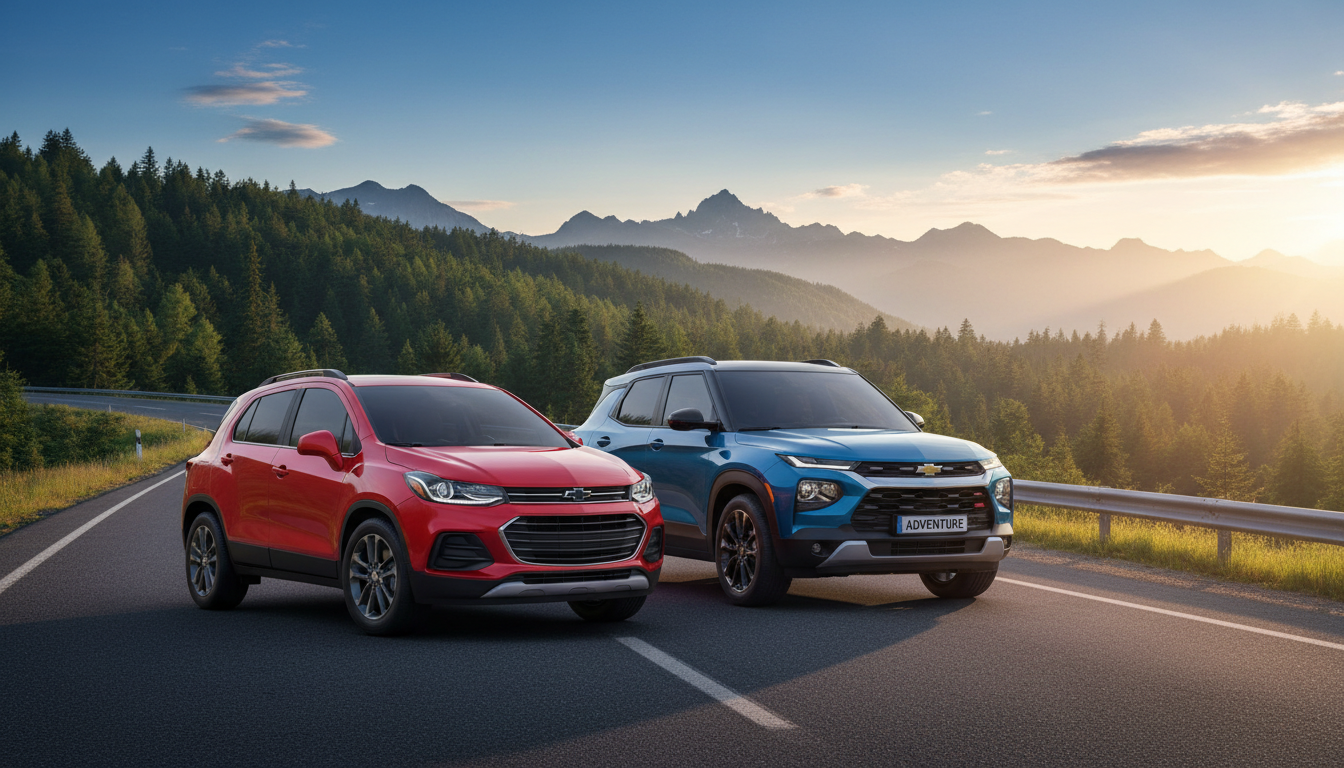
Chevy Trax vs Trailblazer: Choosing the Best SUV for Your Needs
This short comparison frames a common US shopping problem: two small Chevrolet SUVs that overlap on paper but feel different day to day. Shoppers now see the chevy trax vs trailblazer in the same showroom and often leave unsure which fits their life.
Start with what matters most: price, drivetrain, and space. The 2024 updates made the chevrolet trax larger, yet the chevrolet trailblazer still commands a higher price and offers available AWD. The Trax stays FWD-only and costs less.
It compares trims and equipment so you don’t pay extra for features you don’t need. The decision lens is simple: value (MSRP vs features), capability (FWD vs AWD), and livability (interior, cargo, tech).
Think about real use cases—city parking, highway merging, winter traction—and match a model to your commute, weather, and budget. This guide keeps the facts practical and buyer-focused.
Chevy Trax vs Trailblazer: Quick side-by-side comparison for US buyers
A brief, practical comparison shows which compact crossover matches common US routines. The goal is simple: pick a model to test-drive first based on how you use a car day to day.
Who each fits best: For tight city driving and frequent short trips, the smaller turning footprint helps with parking and traffic. For mixed suburban commutes and occasional highway runs, a slightly different layout may feel more composed on longer drives.
Size, space, and family usability
The newer generation grew about five inches longer overall, so the chevrolet trax now often feels more open in the cabin. That extra size contributes to a roomy impression and useful cargo shapes for strollers and grocery runs.
Still, the chevrolet trailblazer holds an edge where it counts: rear-seat legroom is about 0.7 inches better. Consider space efficiency—how the cabin and cargo are shaped—rather than raw dimensions alone.
- Start with Trax if a more open cabin and lower entry price matter.
- Start with Trailblazer if rear passenger room and longer trips are priorities.
Price, MSRP, and trims: Chevrolet Trax vs Chevrolet Trailblazer
Start by checking what the MSRP hides: base numbers are helpful, but options change the final price fast. At the entry level, the difference is clear — a base Trax lists near $21,495, while the Trailblazer LS starts around $24,500. That gap frames where value decisions begin.
Trim strategy matters. LS trims are basic starters. LT typically adds comfort and tech. RS and Activ add styling or off-road looks and can push the msrp up quickly.
- Smart pick: Trax LT — adds automatic climate control, rear USB ports, and an 11-inch touchscreen.
- Value picks: Trailblazer LS or LT — balance cost and useful features.
- Options to watch: adaptive cruise control and wireless charging are optional items, not standard.
| Model | Base MSRP | Common Add-on |
|---|---|---|
| Trax (LS→Activ) | $21,495 | LT tech pack, wireless charging |
| Trailblazer (LS→Activ) | $24,500 | AWD (~$1,300), premium pack |
| Top end | Trax Activ ≈ $28k | Fully loaded Trailblazer ≈ $33k |
Decide by priorities. If you want the lowest sticker price, pick the base trim and add only essential options. If daily comfort or safety tech matters, plan for the LT or an Activ package and expect the price to climb accordingly.
Drivetrain and capability: FWD vs AWD and why it matters?
How a vehicle sends power to the road changes where it shines most. It explains the tradeoffs between a front-drive layout and an all-wheel system so buyers can pick what fits local roads and weather.
Front-wheel setup: lighter and predictable
The front drivetrain is simple and lighter. That helps with lower weight, better city fuel economy, and predictable handling on dry pavement.
What you gain: lower purchase cost, simpler maintenance, and steady behavior in traffic.
What you give up: less traction in deep snow, slush, or steep driveways. Good winter tires often matter more than drivetrain alone.
All-wheel availability and typical added cost
All-wheel drive adds traction when roads are slick. On many trims, expect AWD to cost about $1,300. That price covers extra hardware and a control system that shifts torque to the wheel with grip.
Ground clearance and everyday SUV use cases
Ground clearance helps with curbs, ruts, and driveway lips. The smaller model clears about 7.3 inches, which is enough for common urban hurdles.
- City drivers: front drive and the 7.3-inch clearance handle curb strikes and grocery runs well.
- Snow-belt drivers: AWD and winter tires give real benefits when intersections ice over or streets go unplowed.
- Highway and hilly routes: AWD can change road feel and slightly affect fuel numbers, so weigh the tradeoff if you do lots of highway miles.
| Drive type | Primary benefit | Typical cost impact |
|---|---|---|
| Front-wheel | Lower weight, better city fuel | Base price |
| All-wheel | Extra traction in poor conditions | ≈ $1,300 added |
| Clearance note | 7.3 in helps urban obstacles | Minimal effect on price |
Engines, power, and transmissions: turbo-three performance differences
Engine and transmission choices shape how a small crossover behaves in everyday driving. The shared turbo-three concept uses a compact, turbocharged three-cylinder to balance fuel economy with usable torque.
Trax powertrain and highway behavior
The Trax uses a 1.2L turbo-3 making 137 hp and 162 lb-ft, mated to a 6-speed automatic. Shifts feel smooth and predictable, so merging on the highway is confident.
Uphill passes need planning; the power is enough for city and highway cruising but not lively for rapid overtakes.
Trailblazer base setup: CVT tradeoffs
The base Trailblazer uses the same 1.2L engine with a CVT. That combo can sound louder under load and respond with a rubber-band feel when you press the throttle.
Some drivers notice more noise and less crisp response than the 6-speed, affecting perceived power during quick on-ramps.
Trailblazer upgrade: 1.3L and the 9-speed
The optional 1.3L turbo-3 puts out about 155 hp and pairs to a 9-speed automatic with available AWD. This setup aims for stronger highway passing and better traction on steep grades.
In testing, the 9-speed sometimes feels lethargic in quick maneuvers despite the extra horsepower.
- Steering wheel feel: Trax offers sharper steering feedback. That added precision boosts driver confidence more than raw power in traffic.
- Real-world note: For frequent highway merges or hilly commutes, the 1.3L/9-speed with AWD is preferable. For city-driving and economy, the 1.2L/6-speed is adequate.
| Model | Engine | Transmission | Real-world note |
|---|---|---|---|
| Trax | 1.2L turbo-3, 137 hp | 6-speed automatic | Smooth shifts; good merging, cautious uphill passing |
| Trailblazer (base) | 1.2L turbo-3, 137 hp | CVT | Noisier under load; less immediate response |
| Trailblazer (upgrade) | 1.3L turbo-3, 155 hp | 9-speed automatic, AWD available | Better power for hills; 9-speed can feel slow to react |
Fuel economy: city and highway mpg comparison
Real-world mpg matters more than headline EPA numbers when you log daily miles. The EPA figures give a baseline, but commute mix, weather, and driving style change what you actually see at the pump.
Trax EPA estimates and what to expect for commuting
The chevrolet trax posts EPA ratings of 28 mpg city / 32 mpg highway / 30 mpg combined. Expect combined numbers to drop a mpg or two in cold weather or heavy traffic.
City stop-and-go driving and short trips reduce efficiency more than steady freeway miles. For mostly mixed driving, use the combined figure to estimate weekly fuel costs.
Trailblazer EPA estimates by engine and the mpg impact of AWD
The chevrolet trailblazer varies by engine and drivetrain. Key EPA ratings:
- Base 1.2L FWD: 29 city / 31 highway / 30 combined
- 1.3L FWD: 29 city / 33 highway / 31 combined
- AWD versions: 26 city / 30 highway / 28 combined
Adding AWD cuts efficiency by several mpg. That difference can change monthly fuel spend if you average long commutes.
| Model / Setup | City (mpg) | Highway (mpg) |
|---|---|---|
| chevrolet trax (combined) | 28 | 32 |
| chevrolet trailblazer 1.3L FWD | 29 | 33 |
| chevrolet trailblazer AWD | 26 | 30 |
Decision tip: Compare combined mpg for your typical week. If traction is crucial in winter, AWD’s lower mpg may be worth the trade. Neither model offers a hybrid, so fuel differences come from drivetrain choice and transmission behavior.
Interior space, seats, and legroom: which cabin fits passengers better?
Interior measurements tell one story; getting in and out tells another. Both models seat five and provide a usable second row for two adults, while the center back seat stays tight for long trips.
Front comfort and daily use
Front seats are supportive but different. One offers wider door openings and a more open cabin feel that eases entry.
That same seat could use stronger lumbar support on long drives. Heated front seats appear on most trims, so buyers can get warmth without jumping to the top level.
Rear access and legroom tradeoffs
Rear legroom favors the other model by about 0.7 inches, making it marginally better for taller adults.
Yet the roomier cabin and better shoulder space in the first example make rear rides feel less boxed in. Wide-opening doors help families and rideshare users load children and bags faster.
Driver adjustments and trim notes
Power driver seat adjustments are available on more trims in one name, while the other holds power adjust until the top Activ trim.
Choose by who rides most: pick the model with extra rear legroom for regular adult passengers. Pick the roomier cabin and earlier heated seats for frequent front-seat commuting.
| Feature | Practical effect | Where it helps |
|---|---|---|
| Five-seat layout | Two adults fit rear row; center is tight | Commuting, short trips |
| Rear legroom +0.7 in | Better knee space for tall passengers | Long rides, adult passengers |
| Wide door openings | Easier rear access and loading | Families, rideshare |
| Driver power adjust | More trims include power seat in one model | Daily driver comfort |
Cargo room and flexibility: carrying gear, groceries, and strollers
Real cargo usefulness comes down to shape, not just headline capacity. The two small SUVs post nearly identical numbers: about 25.6 cu ft vs 25.3 cu ft behind the rear seats, and roughly 54.1 cu ft vs 54.4 cu ft with seats folded.
Those cubic-foot figures tell one story. Daily life tells another. Weekly groceries, a stroller, or two carry-on suitcases depend on hatch width, lift-over height, and how flat the floor is.
Practical notes for owners
The model with the more regularly shaped cargo area often packs easier. Bulky boxes and a stroller slide in without awkward gaps.
If you keep a child seat installed, measure how the rear seat folds and whether the load floor stays level. Folding a row for a one-time trip is different than doing it every week.
- Bring a test item: a suitcase or stroller during the test drive.
- Check hatch opening: width and height, plus how high you must lift items over the bumper.
- Inspect floor shape: flat, regular floors beat slightly higher max cubic numbers in daily use.
| Metric | Model A | Model B |
|---|---|---|
| Behind rear seats (cu ft) | 25.6 | 25.3 |
| Max cargo folded (cu ft) | 54.1 | 54.4 |
| Practical edge | More regular cargo shape; easier packing | Slightly higher max number; similar daily capacity |
Decision tip: If cargo is the tie-breaker, prioritize usability, hatch features, and how often you fold seats rather than the tiny numeric gap.
Tech and features: Apple CarPlay, Android Auto, audio, and everyday convenience
The screens and phone systems inside these small crossovers matter on every drive. Infotainment responsiveness, screen size, and phone pairing shape daily satisfaction more than a spec line.
Screen sizes and basic layout
The entry-level setup on the chevrolet trax uses an 8.0-inch touchscreen. Upgrading to the LT moves to an 11.0-inch display and adds automatic climate control plus rear USB ports.
The trailblazer LS starts with an 11.0-inch screen and includes automatic emergency braking. Larger screens make menus easier to read and change how maps and audio appear.
Phone integration and charging
Wireless Apple CarPlay and wireless Android Auto are standard on both models, so basic smartphone sync is not a paid add-on.
Wireless charging is an optional feature on all trims. Check the window sticker if a flat charging pad matters to you.
Everyday convenience and audio expectations
Features like automatic climate control and rear USB ports shift perceived value. The Trax LT bundles these into a sensible package.
Audio quality in this price class is adequate; branded upgrades can improve bass and clarity but add cost. During a test drive, test phone placement, Bluetooth dropouts, and how easy it is to access common controls.
- Trim strategy: pay for the right trim instead of many small add-ons.
- Test tip: bring your phone and try Apple CarPlay and Android Auto menus.
| Feature | Where it appears | Why it matters |
|---|---|---|
| 8.0″ screen | Entry chevrolet trax LS | Smaller, responsive for basic tasks |
| 11.0″ screen | Trax LT, trailblazer LS | Better map and audio visibility |
| Wireless charging | Optional on all trims | Avoids cable clutter if included |
Safety and driver-assist systems: cruise control, adaptive cruise control, and emergency braking
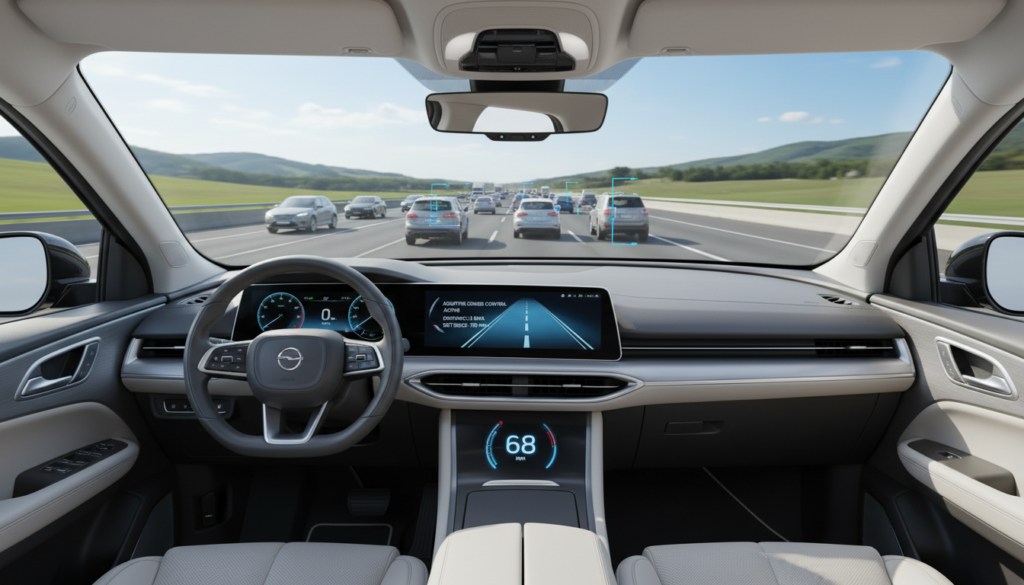
Driver-assist tools can turn a tiring commute into a calmer ride. This short safety guide shows which aids are standard, which are optional, and how that affects value for daily drivers.
What’s standard and why it matters?
The Trailblazer LS includes automatic emergency braking as standard. That system helps slow or stop the car to reduce impact risk in sudden-city stops. The base Trax LS includes basic cruise control, which is the minimum comfort feature for highway driving.
Optional systems and trim choices
Adaptive cruise control (sometimes labeled adaptive cruise) is available on higher trims. It automatically keeps a set following distance and eases stop-and-go stress.
On the lineup, adaptive cruise control is optional on the Trax LT and available on the Trailblazer LT. That makes trim choice important if you want the extra tech.
- Practical tip: verify these features on the window sticker and test them during a drive.
- Buyers who do long highway miles should prioritize adaptive cruise control and automatic emergency braking.
| Feature | Where it appears | Why it helps |
|---|---|---|
| Cruise control | Base trims | Reduces fatigue on steady roads |
| Adaptive cruise control | Available on LT trims | Maintains following distance in traffic |
| Automatic emergency braking | Standard on Trailblazer LS | Cuts collision severity in city stops |
Conclusion
Choose the small SUV that fits your daily life, not just the spec sheet. For shoppers who prize value, cabin openness, and a lower starting price, the Trax LT is the sensible pick. It bundles comfort tech without forcing high options.
Buyers who need winter traction or plan longer highway miles should consider the Trailblazer LS or LT. That line offers available AWD (typically about $1,300 extra) and more flexibility for varied roads and weather.
Final check at the dealer: confirm drivetrain, verify adaptive cruise availability, and test wireless charging. Match your budget to real use—commute length, family cargo needs, and local weather—so the SUV feels right every day.
FAQ
Which SUV is better for city commuting and tight parking?
The smaller-wheelbase model with a tighter turning circle suits city driving best. It’s easier to park, maneuver in traffic, and typically has better curb-to-curb agility for urban streets while still offering modern infotainment like Apple CarPlay and Android Auto.
How do starting prices compare and what should buyers expect for fully loaded trims?
Base pricing starts around the low-K mark for the entry model and about mid-K for the larger competitor. Fully equipped higher trims, especially with AWD, larger engines, leather, and advanced safety packs, can push a well-optioned vehicle into the low-K range.
Are both models available with all-wheel drive and does it affect fuel economy?
One model offers AWD as an option, which helps in poor weather and light off-pavement use but typically reduces highway and city mpg compared with the front-wheel–drive–only variant. Expect a measurable mpg hit when choosing AWD over FWD.
What are the main engine and transmission differences that affect highway passing and merging?
Both start with a small turbo three-cylinder. One pairs it to a 6-speed automatic that feels steady on highways, while the other uses a CVT with different noise and response characteristics. An available 1.3L turbo with a 9-speed automatic and AWD option offers noticeably stronger acceleration for merging and hills.
How do cargo capacity and rear passenger space compare for daily family use?
Cargo volume behind the rear seats is nearly identical—roughly mid-20 cubic feet—and maximum capacity with seats folded sits in the mid-50s cubic-foot range for both. Rear legroom and day-to-day comfort vary by model; one offers a bit more rear-seat stretch while the other feels roomier in certain seating positions, so test seating with real passengers.
What tech and connectivity features come standard, and are wireless systems available?
Both vehicles include smartphone integration like Apple CarPlay and Android Auto as standard, often wireless on higher trims. Available infotainment upgrades increase screen size, and wireless charging appears on select option packages—check the trim sheet to confirm.
Which safety and driver-assist systems are standard, and is adaptive cruise control included?
Automatic emergency braking and a basic driver-assist suite are standard on recent models. Adaptive cruise control is typically an optional feature or part of an upper-level safety package, so buyers who spend a lot of highway miles should opt for trims or packages that include adaptive cruise and related steering assist systems.