Chevy Traverse Oil Type: What You Need to Know?
Motor oil does more than lubricate. It keeps engine parts separated, moves heat away, and contains additives that fight oxidation and corrosion.
The practical meaning of “chevy traverse oil type” is a combination of viscosity grade and formula quality. Choosing the correct option matters for longevity and performance today.
The right choice depends on model year and engine. This guide shows how to confirm the exact match for your vehicle.
Three decision layers will help you decide: the manufacturer spec, how and where you drive, and your goals—cost, protection, or high-mileage care.
Using the wrong product can raise wear and heat over time. The proper selection supports smooth starts, efficient operation, and longer engine life. Later sections cover full synthetic and high‑mileage options, plus how changes affect engine health.
Which Engine Do You Have? (Generations & Codes)
Before buying oil, identify which Chevy Traverse generation you own. The oil requirements changed significantly in 2018 and again in 2024.
- Gen 3 (2024 – Present):
- Engine: 2.5L Turbo I4 (Engine Code LK0).
- Note: This new 4-cylinder engine replaces the old V6. It requires a specific PF66 filter and tighter viscosity tolerances.
- Gen 2 (2018 – 2023):
- Standard: 3.6L V6 (Engine Code LFY). This updated V6 includes Stop/Start technology.
- Optional: 2.0L Turbo (Engine Code LTG). Found in the RS trim (2018-2019 only).
- Gen 1 (2009 – 2017):
- Engine: 3.6L V6 (Engine Code LLT or LFX).
- Warning: These older direct-injection engines are prone to timing chain wear if oil levels drop. We recommend checking your dipstick every 1,000 miles.
Quick Reference: Chevy Traverse Oil Capacity & Type (By Year)
Don’t want to dig through the manual? Here is the specific data for every Chevy Traverse generation.
| Model Year | Engine | Oil Type (Viscosity) | Capacity (w/ Filter) | Oil Filter |
| 2024 – 2025 | 2.5L Turbo (LK0) | 5W-30 Dexos1 Gen 3 | 6.0 qt (5.7L) | PF66 |
| 2018 – 2023 | 3.6L V6 (LFY) | 5W-30 Dexos1 | 6.0 qt (5.7L) | PF63E |
| 2018 – 2019 | 2.0L Turbo (LTG) | 5W-30 Dexos1 | 5.0 qt (4.7L) | PF64 |
| 2009 – 2017 | 3.6L V6 (LLT/LFX) | 5W-30 Synthetic Blend | 5.5 – 6.0 qt* | PF63 / PF48 |
- Note for 2009-2010 Owners: Early models often listed 5.5 quarts, but most mechanics fill to 6.0 quarts to prevent timing chain wear (a common issue on the early 3.6L).
- The “Dexos” Rule: GM vehicles require Dexos-approved oil. Look for the green “Dexos” logo on the bottle (e.g., Mobil 1, Pennzoil Platinum). Using non-approved oil can void your powertrain warranty.
🔧 Technical Specs: Filters, Drain Plugs & Torque
Getting the oil viscosity right is only half the battle. Use this chart to ensure you have the correct filter and tighten your drain plug to the factory specification to avoid leaks or stripped threads.
| Component | 2024 – 2025 (2.5L Turbo) | 2018 – 2023 (3.6L V6) | 2009 – 2017 (3.6L V6) |
| Oil Filter (ACDelco) | PF66 | PF63E | PF63 (Replaces older PF48) |
| Drain Plug Size | 15mm | 15mm | 15mm |
| Drain Plug Torque | 18 lb-ft (25 Nm) | 18 lb-ft (25 Nm) | 18 lb-ft (25 Nm) |
| Filter Torque | Hand Tight + 3/4 Turn | Hand Tight + 3/4 Turn | Hand Tight + 3/4 Turn |
| Crush Washer? | Yes (Replace if damaged) | Yes ( Integrated rubber seal) | Yes (Integrated rubber seal) |
⚠️ Critical Warning for 2009–2012 Owners: Early Traverse models originally called for the smaller PF48 filter. GM released a Technical Service Bulletin (TSB) updating this to the larger PF63 filter to improve oil flow and timing chain life. Always use the larger PF63 style filter to protect your engine.
What “oil type” means for a Chevy Traverse engine today?
In simple terms, the right motor lubricant pairs thickness with additives to guard the engine under load.
“Oil type” is viscosity (how thick the fluid is) plus the formula that protects internal components. The choice affects start-up friction, heat control, and long-term wear.
Motor oil has three core jobs. It lubricates to stop metal-on-metal contact. It moves heat away from hot spots. It also uses additives to reduce corrosion and oxidation.
The fluid also traps debris. Tiny particles stay suspended until the filter removes them. That keeps sensitive parts cleaner over time.
- Cold climates need low-viscosity fluids for quick flow at start-up.
- Hot or heavy-load driving favors stable viscosity at operating temperature for consistent protection.
- Higher mileage engines may benefit from formulas that help seals and reduce consumption.
| Factor | How it affects choice | Owner action |
|---|---|---|
| Climate | Cold needs thinner start-up flow; heat needs stable viscosity | Pick viscosity to match regional temps |
| Driving habits | Stop-and-go and towing increase stress and contamination | Consider stronger additive packages or shorter change intervals |
| Engine age | Wear and seal changes can alter clearances and consumption | Review high-mileage formulas and follow manufacturer spec |
How to find the correct oil spec for your exact Traverse?
Finding the exact manufacturer oil specification starts with a quick look at the owner’s materials and under‑hood markings. That confirms the right viscosity and industry standards for your engine before you buy and pour anything.
Checking the owner’s manual and oil cap for viscosity and standards
Always consult the owner’s manual first. It lists the recommended oil viscosity, required specifications, and capacity in quarts (most engines take about 5 to 8 quarts).
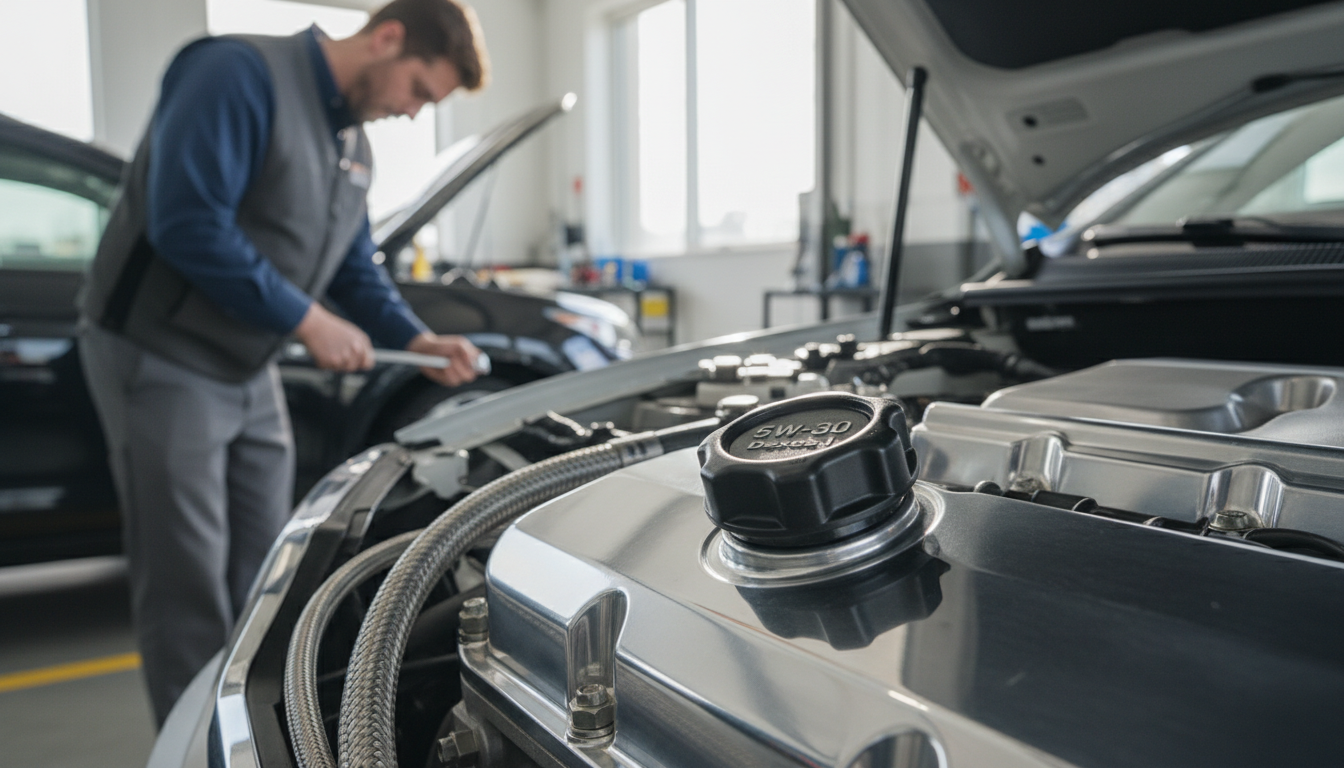
- Look at the filler cap for a matching viscosity marking as a quick cross‑check.
- Verify the recommended standards (API, ILSAC) before you shop.
Matching oil to model year and engine configuration
Not all model years use the same engine or spec. Confirm the engine code or displacement in the manual and match that to the recommended fluid.
If the vehicle changed engines or has aftermarket modifications, verify the spec before any change.
When to contact a certified service department or mechanic?
If the cap is missing, the manual is lost, or records are unclear, contact certified service or experienced mechanics. They can confirm the correct oil, the proper oil filter part number, and whether the maintenance monitor needs resetting.
Note: Oil selection is separate from transmission fluid—do not assume the same spec applies when performing other maintenance.
| Item | Why it matters | Owner action |
|---|---|---|
| Capacity | Most engines: 5–8 quarts | Confirm before adding |
| Filter | Correct oil filter affects flow and protection | Match part number with specs |
| Service check | Mechanics verify fit and reset monitors | Contact dealer or trusted shop |
Chevy traverse oil type: choosing the right viscosity and formula
Choosing the right viscosity and formula starts with understanding how numbers and chemistry affect performance. Viscosity grades tell you flow at cold start and stability at running temperature.
What the numbers mean: In 0W-20, the “0W” shows cold-start flow and the “20” is thickness at operating temperature. A 5W-30 resists thinning more as the engine heats, while 0W-20 flows faster on cold mornings.
Common viscosity options
- 0W-20 — quick start-up flow for cold climates and modern engines.
- 5W-20 — balanced option for moderate climates and many model years.
- 5W-30 — thicker at temp, better for hot climates or heavier loads.
Formula choices: conventional, blend, full synthetic
Conventional oil is cost-effective for light use. A synthetic blend mixes base stocks for extra stability. Full synthetic offers the best resistance to breakdown and fewer impurities.
| Choice | Best for | Trade-off |
|---|---|---|
| Conventional oil | Budget maintenance | Shorter change intervals |
| Synthetic blend | Tow/occasional heavy use | Improved stability, moderate cost |
| Full synthetic | High performance, long intervals | Higher upfront cost |
Start by matching the required viscosity in the manual, then pick a formula that fits driving habits and budget. Remember, the best motor oils meet the engine’s spec first — higher-grade fluids only help when they match that specification.
Next, the guide explains why full synthetic is often recommended and when high‑mileage products make sense for older engines.
The “Dexos” Requirement: Why It Matters
You will see the term “Dexos” on your oil cap. This is GM’s proprietary oil standard, and using it is mandatory to keep your powertrain warranty valid.
- Current Standard:Dexos1 Gen 3 (Released Sept 2021).
- Benefit: Designed specifically for modern Turbo engines (like the new 2.5L) to prevent “Low Speed Pre-Ignition” (LSPI), which can destroy pistons.
- Can I use older oil? You can use Dexos1 Gen 2, but Gen 3 is backward compatible and offers better protection.
- ** Brands to look for:** Mobil 1 Extended Performance, Pennzoil Platinum, and Valvoline Advanced Full Synthetic all carry the Green Dexos Logo.
Full synthetic oil for the Chevy Traverse
Full synthetic oil is built from refined base stocks and engineered additives. It keeps fluid behavior predictable from a cold start to high operating temperatures.
Protection benefits
A higher viscosity index helps the fluid stay stable as the engine warms. That stability limits wear during hard driving and long intervals.
Cleanliness benefits
Advanced additive systems cut oxidation and slow sludge buildup. Cleaner passages mean parts stay free of deposits and maintain performance.
Why it costs more and when it’s worth it?
Higher price reflects deeper refinement and stronger additive packages, not just branding. Choose full synthetic when you do frequent short trips, drive in extreme heat or cold, run heavy stop-and-go traffic, or want long-term engine protection.
- Reminder: Premium fluids still need scheduled changes and the correct filter to deliver expected results.
2024+ Chevy Traverse: The New 2.5L Turbo Requirements
If you own a 2024 or newer Traverse (Gen 3), you no longer have the 3.6L V6. You have the high-output 2.5L Turbo (LK0) engine. This engine is far more sensitive to oil quality than the previous generation.
- Why it’s different: Turbochargers spin at up to 200,000 RPM and share the engine’s oil supply. Old or cheap oil will “coke” (burn) inside the turbo bearings, leading to immediate failure.
- The Requirement: You MUST use Dexos1 Gen 3 approved synthetic oil.
- Viscosity: Strictly 5W-30. Do not use 10W-30 or heavier grades, as they cannot flow fast enough to cool the turbo bearings at startup.
- The Capacity: Despite having 2 fewer cylinders, the 2.5L Turbo requires the same 6.0 quarts of oil as the old V6 to manage heat.
Tech Tip: Turbo engines consume oil differently. Check your dipstick every 2 fuel fill-ups. It is normal for a turbo engine to use 1 quart every 3,000-5,000 miles during the break-in period.
Synthetic blend vs full synthetic for Traverse owners
Selecting between a part-synthetic blend and a full synthetic depends on how hard the engine is worked.
In plain terms, a blend mixes conventional base stocks with some synthetic base fluids and additives. A full synthetic uses engineered base stocks with fewer impurities and tighter molecular uniformity.
That purity matters in extremes. Full synthetic holds consistent viscosity in very cold starts and resists breakdown on long, hot climbs. Blends improve cold-flow and oxidation resistance versus conventional, but they usually lag full synthetic under the most severe stress.
When a synthetic blend makes sense?
A blend fits owners who want better protection than conventional without full synthetic cost. It is practical for light towing, occasional hauling, or vehicles used in mixed climates.
- Heavy strain: Frequent towing, mountain driving, or long highway pulls increase oil stress—full synthetic is safer.
- Everyday use: Blends give a cost-effective balance for routine service intervals.
| Feature | Synthetic blend | Full synthetic |
|---|---|---|
| Purity | Part-synthetic, some impurities | Higher purity, engineered molecules |
| Extreme temps | Improved over conventional | Superior cold-flow and heat resistance |
| Best use | Budget-conscious, light heavy-duty tasks | Frequent heavy loads, extreme climates |
Match the selection to the owner’s manual and ask a trusted service professional if unsure. A blend is a solid middle ground, but it won’t always equal the top-end stability of full synthetic.
High mileage oil for a Traverse with 75,000+ miles
Engines with more than 75,000 miles face different stresses, and high mileage oil addresses those changes.
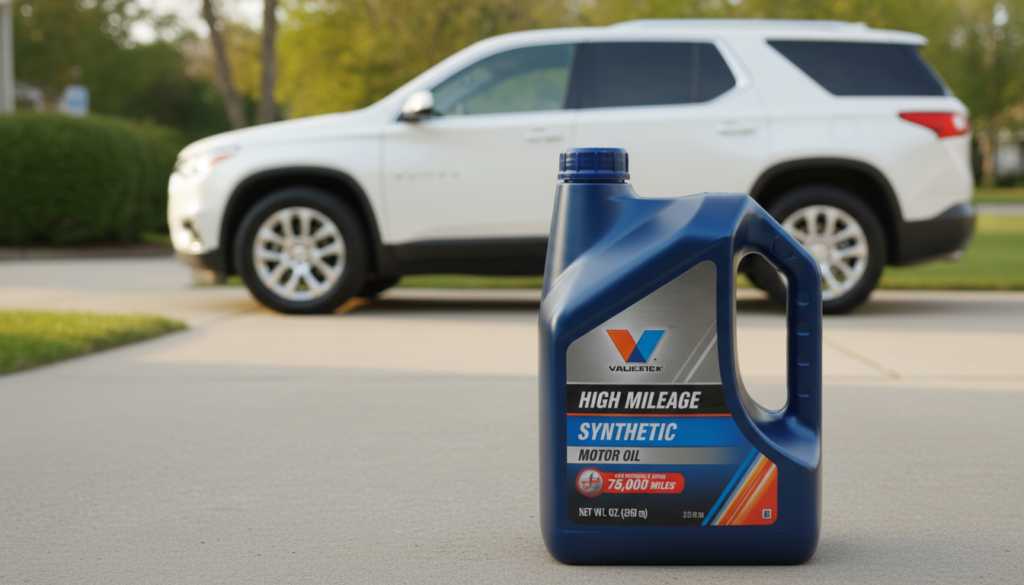
What it is: High mileage oil is a formula made for engines past about 75,000 miles. It adds conditioners that soften aging seals and boost deposit control.
⚠️ Mechanic’s Warning: The 3.6L “Timing Chain” Connection
Why is oil quality so critical specifically for the Chevy Traverse? Because the 3.6L V6 (LLT/LFX/LFY) engine is notorious for one major failure: Timing Chain Stretch.
- The Cause: These engines use Hydraulic Tensioners to keep the timing chains tight. These tensioners rely on clean, high-pressure oil.
- The Failure: If you extend your oil changes past 5,000 miles, sludge builds up in the tiny oil ports of the tensioners. The tensioner gets weak, the chain gets loose (“slop”), and it physically stretches over time.
- The Result: You will eventually trigger the “Death Codes” (P0008, P0017) which indicate the camshafts are out of sync. This is a $2,500+ repair that is almost entirely preventable with frequent 5W-30 Full Synthetic changes.
Pro Tip for Direct Injection: The Traverse uses Direct Injection (DI), which means fuel is sprayed directly into the combustion chamber, bypassing the intake valves. This causes Carbon Buildup on the valves. Using a high-quality Dexos1 Gen 3 oil with low volatility (NOACK) helps reduce these carbon deposits significantly compared to cheap bulk oil.
How it helps sludge, wear, and consumption?
Older engines can carry leftover sludge from past intervals. High mileage fluids include detergents to help clean deposits and reduce further buildup.
They also add agents that limit metal-on-metal wear and can lower oil use between changes. This supports steady performance as parts age.
Seals and compression as engines age
Over time, seals harden and cylinder compression can fall. That raises oil consumption and may allow minor seepage.
High mileage formulas target seal swell and cushion worn surfaces, which may reduce leaks and slow performance loss. Still, they do not replace needed repairs.
- If the vehicle uses oil between services, has small seepage, or has unknown maintenance history, consider high mileage oil.
- For sudden oil loss or heavy smoke, seek a mechanic—these are signs of serious problems beyond formula choice.
| Issue | How high mileage oil helps | Owner action |
|---|---|---|
| Sludge | Improved detergents aid cleaning | Use recommended formula and change interval |
| Seal wear | Conditioners help reduce seepage | Monitor leaks; repair if persistent |
| Oil consumption | Reduced volatility and better film strength | Track usage between changes |
How often to change oil on a Chevy Traverse?
Knowing when to change the oil saves money and protects your engine. Follow a clear schedule based on the fluid you use and how the vehicle is driven.
Typical intervals for conventional oil changes
Conventional oil typically needs service every 3,000–5,000 miles. Short trips, frequent idling, and stop-and-go traffic shorten effective life.
Typical intervals for synthetic oil changes
Full synthetic oil often allows longer runs — typically about 7,500–10,000 miles. Confirm this against the owner’s manual before you change oil.
Why your best interval depends on your manual, usage, and conditions?
The owner’s manual wins because intervals are set for the engine’s design and capacity. Severe service—towing, hot climates, many short trips, or lots of stop-and-go driving—requires shorter intervals.
- Reset maintenance reminders and record mileage/time after each service.
- Don’t rely only on a sticker if multiple people use the vehicle.
- Regular oil changes reduce sludge and let the fluid protect parts for the full interval.
| Fluid | Typical interval (miles) | When to shorten |
|---|---|---|
| Conventional oil | 3,000–5,000 | Short trips, heavy idling, towing |
| Synthetic oil | 7,500–10,000 | Severe heat, heavy loads, frequent short drives |
| Owner guidance | Follow manual | Engine design and service history |
How to Reset the “Change Engine Oil Soon” Light
After changing your oil, you must reset the Oil Life Monitoring System. If you don’t, the computer won’t track the new oil’s degradation, and the light will come back on prematurely.
For 2018 – 2025 Models (Gen 2 & 3)
- Turn Ignition On: Press the Start button (without touching the brake) to put the vehicle in “Run” mode.
- Navigate Menu: Use the Right Arrow on the steering wheel pad to scroll to the “Info” tab (indicated by an “i” icon).
- Find Oil Life: Scroll down using the Thumbwheel until “Oil Life” is displayed (e.g., “Remaining Oil Life 10%”).
- Reset: Press and hold the Thumbwheel for several seconds.
- Confirm: Select “Yes” on the confirmation prompt. The display should reset to 100%.
For 2009 – 2017 Models (Gen 1)
- Turn Key On: Turn the ignition to the “Run” position (do not start the engine).
- Press Buttons: Locate the Driver Information Center (DIC) buttons on the dashboard (to the right of the steering wheel).
- Find Oil Life: Press the Vehicle Info button (car with “i” symbol) repeatedly until “Oil Life Remaining” appears.
- Reset: Press and hold the Checkmark (Set/Reset) button for roughly 5 seconds until the display changes to 100%.
- Alternative (Gas Pedal Method): If the buttons don’t work, turn the key to “Run” and fully press the gas pedal 3 times within 5 seconds. The light should flash and reset.
How to check your oil level and condition between oil changes?
A quick dipstick check gives a clear snapshot of oil level and overall engine health between scheduled services. Regular checks help catch low level, contamination, or early signs of wear before they affect performance.
Dipstick Analysis: What Your Oil Color Is Telling You
Don’t just check the level; check the condition. The oil on your dipstick is a window into your engine’s health.
👃 Burnt Smell: If the oil smells like burnt toast and feels gritty, it has broken down significantly. Change it immediately, regardless of mileage.
🟨 Amber / Honey: Fresh, healthy oil. (0–3,000 miles).
🟫 Dark Brown / Black: Normal for used oil. Carbon buildup turns oil dark quickly, especially in the 3.6L V6. This does not necessarily mean it needs changing immediately—follow your mileage schedule.
🥛 Milky / Chocolate Milk: DANGER. This indicates coolant has mixed with the oil (blown head gasket). Stop driving immediately.
✨ Metal Flakes / Glitter: CRITICAL. If you see shiny specks, your bearings are failing. Do not start the engine; tow it to a mechanic.
Warning signs: low oil, overheating risk, and performance changes
- Oil pressure warning light or persistent low level — stop and top off or seek service.
- Burning smell, rising temperature gauge, or engine knocking — risk of serious damage.
- Noticeable loss of power or increased fuel use — possible lubrication failure.
Preventive maintenance: Catching low fluid early can save an engine from major repair. A quality oil filter traps debris the fluid carries, so filter replacement matters at each oil change.
| Check | What to watch for | Owner action |
|---|---|---|
| Level | Below low mark | Top off per manual; repeat check |
| Color/consistency | Gritty or thin/thick | Inspect for particles; change fluid if contaminated |
| Warning signs | Light, smell, temp, noise | Stop driving; seek service to avoid damage |
How much oil does a Chevy Traverse take?
Capacity usually falls in a small range, so owners can plan service with confidence.
Most modern engines require between 5 and 8 quarts of fluid. A typical four‑cylinder needs about 5 quarts, while a six‑cylinder often takes around 6 quarts.
Typical engine oil capacity and what affects it?
Capacity varies with engine size, oil pan design, and filter volume. Some model years use different sump sizes or larger filters that change the total fill.
Whether the vehicle is fully drained and sitting level also affects measured usage. Always drain fully and park on level ground for an accurate refill.
Why “much oil” varies by engine and model year?
Different engines and production years change internal volume. Subtle design revisions can add or remove a quart or more.
- Safe fill strategy: Add most of the quoted capacity, then check the dipstick and top off slowly to avoid overfilling.
- Dipstick is final authority: Overfilling can harm seals and cause foaming, just like running too low.
- Record the amount used at each service to spot consumption changes over miles and years.
| Engine | Typical quarts | Owner action |
|---|---|---|
| 4‑cylinder | ~5 | Start with 4.5, check dipstick, add to full |
| 6‑cylinder | ~6 | Fill most, then top off carefully |
| All engines | 5–8 quarts | Verify in the owner’s manual before service |
Common mistakes that can cause engine damage
Routine neglect of scheduled maintenance often starts small but can lead to serious engine damage. Skipping an oil change lets fluid break down. Varnish and sludge form. Debris circulates instead of being trapped.
What happens if you don’t change the oil: sludge, heat, and debris
Old motor oil loses detergents and shear strength. That raises friction and operating temperature. Sludge can block passages and increase wear. The engine will run rougher, lose efficiency, and may show knocking or leaks.
Can you mix conventional oil and synthetic oil?
Mixing conventional and full synthetic is chemically compatible but not ideal. It dilutes the benefits of full synthetic and can be a false economy. In an emergency, top off with the correct viscosity/spec, then return to a full service as soon as possible.
Choosing the right oil filter and why it matters?
A proper oil filter traps debris for the life of the service interval. Use the manufacturer’s part or a reputable equivalent. Common DIY errors include forgetting the crush washer, double-gasketing the filter, incorrect torque, and not checking level after running the engine.
| Risk | Impact | Owner action |
|---|---|---|
| Sludge | Reduced flow, higher wear | Follow recommended change intervals |
| Mixed fluids | Lower protection | Avoid mixing; follow manual |
| Poor filter | Contaminants recirculate | Use quality oil filter and replace each service |
Record every oil change and parts used. Good documentation aids resale and troubleshooting and preserves long-term performance and protection.
Conclusion
Follow a simple decision path: confirm the exact manufacturer spec, pick the right formula (conventional, blend, full synthetic, or high‑mileage), and set a realistic oil change schedule that fits your driving.
Always use the owner’s manual as the final authority for viscosity and standards. Driving conditions such as towing, short trips, or extreme climate may justify a more conservative interval for engine protection.
Check the dipstick between services to monitor level and condition. A quick look can spot leaks or high consumption before they cause bigger problems.
Use the correct oil filter and avoid mixing formulas as a long‑term strategy. These steps preserve fluid quality and help the motor perform as designed.
If any specification or situation is unclear, contact a trusted service professional before the next change to confirm the right fluid and parts.
FAQ
What does “oil type” mean for a Chevy Traverse engine today?
“Oil type” refers to the recommended viscosity grade (like 0W‑20, 5W‑20, or 5W‑30) and the oil formula (full synthetic, synthetic blend, or conventional). It also covers performance standards such as API and GM specs that ensure proper lubrication, cooling, and corrosion protection for the engine under modern operating conditions.
How do I find the correct oil spec for my exact Traverse model?
Check the owner’s manual and the oil fill cap first—both list the factory viscosity and required specs. If unsure, note your model year and engine type and confirm with a certified Chevrolet service department or a trusted mechanic to match the correct viscosity and performance standards.
Which viscosity options are commonly recommended for the Traverse?
Owners commonly see 0W‑20, 5W‑20, and 5W‑30 recommended, depending on model year and engine. Lower “W” numbers improve cold-start protection; higher second numbers better handle sustained high temperatures. Always follow the manual for the specific engine.
Should I use full synthetic or a synthetic blend?
Full synthetic offers higher resistance to breakdown, better viscosity stability, and cleaner internals. A synthetic blend gives some of those benefits at lower cost. For modern engines and extended intervals, full synthetic is typically the better choice; blends suit budget-minded drivers or older patterns of use.
Is full synthetic worth the higher price?
Yes when you value longer oil life, improved protection against sludge and oxidation, and stable viscosity across temperature extremes. It can extend drain intervals and protect turbocharged or high‑stress engines, making it cost‑effective for many owners.
When does a synthetic blend make sense?
Choose a synthetic blend if you tow, haul occasionally, or want better protection than conventional oil without the full synthetic cost. Blends improve high-temperature protection and can reduce wear during heavier loads compared with conventional oils.
What benefits does high mileage oil provide for engines over 75,000 miles?
High mileage formulations include seal conditioners to reduce leaks, detergents to manage sludge, and additives that help with oil consumption and wear. These oils can improve compression retention and reduce minor leaks common in older engines.
How often should the oil be changed?
Conventional oil typically needs changes every 3,000–5,000 miles. Full synthetic intervals usually range from 7,500–10,000 miles or follow the manufacturer’s recommended schedule. Your driving habits, towing, and climate can shorten these intervals—always follow the owner’s manual and service reminders.
How do I check oil level and condition between changes?
Use the dipstick with the engine off and cooled briefly. Check level against the marks, inspect color and consistency—healthy oil appears amber to light brown and flows easily. Dark, gritty, or milky oil, or a low level, signals service is needed.
How much oil does a Traverse typically take?
Almost all V6 models (2018–2023) and the new 2.5L Turbo (2024+) require exactly 6.0 quarts (5.7 Liters) with a filter change. The only exception is the rare 2018-2019 2.0L Turbo RS model, which takes 5.0 quarts. Do not guess—overfilling can damage seals.
What happens if you don’t change the oil on schedule?
Old oil breaks down, loses lubricating ability, and allows sludge and debris to form. That raises engine temperatures, accelerates wear, and can lead to serious damage or failure. Regular changes protect engine components and maintain performance.
Can you mix conventional and synthetic oils?
Technically yes—mixing is safe in most cases because modern oils are compatible. However, mixing negates some benefits of full synthetic and can complicate drain‑interval expectations. For best protection, stick to one recommended formula and viscosity.
How important is the oil filter and how do I choose one?
A quality oil filter traps particles and prevents debris recirculation. Choose a filter that meets OEM specifications or trusted aftermarket brands like ACDelco or Mobil 1. Replace the filter at every oil change to ensure maximum engine protection.