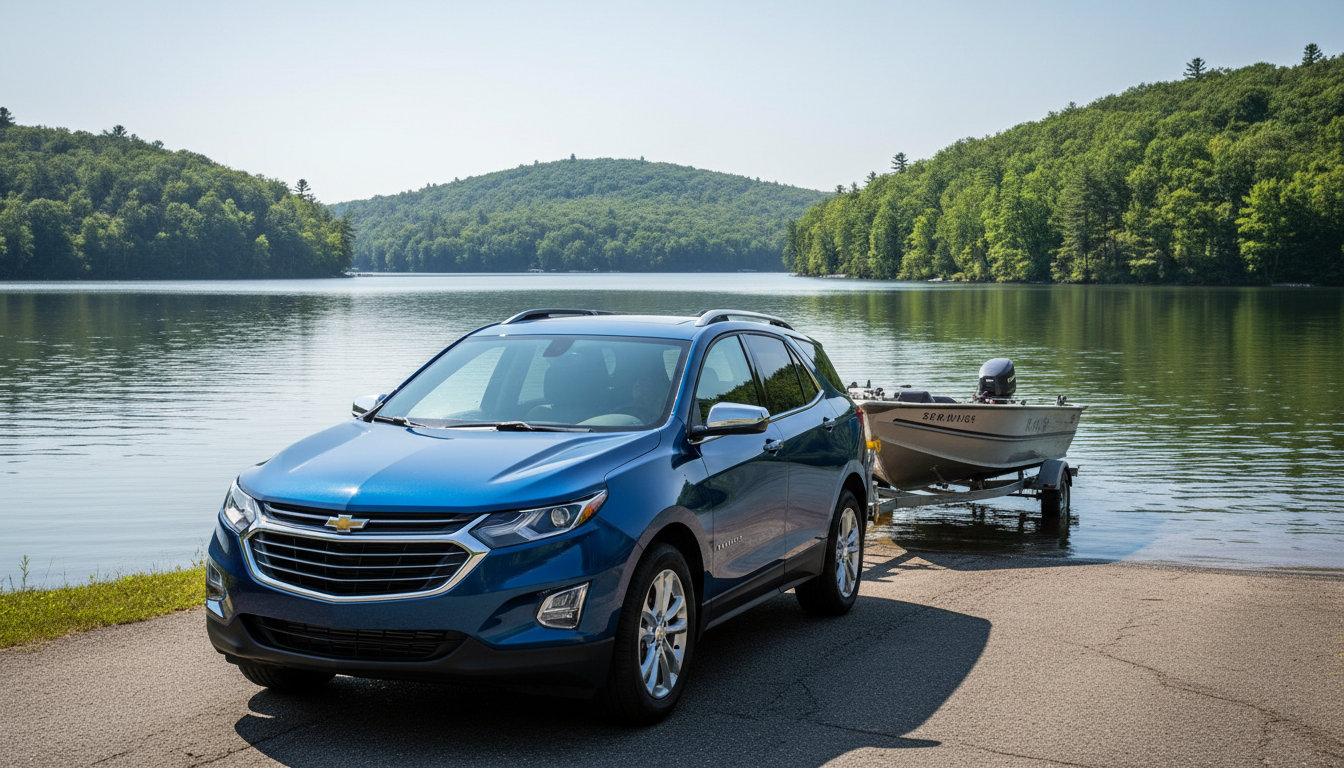
Discover the Chevy Equinox Towing Capacity: Key Details
It explains what towing capacity means in plain terms: it is the maximum weight a vehicle is designed to tow safely. Owners who hitch without checking limits risk poor handling, longer stops, and wear.
The Chevrolet compact SUV’s published range runs roughly from 1,500 to 3,500 pounds across model years and setups. That range means the exact number depends on engine, cooling, gearing, and factory ratings.
Most models from 2018 and newer list up to 1,500 pounds when properly equipped, while some older variants can rate higher. Manufacturers change numbers because they alter powertrains and cooling, not to confuse buyers.
It will show how to find the right rating for a specific vehicle and how to plan a safe setup. Remember: safe towing is about stability, braking, and durability not just whether it can pull the load.
For context, 1,500 pounds is about a small utility trailer or a single jet ski on a trailer. Verify your numbers before you hitch and drive.
How to Find Your chevy equinox towing capacity for Your Exact Model Year?
Towing ratings vary by year and equipment, so owners should confirm the exact figure for their vehicle before hitching up. Start with the model year, trim, and engine when looking for a number.
Published range and why it changes?
Published ratings span roughly 1,500 to 3,500 pounds across generations. Differences stem from engine choices, cooling, and factory tow packages, so two vehicles with the same badge can have very different limits.
Practical checklist to confirm your number
- Note the vehicle model year and engine option.
- Read the owner’s manual towing section for the exact figure.
- Locate the door-jamb label for the factory rating tied to your VIN.
- Verify “properly equipped” items like hitch and wiring are present.
- Ask to see documentation during a test drive or vehicle walkthrough.
| Model Years | Common Published Rating | Key Factors | Real-road Notes |
|---|---|---|---|
| 2018–present | Up to 1,500 lb | Smaller engines, efficiency features | Front-wheel drive helps on dry roads; traction varies in wet conditions |
| 2010–2017 | Up to 3,500 lb | Available higher-output engines and tow packages | Heavier setups need correct hitch and cooling |
| How to verify | Owner’s manual/door label | VIN documentation | Request proof during a test |
What Changes Your Real-World Towing Limit (Engine, Drive Type, and Weight Ratings)?
Real-world pull limits depend on more than the sheet number; passengers, gear, and hitch loading all eat into what you can safely tow.
GVWR is the max the vehicle can weigh when loaded. Exceeding it risks handling and brake problems. Think of GVWR as a hard cap for everything inside and attached to the SUV.
Payload vs towing a simple rule
Payload is what you carry inside the vehicle. Towing is what you pull behind. The trailer’s tongue weight sits on the hitch and counts against payload. That reduces how much trailer you can safely attach.
Quick check you can repeat every trip
- Add passenger weight + in‑vehicle cargo.
- Estimate tongue weight (about 10% of trailer weight) and add it.
- Compare the total to the payload/GVWR numbers on your door label.
| Factor | Effect on real limit | Practical note |
|---|---|---|
| Passengers & cargo | Reduces available payload | Use scales or vehicle label to verify remaining headroom |
| Trailer tongue weight | Directly counts toward payload | Aim ~10% of trailer weight; keep under rated hitch tongue allowance |
| Engine & torque | Controls ability to start and hold speed | 1.5L turbo with 170 hp and 203 lb-ft is suited for light loads and short grades |
| Drivetrain | Affects traction and low‑speed confidence | All‑wheel drive may help grip, but ratings and loading still govern safe limits |
The common 1.5l turbo engine delivers usable power for everyday pulls. Its 203 lb-ft of torque helps get a trailer moving and hold speed on small hills. Still, safe equinox towing depends on correct loading and staying inside ratings, not just engine output.
How to Tow with a Chevy Equinox Safely: Equipment, Setup, and What You Can Pull?
Safe trailering starts with the right gear, correct hookups, and a simple weight check before you drive.
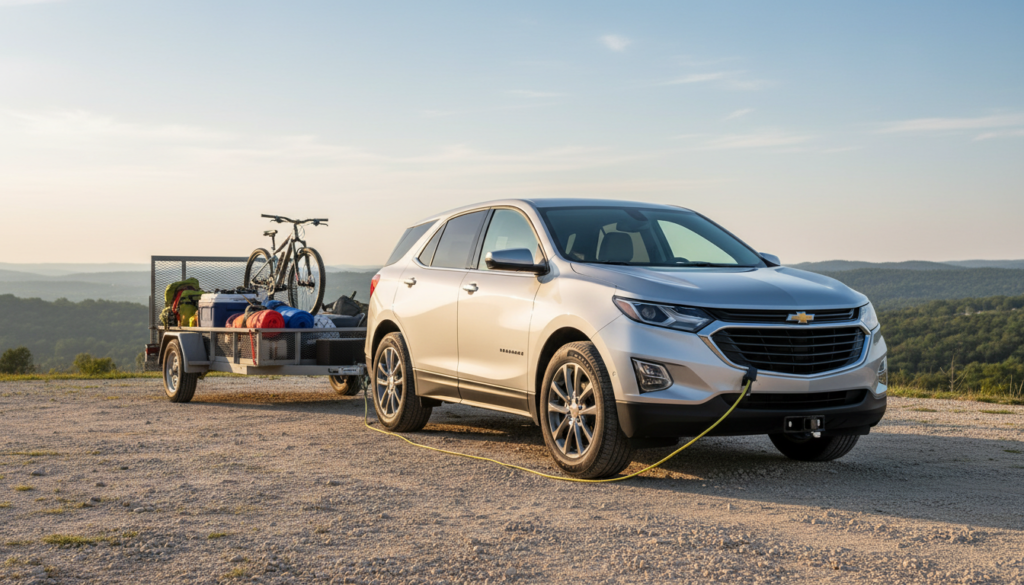
Tow-setup walkthrough
- Fit rated hardware: install a correctly rated hitch receiver, ball mount, and trailer ball.
- Attach safety chains and cross them under the coupler as a backup link.
- Connect the wiring harness and test lights; use a 7-way when electric trailer brakes are present.
- Do a quick lights/brakes/tires test before leaving.
Hardware explained
| Part | Role | Why rating matters |
|---|---|---|
| Hitch receiver | Mount point for trailer | Must match vehicle tongue and weight limits |
| Ball mount & trailer ball | Couples trailer to vehicle | Size and rating control secure hookup |
| Safety chains | Secondary restraint | Crossing chains prevents droop if uncoupled |
Load, drive, and limits
Aim for about 10% tongue weight and keep it under about 150 pounds on properly rated setups to preserve handling. That helps when you tow 1,500 pounds or less.
Choose AWD for extra grip on wet roads, ramps, or muddy campsites, but do not assume it raises the vehicle’s published limit.
Practical pulls under a 1,500-pound limit include a small utility trailer for weekend home improvement, a light aluminum boat, a single jet ski, or a compact pop-up camper. Pack low, secure cargo, drive slower, increase following distance, and take wider turns to reduce sway and stress.
Conclusion
Understand the model and gear before you plan any pull. The right answer for a chevy equinox depends on the exact model year and setup. Published numbers range roughly from 1,500 to 3,500 pounds, so verify the equinox towing capacity for your trim before you hitch up.
Keep in mind that the engine helps but does not set the limit alone. Payload, cargo and tongue weight change what a vehicle can safely move. Use the owner’s manual and the door label to confirm ratings.
Do this every trip: review equipment, do a driveway hookup check, and weigh the loaded setup if you’re near the limit. When comparing a new equinox to an older one, ask for the model-year rating during a test drive.
Follow the numbers, set up correctly, and drive with care towing becomes straightforward and safe.
FAQ
How much can the new Equinox tow?
The common rating for recent models is up to 1,500 pounds when properly equipped. Older generations with different engines and chassis options can reach higher numbers, so always verify your exact model year and trim.
Where do I find the exact towing limit for my model year?
Check the owner’s manual and the door-jamb label for the vehicle’s Gross Vehicle Weight Rating (GVWR), Gross Combined Weight Rating (GCWR), and tow rating. Dealer specs and the manufacturer website also list factory tow charts by year and trim.
Which factors reduce the real-world tow limit?
Payload use (passengers, cargo, and equipment), trailer tongue weight, and optional accessories all lower your available towing headroom. Use GVWR and payload to calculate how much weight you can safely add before hitching a trailer.
How does the 1.5L turbo engine affect towing performance?
The 1.5L turbo typically produces about 170 horsepower and 203 lb-ft of torque, which is suitable for light hauling like small boats or utility trailers. It offers decent low-end torque but is not meant for heavy towing without proper upgrades.
What towing hardware and setup do I need?
Install a correctly rated hitch receiver, matching ball mount and trailer ball, safety chains, and the proper wiring connector for lights. For some trailers a 7‑way connector is recommended to power brakes and auxiliary circuits.
What is the recommended tongue weight and how do I load a trailer?
Aim for about 10% of trailer weight as tongue load and keep it within the vehicle’s tongue-weight rating—roughly under 150 pounds on typical small‑trailer setups. Balance cargo forward of the axle, secure loose gear, and avoid overloading the rear cargo area.
Should I choose front‑wheel drive or all‑wheel drive for towing?
Drive type affects traction, not the factory tow rating. All‑wheel drive helps in rain, snow, and off‑ramp launches, while front‑wheel drive is fine for light loads on dry pavement. Pick the drivetrain that matches your typical road and weather conditions.
What trailers and gear are suitable for a 1,500‑pound limit?
Small utility trailers, lightweight aluminum boats, single jet skis, and pop‑up campers usually fall within this range. Always confirm the trailer’s curb and loaded weight and allow margin for passengers and gear.
Any driving tips when pulling a trailer with this vehicle?
Drive slower, increase following distance, make wider turns, and plan for longer braking. Use lower gears on descents, avoid sudden maneuvers, and perform a short test run to check sway and braking before long trips.
Can aftermarket upgrades raise the tow rating?
Aftermarket changes like stronger hitches or suspension upgrades can improve handling and tongue‑weight capacity, but they don’t change the factory tow rating. Consult a qualified technician and your vehicle’s manufacturer before assuming a higher limit.