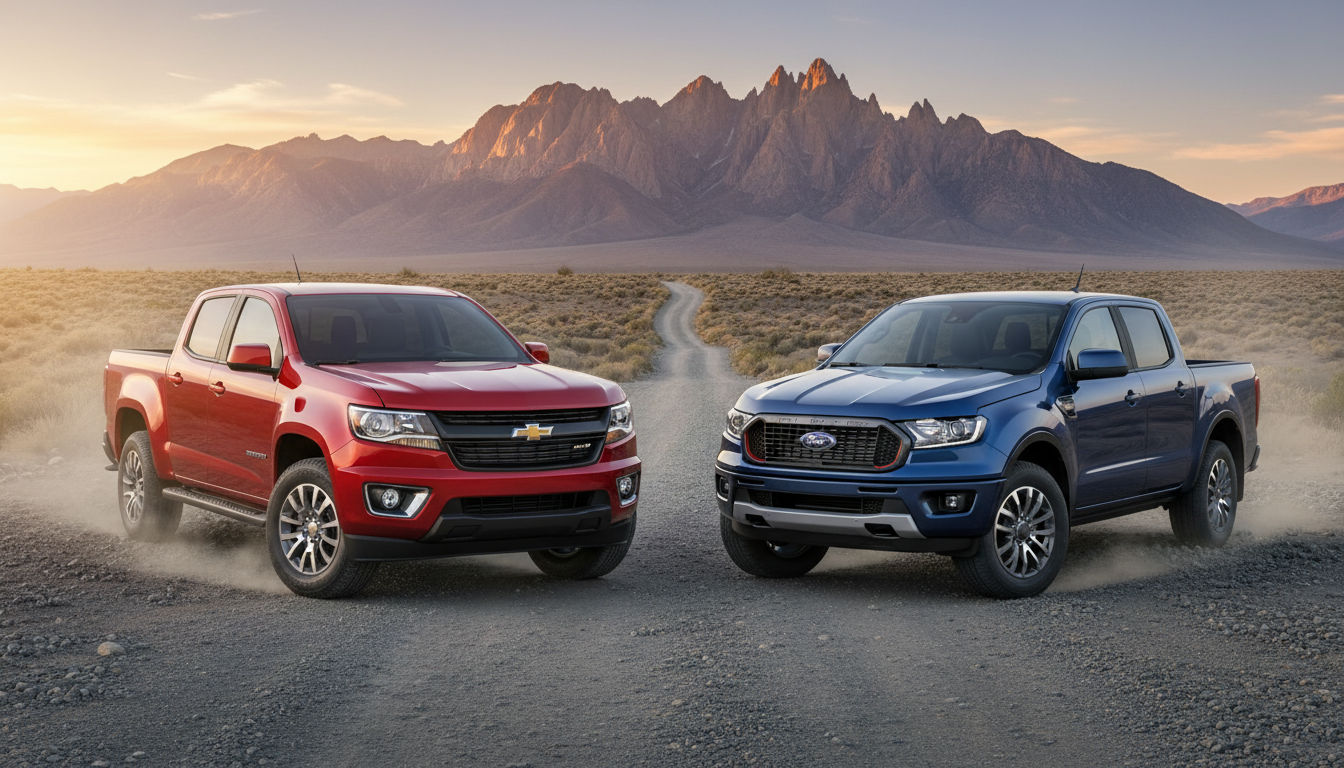
Chevy Colorado vs Ford Ranger: Which Midsize Truck is Best?
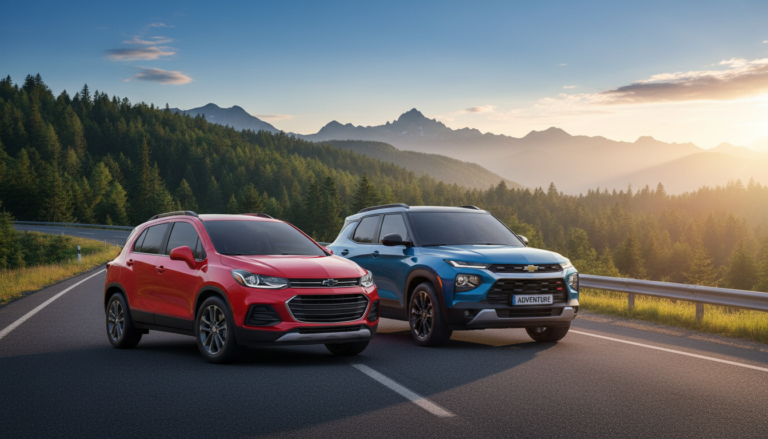
The U.S. guide opens with a clear purpose: a practical, real-world comparison to help drivers pick a midsize truck for work, weekends, and commuting.
This introduction previews the topics ahead. It will compare engines and torque delivery, towing and payload numbers, bed utility, cabin comfort, technology and safety, off-road trims, and pricing/value.
Specs change with trims and options, so use this as a shortlist tool and confirm the exact build you plan to buy.
You will see the headline trade-off: strong standard output and higher max tow/payload on one side and better efficiency and performance halo trims on the other.
It will recommend which model fits specific use cases jobsite hauling, family daily driving, light trailering, and off-road weekends and end with simple “pick this if…” advice to make your final choice easy.
Quick Overview of These Midsize Trucks for US Drivers
For buyers juggling work, weekend adventure, and commute duties, this short guide shows where each midsize pickup shines.
Who the Chevrolet Colorado is best for?
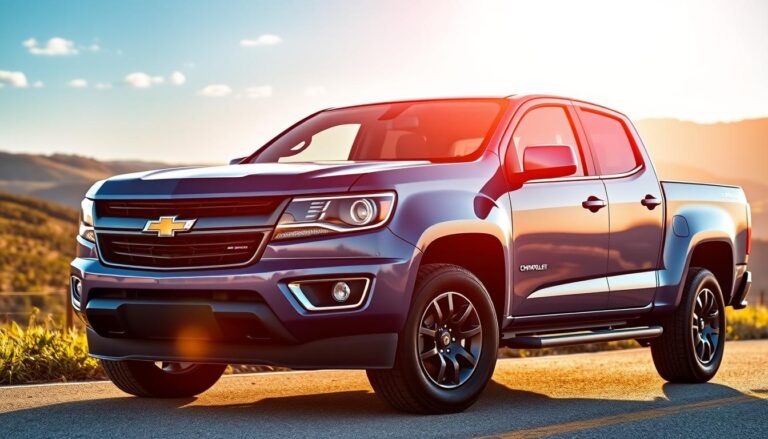
Drivers seeking strong standard power and higher tow/payload numbers tend to pick the chevrolet colorado. It comes crew-cab only and offers multiple trail-ready trims right in the main lineup.
Who the Ford Ranger is best for?
Buyers who want flexible cab/bed options and better everyday fuel economy lean toward the ford ranger. It suits drivers who value configurable models and available performance or off-road packages.
Key differences at a glance
Use three quick lenses to decide: worksite, weekend, and daily driving.
- Worksite: Check payload, bed utility, and towing ratings for tools and trailers.
- Weekend: Look at off-road hardware, ground clearance, and camera systems for trails and camping.
- Daily driving: Prioritize screen usability, cabin comfort, driver assists, and fueling range.
| Focus | chevrolet colorado | ford ranger |
|---|---|---|
| Best for | Strong standard power, higher tow/payload | Everyday usability, fuel efficiency, flexible configs |
| Off-road trims | Multiple trail-ready trims in main lineup | Available performance/off-road packages |
| What to check first | Engine/torque, tow & payload | MPG/range, cab/bed layout |
Chevy Colorado vs Ford Ranger: Engines, Power, and Transmission
Engine choices and transmission tuning shape how these midsize trucks feel on a busy highway or a loaded jobsite.
TurboMax explained
The TurboMax powertrain delivers 310 hp and 430 lb-ft of torque via an 8-speed automatic. In plain terms, that strong torque peak low in the rev range helps low-speed pulling and confident on-ramp merges when the truck is loaded.
Engine ladder and options
The other line offers a simple ladder: a 2.3L four-cylinder (270 hp, 310 lb-ft) for efficiency, an available 2.7L V6 (315 hp, 400 lb-ft) for more muscle, and a 3.0L V6 Raptor tune (up to 405 hp, 430 lb-ft) for enthusiasts. Buyers get 4×2 or 4×4 depending on trim.
Transmission and real-world feel
Transmission logic and gear count shape passing confidence. A 10-speed tends to keep revs in the sweet spot for overtakes and towing. The 8-speed holds gears differently and can feel stronger in low-end pulls.
- Real-world torque delivery: Better low-end torque means easier launches with a small travel trailer, smoother hauling of dirt bikes, and less downshifting on steep grades.
- 4×2 vs 4×4: 4×4 helps traction in snow and on boat ramps but adds weight and can lower fuel efficiency.
| Item | Spec | Effect |
|---|---|---|
| TurboMax | 310 hp / 430 lb-ft, 8-speed | Strong low-end pull |
| 2.3L | 270 hp / 310 lb-ft, 10-speed | Best economy |
| 2.7L / 3.0L | 315–405 hp / up to 430 lb-ft | More top-end performance |
Buying tip: Match engine, transmission, and drivetrain to your typical load and terrain choose capability, not just the biggest number.
Towing Capacity and Payload Capacity for Jobsite and Trailering
When jobsite loads and weekend trailers are on the list, towing numbers and payload limits become the deciding factors.
What towing and payload mean: Towing refers to the weight a truck can pull behind it. Payload is what the truck carries on board passengers, gear, and tongue weight. A rig can tow a lot but still run out of payload when people and equipment are added.
Published maxs and what “properly equipped” means?
Published max towing: one model reaches up to 7,700 lbs and the other up to 7,500 lbs when properly equipped. Proper equipment usually includes the correct hitch class, cooling package, axle ratio, and factory tow package parts.
Payload differences and trim trade-offs
Max payload tops out around 2,046 lbs on one truck and about 1,788 lbs on the other, depending on cab, drivetrain, and options. Off-road trims commonly swap tow capacity for bigger tires and heavier suspension: the ZR2 hauls up to about 6,000 lbs while the Raptor tops near 5,510 lbs.
- Check the door-jamb rating for exact payload capacity.
- Confirm trailer GVWR, hitch rating, and brake controller needs before towing.
- Keep a safety margin under maxs for long grades, heat, or high-altitude runs.
| Item | Max Value | Notes |
|---|---|---|
| Max towing | 7,700 / 7,500 lbs | Properly equipped; hitch and tow package matter |
| Max payload | 2,046 / 1,788 lbs | Varies by cab, wheels, and added parts |
| Off-road trim tow | 6,000 / 5,510 lbs | Hardware reduces towing capacity |
Fuel Economy, Fuel Capacity, and Day-to-Day Running Costs
Everyday fuel habits and tank size often decide which midsize truck fits a driver’s routine best.
EPA-style MPG comparison: Published figures show a clear efficiency edge for the smaller-displacement model. Example combined numbers: 4WD — 19/22 MPG (truck A) and 17/19 MPG (truck B) depending on drivetrain and options. Two-wheel-drive figures are higher: about 21/23 MPG versus 19/20 MPG, engine and trim dependent.
Compare EPA ratings like-for-like. Drive layout (2WD vs 4WD), tire choice, and trim weight change real mileage. Use the cited numbers as a baseline, not a guarantee.
- Tank sizes: 21.4 gallons vs 18.0 gallons the larger tank boosts highway range even when MPG is lower.
- Range math: Estimate range with combined MPG × gallons. For example, 20 MPG × 21.4 gal ≈ 428 miles between stops.
- Ownership costs: Frequent towing, heavy payloads, and aggressive tires cut MPG sharply on either vehicle.
| Item | 4WD MPG (city/highway/combined) | Tank (gal) |
|---|---|---|
| Model A | 19/26/22 | 18.0 |
| Model B | 17/21/19 | 21.4 |
Choose based on routine: commuters who prioritize fuel economy should favor the higher-MPG option. Rural drivers and long-distance travelers may prefer the larger tank to reduce stops and improve range.
Bed Size, Cargo Utility, and Work-Ready Features
Cargo length, tie-downs, and access features shape how useful a pickup proves on job sites and weekend trips.
Length and real-world fit
The crew-cab short configuration on the chevy colorado gives a bed length around 61.7 inches. That fits a motorcycle or a pair of standard toolboxes easily.
The ford ranger offers more choices, with box lengths roughly 61.0 to 72.8 inches. Longer beds let you haul plywood or ladders without lowering the tailgate.
Short-bed utility and tie-downs
The colorado uses thoughtful tie-down placement and an available StowFlex tailgate to help secure odd-shaped loads. Internal anchor points keep smaller gear from sliding during transit.
Benefit: tighter cargo control when loading solo and easier organization for daily work parts and tools.
Access, power, and lighting for the box
The ranger’s available box side step makes frequent loading simpler. In-bed 120V power and LED lighting let users run small tools at night or see fast while unloading.
Benefit: better late-night utility for campsite projects or after-hours jobsite work.
- Visualize what you carry: motorcycle, plywood with tailgate down, or camping gear.
- Prioritize bed access and anchor strategy if you load alone; choose length if you haul long materials often.
- Remember accessories liners, tonneaus, and racks change usability; confirm compatibility with trim and parts before purchase.
| Item | chevy colorado | ford ranger |
|---|---|---|
| Typical bed length | 61.7 in (crew cab short) | 61.0–72.8 in (multiple configs) |
| Notable features | StowFlex tailgate, multiple tie-downs | Box step, in-bed power, LED lighting |
| Best for | Daily drivers needing secure short loads | Users who need variable length and late-night utility |
Interior Comfort, Cabin Layout, and Everyday Convenience
Comfort and practical storage often beat headline specs when the truck is your daily driver. Focus on how the cabin works for real trips: entry and exit, long-seat support, and space for rear passengers matter more than trim badges.
Seating, space, and storage for commuters and families
Check the seat shape and bolstering for long commutes. Look for adjustable lumbar support and firm cushion edges that reduce fatigue.
Assess rear cabin room for adult passengers and car seats. Small storage bins, in-door pockets, and under-seat stowage keep straps, gloves, and recovery gear tidy and within reach.
Available upgrades: heated/ventilated seats and premium comfort options
Heated and ventilated seats make year-round comfort real. Premium audio matters on long highway drives and helps the driver stay alert and entertained.
Remember that many comfort items come in bundles. Compare similarly equipped models rather than base trims to get a fair view of what you’ll actually buy.
Practical test-drive checklist
- Adjust the seat, then check sightlines over the hood.
- Open and close common bins to test reachability.
- Listen for road noise at 65 mph and feel armrest height during cornering.
| Item | What to check | Why it matters |
|---|---|---|
| Seat support | Bolster firmness and lumbar | Limits fatigue on long drives |
| Cabin storage | Under-seat bins and door pockets | Secure, easy access for small gear |
| Upgrades | Heated/ventilated seats, premium audio | Year-round comfort and better commute |
Technology and Driver-Focused Screens, Cameras, and Connectivity
Big screens grab headlines, but real value comes from intuitive menus and quick access to driving tools. Screen size matters less than how fast a driver can pull up navigation, adjust audio, or call up towing settings.
Infotainment and on-screen systems
One model ships a standard 11.3-inch touchscreen with Google built in, while the other starts with a 10-inch unit and offers a 12-inch option on higher trims. Both support Apple CarPlay and Android Auto, often wireless.
Evaluate menu layout, shortcut buttons, and voice responsiveness. A larger display is helpful, but a clear menu and physical shortcuts reduce time spent adjusting settings while you drive.
Driver information and cluster usefulness
The 11.0-inch driver information center shows trip, tow, and diagnostic data in one view. The rival offers an 8-inch cluster on lower trims and a 12-inch full display on top trims.
Why it matters: Visible towing and off-road readouts cut distraction and boost confidence on long or technical drives.
Cameras, trail visibility, and connectivity options
Up to 10 camera views, including available underbody cameras, help when hitching solo or choosing a line on rocky sections. More angles equal fewer blind spots when parking tight or backing a trailer.
Expect Wi‑Fi hotspot options and mobile data plans for on-the-go connectivity. A hotspot helps remote work or keeps passengers entertained on long trips.
- Tech shopping tip: Confirm which screens, clusters, and camera packages are standard for the exact trim many useful options are add-ons that raise the price.
| Feature | Standard | Available |
|---|---|---|
| Center touchscreen | 11.3-inch with Google built in | 10–12 inch progression by trim |
| Driver display | 11.0-inch information center | 8–12 inch cluster depending on trim |
| Camera views | Multi-view backup | Up to 10 views, underbody camera option |
Safety and Driver-Assistance Systems for Confident Driving
Driver-assist tech is best seen as a set of fatigue reducers that help with long highway miles and stop-and-go traffic. These tools support attentive driving; they are not a replacement for it.
Chevrolet Safety Assist includes:
- Forward Collision Alert: warns of slower traffic ahead.
- Automatic Emergency Braking: can stop the vehicle in sudden slowdowns.
- Front Pedestrian Braking: helps avoid mid-speed hits to pedestrians.
- Lane Keep Assist & Lane Departure Warning: nudge or alert when drifting.
- Following Distance Indicator: helps maintain safe gaps in traffic.
- IntelliBeam Auto High Beams: automates headlight highs/low for clearer night driving.
Ranger approach and Co‑Pilot360: Core items like a rear-view camera and Trailer Sway Control are standard. Co‑Pilot360 features appear more on higher trims, so buyers should verify what each trim includes before purchasing.
| Item | Typical availability | Real benefit |
|---|---|---|
| Rear Park Assist | Standard on WT, optional on XL | Eases tight parking and low-speed maneuvers |
| Trailer Sway Control | Standard on many trims | Stabilizes trailers at speed |
| Co‑Pilot360 | Available / bundled on higher trims | Expanded automated aids and sensors |
Test-drive checklist: check alert sensitivity, observe lane-keep behavior, and note if warnings feel helpful or intrusive. Also confirm package bundling many safety options tie to trim or option groups.
Off-Road Capability and Trail-Ready Trims
Off-road ability comes from a blend of geometry, hardware, and deliberate tuning badges only tell part of the story. Evaluate clearance, tires, suspension, and protection together when comparing trail-ready trucks.
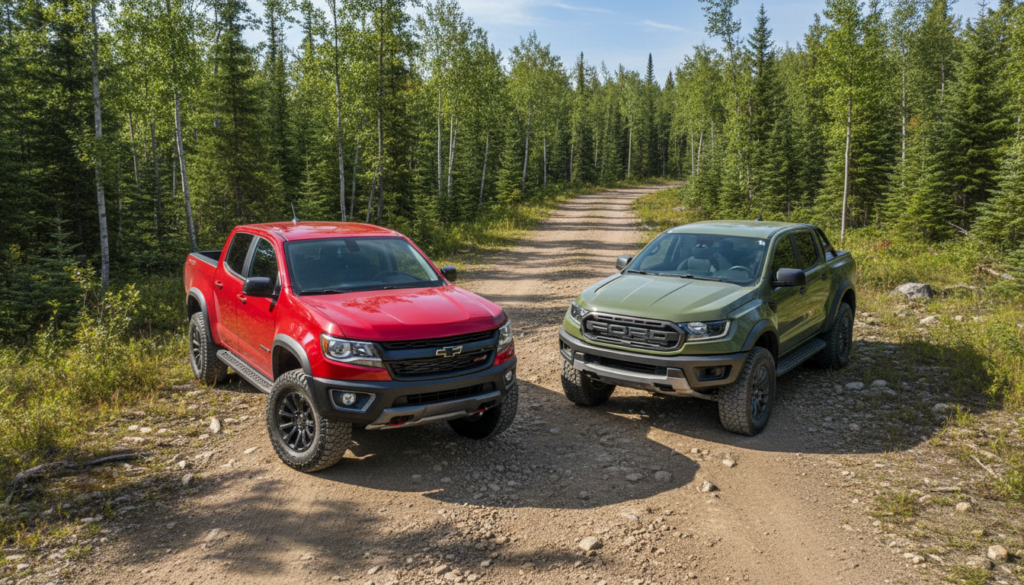
Colorado off-road ladder
The Trail Boss and Z71 add lift, skid plates, and better tires for light trails. ZR2 steps up with wider track, specialized dampers, and locking differentials for technical lines.
The ZR2 Bison adds stamped-steel bumpers and extra durability parts for harsher terrain and hard use.
Tremor and Raptor approach
The Tremor package boosts capability on mainstream trim levels with FOX dampers and a locking rear differential for improved traction.
The Raptor is the high-performance option, tuned for high-speed desert running and aggressive off-road performance.
Ground clearance and hardware that matter
ZR2 offers up to 12.2 inches of ground clearance; Raptor measures up to 10.7 inches. More clearance helps over ruts and increases breakover angle.
- Skid plates: protect key parts from rocks and stumps.
- Locking differential: sends torque to both wheels when one slips.
- Dampers: control wheel motion for stability at speed.
- Drive modes: tailor throttle, traction, and shift logic for mud, sand, or rock.
| Feature | Colorado ladder | Ranger options |
|---|---|---|
| Base off-road | Trail Boss / Z71 | Tremor package |
| High-end | ZR2 / ZR2 Bison | Raptor |
| Max ground clearance | 12.2 in (ZR2) | 10.7 in (Raptor) |
| Key hardware | Skid plates, locking diffs, stamped bumpers | FOX dampers, locking rear diff, tuned shocks |
Be honest about your trails: mild forest roads, sandy access routes, and rocky sections need different levels of capability. Match the trim to the real terrain you drive.
Pricing, Trims, and Overall Value in the Midsize Truck Segment
Sticker price is only the start; fees, packages, and local demand shape the final deal.
Entry-level comparison
The 2026 chevrolet colorado WT starts near $32,400. The 2025 ford ranger XL begins around $33,350.
Watch destination charges, dealer fees, and option packages — they shift that “starting” number quickly.
Top-trim pricing
High-end builds show a wider gap: the colorado ZR2 lists about $52,595 while the ranger Raptor is about $56,070.
These trims pack purpose-built hardware. Value depends on whether owners use the extra off-road or performance gear.
How to pick the right trim?
- Match a trim to primary use: frequent towing and payload needs, tech and comfort, or serious off-road intent.
- Price out similarly equipped models drivetrain, tow package, and key options aligned before deciding.
- Consider future-proofing: buying capability now often costs less than aftermarket upgrades for towing or protection.
| Level | chevrolet colorado | ford ranger |
|---|---|---|
| Base MSRP | $32,400 | $33,350 |
| Top trim | ZR2 $52,595 | Raptor $56,070 |
| What to check | Included capacity, safety tech, bed features | Options, towing packages, dealer add-ons |
Conclusion
What matters most is matching the truck’s strengths to your weekly routine. If you haul heavy loads, tow often, or want stronger standard power, the chevy colorado lineup leads with higher published max tow and payload and more off-road trims out of the box.
If fuel economy, flexible cab/bed choices, or factory performance variants appeal, the ford ranger better suits daily commuters and those who value MPG and trim options.
Before buying: test drive both, check the door-jamb payload label, confirm the tow-package and transmission choices, and compare insurance and fuel estimates for the exact trim.
Choose the truck that matches trailer weight and passenger needs first, then refine by engine, tech, and off-road gear.
FAQ
Which midsize pickup offers better towing for occasional trailer use?
Both trucks tow competitively when properly equipped. The Colorado can tow up to about 7,700 lbs on certain powertrains, while the Ranger tops near 7,500 lbs. For occasional towing, choose the model whose max rating exceeds your trailer’s gross weight and confirm axle ratio, hitch, and brake controller specs before you hook up.
Which truck has higher payload capacity for jobsite loads?
The Colorado generally offers higher payload figures in its best-configured trims—up to around 2,046 lbs—while the Ranger’s peak payload is lower, near 1,788 lbs. Payload varies by cab, bed, drivetrain and options, so check the sticker for the exact configuration you plan to use.
How do the engine choices affect everyday driving and highway passing?
The Chevrolet’s available TurboMax V6 delivers strong torque and an 8-speed automatic that helps with passing and towing. The Ranger’s 2.3L turbocharged four-cylinder balances fuel economy and performance; higher-displacement V6 options add low-end grunt. Consider torque curves for towing and the transmission’s shift logic for smooth highway passing.
Which truck is better off-road and what trim should I pick?
For trail use, look at off-road trims: Colorado offers Z71, ZR2 and ZR2 Bison with heavy-duty suspension and skid protection; the Ranger offers Tremor and Raptor variants tuned for aggressive terrain. Choose based on ground clearance, locking differentials, and suspension components suited to your intended trails.
How much difference in fuel range should I expect between the two models?
Fuel economy depends on engine and drivetrain. The Ranger’s lighter engine options often yield better EPA MPG, while the Colorado’s larger tank (about 21.4 gallons versus roughly 18.0 gallons) can extend range between fill-ups even if MPG is similar. Combine tank size and MPG to estimate real-world range.
What tech and connectivity features come standard or available?
Expect modern infotainment, smartphone integration and driver-assist integration across both lineups. The Colorado offers an available large touchscreen with Google built-in and multiple camera views. The Ranger provides a variety of screen sizes and Ford’s connectivity suite. Higher trims add premium audio, Wi‑Fi hotspots and larger digital clusters.
What should I inspect before towing or loading a heavy payload?
Verify the vehicle’s gross vehicle weight rating (GVWR), gross combined weight rating (GCWR), tongue weight limits, and payload capacity for your specific trim. Check hitch class, sway control, trailer brakes, cooling package, and tire pressures. Secure loads evenly and observe tongue weight guidelines to maintain safe handling.