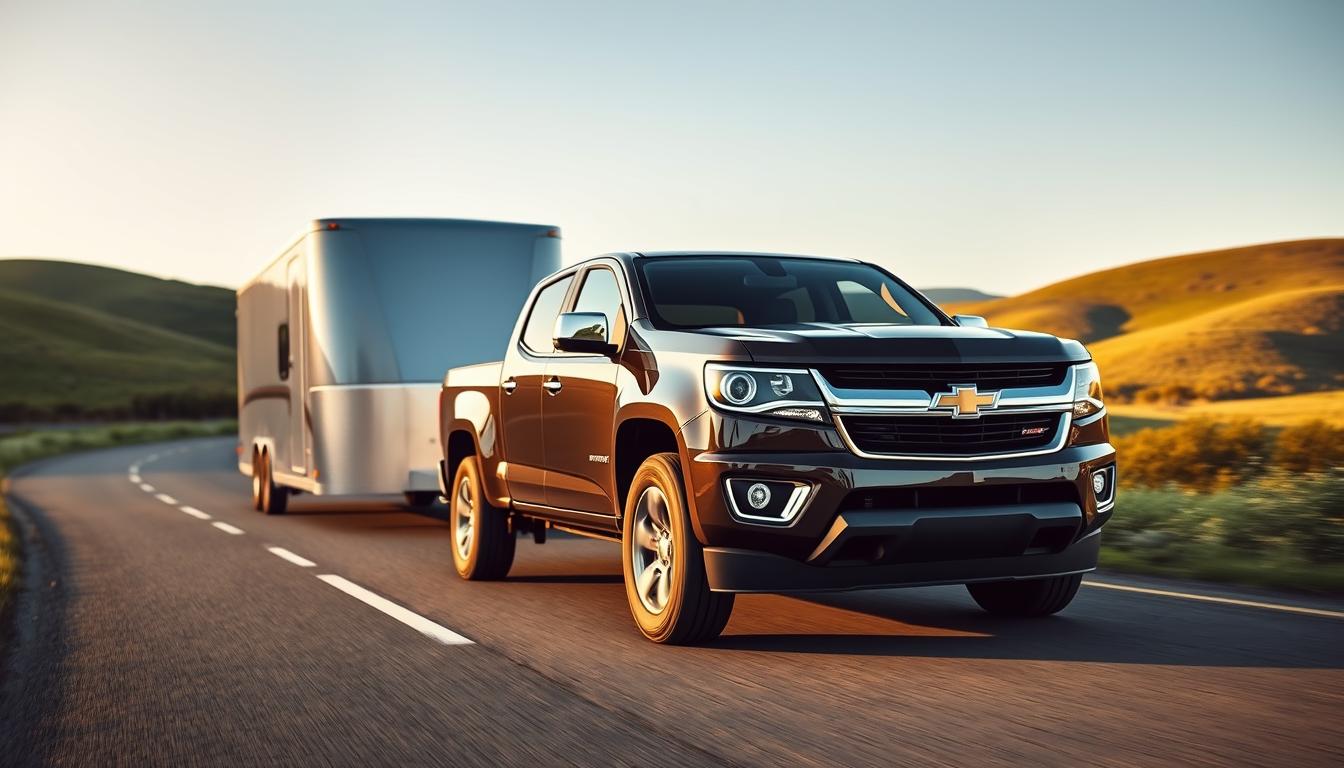
Chevy Colorado Towing Capacity Guide: Engines, Payload & Charts
Don’t let the ‘Midsize’ label fool you. When properly equipped, the Chevy Colorado towing capacity rivals many older full-size trucks.
The 2025 Headline Number: With the high-output 2.7L TurboMax engine, the 2025 Colorado can tow up to 7,700 lbs—besting the Toyota Tacoma and Ford Ranger in raw pulling power.
But there’s a catch: Not every Colorado hits that number.
- The Workhorse: The LT and Z71 trims (with the Z82 Trailering Package) hit the max 7,700 lbs.
- The Off-Roader: The ZR2 trades towing for suspension travel, dropping the limit to 6,000 lbs.
Whether you drive a classic 2004 model or the new 2025 Turbo, this guide breaks down the max ratings by year, trim, and engine. We also dive into the critical payload math and advanced tech like the Transparent Trailer Camera to ensure you haul that camper safely, not just legally.
| Trim / Engine | Max Towing Capacity | Notes |
| 2.7L Turbo (Base) | 3,500 lbs | Requires Hitch |
| 2.7L TurboMax (LT/Z71) | 7,700 lbs | Requires Trailering Pkg |
| Colorado ZR2 | 6,000 lbs | Off-Road Suspension Limit |
| Colorado ZR2 Bison | 5,500 lbs | Added Armor Weight |
Overview of Chevy Colorado towing capacity and model highlights
The 2025 Colorado is perfect for those who tow often. Most models come with a 2.7L turbocharged engine. This engine boosts the towing capacity to 7,700 pounds.
This is important for matching trailers, boats, and work equipment to the truck. It ensures the truck can handle the load every day.
The 2.7L engine has two versions. The high-output version makes 310 hp and 430 lb-ft of torque. This extra power helps keep speed on the highway and climb hills with a trailer.
Trim levels affect the truck’s capabilities. Work Truck and LT keep the 7,700-pound towing limit in RWD and AWD. Z71 and Trail Boss add off-road features but keep strong towing numbers. The ZR2 sacrifices some towing for better off-road suspension and dampers, lowering the max to about 6,000 pounds.
Comparing the 2021 Chevy Colorado to current models shows improvements. These updates enhance towing for most users, making it better for long highway drives and hill climbs.
Below is a concise comparison of key drivetrain and trim attributes that affect towing. Use this to match intended trailer weights to the right Colorado configuration.
| Trim | Engine / Output | Drive | Factory Max Tow | Notes |
|---|---|---|---|---|
| Work Truck (WT) | 2.7L turbo (standard tune) | RWD/AWD | 7,700 lbs | Value-focused; full towing capability |
| LT | 2.7L turbo (standard/high output options) | RWD/AWD | 7,700 lbs | Balanced comfort and tow performance |
| Z71 | 2.7L turbo (high-output available) | 4WD | 7,700 lbs | Off-road hardware with minimal tow penalty |
| Trail Boss | 2.7L turbo (high-output available) | 4WD | 7,700 lbs | Lifted package, retained tow capacity |
| ZR2 | 2.7L turbo (tuned for off-road) | 4WD | ~6,000 lbs | Multimatic DSSV dampers reduce max tow |
Technical shoppers should check the owner’s literature and dealer materials. These sources provide exact weights, tongue limits, and recommended equipment for safe towing.
Chevy Colorado towing capacity
The Chevy Colorado has been towing for 20 years, with engine changes and rating shifts. This section covers the highest towing figures by era. It also mentions the 2025 limits and where to find official numbers. This guide is handy for planning a tow or comparing model years.
Maximum tow ratings across recent model years (2004–2025)
Early Colorados from 2004–2006 could tow near 4,000 pounds with five-cylinder engines. A V8 option in 2008–2012 raised capacities to about 6,000 pounds. The 2015 3.6L V6 reached around 7,000 pounds.
From 2016 to 2022, the 2.8L TurboDiesel hit the 7,700-pound peak. Starting in 2023, turbocharged four-cylinder designs kept that peak.
For a clear year-by-year view, check the chevy colorado towing capacity chart below. It shows typical maximums and highlights major towing-capability changes by year.
| Model Years | Engine Highlight | Approx. Max Tow |
|---|---|---|
| 2004–2006 | 2.8L/3.5L 5‑cyl gasoline | ~4,000 lbs |
| 2008–2012 | 5.3L V8 (available in some markets) | ~6,000 lbs |
| 2015 | 3.6L V6 | ~7,000 lbs |
| 2016–2022 | 2.8L TurboDiesel | ~7,700 lbs |
| 2023–2025 | 2.7L turbo I‑4 | ~7,700 lbs |
2025 maximums: 7,700 lbs for most trims; ZR2 rated at 6,000 lbs
In 2025, most trims—Work Truck, LT, Z71, and Trail Boss—can tow up to 7,700 pounds. This is with the right drivetrain, hitch, and axle ratio. The ZR2, with its off-road suspension, can tow about 6,000 pounds.
These differences show the trade-offs between towing on roads and off-road capability. Always check the specific trim data before assuming a truck can meet your towing needs.
Where to find official tow figures: owner’s manual and door tag?
The owner’s manual has a section on trailering. It lists towing limits, required equipment, and specs tied to engine and axle codes. The certification label on the driver’s door jamb shows curb weight, GVWR, GAWR, and GCWR. Use both sources to find safe towing limits for your truck.
Dealer spec sheets and Chevrolet’s official guides offer adjustments based on equipment. For confirmation, match the truck’s VIN options to the manual and door tag data. This ensures the towing specs apply to your vehicle.
Detailed towing specs by engine, drivetrain, and trim
The Chevy Colorado’s towing specs change based on engine, drivetrain, and trim. We’ll look at how the 2.7L turbo I‑4 performs in two states, the difference between RWD and AWD/4WD, and how past models have influenced current specs.
The 2.7L turbo I‑4 comes in two versions. The high-output one makes about 310 hp and 430 lb-ft of torque. The standard version has less horsepower but strong midrange torque for towing.
The engine is paired with an eight-speed automatic transmission. This setup helps keep torque in the right range for towing. Both versions offer confident pulling power, affecting the Colorado’s towing capabilities.
Drive type impacts towing ratings and real-world use. RWD models can tow up to 7,700 lbs on many trims. AWD and 4WD versions also reach this rating but offer better traction. AWD/4WD models have slightly less payload due to added weight.
Off-road packages like ZR2 can lower tow limits. ZR2 adds heavy-duty components but reduces payload and tow rating to about 6,000 lbs. This trade-off is important for those needing off-road prowess and high towing capacity.
Looking back, the 2.8L TurboDiesel models from 2016–2022 had strong low-end torque for heavy towing. Earlier 3.6L V6 models reached around 7,000 lbs. These changes reflect the evolution of the Colorado’s engine and drivetrain over time.
The chart below compares engine-era peaks, peak torque, and typical max tow ratings for a quick look.
| Engine / Era | Approx. Peak Torque (lb‑ft) | Peak Rated Tow (lbs) | Real‑world note |
|---|---|---|---|
| 2.7L Turbo I‑4 (high‑output) | ~430 | 7,700 | Strong midrange, best for heavy trailers on most trims |
| 2.7L Turbo I‑4 (standard) | ~350–390 | 7,700 (many trims) | Excellent torque curve, efficient towing in daily use |
| 2.8L TurboDiesel (2016–2022) | ~369–369 | 7,700 | Low‑end torque aided heavy launches and hill climbs |
| 3.6L V6 (earlier years) | ~275–280 | ~7,000 | Good all‑around motor, lower peak tow than turbo options |
| ZR2 (off‑road hardware) | Varies by tune | ~6,000 | Off‑road focus reduces payload and tow rating |
👨🔧 Tech Note: Know Your Engine Codes
- L2R: This is the base 2.7L Turbo engine (237 hp) found in WT and LT trims. It is tuned for efficiency, not max towing.
- L3B (TurboMax): This is the high-output version (310 hp / 430 lb-ft) found in Z71, Trail Boss, and ZR2. This is the engine you want for heavy towing.
Chevy Colorado towing packages and advanced trailering features
The Colorado has tools for heavy-duty tasks that make towing easier. It’s important to pick the right towing package for your needs. Knowing what the Colorado can tow helps you choose the best options.
Integrated trailer brake controller
A special brake controller is installed to adjust trailer brakes from the cab. This makes braking smoother and reduces wear. It helps control the truck and trailer better.
ProGrade/Advanced Trailering app and trailer profiles
The ProGrade app lets you save up to five trailer profiles. You can input details like dimensions and tire pressure. It also tracks mileage and gives diagnostics during trips.
Transparent Trailer shows trailer dimensions on the rear camera. This helps when backing up or maneuvering in tight spaces.
Camera calibration, sensors, and TPMS notes
Transparent Trailer needs you to enter trailer size for accurate display. A short calibration drive is needed for the display to work right. Trailer tire pressure monitoring requires GM-compatible sensors on the trailer wheels.
These sensors are often installed by dealers, not the factory.
Hardware: hitch, tow/haul mode, and mirrors
Factory hitches vary by class and rating. Tow/Haul mode helps control speed on hills. It shifts gears later and adds engine braking.
Tow mirrors give a wider view for towing. They help reduce blind spots when driving with a trailer.
Safety and installation guidance
Dealers may offer packages with extra parts like a hitch ball or wireless TPMS. Make sure you know what each package includes. Proper installation and setup are key to using the truck’s towing features.
Payload capacity vs towing capacity: how to calculate safe loads
The Chevy Colorado is great for both payload and towing. It’s important to know the difference between payload, tongue weight, and GCWR. This keeps your hauls safe. Always check the door jamb sticker and owner’s manual for exact limits before loading or hitching.
Definition and differences
Payload is the total weight the truck carries in the cab and bed. Tongue weight is the part of the trailer’s weight that presses down on the hitch. GCWR is the total weight of the truck, passengers, cargo, and trailer. Towing capacity is the maximum trailer weight the truck can tow; for many 2025 Colorados, this is 7,700 lbs on select configurations.
Example payload figures and a 2025 guide
Dealer reports show payload around 1,600–1,700 lbs on some 2025 models. Subtract passenger weight, bed cargo, and tongue weight to avoid overloading. For example, two occupants at 350 lbs plus 300 lbs of bed cargo and a 770‑lb tongue weight use 1,420 lbs of payload.
How to calculate total weight (passengers + cargo + tongue weight)?
Step 1: Read curb weight and GVWR/GCWR on the door tag and in the manual. Step 2: Add passenger weight, cargo weight, and trailer tongue weight. Step 3: Make sure total payload used is less than the truck’s payload capacity. Also, check that trailer weight does not exceed the chevy colorado towing capacity.
Practical tip: use a safety margin by staying under 80% of maximums for frequent towing. Always check chevy colorado towing specs for your exact trim. This ensures you match real-world loads and avoid surprises on the road.
| Item | Typical Value (2025 estimate) | Notes |
|---|---|---|
| Payload capacity | 1,600–1,700 lbs | Varies by cab, bed, and options; check door tag |
| Maximum towing capacity | Up to 7,700 lbs | Applies to many trims with the 2.7L turbo; ZR2 rated lower |
| Tongue weight (typical) | 10–15% of trailer weight | Include in payload calculations; adjustable with weight-distribution hitches |
| Example payload use | 1,420 lbs | Two occupants (350) + bed cargo (300) + tongue weight (770) |
| Recommended working margin | 80% of rated capacities | Improves safety and reduces strain on brakes and drivetrain |
Essential towing equipment and Chevy Colorado towing packages
The right gear makes towing safer and smoother. This guide covers hitches, load control, and monitoring gear. It also talks about the items dealers include in towing bundles. Make sure to check the chevy colorado towing capacity and specs before you go.

Recommended hitches, hitch balls, and weight-distributing options
Choose a hitch receiver that meets or exceeds the truck’s max tow rating. Make sure the hitch ball diameter and shank capacity match the trailer coupler. For heavy trailers or loads near the truck’s limit, a weight-distributing hitch reduces rear sag and improves steering and braking control.
When selecting components, confirm SAE/ANSI safety ratings. Have a qualified technician install the hitch and torque fasteners to factory specs. This protects the chevy colorado towing capacity and ensures the chevy colorado towing specs are preserved in real use.
Tie-down hooks, tarps, and trailer tire pressure monitoring
Factory tie-down hooks secure cargo in the bed. Use high-quality ratchet straps and anchor points to prevent shifting and keep weight balanced. Cover open loads with durable tarps to shield cargo from weather and debris.
Trailer tire pressure monitoring cuts the risk of blowouts and uneven wear. The ProGrade system supports wireless TPMS sensors for trailer rims. These sensors are often aftermarket or Genuine GM accessories, not always part of base kits. Monitor both pressure and temperature during long hauls.
What’s typically included in dealer towing packages and optional accessories?
Dealer towing bundles commonly add an integrated trailer brake controller, receiver hitch, and wiring harness. Some packages include tow mirrors and Transparent Trailer support for the infotainment camera system. Verify exact contents with the selling dealer before purchase.
Available accessories that complement dealer packages include factory hitch balls, heavy-duty suspension upgrades, floor mats, and trailer-specific TPMS kits. Enabling tow/haul settings and choosing the right tires can affect how the truck uses its rated Chevy Colorado towing capacity.
| Component | Purpose | When to Choose |
|---|---|---|
| Class III/IV Receiver Hitch | Primary connection point; matches truck tow rating | Standard towing up to the truck’s maximum Chevy Colorado towing specs |
| Weight-Distributing Hitch | Reduces sag; improves stability and braking | Trailers with high tongue weight or loads near 80–100% of rated capacity |
| Integrated Trailer Brake Controller | Controls trailer brakes for safer stopping | Anything with brakes or trailers over local legal limits |
| Wireless Trailer TPMS | Monitors tire pressure and temp on trailer rims | Long trips, heavy loads, or older trailers without sensors |
| Heavy-Duty Hitch Ball & Shank | Proper coupler fit and rated connection | Match ball size and capacity to trailer tongue rating |
| Ratchet Straps & Bed Tie-Downs | Secure cargo and maintain load balance | Open-bed hauling, landscaping gear, or unsecured cargo |
| Tow Mirrors & Transparent Trailer | Improves visibility and camera views while towing | Wide loads, longer trailers, or frequent towing users |
Always check the owner’s manual and the door tag for official chevy colorado towing capacity numbers. Confirm compatibility of aftermarket parts with the chevy colorado towing specs before installation. Proper gear and correct installation help drivers get the most from their truck while protecting safety margins on the road.
Best Chevy Colorado for towing: trims and configurations to consider
Choosing the right Colorado depends on how you plan to use it. Some buyers need raw towing power for trailers and boats. Others want a truck that can handle rough trails and occasional towing. This guide compares trims and their towing capacity and capabilities.
Work Truck and LT
Work Truck and LT offer a good balance of price and towing. Both trims reach the 7,700-lb maximum in most setups. They are great for fleet operators and weekend haulers who need consistent tow performance.
The LT adds comfort without losing towing capacity. Buyers who want value and convenience while keeping full tow ratings should choose these trims.
Z71 and Trail Boss
Z71 and Trail Boss come with off-road gear like skid plates and all-terrain tires. They keep the 7,700-lb rated capacity in typical setups. These trims are perfect for drivers who tow to trailheads, boat ramps, and campsites then drive off pavement.
Users who need moderate off-road capability while keeping strong towing capabilities will find these trims useful.
ZR2 trade-offs
ZR2 focuses on extreme off-road performance. It has Multimatic DSSV dampers and a wider track. These changes reduce the certified max tow to about 6,000 lbs.
Choose ZR2 when rock crawling and trail performance are more important than heavy towing. For maximum towing capacity, stick with WT, LT, Z71, or Trail Boss. Make sure to check the exact towing capacity for your configuration before buying.
| Trim | Tow Rating (approx.) | Best For | Key Features Affecting Towing |
|---|---|---|---|
| Work Truck (WT) | 7,700 lbs | Fleet use, budget towing | Standard tow hardware, basic suspension |
| LT | 7,700 lbs | Comfort + towing value | Upgraded interior, same tow setup as WT |
| Z71 | 7,700 lbs | Trail access with towing needs | Skid plates, off-road shocks, AT tires |
| Trail Boss | 7,700 lbs | Light off-road + heavy towing | Lifted suspension, off-road hardware |
| ZR2 | ~6,000 lbs | Extreme off-road first, towing secondary | Wide track, DSSV dampers, larger tires |
Practical towing tips and safety checks for Colorado owners
The Chevy Colorado is great for towing when you’re ready. A simple checklist and regular habits can make towing safer. Knowing about towing capabilities, packages, and specs is key before you go.
Pre-trip inspection checklist
- Tires: check pressure and tread on truck and trailer. Make sure the spare is good and can handle the load.
- Brakes: test the brakes at low speed. Check that the trailer brake controller works right and the gain is set for smooth stops.
- Lights and wiring: check brake, turn, and tail lights. Look for corrosion or loose pins in the harness and ground.
- Mirrors and visibility: add tow mirrors if needed. Use the Transparent Trailer camera when backing up.
- Load security: tie down cargo, balance weight, and keep tongue weight at 10–15% of trailer gross weight.
Hitching procedure and compatibility
- Align the ball and coupler, then lower the trailer onto the ball until it seats fully. Lock the coupler and use a safety pin or lock.
- Attach safety chains in an X pattern beneath the tongue. Hook the breakaway cable to the truck frame, not the hitch.
- Check if the ball diameter and coupler match. Make sure shank rating, receiver class, and ball mount ratings are good for the trailer’s weight.
Driving best practices
- Use Tow/Haul mode for better engine braking on descents.
- Drive at moderate speeds and increase following distance for longer stopping times.
- Use engine braking on steep grades to cool the brakes.
- Manage crosswinds by reducing speed and keeping a steady grip on the wheel. Be ready for gusts that push the trailer.
- Use a spotter for tight backing. Rely on camera aids like Transparent Trailer to see blind spots and align the coupler.
- Follow the 80% rule for frequent heavy towing: stay below maximums to reduce heat and wear on the drivetrain.
Towing use cases: trailers, boats, campers, and vehicle towing examples
The Chevy Colorado is great for many towing needs. It can handle a weekend boat, a work trailer, or a small camper. The towing capacity, payload, and hitch gear are key to making it work.
What a 7,700‑lb rating permits
A Chevy Colorado can tow small to medium travel trailers and most boat trailers. It’s good for single-axle and some tandem-axle trailers. It can also tow light car haulers and landscaping trailers.
Fifth‑wheel and car‑towing considerations
Fifth-wheel towing needs a special hitch and enough payload. Mid-size trucks like the Colorado might not have enough for big fifth-wheels. Always check the truck’s payload and towing capacity before adding a fifth-wheel.
Car towing requires a flatbed trailer or dolly. Make sure the trailer and dolly tongue weights fit within the truck’s payload. Trailer brakes, wiring, and coupler compatibility are also important for safety.
Real‑world examples
For a weekend boat, a 20–24 ft fiberglass runabout on a tandem-axle trailer is usually okay. Just remember to add the boat’s dry weight, trailer, fuel, and gear.
Work trailer towing is possible with a loaded landscaping trailer. Make sure the trailer’s weight and tongue weight don’t exceed the truck’s limits. This way, you can carry passengers and cargo too.
Family camper towing is feasible with small travel trailers and pop-ups. Just be careful not to overload. Too much gear or full water tanks can affect the truck’s stability.
Practical guidance
Use a public scale to weigh the truck and trailer if unsure. Check the owner’s manual and dealer resources for towing limits. Use the right hitch class and consider a weight-distribution system if needed.
Conclusion
The Chevy Colorado is a great choice for those needing a truck that can handle real-world tasks. It has a towing capacity of up to 7,700 pounds for most 2025 trims. This makes it perfect for hauling work, boats, and small-to-medium campers.
When picking the best Chevy Colorado for towing, consider what you need. The Work Truck and LT offer the highest tow ratings and value. The Z71 and Trail Boss mix off-road features with strong towing capabilities. The ZR2 is best for extreme trail use but has a lower tow limit.
Before towing, make sure you have the right equipment and follow safe practices. Use approved hitches, weight distribution, trailer TPMS, and an integrated trailer brake controller. Always check your tires, lights, coupler fit, and load security before hitting the road.
For the best results, have a certified technician install any accessories. They can ensure everything matches the truck’s ratings. This way, you can tow safely and efficiently.
FAQ
What is the 2025 Chevy Colorado towing capacity?
The 2025 Chevy Colorado with the 2.7L turbocharged engine can tow up to 7,700 pounds. This applies to most trims like WT, LT, Z71, and Trail Boss. The ZR2, with its heavy off-road gear, can tow about 6,000 pounds.
Where do I find the official towing and payload figures for my Colorado?
Check the owner’s manual, the trailering section. Also, look at the certification label on the driver’s door jamb. It lists curb weight, GVWR, GAWR, and GCWR. Dealer spec sheets and Chevrolet towing guides give more details.
How does the 2.7L turbo I‑4 compare to older V6 and diesel options for towing?
The 2.7L turbo is a modern choice that offers V6-like performance but is smaller and more efficient. It comes in two versions, with the high-output version making about 310 hp and 430 lb-ft. This makes it great for towing up hills and for a long time. The 2.8L TurboDiesel from 2016 to 2022 also had a 7,700-pound towing capacity and strong low-end torque.
Do drivetrain choices (RWD vs AWD/4WD) change the rated towing capacity?
Most 2025 Colorado trims can tow 7,700 pounds with RWD or AWD/4WD. AWD/4WD improves traction but may add weight. Always check the door jamb and owner’s manual for your specific trim and equipment rating.
What towing packages and trailering tech are available for the Colorado?
You can get an integrated trailer brake controller and the ProGrade/Advanced Trailering app. This app has trailer profiles, diagnostics, and mileage tracking. There’s also a Transparent Trailer camera overlay, factory receiver hitches, wiring harnesses, and tow mirrors. Dealer bundles often include an integrated brake controller, hitch, and wiring. Check with the dealer for details.
How do I calculate payload vs. tongue weight to tow safely?
Find curb weight and GVWR/GCWR on the door tag. Add passenger, cargo, and trailer tongue weight. Make sure the total doesn’t exceed your payload capacity. Also, the trailer weight should be less than or equal to the tow capacity. It’s wise to stay under 80% of the max tow rating for frequent heavy towing.
What hitch and hardware should I use for heavy towing with a Colorado?
Use a receiver hitch and hitch ball that meet or exceed your truck’s tow and tongue-weight ratings. For heavy trailers, consider a weight-distributing hitch to improve control. Make sure all parts meet SAE/ANSI ratings and are installed by a qualified technician or dealer.
Which Colorado trim is best for towing?
WT or LT trims offer the best value and can tow up to 7,700 pounds. Z71 and Trail Boss trims also have high tow ratings and add off-road features. Choose ZR2 only if off-road performance is key, as it has a lower tow rating of about 6,000 pounds.
What pre‑trip and safety checks should I perform before towing?
Check tire pressure and condition for both truck and trailer. Test vehicle and trailer brakes and the integrated trailer brake controller. Verify lights and wiring, and make sure mirrors and the Transparent Trailer camera are clear. Secure loads and confirm even tongue weight. Also, ensure hitch, ball, and chains are correctly sized and attached. Set tow/haul mode for better engine braking.
What real‑world loads can I tow with a 7,700‑lb rating?
A 7,700-pound rating can handle small-to-medium travel trailers, a wide range of boat trailers, landscaping or equipment trailers, and lighter car haulers. Always weigh loaded trailers and confirm tongue weight and total mass before travel.