Chevy 1500 Towing Capacity (Max 13,300 lbs) | Real Numbers
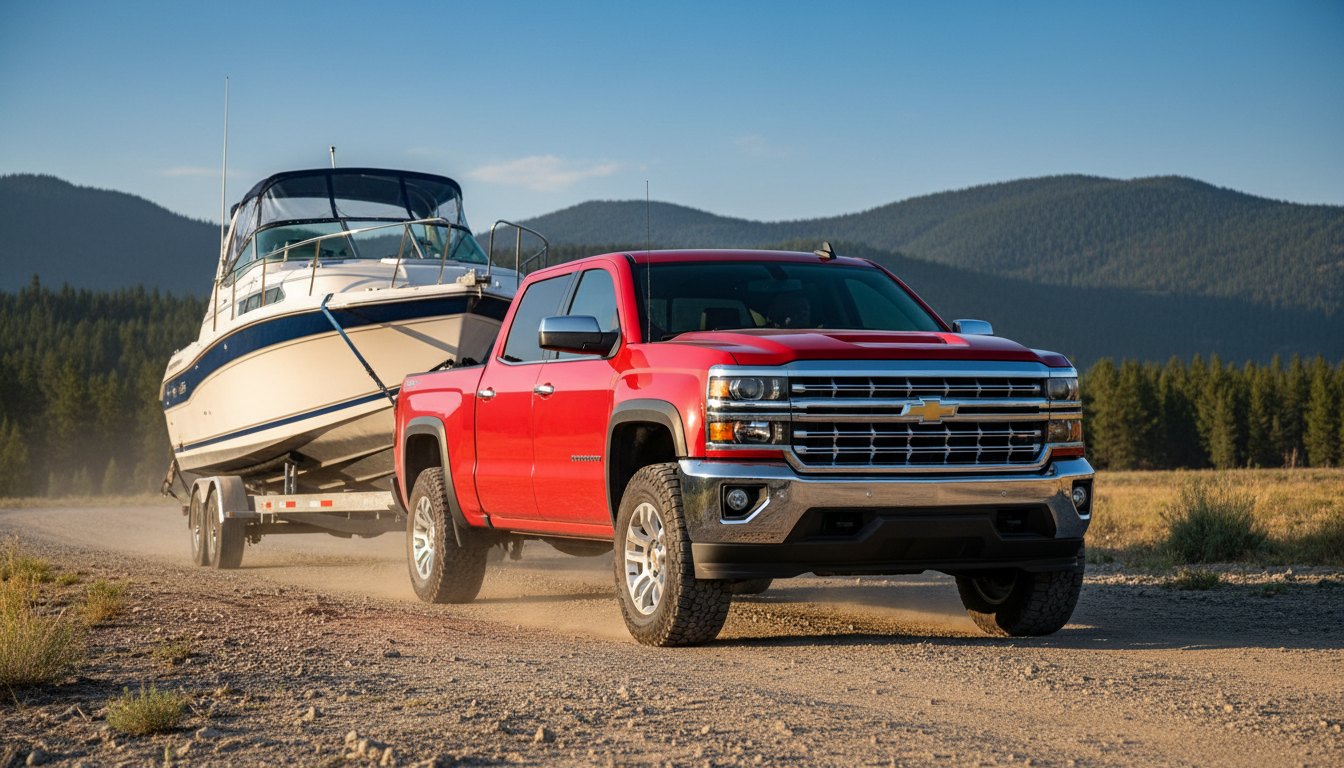
The Chevy Silverado 1500 is one of the most versatile tools in any garage, but its towing numbers can be confusing. Depending on how you spec your truck, the Chevy 1500 towing capacity ranges from a respectable 8,700 lbs to a massive 13,300 lbs.
The Hard Numbers (2025 Model):
- Max Towing Capacity: 13,300 lbs (Requires 6.2L V8 or 3.0L Duramax Diesel with Max Trailering Package).
- Standard Towing: Approx. 8,700 – 9,500 lbs (Common for 2.7L TurboMax models).
- Max Payload: Up to 2,260 lbs (Crucial for tongue weight and cabin gear).
Why Numbers Alone Don’t Tell the Whole Story
“Properly equipped” is the most important phrase you’ll read today. To hit that 13,300-lb limit, you need a specific combination of engine, rear-axle ratio, and the Max Trailering Package. Without it, you might find your truck struggling with a trailer it was “supposed” to handle.
Don’t Guess—Check the Sticker
Before you hitch up your boat or camper, skip the marketing brochures. The only number that matters is on your driver-side door-jamb sticker. In this guide, we’ll show you how to decode those ratings, compare engine benchmarks, and understand how 4WD and cab size impact your real-world towing limit.
Whether you’re hauling a utility trailer or a 30-foot travel trailer, we’ll help you find the exact Silverado setup you need to tow safely and confidently.
Silverado 1500 towing and payload specs at a glance
Start with the headline numbers: engine and drivetrain determine a truck’s rated pull. Compare like-for-like powertrains when checking specs so shoppers can make an apples-to-apples choice.
Maximum towing benchmarks and the 13,300-pound headline
The true max trailer number is 13,300 pounds, achievable with the Duramax 3.0L in 2WD when properly equipped. Some configurations fall slightly below that figure, so verify the specific trim and package.
TurboMax 2.7L — everyday strength and payload
The TurboMax 2.7L offers about 9,500 pounds (RWD) or 9,300 pounds (4WD). It’s a strong everyday choice for smaller campers and boats.
Payload explained: payload is what you can carry in the bed and cab — passengers, gear, and options. TurboMax tops near 2,260 pounds in 2WD, giving real flexibility for gear and tools.
EcoTec3 5.3L V8 — the middle ground
The 5.3L balances work and comfort. Expect roughly 11,300 pounds (RWD) or 11,100 pounds (4WD), enough for heavier trailers without sacrificing daily drivability.
EcoTec3 6.2L V8 — high-output gas power
The 6.2L targets high-output gas performance and posts about 13,200 pounds in the 4WD-only configuration. It adds confident passing power for highway merging and hauling.
Duramax 3.0L turbo diesel — torque and efficiency
The Duramax rates at 13,300 pounds (2WD) and 13,000 pounds (4WD). Its 305 hp and 495 lb-ft of torque give strong low-rpm pull, which matters for long climbs and steady highway pulls.
Diesel torque helps maintain speed under load and can improve fuel economy on long hauls.
2WD vs 4WD differences and why curb weight matters?
2WD models often tow slightly more than 4WD. That’s because 4WD hardware adds curb weight, leaving less remaining allowance for trailer weight.
Choose 4WD if traction is a priority. Choose 2WD if you want the top max trailering number.
- Quick tip: Always compare the engine, drivetrain, and option packages before assuming a max number.
- Next step: The following section shows how to calculate your truck’s true max tow given passengers and cargo.
| Engine | Drive | Max Tow (pounds) | Notable Spec |
|---|---|---|---|
| TurboMax 2.7L | RWD / 4WD | 9,500 / 9,300 | Payload up to 2,260 lbs (2WD) |
| EcoTec3 5.3L V8 | RWD / 4WD | 11,300 / 11,100 | Balanced work-truck feel |
| EcoTec3 6.2L V8 | 4WD only | 13,200 | High-output gas power |
| Duramax 3.0L Turbo Diesel | 2WD / 4WD | 13,300 / 13,000 | 305 hp, 495 lb-ft torque |
What affects chevy 1500 towing capacity when you’re shopping?
Shopping the lot? Small configuration choices change what a truck can pull. Cab size, bed length, axle ratio, drivetrain, and added options all affect the final rating.
Cab and bed choices that change your rating
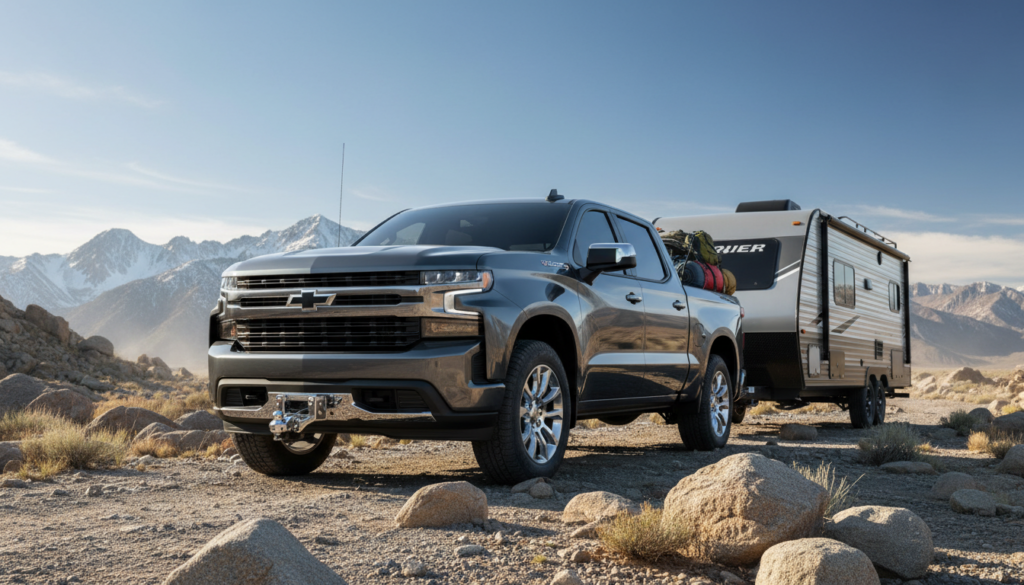
A crew cab gives more passenger room but adds weight. That extra weight reduces available payload and can lower the tow number on paper.
A double cab is lighter and often trades rear comfort for a slightly higher usable payload. A standard bed means a shorter box and different wheelbase — that can change stability and which tow packages fit the vehicle.
Treat trims as starting points. Two models with the same badge can have different ratings once options and configuration vary.
How to find your truck’s true max tow?
Use the door-jamb sticker to read GCWR, GVWR, and curb weight. In simple steps:
- Add curb weight + passengers, cargo, and fuel.
- Subtract that total from GCWR.
- The remainder is the estimated max trailer weight the truck can handle.
For a quick check, try the myChevrolet Load Calculator, then verify the sticker. This method helps sanity-check any promising truck before you commit to a heavy trailer.
Choosing the right Chevy Silverado 1500 model for your trailer
A quick shopping plan helps match a truck build to a real trailer’s weight. Know your trailer’s loaded mass, then narrow models by engine and drive layout.
Trim levels that can reach the highest towing capacity
LT, RST, LTZ, and High Country can hit the 13,300 pounds peak when properly equipped with the Duramax 3.0L and the correct cab/bed/2WD setup. Don’t assume every trim on the lot qualifies — verify the powertrain and sticker figures.
Work-focused configurations that prioritize payload vs towing
Some builds favor payload over max tow. A payload-first truck fits contractors and fleets that haul tools and materials.
- Payload leader: best-case payload near 2,260 pounds for heavy bed loads.
- Tow-first: picks include diesel or higher-output gas powertrains with 2WD for top tow numbers.
Off-road trims and towing tradeoffs
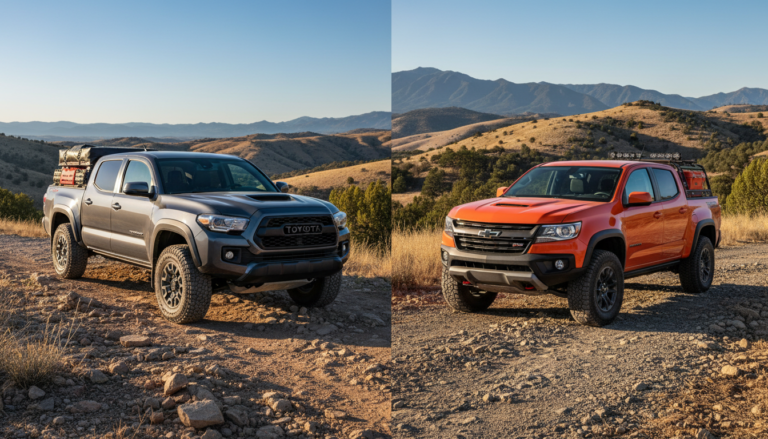
Trail Boss variants and ZR2 add weight with lifts, tires, and hardware. That shifts ability toward terrain, not top towing numbers. Custom Trail Boss and LT Trail Boss can still reach about 13,000; ZR2 is lower.
Matching common trailer weight to the right engine
Light loads: TurboMax suits small campers and boats. Midweight: the 5.3L handles frequent mid-range trailers. Heavy: the 6.2L or Duramax diesel fits near the top end.
Buyer tip: consider wheelbase, hitch type, and stability equipment — they matter as much as headline numbers when you actually tow.
Trailering packages and towing tech that make hauling easier
Proper packages and smart electronics remove much of the guesswork from hauling.
Trailering Package vs Max Trailering Package — what to look for?
The basic trailering package bundles the hitch hardware you need. Look for a trailer hitch platform, a 2-inch receiver, 4- and 7-pin connectors, a 7-wire harness, and a Hitch Guidance System.
The max trailering package adds heavy-duty cooling and upgraded suspension. These options help the truck earn a higher rating and improve real-world control.
GCWR gains and key hardware upgrades with max trailering
GCWR is the total allowed weight of the vehicle, passengers, cargo, and trailer. Raising GCWR can turn “rated to tow it” into “comfortable towing it.”
- Common upgrades: rear automatic locking differential, tuned shocks, heftier rear axle, enhanced radiator, and trailer brake controller.
- Benefits: better traction on ramps, improved stability at speed, cooler engine temps under load, and stronger braking control.
Advanced trailering systems and camera tech
In-vehicle trailering apps and the myChevrolet load calculator cut planning time. They store trailer profiles, run pre-departure checks, and monitor trailer tire pressure.
Multi-view cameras provide Hitch View, Rear Trailer View, Transparent Trailer View, and HD surround views. These views make hitching, lane changes, and tight maneuvers safer.
| Package | Key Items | Typical GCWR Gain | Primary Benefit |
|---|---|---|---|
| Trailering Package | 2″ receiver, 4/7-pin connectors, hitch guidance | Minimal | Compatibility and ease of hookup |
| Max Trailering Package | All above + enhanced radiator, tuned shocks | +500 to +2,800 lbs (engine dependent) | Higher rating and sustained performance |
| Max Hardware Add-ons | Locking diff, brake controller, heavier axle | Depends on combo | Traction, braking, durability |
| Electronics | In-vehicle app, load calculator, tire monitoring | Indirect (better planning) | Reduced guesswork and safer trips |
How to shop: during a test drive, ask to demo the hitch guidance and camera views. Confirm the connectors and brake controller match your trailer’s specs.
Bottom line: packages and tech do more than raise numbers. They help drivers control weight in crosswinds, traffic, and tight spots so towing is safer today.
Conclusion
Wrap up your buying plan by matching real trailer weight to the proper truck build.
Pick the trailer first, then match engine, drivetrain, cab/bed configuration, and packages that meet the needed towing rating. That simple flow keeps choices practical and focused on real use.
The silverado 1500 and chevy silverado are a spectrum. Some builds favor payload and daily work. Others prioritize higher towing numbers for heavier trailers and long trips.
Verify before you buy read the driver-side door-jamb sticker, consult the owner’s manual, and use a load calculator to include passengers and cargo. Don’t rely on headline figures alone.
Confirm engine and drivetrain, confirm trailering package level, confirm hitch and connector compatibility, and confirm the exact vehicle rating.
Choose the model that matches how you tow most often short hauls, weekend camping, or frequent long-distance runs and prioritize stability features like brake controller support, cooling, and camera visibility.
FAQ
What is the maximum trailering rating for the Silverado 1500?
The highest trailering figure for a Silverado 1500 tops out around 13,300 pounds when configured with the Max Trailering Package, the strongest engine and proper axle ratio. Exact numbers depend on engine, cab, bed and drivetrain choices, so check the vehicle’s tow chart for your configuration.
How do the TurboMax 2.7L and Ecotec3 5.3L engines compare for hauling?
The TurboMax 2.7L offers good torque and efficiency for light-to-medium trailers and improves fuel economy. The Ecotec3 5.3L V8 delivers stronger low-end power and higher payload tolerance for everyday work. Choose the 2.7L for efficiency, the 5.3L for balanced work use.
When should I consider the Ecotec3 6.2L V8 or the Duramax 3.0L diesel?
Pick the 6.2L gas V8 if you need maximum gasoline output and higher gross towing capability. The Duramax 3.0L diesel suits buyers who want superior torque and highway efficiency for long-distance towing. Both excel in different use cases: gas for peak power, diesel for torque and economy.
Do 2WD and 4WD versions tow differently?
Yes. Two-wheel-drive models generally have a lower curb weight and slightly higher tow rating in some setups, while 4WD adds weight but improves traction. Curb weight, axle ratio and drivetrain affect the published tow limit, so compare specific builds.
How do cab and bed choices affect the truck’s rating?
Cab (crew cab vs double cab) and bed length alter curb weight and tongue weight distribution. A standard bed with the right axle ratio often yields a higher tow rating than longer beds or heavier cab options. Choose the combination that matches trailer weight and payload needs.
What numbers do I need to calculate my truck’s real max tow?
Use GVWR (Gross Vehicle Weight Rating), GCWR (Gross Combined Weight Rating) and the truck’s curb weight. Subtract curb weight and any payload from the GCWR to estimate maximum trailer weight; the vehicle’s manual and tow charts give precise limits for each configuration.
Which trims reach the highest towing figures?
Work and heavy-duty-oriented trims fitted with the Max Trailering Package, stronger engines and the correct axle ratio reach top towing figures. Look for models marketed with towing upgrades and consult the manufacturer tow chart for exact ratings.
What does the Max Trailering Package add compared with the standard trailering option?
The Max Trailering Package typically increases GCWR, adds upgraded cooling, a higher-capacity hitch, heavy-duty rear axle ratios and sometimes an integrated brake controller. These hardware and calibration changes raise the truck’s legal tow limit.
What trailering tech helps make hauling easier and safer?
Look for the Advanced Trailering System, in-vehicle trailering app, multi-view camera setups and the myChevrolet load calculator. These tools guide hitch setup, trailer profiles, brake controller integration and provide camera views to monitor trailer position.
How do I match common trailer weights to the right powertrain and configuration?
Identify your typical trailer weight—boat, camper or equipment—then pick an engine and axle ratio rated above that weight, plus enough payload for passengers and cargo. For heavy trailers, choose the strongest engine option and the Max Trailering Package; for light loads, a turbo four or midlevel V8 often suffices.