Chevy TCM Location: Where is the Transmission Control Module?
If your Chevy is shifting erratically, dropping into limp mode, or throwing a stubborn P0700 engine code, you might be dealing with a failing Transmission Control Module (TCM).
But before you can test, reprogram, or replace this vital computer, you have to answer one highly frustrating question: where exactly is the transmission control module located on a Chevy?
Unlike a battery or an alternator, the TCM doesn’t have a universal home. Depending on your specific model, production year, and transmission type (like a 4L60E versus a modern 10-speed), GM engineers could have placed it in a handful of wildly different spots.
Sometimes, it’s an easy find. On older Tahoes, it might be bolted right to the firewall, while a 2014 Spark CVT tucks it safely under the driver’s side dashboard.
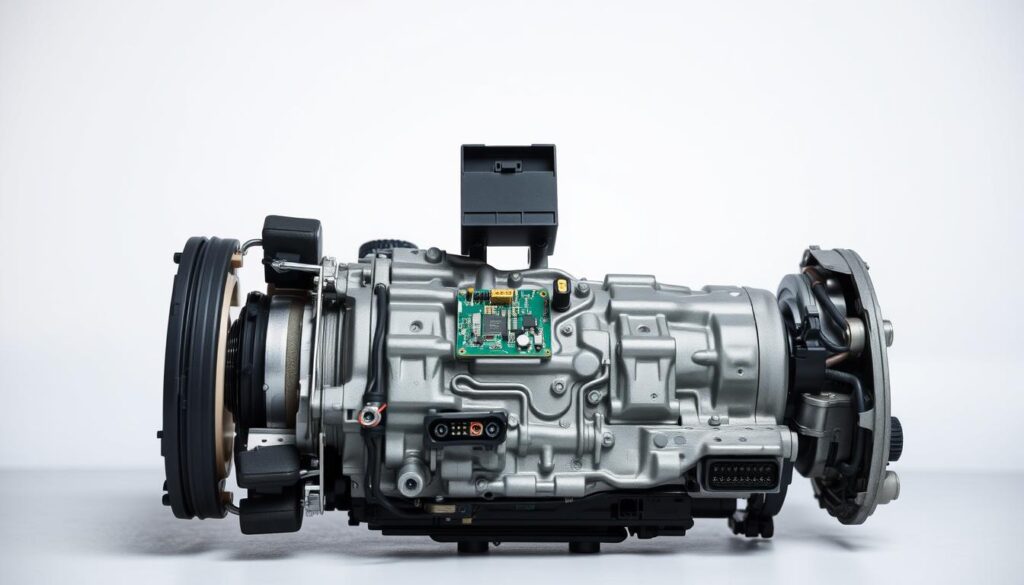
However, on newer models like late-generation Silverados and Malibus, Chevrolet began integrating the TCM directly inside the transmission’s valve body.
This variety means that what takes ten minutes to access on one vehicle could require dropping the entire transmission pan on another.
In this guide, we’ll break down the most common Chevy transmission computer placements by model and year, walk you through the visual cues needed to track yours down safely, and explain exactly how its location will impact your upcoming diagnostic and repair costs.
Common Chevy TCM Locations by Model and Year
Finding the transmission control unit quickly saves a massive amount of diagnostic time. Use the table below as a starting point, but always verify your specific configuration using your vehicle’s VIN or a factory service manual, as GM frequently updates module placements between production batches.
| Model | Typical Years | Common TCM Location | Access Notes |
| Silverado 1500 | 1999–2006 | Transmission side near bell housing | Accessible from under truck; may require a lift. |
| Silverado 1500 | 2007–2013 | Engine bay near battery/fuse box | Easy engine-bay access; remove cover panels. |
| Silverado 1500 | 2014–Present | Integrated into valve body | Transmission removal/pan drop often required. |
| Malibu | 2004–2012 | Center console near shifter | Interior trim removal needed. |
| Malibu | 2013–Present | Mounted on transmission housing | Accessible from engine bay or underbody. |
| Equinox | 2005–2017 | Near battery or attached to transmission | Check battery area first; some underbody access. |
| Equinox | 2018–Present | Integrated into transmission valve body | Service needs a transmission drop in many cases. |
| Tahoe | 2000–2014 | Driver’s side engine bay near firewall | Engine-bay panels removable for easy access. |
| Tahoe | 2015–Present | Inside transmission case | Dealer-level tools and fluid drain required. |
| Traverse | 2009–2017 | On top of the transmission (engine bay) | Accessible from above with basic hand tools. |
| Traverse | 2018–Present | Integrated in valve body | Transmission removal likely. |
| Spark (CVT) | 2014 | Under left side of instrument panel | Interior access; check for CVT labels near wiring. |
How to Physically Locate Your Chevy’s TCM: A Step-by-Step Guide
If you are standing over your engine bay wondering where the transmission module is located, or searching your manual for the exact location of the transmission control module, you aren’t alone.
Tracking down this computer requires a bit of patience and a good flashlight.
Whether you have a modern 10-speed or need to find the transmission control module location for an automatic 4L60E, here is how to safely and systematically find your TCM:
1. Prioritize Safety First
Before you start pulling panels or unplugging connectors, disconnect the negative battery terminal. The TCM is a sensitive, expensive piece of electronics. A sudden surge or short while probing around can fry the module entirely. Put on some safety glasses, especially if you plan on crawling underneath the vehicle.
2. Follow the Wiring Harness (The Visual Clues)
If you aren’t sure where to look, let the wiring guide you. Locate the main transmission wiring harness on the side of your gearbox and trace it back toward the engine bay or the cabin. You are looking for a small, rectangular metal or plastic box featuring large, multi-pin connectors. Look for stamped part numbers or identifying labels like “TRAN” or “CVT.”
3. Check the “Easy” Spots First
Start with the most accessible locations. Pop the hood and inspect the driver’s side inner fender, behind the battery, and near the main fuse box. If it’s not in the engine bay, move to the interior. You’ll often find cabin-mounted modules tucked safely behind the lower driver-side kick panels or buried beneath the center console trim. Use a plastic trim tool to gently pry these panels away so you don’t snap the retaining clips.
4. Prepare for Internal Modules
If you have traced the harness straight into the transmission case and there’s no external box in sight, your Chevy likely uses an integrated TCM. On many modern 6-speed, 8-speed, and 10-speed GM transmissions, the module is bolted directly to the valve body inside the transmission pan. Note: Do not attempt to drop the transmission pan or loosen valve body fasteners unless you have a factory service manual and the proper fluid replacement tools.
Symptoms of a Failing Chevy TCM (And Why Location Matters)
When a transmission computer starts to fail, it rarely fails quietly. Because the TCM controls shift timing, line pressure, and torque converter lockup, a glitchy module will make your Chevy nearly undrivable.
Common red flags include harsh, clunky shifting, delayed gear engagement, or the vehicle suddenly dropping into “limp mode” (where it locks itself into a single gear to prevent mechanical damage). You will almost certainly see a Check Engine Light, usually accompanied by the dreaded P0700 generic transmission control system code.
How the TCM’s Location Affects the Diagnosis
Knowing exactly where your Chevy’s transmission control module is located isn’t just about knowing where to plug in a new one—it actually gives you vital clues about why it failed in the first place:
- Under-Dash Modules: These are protected from engine heat and road salt, but they are highly vulnerable to interior moisture. A spilled coffee in the center console or a leaking heater core can easily short out a cabin-mounted TCM.
- Engine Bay/Exterior Mounts: These units face extreme heat cycles, engine vibration, and exposure to the elements. Corroded connector pins or melted wiring harnesses are incredibly common here.
- Internal Valve Body Mounts: If your module is inside the transmission, electrical shorts are rare. Instead, failures here are usually caused by dirty, contaminated transmission fluid damaging the sensors, or mechanical debris clogging the valve bores.
Quick Diagnostic Cheat Sheet
| The Symptom | Likely TCM-Related Cause | Diagnostic Clues Based on Location |
| Erratic or violently harsh shifting | Corrupted software or faulty solenoid commands. | External Mount: Inspect the engine bay harness for melted wires or heat damage. |
| Stuck in “Limp Mode” (Won’t shift out of 2nd or 3rd) | The TCM detected a critical fault and is protecting the drivetrain. | All Locations: Pull OBD2 codes (look for P0700). Check ground wires near the module. |
| Check Engine Light (P0700 Code) | Communication failure between the Engine Control Module (ECM) and TCM. | External Mount: Unplug the TCM and check the pins for green water corrosion. |
| Gear slippage or sluggish acceleration | Incorrect line pressure or worn internal components. | Internal Mount: Check the transmission fluid. Dark, burnt fluid points to valve body or internal sensor damage. |
Repair, Reprogramming, and Replacement Costs (Why Location is Everything)
When it comes to fixing a faulty transmission computer, the final bill almost always comes down to one factor: where the module is physically located? The difference between an external mount and an internal valve body mount can literally double or triple your labor costs.
In-Place Reprogramming vs. Full Removal
Before replacing the unit entirely, many technicians will attempt to reflash or update the TCM’s software to fix calibration bugs or harsh shifting.
- External Modules (Under-Dash or Engine Bay): These are a mechanic’s dream. Shops can often plug a laptop directly into the OBD2 port or the module’s wiring harness adapter to test and reprogram the unit right in the driveway. If it’s fried, swapping in a new one takes less than an hour of labor.
- Internal Modules (Inside the Transmission): If your Chevy uses a TCM integrated into the valve body, reprogramming can sometimes still be done via the OBD2 port. However, if the module needs physical testing or replacement, the vehicle must go on a lift. The technician has to drain the transmission fluid, drop the pan, and carefully remove the valve body assembly. This drastically increases the labor hours and introduces the risk of fluid contamination.
The Real Cost to Replace a Chevy TCM
Depending on your specific model, year, and whether you opt for OEM or aftermarket parts, here is what you can expect to pay in the United States:
- Software Reprogramming Only: $50 to $300 (highly dependent on regional labor rates and the shop’s diagnostic fee).
- The Part Itself (New or Remanufactured): $200 to $1,250. Remanufactured units are generally cheaper, but internal valve body TCMs are significantly more expensive than simple external plastic boxes.
- Total Replacement Cost (Parts + Labor + Flashing): Expect a final bill ranging anywhere from $300 for an easy, under-dash swap to well over $1,100+ for an internal valve body replacement that requires fresh transmission fluid, new pan gaskets, and extensive labor.
Dealer vs Independent Shop: Who Should Do the Work?
Replacing a transmission control module isn’t like swapping out a dead battery. It’s a highly specialized job that involves software communication.
Almost all new Chevy TCMs come completely blank. They must be programmed and calibrated to your specific VIN using GM’s proprietary software. Furthermore, the TCM frequently communicates with the Engine Control Module (ECM) and the vehicle’s security system. If the new module isn’t paired correctly with the immobilizer, the car simply will not start.
- The Dealership: They have direct access to the latest GM software updates and calibration files. You will pay a premium labor rate, but the programming will be exact and backed by a warranty.
- Independent Shops: Many high-end, specialized transmission shops carry the necessary pass-through tools to flash GM software. However, before handing over your keys, always ask if they have the capability to perform factory-level TCM programming and immobilizer pairing. If they don’t, they will have to tow your Chevy to a dealership just to finish the job.
Overview of common TCM mounting areas
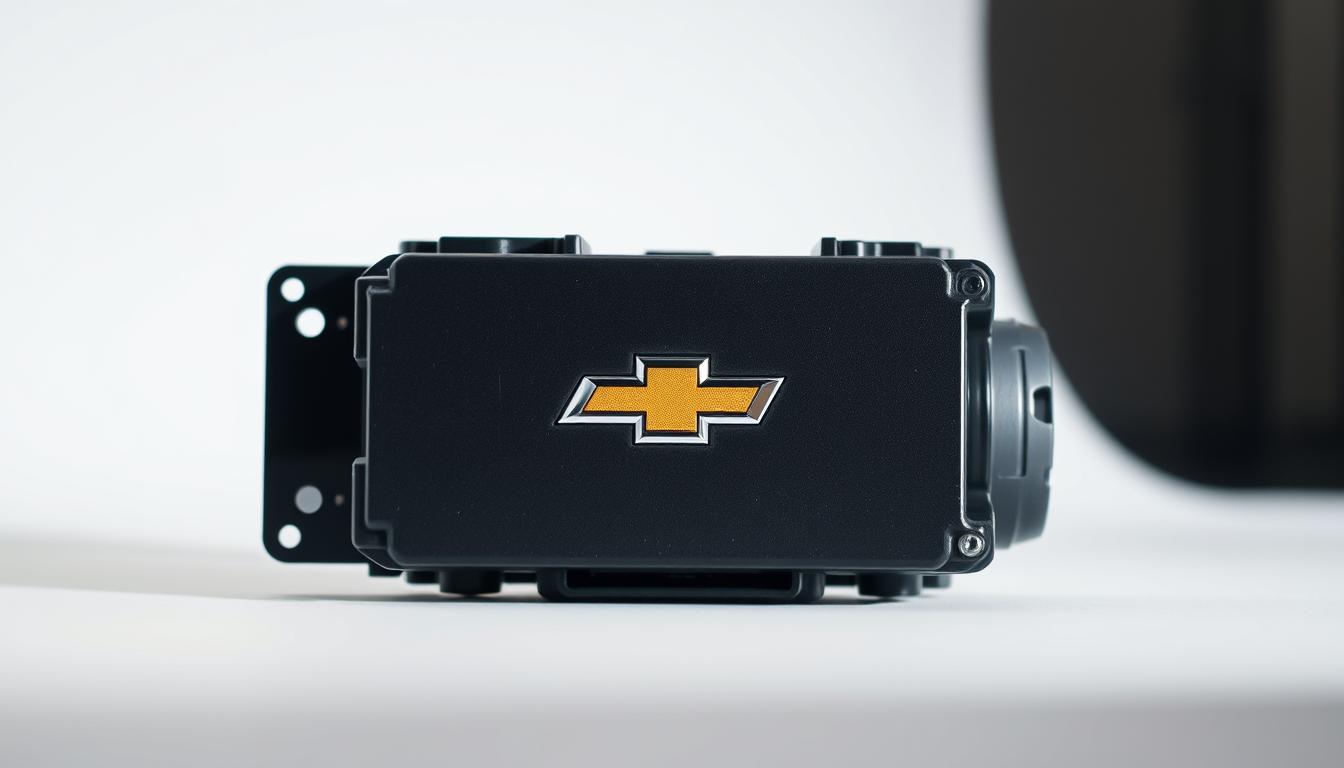
Technicians usually find the module on the transmission housing or valve body. Some newer 8- and 10-speed transmissions have it inside the case. It can also be near the engine, battery, or under the dashboard.
If you are searching for the location of the transmission control module on a 4L60E or a 4L80E, you will typically find it bolted to the case or near the firewall.
However, before attempting a reset on a 4L60E TCM, always verify the transmission fuse location for the 4L60E control module to ensure a blown fuse isn’t causing the communication error.
Heavy-duty truck owners will find that the Allison transmission control module location is generally mounted securely under the hood near the radiator.
Why the same brand can have multiple TCM locations across models and years?
Chevrolet uses various transmissions, like 4L60E, 6L80, CVT, and 8-/10-speed. Each type has its own design, leading to different module placements. Early models had the TCM outside for easier access. Now, it’s often inside the valve body for better reliability and space-saving.
Changes in electrical systems also play a role. Updates in wiring, CAN bus, and thermal management cause the TCM’s location to shift. This happens between model updates and batches.
Because General Motors shares vehicle architectures, understanding the general GMC TCM module location—such as finding the transmission control module on a 2018 GMC Sierra, a 2004 GMC Yukon, or even a 2014 GMC Terrain—follows the exact same placement logic as their Chevrolet Silverado, Tahoe, and Equinox counterparts.
Similarly, the transmission control module location for a 2012 Chevy Traverse is typically found right on top of the transmission in the engine bay.
Because of GM’s shared architecture, this exact placement logic applies even if you are tracking down a corporate cousin, like the TCM location on a 2014 Buick Verano.
Common Chevy Transmission Control Module Locations by Model and Year
Finding the transmission control unit can save a lot of time. The location of the chevy transmission module changes with each model and year. This section will show you where to look, based on the model and year of your car.
The engine bay and firewall are common spots for the module on the driver’s side. Older and mid-2000s Chevrolet cars often place it near the firewall. This makes it easier to cool and route the harness. It’s a common spot for sedans and full-size SUVs from that time.
Some models put the control electronics on or attached to the transmission housing or valve body. The 4L60E and similar units have the TCM or solenoid pack bolted to the case. Newer transmissions might have the control unit integrated into the valve body. This means you might need to drop the transmission to access it.
Some vehicles hide the module inside the passenger compartment. Look under the dash, beneath the center console, or beside the shifter on some Malibus and small cars. This keeps it safe from road debris but can make diagnostics harder if you need to remove console trim.
Whether you are looking for the transmission control module location on an older 1995 Chevy 1500, a classic 2003 Chevy Silverado, or a modern 2018 Chevy Silverado, the overarching Silverado TCM location has gradually migrated from the firewall to being completely integrated inside the valve body over the decades.
If you own a mid-generation truck, tracking down the TCM location on a 2007 Chevy Silverado or the transmission control module for a 2008 Silverado is usually easy since it sits near the fuse box.
However, the Silverado TCM location transitioning from 2014 up through 2017 represents the era where GM began shifting to complex, internal valve-body integrations.
For smaller sedans and commuter cars, finding the TCM location on a Chevy Cruze, a 2014 Chevy Sonic, or the transmission control module in a 2015 Chevy Impala often requires looking right behind the battery tray.
Meanwhile, commercial drivers will usually find the Chevy Express TCM location tucked away securely within the engine bay.
For heavy-duty diesel owners, the 2005 Duramax TCM location is uniquely positioned on the driver’s side of the radiator fan shroud in the engine bay, keeping it accessible for diagnostics.
Repair, Reprogramming, and Replacement Considerations Based on TCM Location
The location of a transmission control module affects repair, reprogramming, and replacement. Modules mounted outside are easier to get to. Those inside the transmission or valve body are more complex and costly.
When a TCM can be repaired or reprogrammed in-place versus removed?
Modules on the engine bay or transmission housing can be removed. Shops can test or reprogram these units with a laptop and adapter. Some techs can reflash the module without removing it.
Modules in the valve body or transmission need more work. They often require partial disassembly or a full transmission drop. In these cases, replacing the valve body assembly is common.
Typical costs for reprogramming and replacement in the United States
Reprogramming costs range from $50 to $300, depending on the region and shop. A new module can cost between $200 and $1,250. Remanufactured and aftermarket units are cheaper.
Total repair costs usually range from $300 to $1,100 or more. This includes labor and any extra parts.
Labor differences when TCM is inside transmission vs external mount
Modules mounted outside need less labor. Diagnosis and swap times are shorter. Internal mounts require more hours to access.
Internal mounts increase the risk of fluid contamination. They may also need extra testing after reassembly.
Dealer vs independent shop: tools, software, and immobilizer pairing
Dealerships have GM Tech 2 / SPS tools for updates and security programming. They can apply the latest calibrations. Independent shops offer lower rates but need the right tools and experience.
Confirm an independent shop can pair a new unit to the vehicle’s immobilizer. They should also program transmission calibrations for your model.
The table below compares common repair scenarios, typical cost ranges, and who usually performs each task.
Conclusion
Finding the chevy where is transmission control module located depends on the model and year. Chevrolet TCMs can be found in different places. They might be under the dash, in the engine bay, attached to the transmission housing, or part of the valve body.
The exact location of the chevy transmission control module varies. This means you should check the VIN or use the factory service manual to be sure.
Begin by looking at common places for the module and pulling OBD2 codes. This can help you find the problem. Try simple fixes like disconnecting the battery or using the ignition/gas pedal method for minor issues.
But remember, these are just temporary solutions. For most replacements and any programming or immobilizer pairing, you’ll need professional tools. Dealers or skilled independent shops are usually the best choice.
Expect to pay a bit for parts and reprogramming if the module is easy to get to. But, if it’s inside or in the valve body, labor costs will be higher. Compare what dealers and independent shops can do for programming. Then, choose based on the tools they have and your warranty needs.
Use the tips in this guide to find the chevy TCM location. And know when to ask for expert help.
Frequently Asked Questions
Can the TCM be located inside the transmission?
Yes. Modern Chevys often integrate the TCM directly into the valve body or transmission case. While this setup saves space and improves communication speeds, it makes the module significantly harder to access, requiring a pan drop and fluid drain for replacement.
How does the TCM differ from the ECM?
The Engine Control Module (ECM) oversees engine functions like fuel injection and ignition timing. The TCM strictly manages the transmission, including shift points and solenoid line pressure. The two computers communicate constantly via the CAN bus network to ensure smooth driving.
Additionally, do not confuse the transmission computer with the throttle controller; if you are looking for the 2004 silverado tac module location, it is mounted separately on the firewall, not on or inside the transmission.
If I need a replacement TCM, will programming be required?
Yes, almost always. Most new or remanufactured TCMs arrive blank. They must be flashed with GM’s calibration software to match your specific vehicle’s VIN, gear ratios, and security immobilizer.