Is Chevy Malibu a Good Car? Expert Review & Analysis
Is the Chevrolet Malibu a good choice for a mid-size sedan? This question is worth exploring. It’s about whether the Malibu is a smart pick in today’s U.S. market.
We’ll look at the Malibu’s reliability, performance, safety, and costs. We’ll also compare it to rivals like the Honda Accord and Toyota Camry. You’ll get expert opinions on its ride, noise, and handling, plus fuel efficiency.
Some key facts are important: the Malibu’s current generation started in 2016 with a 2019 refresh. Production stopped in February 2021 due to chip shortages. It then started again at GM’s Kansas City plant. The 2022 base price was around $23,400.
It uses reviews from experts and owners, safety data, and trim details. It aims to give a fair verdict. It wants to help people decide if the Malibu meets their needs.
Is Chevy Malibu a good car?
Experts say the Malibu is a solid mid-size sedan. It offers a smooth ride and thoughtful features for its price. The 1.5L turbo engine is great for daily use, thanks to its power and fuel efficiency.
The base model looks upscale, but the interior materials vary by trim. This affects the overall feel of the car.
Quick verdict based on expert testing
The Malibu is good for commuting and long drives. It’s quiet on the highway, thanks to active noise cancellation. The brakes and steering are designed for comfort, not sportiness.
Safety features add value, but some are optional. This can impact how the car compares to others in its class.
Who the Malibu suits best (commuters, families, budget buyers)?
Commuters will like the Malibu’s fuel efficiency and quiet cabin. It’s also comfortable on long trips.
Small families will find the rear seats spacious. The trunk is big enough for everyday needs.
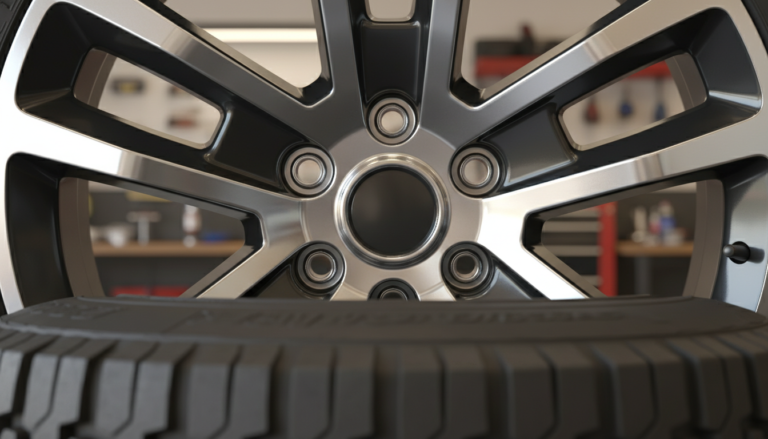
Budget buyers will appreciate the Malibu’s looks, like the 16-inch alloy wheels on the base model. To get the best deal, compare prices and incentives at different dealerships.
How the 2022 restart of production and pricing affect value?
The 2021 pause in production made the Malibu harder to find. But, Kansas City started making 2022 models again. The base price was around $23,400, making it a good value.
With limited supply, prices and resale values can change. Look for deals on leftover models. Compare prices with Hyundai, Kia, and Nissan to find the best deal.
| Strength | Typical Impact | Buyer Type |
|---|---|---|
| Calm highway ride | Less fatigue on long drives | Commuters, frequent travelers |
| Fuel-efficient 1.5L turbo | Lower daily operating cost | Budget-conscious buyers |
| Attractive base equipment | Better value at entry price | First-time buyers, small families |
| Mixed interior materials | Perceived quality varies by trim | Detail-focused shoppers |
| Advanced safety often optional | Extra cost for full ADAS suite | Safety-minded buyers |
| Production restart effects | Fluctuating dealer pricing and resale | All buyers comparing value |
Chevy Malibu reliability and long-term ownership
The Chevy Malibu is known for its dependability in daily use. Its engines, the 1.5L and 2.0L turbo units, work well under normal driving conditions. There are no widespread reports of major failures.
Most issues are related to wear and tear, like worn-out parts and fading trim in lower models.
Owners often talk about interior wear and the high cost of advanced driver aids. These can include sensors, cameras, and ADAS calibration. They add to the overall cost, not just the mechanical parts.
The 2021 production pause and 2022 restart changed the market. Shortages of parts, like semiconductors, made things harder. This scarcity made some used models more valuable.
But, concerns about model availability can affect resale values. In some places, the rarity of the Malibu keeps its value high. In others, worries about future support can lower it.
Maintenance for the Malibu is typical for mid-size sedans. You’ll need to replace brakes, tires, and fluids regularly. Spark plugs, filters, and transmission checks are also part of the routine. Upgrades like ADAS can increase repair costs.
New Malibus come with standard warranties from General Motors. These warranties cover the early years of ownership. To save money, keep service records, follow the maintenance schedule, and consider extended warranties for long-term ownership.
Here’s a comparison of long-term costs and ownership factors. It helps owners understand repair costs, parts availability, and resale trends.
| Factor | Typical Impact | Owner Action |
|---|---|---|
| Engine reliability (1.5L / 2.0L) | Low incidence of major failures; routine upkeep expected | Follow service schedule; use quality fluids |
| Interior trim wear | Cosmetic deterioration affects perceived value | Protect surfaces; replace worn panels early |
| ADAS sensors and calibration | Higher repair and calibration costs after incidents | Source OEM parts; budget for calibration fees |
| Parts availability after restart | Short-term tightness can raise wait times and cost | Plan repairs in advance; check dealer inventory |
| Resale implications | Scarcity can support chevy malibu resale in some markets | Maintain records and condition to capture value |
| Warranty and ownership costs | Standard GM coverage reduces early out-of-pocket expenses | Consider extended warranty if holding beyond factory term |
Chevy Malibu reviews from experts and owners
Experts and owners have mixed opinions on the Malibu. They praise its smooth ride and quiet interior. The car handles well for daily driving.
Some say the steering isn’t as sharp as rivals like the Honda Accord and Toyota Camry. The interior plastics get criticism for not feeling as premium. These points are common in many reviews and affect ratings.
But owners love the Malibu’s fuel efficiency and easy-to-use tech. They enjoy the 8-inch touchscreen and wireless Apple CarPlay and Android Auto. The car is comfortable for daily use, though some mention wear and wish for ventilated seats.
Owners also talk about the Malibu’s durability and tech. They say it’s reliable with regular care. But, they wish more advanced safety features were standard, which affects satisfaction and value.
Trim levels play a big role in reviews. The LS is seen as a good value with standard features. The RS is praised for its sporty look without major changes.
The LT adds comfort features like automatic climate control and heated seats. It’s great for those who want a bit more without spending too much. The Premier offers luxury and the 2.0L engine, but advanced safety features cost extra.
| Trim | Typical Praise | Common Critique |
|---|---|---|
| LS | Strong value, practical standard features, comfortable ride | Fewer tech options, simpler interior materials |
| RS | Sporty appearance, enhanced styling cues, leather-wrapped wheel | Mostly cosmetic upgrades, no major performance bump |
| LT | Balanced option set, heated seats, good daily comfort | Step-up costs for some desirable features |
| Premier | 2.0L turbo option, premium appointments, quieter high-speed cruise | Advanced safety often not standard, higher purchase price |
Chevy Malibu features and interior comfort
The Chevy Malibu combines smart tech and practical design for daily use. It offers standard items that add value, making it a modern choice without extra costs.
Standard equipment that adds value
Even the base models have 16-inch alloy wheels and a proximity key with push-button start. They also come with an 8-inch touchscreen that supports wireless Apple CarPlay and Android Auto. These features make the Malibu feel more luxurious than its price.
Cabin materials and design notes
The dash features flowing, aluminum-accented curves for a clean look. Controls are easy to use, with clear climate buttons that don’t distract the driver.
Leather seats and a power sunroof are options for higher trims. It also has rubber-lined steering wheel buttons and an acoustic windshield to reduce noise. Yet, some hard plastics in lower areas keep the interior from feeling fully upscale.
Space and passenger comfort
The front seats offer plenty of room and adjustment options. They’re comfortable for long drives.
The rear seats have enough headroom, despite a slightly sloping roof. Legroom is good for two adults. Higher trims add heated seats and a heated steering wheel. Ventilated seats are not available, which might affect comfort in hot weather.
Quick reference of notable features
- 16-inch alloy wheels at base — elevates curb appeal and value
- Proximity key with push-button start — modern convenience
- 8-inch touchscreen with wireless smartphone integration — central to in-car connectivity
- Acoustic windshield and rubberized controls — subtle comfort upgrades
- Optional leather and sunroof — push price toward $30,000
| Item | Standard on LS | Available on Higher Trims |
|---|---|---|
| 16-inch alloy wheels | Yes | Yes |
| Proximity key / push-button start | Yes | Yes |
| 8-inch touchscreen (wireless CarPlay/Android Auto) | Yes | Yes, upgraded audio options |
| Leather upholstery | No | Yes |
| Heated rear seats | No | Yes |
| Ventilated front seats | No | No |
The Chevy Malibu offers a great mix of features, materials, and comfort. It’s a smart choice for those seeking practical comfort without luxury prices.
Chevy Malibu performance and driving experience
The Malibu offers a mix of comfort and performance for everyday driving. It has two engine options, each with its own strengths. The car is best for relaxed cruising, not for racing.
Engine options and output
The base engine is a 1.5L turbocharged four-cylinder, making 160 hp and 184 lb-ft of torque. It’s designed for efficiency and smooth power. The Premier model has a 2.0L turbo four-cylinder, making 250 hp and 260 lb-ft. This engine provides stronger acceleration for highway driving.
Transmission behavior and acceleration
The 1.5L engine comes with a CVT transmission. This setup offers smooth power delivery, perfect for daily driving. Drivers find the acceleration natural and the shifts smooth.
The 2.0L engine has a conventional automatic transmission. It provides quick and quiet acceleration. Drivers feel confident when passing and merging, thanks to the engine’s power.
Ride quality, noise isolation, and handling
The Malibu’s suspension is tuned for a stable ride. It absorbs bumps well, keeping the cabin quiet on long trips. The car also has features to reduce outside noise, making long drives more comfortable.
The steering is designed for predictability, not sharpness. While it’s not the best in corners, the Malibu handles well on winding roads. It’s great for those who value comfort and reliable handling over sportiness.
Chevy Malibu fuel efficiency and economy
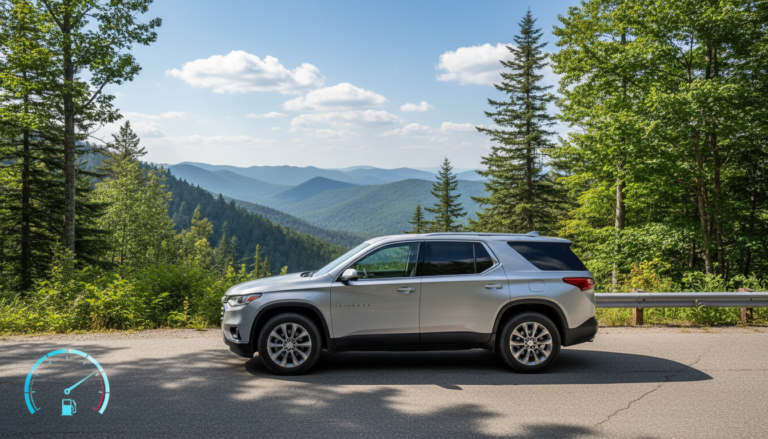
The Malibu offers good fuel numbers for daily driving and long trips. Real-world results often match EPA estimates. But, your driving style and fuel choice can change these numbers.
The EPA says the 1.5L gets 29 mpg city, 36 mpg highway, and 32 mpg combined. The 2.0L gets 22 city, 33 highway, and 26 combined. Chevrolet suggests using premium fuel for the 2.0L, which can affect costs.
Tests show the 1.5L can get about 32 mpg. One test of the 2.0L got 36 mpg. This shows the Malibu can sometimes beat EPA estimates under the right conditions. But, results vary based on your driving and the road.
Choosing the right engine is key when comparing the Malibu to others. The 1.5L’s economy is competitive in the mid-size class. But, hybrid versions of the Accord, Sonata, and Camry offer better fuel savings for long trips.
It’s important to note Chevrolet doesn’t sell a Malibu Hybrid anymore. This changes things for those looking to save on fuel. If you want the best fuel economy, consider a hybrid Accord, Sonata, or Camry.
| Model / Engine | EPA City (mpg) | EPA Hwy (mpg) | EPA Combined (mpg) | Typical Real-World Result |
|---|---|---|---|---|
| Malibu 1.5L Turbo | 29 | 36 | 32 | ~32 mpg in mixed driving |
| Malibu 2.0L Turbo | 22 | 33 | 26 | Variable; one test showed 36 mpg |
| Accord Hybrid (example) | ~48 | ~47 | ~47 | Significantly higher than Malibu |
| Camry Hybrid (example) | ~51 | ~53 | ~52 | Best-in-class fuel savings |
For those looking for good fuel efficiency, the 1.5L is a good choice. But, if you want the best mpg, consider a hybrid from a rival. Think about your driving, the roads you take, and long-term fuel costs when comparing the Malibu to others.
Chevy Malibu safety, crash tests, and driver-assist tech
The Chevrolet Malibu is known for its solid safety features. Yet, there are some important things to know. It does well in crash tests and has good driver-assist tech. But, it has some weaknesses in frontal and pedestrian safety.
When choosing a Malibu, think about what safety features are most important to you. Different trims and options offer different levels of safety.
NHTSA and IIHS test highlights
The NHTSA gave the Malibu four out of five stars overall. It scored lower in a side-impact test. This is something to consider if crash tests are very important to you.
IIHS tests show the Malibu does well in many areas. But, it did poorly in a small-overlap test. Automatic emergency braking didn’t work well in some tests.
Which ADAS features come standard and which cost extra?
Every Malibu comes with basic safety features. These include airbags, stability control, and a backup camera. But, more advanced safety features are only available on certain trims or packages.
Features like high-resolution cameras and adaptive cruise control are often found on the Premier trim. They can also be added as optional packages. These packages can cost over $2,000.
What the pricing of safety means for buyers?
Adding advanced safety features changes the Malibu’s value. If you want to match rivals, you might need to pay extra for these features.
When looking at a Malibu, check what safety features it has. The type of sensors and software used affects how well the safety systems work. This is important for real-world safety and ratings.
Here’s a quick guide to help you choose the right Malibu. It shows which safety features are available and how much they might cost.
| Safety Item | Typical Availability | Impact on chevy malibu safety | Estimated Extra Cost |
|---|---|---|---|
| Airbags & stability control | Standard on all trims | Essential baseline protection, improves overall chevy malibu ratings | Included |
| Backup camera | Standard on all trims | Reduces low-speed collisions and improves visibility | Included |
| Adaptive Cruise Control | Available on LT (limited) and standard on Premier | Enhances highway comfort and lane-following in chevy malibu driver-assist suite | $800–$1,500 when optional |
| Enhanced Automatic Emergency Braking | Often part of higher trims or packages | Improves stopping at higher speeds, affects IIHS test outcomes | $1,200–$2,200 |
| High-resolution surround camera | Optional package or Premier | Better object detection for urban driving, aids pedestrian detection | $600–$1,000 |
| Lane Keep Assist with Lane Departure Warning | Common on mid and upper trims | Reduces unintentional lane drift, contributes to better chevy malibu ratings | $400–$900 when optional |
Chevy Malibu pricing, trims, and value comparison
The Malibu offers a range of prices to fit different budgets. It has options for those who want basic features and those who want luxury. This guide will help you understand the prices, what each trim includes, and how it compares to other cars.
Base pricing and key equipment by trim (LS, RS, LT, Premier)
The LS starts at about $23,400. It comes with 16-inch alloy wheels, a proximity key, and an 8-inch touchscreen. The RS starts at around $24,400 and adds a leather-wrapped steering wheel and more.
The LT costs about $26,800 and includes automatic climate control and heated seats. The Premier is the most expensive, at roughly $33,500, but offers advanced features.
Which trims deliver the best value for money?
The RS is a great choice for those who want style without spending too much. It has the essentials and a sporty look. The LS is perfect for those on a tight budget, with basic tech and a proximity key.
The LT is a good middle option but may not be worth it unless you want specific upgrades. The Premier is for those who want the best interior and performance, but it’s pricier.
How Malibu pricing compares with Sonata, K5, Altima, Accord, Camry?
The Hyundai Sonata and Kia K5 often have more features for less money. They offer upscale interiors at similar prices. The Nissan Altima and Volkswagen Passat compete on comfort and features, but prices can vary.
The Honda Accord and Toyota Camry are pricier but have better resale values. They are great for those who value driving experience and resale. This affects how the Malibu is seen in the market.
| Trim | Starting Price (approx.) | Key standard equipment | Value proposition |
|---|---|---|---|
| LS | $23,400 | 16″ alloy wheels, proximity key, 8″ touchscreen | Best entry-level tech at a low chevy malibu price |
| RS | $24,400 | 18″ wheels, leather-wrapped wheel, power driver’s seat, sport styling | Strong visual and feature value for a modest upcharge |
| LT | $26,800 | Automatic climate, heated front seats, satellite radio | Good comfort upgrades; less distinct styling vs RS |
| Premier | $33,500 | 2.0L engine, upgraded interior, premium options | Near-luxury features but higher chevy malibu price lowers value unless discounted |
| Hyundai Sonata (comp) | $24,000* | Comparable tech, often more standard features | Strong features-for-price, often undercuts Malibu |
| Kia K5 (comp) | $24,300* | Sporty design, upscale cabin options | Competes closely on style and equipment |
| Honda Accord (comp) | $27,000* | Refined ride, strong resale | Higher perceived value long term despite higher price |
| Toyota Camry (comp) | $26,500* | Class-leading reliability and resale | Premium resale and driving appeal justify cost |
Chevy Malibu design and exterior appeal
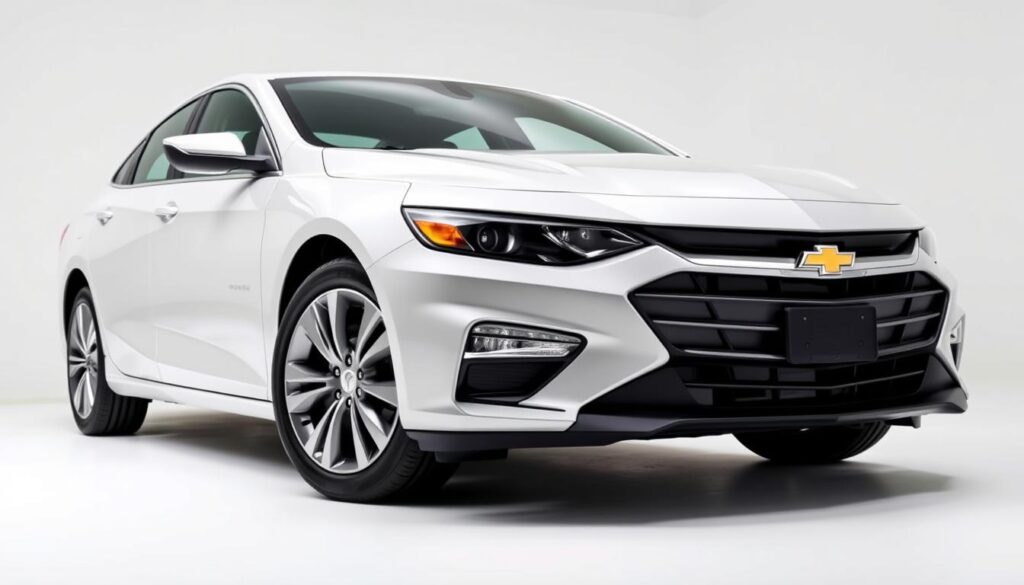
The Malibu stands out in the mid-size class with its composed look. It got a refresh in 2019, with a lower grille and a smaller bowtie logo bar. This update made the lines sharper without being too bold, keeping the design classy and mature.
The chevy malibu exterior looks long and sleek from the side. The roof, greenhouse, and hood blend together for a stretched, elegant look. Those who prefer a calm design will find the Malibu’s silhouette reassuring and easy to live with over time.
Small details make a big difference. The split grille and the RS package change the car’s look quickly. The RS adds 18-inch wheels, a rear spoiler, dual exhaust outlets, and blacked-out badging for a sportier vibe. These features let buyers choose a sportier look without a big price increase.
The base Malibu also has premium touches. It comes with standard fog lamps and alloy wheels. This makes the front end look more polished than some rivals that use plastic wheelcovers on their base trims. This detail helps the Malibu look more expensive when it comes to curb appeal.
Design preferences vary among buyers. Those who want a calm, grown-up sedan will like the Malibu’s understated design. For a bolder look, the RS trim adds attitude. Both options keep the Malibu relevant in a market where many rivals go for louder graphics and bigger grilles.
Chevy Malibu ownership costs and resale considerations
The Chevy Malibu offers mixed value for long-term buyers. The mid-size sedan market has shrunk, leading to higher depreciation. Short pauses in production followed by restarts sometimes caused inventory tightness, which helped some used cars.
Insurance, fuel, and maintenance costs are near average for its class. Insurance rates vary based on trim, safety features, and driving history. The 1.5L turbo engine helps keep fuel costs down, a big ongoing expense.
Regular maintenance items like brakes and tires follow usual schedules. Cars with advanced safety features might cost more to repair and calibrate over time.
Availability after production restarts in Kansas City is key. Dealer stock and local incentives impact prices and trade-in offers. Tight supply can temporarily boost resale values, but loose supply can lead to faster depreciation.
Buyers should consider three main points:
- Depreciation rate compared to SUVs and crossovers.
- Running costs based on engine, safety features, and insurance class.
- When to buy, considering dealer stock and incentives.
| Cost Factor | Typical Range | How It Affects Value |
|---|---|---|
| Depreciation (5-year) | Moderate to high | chevy malibu depreciation outpaces many SUVs; trim and mileage matter |
| Insurance | Standard for mid-size sedans | Safety tech can lower premiums but raises repair costs after claims |
| Fuel | Lower with 1.5L; higher with 2.0L | Engine choice affects daily running cost and long-term ownership expense |
| Maintenance & Repairs | Typical class levels; ADAS adds variability | Well-maintained cars keep chevy malibu resale stronger |
| Dealer Availability | Variable post-restart | Local inventory shifts can lift or depress chevy malibu resale |
How the Malibu compares to rivals in the mid-size sedan segment?
The Chevy Malibu faces tough competition in the mid-size sedan market. Buyers look for comfort, tech, and how it drives. This section compares Malibu with Hyundai, Kia, Nissan, Volkswagen, Honda, and Toyota. It shows where Malibu shines and where others lead.
Head-to-head with Hyundai, Kia, Nissan, and Volkswagen
Hyundai Sonata is known for its value and luxury features at a similar price. In a chevy malibu vs sonata matchup, Sonata often has more standard tech and a bold interior. Those looking for lots of features might prefer Sonata.
Kia K5 focuses on sporty looks and handling. In chevy malibu vs k5 comparisons, K5 is more driver-focused and bold. Malibu, on the other hand, is quieter and more comfortable on the highway.
Nissan Altima is all about a smooth ride and lots of room in the back. Volkswagen Passat offers a big cabin and conservative design. Both can be cheaper than Malibu in terms of space or feel, depending on the trim.
Comparison with class leaders: Honda Accord and Toyota Camry
Honda Accord is known for its fun handling and spacious, well-made interior. Toyota Camry aims for broad appeal with a comfy ride and strong resale value. Malibu often falls behind in resale and standard safety features.
Accord and Camry usually have more advanced safety features without extra cost. A chevy malibu comparison shows Malibu is cheaper and smoother on the highway. But, it trails in long-term value.
When Malibu is the better buy and when competitors are preferable?
- Choose Malibu for a calm, smooth ride and a lower starting price.
- Pick Malibu for a good deal on upscale looks, if you can find a discount on RS or higher trims.
- Consider Sonata or K5 for more standard tech or a sportier vibe; they often beat Malibu in cabin feel.
- Opt for Accord or Camry for better resale value, smooth driving, or standard safety tech.
- Prefer Altima or Passat for more rear-seat space and a relaxed ride.
Conclusion
The Chevy Malibu is a great choice for those seeking a quiet, comfy, and affordable mid-size sedan. The 1.5L turbo engine offers good fuel economy for daily use. The 2.0L engine in the Premier trim adds more power when you need it.
Standard features on the base trims add value without making it too pricey. Yet, the Chevy Malibu has some drawbacks. The interior materials can vary, and advanced safety tech often costs extra. There’s no hybrid option to match rivals in fuel savings.
Resale value and long-term costs are also affected by the shrinking sedan market and past production pauses. Despite this, the Malibu is a good pick for those who value a smooth ride, stylish RS trim, and essential tech. If you’re looking for top safety features, hybrid fuel efficiency, or the best handling, consider the Hyundai Sonata, Kia K5, Honda Accord, and Toyota Camry first.
FAQ
Is the Chevy Malibu a good car?
The Malibu is a solid choice for daily driving and family needs. It offers a smooth ride and quiet cabin. While it may not be the best in some areas, it’s a good value, thanks to its 1.5L turbo engine.
How reliable is the Chevy Malibu long term?
The Malibu’s engines are generally reliable, with no major failures reported. Owners might notice wear on interior trim and costs for ADAS sensors. Maintenance costs are average for its class, and Chevrolet’s warranties apply.
Did the 2021 production pause affect Malibu availability and pricing?
Yes, the pause in 2021 due to chip shortages affected supplies. This led to higher used car prices and made new cars harder to find. By 2022, the base price was ,400, but prices can vary based on local supply and dealer actions.
What do professional reviews and owners say about ride, noise, and handling?
Critics praise the Malibu’s smooth ride and quiet cabin. The steering is good but not the sharpest. Owners like the fuel economy and infotainment system but note some wear on interior materials.
What are the Malibu’s standard features that boost perceived value?
The 2022 Malibu LS comes with features like alloy wheels, keyless start, and an 8-inch touchscreen. These features make the Malibu seem more valuable than some rivals with less equipment.
How do the 1.5L and 2.0L engines compare in performance and economy?
The 1.5L turbo engine is efficient and smooth, with around 32 mpg. The 2.0L turbo engine is faster and quieter but uses more fuel. The 1.5L is better for daily driving.
How does Malibu fuel efficiency stack up to competitors and is there a hybrid option?
The Malibu’s fuel efficiency is good but not the best. Hybrid versions from rivals like the Hyundai Sonata and Toyota Camry offer better fuel economy. Chevrolet no longer offers a Malibu Hybrid.
What are the Malibu’s crash test ratings and ADAS availability?
The Malibu scored four out of five stars in NHTSA tests but did poorly in some areas. IIHS results are mixed. Basic safety features are standard, but advanced tech like adaptive cruise control is optional and often bundled with higher trims.
Which Malibu trim offers the best value?
The RS trim is a good choice for those who want sporty looks and tech. The LS is the best for a low entry price. The LT offers comfort options, while the Premier has luxury features but can be pricey with ADAS options.
How does the Malibu compare to Sonata, K5, Altima, Accord, and Camry?
The Sonata and K5 have better interiors and value. The Altima focuses on comfort, while the Passat offers roomy interiors at a good price. The Accord and Camry lead in handling and safety tech. Choose the Malibu for its quiet ride and upscale looks, but consider rivals for hybrid options and more standard safety features.
What should buyers watch for regarding ownership costs and resale?
Expect average maintenance and insurance costs for a mid-size sedan. Fuel costs vary by engine. Optional ADAS systems can increase repair costs. Depreciation might be higher than SUVs, but used values could be supported by limited new inventory. Check local dealer availability and incentives after the Kansas City plant restart.