
How Long Do Chevy Malibus Last? Tips to Extend Lifespan
The central question for many buyers is simple: how long do chevy malibus last in real ownership terms. Reports put the typical range near 100,000–150,000 miles before serious issues rise, but that number varies with driving habits and climate.
This short guide gives clear information on what “lasting” means: mileage, years, and repair costs as a car ages. Expect to learn which systems often fail first transmission, engine and fuel components, and electrical and what signs to watch for when shopping used.
Keep in mind that two identical cars can age very differently. Stop-and-go commuting, extreme heat, road salt in northern states, and delayed maintenance all change outcomes.
Readers in the US market will get practical tips to set realistic budgets and a maintenance plan. With a realistic view, a Malibu can be a sensible choice for many buyers.
How long do chevy malibus last in today’s market?
A realistic mileage outlook helps set maintenance budgets and resale expectations. The reported typical service range sits near 100,000–150,000 miles, which signals rising odds of major repairs rather than an automatic end of life.
What the 100,000–150,000-mile range means?
At this range, wear items and larger systems become more likely to fail. Expect parts like transmission components, fuel system pieces, and electronics to demand attention.
High mileage as a cost threshold
For the Malibu, 100,000+ miles is widely treated as “high mileage.” Ownership costs often climb because repairs move from routine to higher-ticket items.
Translating miles into years & used-shopping tips
Using a US average of ~13,000 miles per year, 100k equals about 7–8 years. Good mileage for a newer model is well under that mark and clean service records matter as much as odometer numbers.
Comparison and best-case pathway
Broader Chevrolet vehicles often reach 200,000–300,000 miles with diligent care. A chevrolet malibu can also surpass 200,000 miles if owners follow strict maintenance: timely fluid changes, prompt repairs, and periodic system inspections.
| Item | Typical Threshold | What to watch for |
|---|---|---|
| Routine wear | 50,000–100,000 miles | Brakes, tires, filters |
| High-mileage risk | 100,000+ miles | Transmission, fuel system, electronics |
| Best-case longevity | 200,000+ miles | Consistent service history |
Key factors that shorten or extend a Chevy Malibu’s lifespan
Every driver should know which habits and conditions shave miles off a vehicle’s useful life. Simple choices behind the wheel and local road conditions determine wear on core systems.
Driving habits that matter most
Aggressive driving, like speeding and harsh braking, increases stress on brakes, tires, suspension, and cooling systems. That stress shortens usable life even when the car still runs.
Stop-and-go city driving adds heavy strain to transmissions and cooling. Many drivers find city miles are tougher than highway miles for long-term durability.
Weather and road conditions across the United States
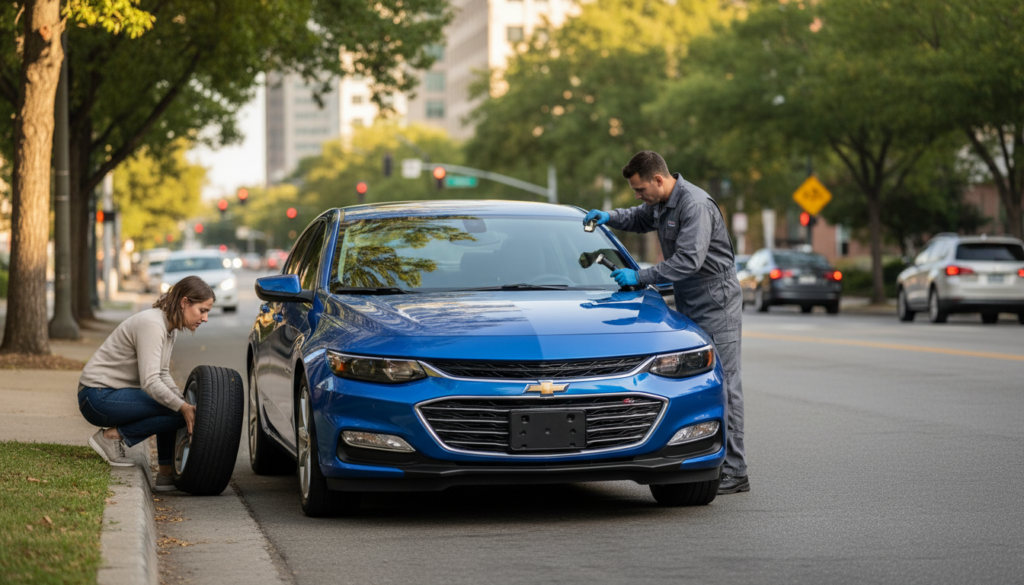
Hot area climates speed fluid breakdown and battery wear. Cold starts and snow increase engine strain and condensation problems.
Road salt and potholes promote corrosion and suspension damage. Those issues often cascade into uneven tire wear and steering troubles.
Maintenance timing: act early on repairs
Small leaks, warning lights, or rough shifting can become much bigger repairs if delayed. Quick diagnosis and targeted fixes cost less and add miles.
Modern driver-assist technology helps avoid some crashes, but longevity still depends on physical upkeep and regular maintenance.
| Factor | Effect | Action |
|---|---|---|
| Aggressive driving | Faster wear on brakes & suspension | Calm driving & scheduled checks |
| Road/snow/heat | Corrosion, fluid breakdown, battery issues | Seasonal inspections & rust protection |
| Delayed repairs | Higher cost, cascading failures | Fix early; prioritize repairs |
How to make a Chevy Malibu last longer with a practical maintenance plan?
Preventive maintenance is the single most effective step to protect vehicle performance and value. A clear routine keeps the engine and transmission working and cuts the chance of big repairs.
Build a preventive-first routine
Check fluids, filters, tires, brakes, and the battery on a set schedule. Fresh oil and correct coolant levels are cheap insurance for the engine and transmission.
Watch the big-ticket systems
Monitor engine performance, fuel delivery, and transmission behavior. Hesitation, poor mileage, or rough shifts often point to fuel or transmission trouble.
Use warning signs to time repairs
Listen for whining, clunks, or slipping shifts. Dash lights and intermittent electrical glitches usually need prompt attention to avoid cascading failures.
Budget with real ownership numbers
Expect an average annual repair cost near $532. Plan about $4,410 for five-year maintenance and roughly $1,792 for repair estimates on newer models.
| Item | Action | Why it matters |
|---|---|---|
| Fluids & filters | Change per schedule | Protects engine & powertrain |
| Tires & brakes | Inspect monthly | Maintains safety & performance |
| Test drive | Cold start + shifts | Reveals hidden issues |
Reliability, safety features, and real-world value for car buyers
Smart shoppers focus on real-world reliability, safety ratings, and ownership costs. These points shape whether a midsize sedan is a sensible purchase for daily driving and resale.
Reliability benchmarks for newer models
J.D. Power scores place recent models near an 80/100 benchmark, with the 2022 model at about 82/100. That marks the car as solid for its class.
Reliability here means fewer surprise repairs, steady daily operation, and predictable costs over several years.
Safety ratings and helpful driver assists
The vehicle holds a NHTSA 5-star overall rating and offers key safety features that lower common crash risks.
- Automatic Emergency Braking and Front Pedestrian Braking.
- Lane Keep Assist with Lane Departure Warning.
- Optional Adaptive Cruise Control and Rear Cross Traffic Alert; teen driver tech is available.
Fuel economy and driving range
EPA estimates for the 2022 model are about 29 city / 36 highway (32 combined). With a 15.8-gallon tank, that equals roughly 470–480 miles per full tank in mixed use.
Where it sits versus competitors?
Against the Accord and Camry, this car often undercuts price while offering comparable features. Rivals may offer different powertrains or interior finishes, so inspection and a test drive matter.
| Metric | This model | Key competitors |
|---|---|---|
| J.D. Power score | ~80–82/100 | Accord / Camry similar range |
| NHTSA rating | 5 stars | Most rivals 4–5 stars |
| 5-year cost | $43,694 (est.) | Varies; often higher purchase price |
Real-world value ties price, insurance, fuel, depreciation, and maintenance into a single decision. For many car buyers, this model delivers balanced reliability and safety at a competitive sale price.
Conclusion
Plan ownership around mileage and maintenance, not myths about instant failure.
Most owners should expect the common 100,000–150,000 miles window before major issues grow more likely, though careful care can push a chevrolet malibu past 200,000 miles.
If shopping used, prioritize service history and a clean test drive over the lowest price. A well-documented vehicle often beats a cheap, high-mileage car.
To extend life: drive smoothly, follow preventive service, and address warning signs promptly. That simple sequence protects fuel economy and major systems.
Overall, the chevy malibu can be a smart choice when its price, safety features, and expected upkeep fit your needs. Decide if you want a lower-mileage model or a higher-mileage option with records, and use that to guide your search.
FAQ
What is the typical lifespan in miles for a Chevrolet Malibu today?
Modern Malibu models commonly reach 150,000 miles with routine care; many owners report 200,000 miles or more when maintenance is consistent and major services are done on schedule.
Why does 100,000–150,000 miles matter for ownership costs?
Passing 100,000 miles often shifts a vehicle into the era of higher-cost items—timing components, transmission service, and suspension work. Expect rising repair frequency and plan for larger bills after this threshold.
What counts as “good mileage” when shopping used and how many years might that represent?
Good mileage for a used sedan is roughly under 12,000–15,000 miles per year. So a five-year Malibu with 60,000–75,000 miles is attractive; lower mileage tends to mean fewer immediate repairs and longer useful life.
Can a Malibu reach 200,000+ miles, and what helps it do so?
Yes. Regular oil changes, timely belt/chain service, cooling system care, and attentive transmission maintenance let many Malibus exceed 200,000 miles. Gentle driving and avoiding prolonged idling also help.
Which driving habits shorten a Malibu’s lifespan most?
Hard acceleration, repeated harsh braking, towing beyond the vehicle’s rating, and frequent short trips that never warm the engine increase wear. Stop-and-go commuting accelerates transmission and brake wear.
How do climate and road conditions affect longevity?
Hot climates stress cooling and AC systems. Winter roads with salt increase corrosion risk. Rough roads and potholes damage suspension and tires. Regular undercarriage checks and anti-corrosion steps reduce harm.
What routine maintenance should owners prioritize to extend life?
Prioritize oil and filter changes, transmission fluid checks, coolant flushes, brake inspections, tire rotation and alignment, and timely replacement of air and fuel filters. A preventive-first approach saves money over time.
Which warning signs indicate a repair is urgent?
Pay immediate attention to persistent dashboard warnings, slipping or hard shifts, unusual engine noises, coolant leaks, and brake pulsation. Early fixes often prevent expensive failures later.
How reliable are newer Malibu models compared with competitors?
Recent Malibu models score competitively on reliability and owner-satisfaction surveys. They typically sit near mid-pack against Honda Accord and Toyota Camry—strong value for buyers prioritizing comfort and safety tech.
What safety features and ratings should buyers check?
Look for NHTSA overall ratings, available advanced driver assists (lane keep, automatic emergency braking, blind-spot alerts), and updated airbag and structure safety. Higher trim levels usually add more driver-assist systems.
What are realistic yearly ownership costs to budget for a Malibu?
Expect routine maintenance and insurance plus occasional repairs to average several hundred to a few thousand dollars per year depending on age and mileage. Budgeting for unexpected big-ticket items—transmission or engine work—helps avoid surprises.