Chevy Volt Battery Replacement Cost: How to Save Thousands?
What affects the chevy volt battery replacement cost today helps owners make clear choices. This short guide sets realistic expectations: the pack price, labor, shop fees, and any shipping or core charges all matter.
Most reported service ranges fall between a few thousand dollars at specialty shops and higher quotes from remanufactured suppliers. Some buyers find used packs, others see dealer or remanufactured offers with different warranties.
Restore electric range, try module repairs or reconditioning, or consider selling the car. The Volt is a special case because its pack is smaller than many full EVs, but parts and sourcing still affect pricing.
It will show US price ranges, what each quote usually includes, terms to confirm in writing, and typical warranty lengths. It also defines basic terms like pack vs. module, installed vs. pack-only, and “core” return so the rest of the article reads easily.
What to Expect From Chevy Volt Battery Replacement Cost in the US Today?
Today’s market shows big gaps between low-cost used packs and full-service, warrantied replacements at specialty shops. Buyers should use a simple shopping range to check any offer.
Present-day US shopping range: installed services commonly appear in the low-thousands, used pack listings can be cheaper, and remanufactured units often sit at the high end. Typical figures reported include $1,195–$2,195 for some fitted options with installation, $3K–$9K for broader market averages, and specific examples like ~$4,000 (16 kWh) or $8,499 for remanufactured packs.
- Two owners with identical models might get different quotes due to local labor, shop specialization, and overhead.
- Availability matters: waitlists can push prices up even as cell prices fall.
- Confirm what’s included: diagnostics, programming, coolant service, disposal, shipping, and warranty.
| Option | Typical US Range | Common Inclusions |
|---|---|---|
| New installed service | $1,195–$2,195 | Labor, programming, 1–3 yr warranty |
| Used pack (market) | $2,500–$4,000 | Pack-only, limited warranty, shipping |
| Remanufactured unit | $4,000–$8,500+ | Rebuilt cells, extended warranty, full install |
Ask for at least two written quotes that list parts, labor hours, and fees separately. Many shops can finish installation in about a day once the pack arrives, but ordering and shipping can add days or weeks.
Chevy Volt Battery Replacement Cost: Real Price Examples and What They Include?
Owners commonly see two clear pricing paths: bundled installed services with set guarantees, or part-only listings that need extra work and verification.
Installed service examples
Installed offers often land at $1,195–$2,195. That bundled price usually covers removal of the old pack, full installation, system resets, and disposal or recycling. Most shops complete the job in about a day and include support and a multi-year warranty.
Pack-only and used-market listings
Marketplace listings can look cheaper. Examples include ~ $3,000 for 2016–2018 18.4 kWh packs, ~$4,000 for 16 kWh, and remanufactured packs near $8,499. Those prices omit labor, shipping, and verification.
| Option | Typical price | What you still need |
|---|---|---|
| Installed service | $1,195–$2,195 | Minimal — includes install, testing, warranty |
| Pack-only (used) | ~$3,000–$4,000 | Labor, shipping, diagnostics, possible core fee |
| Remanufactured | $4,000–$8,500+ | Install, warranty verification, shipping |
Hidden line items and quick checklist
- Confirm labor hours and hourly rate.
- Ask about taxes, shop supplies, and shipping fees.
- Understand core fees extra charge until the old pack is returned.
- Request an itemized invoice, warranty terms, and pack description (new/remanufactured/used).
Key Factors That Influence Battery Replacement Costs
Several key factors change what you’ll pay for a pack, from year-to-year parts differences to how urgent the repair must be.
Model years and pack capacity
Model year affects compatibility and sourcing. Newer models may use different pack capacities or control modules. Matching the correct pack matters to avoid extra programming or adapter parts.
Types of packs: new, remanufactured, refurbished, used
Shoppers typically see four types: new (highest price, longest warranty), remanufactured (rebuilt cells, solid warranty), refurbished (tested, mixed cells), and used (cheapest, limited guarantee).
Labor, diagnostics, and shop specialization
Diagnostics find whether the high-voltage pack is the real cause of poor performance. Shops charge for testing time, and specialized hybrid techs often work faster and safer. That expertise can reduce follow-up issues.
Supply, waitlists, and regional availability
Even if global cell prices fall, local supply can be tight. Long waitlists push lead times and price quotes up. Rural areas often face higher quotes due to shipping and limited specialist options.
Mileage, symptoms, and urgency
High mileage and severe faults raise urgency. A gradual range loss lets owners shop around. A no-start or fault code may force a faster and pricier solution.
| Factor | How it affects price | Reader action |
|---|---|---|
| Model year / pack size | Compatibility and sourcing | Verify exact model and pack code |
| Pack type | Warranty and reliability vary | Choose based on long-term value |
| Labor & diagnostics | Specialist shops cost more but reduce risk | Ask for itemized diagnostic fees |
| Availability | Waitlists raise quotes | Get multiple timelines and written estimates |
- Value tip: A slightly higher quote can save money long-term if it includes a verified pack and solid warranty.
- Always confirm what the quote covers: parts, labor, programming, and return of the old pack.
Battery Replacement Options for a Chevy Volt
Each buyer path has clear tradeoffs in price, warranty, and convenience. Decide whether you want the lowest out-of-pocket cost now or the best long-term reliability and paperwork.
Dealership with OEM parts and service documentation
What you get: factory parts, documented service history, and easier warranty coordination.
Dealership work costs more, but it can boost resale value and reduces paperwork headaches.
Independent hybrid/EV specialists and white-glove installation
Specialist shops offer trained techs and often a “white glove” promise. They handle sourcing, fitment, and system checks for you.
Advantage: expert installation with shorter wait and tailored support.
Remanufactured and refurbished packs
These are the mid-budget option. They blend predictability and savings.
Many come with limited warranty. Expect lower risk than unknown used units, but verify the warranty terms.
Used packs from marketplaces and salvage channels
Used packs can work for short-term ownership or tight budgets.
Vet sellers: confirm donor vehicle details, request state-of-health or capacity data, and check return policies before buying.
| Option | Typical benefit | Typical downside |
|---|---|---|
| Dealership | OEM parts, full documentation | Higher price, longer lead times |
| Independent specialist (white glove) | Expert installation, coordinated service | Varied warranties, shop-dependent pricing |
| Remanufactured/refurbished | Predictable performance, some warranty | Not as comprehensive as OEM |
| Used/salvage | Lowest upfront expense | Higher uncertainty, limited returns |
Match the option to your goal: immediate savings, documented repair, or a balance of risk and value.
Warranty and Coverage: What’s Typically Protected and What isn’t?
Not all coverage is created equal: manufacturer promises, remanufactured vendor guarantees, and shop labor policies differ a lot.
How US battery warranties usually work?
New vehicle warranties often separate the high-voltage pack. Many OEMs use a long-term policy, commonly around 8 years or 100,000 miles for new cars.
After factory coverage ends, any replacement pack typically carries its own terms from the provider.
Provider warranties and labor basics
Some reputable vendors offer a 3-year, unlimited-mile warranty on replacement packs. That level of coverage can justify a higher up-front price.
Confirm whether labor, diagnostics, and programming are included or billed separately.
What can void coverage and other considerations?
- Collision damage, water intrusion, or physical pack damage commonly void warranties.
- Improper installation or aftermarket changes that defeat safety systems can also cancel coverage.
- Keep itemized invoices and service records; they support claims and help resale value.
| Coverage Type | Typical Term | What to Confirm |
|---|---|---|
| Manufacturer | ~8 yrs / 100k mi | Transferability and claim process |
| Provider (replacement) | Varies; e.g., 3 yrs unlimited | Labor included? Prorated or full replacement? |
| Refurbished units | Shorter term | Cell testing and warranty scope |
For older cars, consider extended warranties or financing to spread payments. Always get warranty terms in writing and verify what triggers voiding so there are no surprises later.
Replacement Process, Timing, and What Your Volt Will Feel Like After?
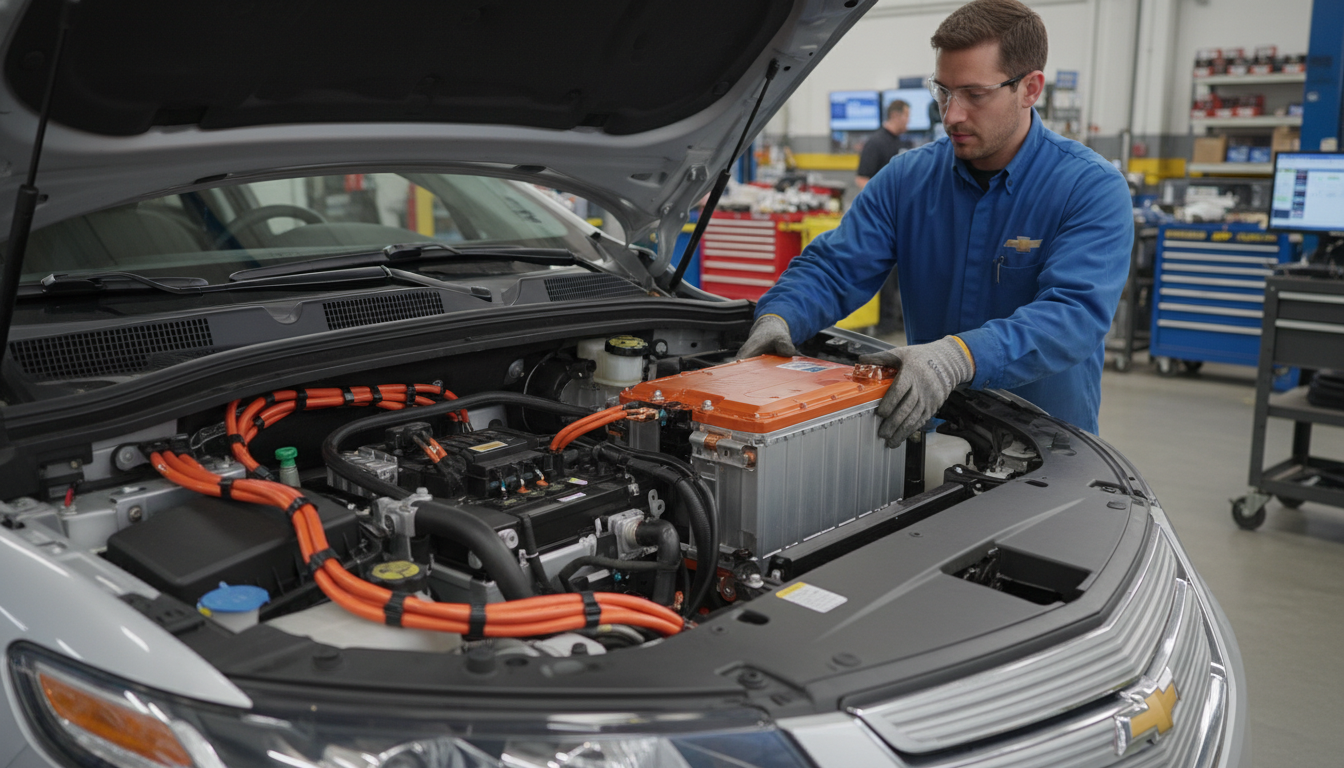
A typical service visit for a pack swap often fits into a single workday when parts are on hand. That one-day example sets realistic expectations, though scheduling depends on parts availability and shop workload.
How long a typical appointment takes?
Technicians follow clear steps: intake and scan, pack removal, installation, system checks, and a final test drive or validation charge cycle.
Most hands-on time occurs during removal and installation. Expect the active work to take several hours and the full appointment to span a business day when the part is available.
What the post-install checks involve?
System resets mean confirming the vehicle recognizes the new pack, clearing fault codes, and verifying normal charging behavior. Techs also run diagnostics and a short drive to validate power delivery and onboard systems.
What drivers notice afterward?
- Restored electric range and steadier power during acceleration.
- Smoother charging behavior with fewer surprises in usable EV miles.
- Better overall performance and reduced fuel use during mixed driving.
| Step | Typical duration | What owner should expect |
|---|---|---|
| Intake & scan | 30–60 minutes | Fault codes noted; diagnostic report |
| Removal & installation | 3–6 hours | Safe handling and secure fitment |
| System reset & checks | 30–90 minutes | Programming, charging test, road check |
A healthier pack will restore designed efficiency, not turn the car into a newer model. After service, track range over a week, watch for warning lights, and keep the invoice and warranty details handy.
DIY vs Professional Installation: Cost Savings vs Risk
Deciding whether to tackle a pack swap at home or hire a shop starts with a clear tradeoff: save on labor but accept safety, warranty, and resale tradeoffs.
Where DIY can save money and where it can backfire?
DIY work can reduce labor charges and let an owner source a cheaper used or pack-only unit. That cuts upfront costs for some buyers.
However, mistakes like connector damage, coolant mishandling, or misdiagnosis can create far bigger bills. High-voltage errors are dangerous and costly.
Safety, tooling, and system reset essentials
Proper PPE, insulated tools, lift supports, and torque specs are non-negotiable. Missing one item risks injury or part damage.
System reset and programming are required after a swap. Skipping these steps often triggers fault codes and drivability issues.
Warranty impact and resale considerations
Self-installation can void some warranties. Providers and buyers prefer documented shop invoices for future claims or resale trust.
Decision rule: DIY is appropriate for trained technicians with proper gear. Most owners gain safety and accountability by using an expert service.
| Choice | Immediate savings | Primary risk |
|---|---|---|
| DIY | Lower labor fees | Safety, incorrect install, voided warranty |
| Professional | Higher up-front cost | Higher price but documented, safer, includes resets |
| Hybrid (source DIY, pro install) | Moderate savings | Shipping/compatibility checks required |
How to Extend Volt Battery Life and Delay Replacement?
Goal: slow degradation to preserve usable range and keep electric driving consistent for more years.
Small, repeatable habits make the biggest difference. Focus on gentle charging, climate care, and steady driving.
Charging habits that help
- Avoid leaving the pack very full or very empty for long periods.
- Prefer small, frequent charging sessions over long stays at 100%.
- Limit DC fast charging to occasional trips to reduce heat stress.
Heat and cold management
Park in shade during hot months and in a garage or sheltered spot in cold weather. Precondition the cabin while plugged in so the pack warms or cools using shore power.
Driving and maintenance habits
- Use smooth acceleration and moderate highway speeds to cut thermal and load spikes.
- Keep tires properly inflated and choose efficient tires at replacement—both help range and reduce stress.
- Stay current on software updates and routine maintenance to protect long-term performance.
| Action | Impact | Quick tip |
|---|---|---|
| Frequent small charges | Lower degradation | Top up to 80–90% for daily use |
| Shade/garage parking | Reduced heat cycles | Avoid midday sun when possible |
| Smooth driving | Less thermal stress | Ease onto highway speeds |
Conclusion
Final decision hinges on matching a realistic price range to your timeline and risk tolerance.
Typical figures to keep in mind are installed services around $1,195–$2,195, used pack listings near $3,000, and remanufactured units up to about $8,499. Broader EV replacements can run $5,000–$16,000 today.
Shop apples-to-apples: compare installed totals to installed totals, and pack-only offers to pack-only offers. Request an itemized quote that lists labor, shipping, taxes, and any core fees.
Choose the right option for your goals: dealership for documentation, specialist shops for focused service, remanufactured for a mid-budget balance, and verified used packs for short-term savings.
With clear quotes and warranty terms in writing, a successful swap should restore range consistency and normal drivability, making the vehicle reliable for daily use.
FAQ
What are typical real-world price ranges for a Volt pack swap in the US today?
Prices vary, but most full-service installs fall between roughly ,000 and ,000 depending on model year and whether the pack is new, remanufactured, or used. Lower figures usually reflect used packs or independent-shop labor; higher figures reflect new or dealer-sourced packs plus extensive diagnostics and programming.
Why do quotes for a replacement pack vary so much by location and shop?
Quotes differ because of parts availability, dealer versus independent labor rates, regional shipping, and how the shop prices diagnostics, programming, and disposal/core fees. Supply constraints and local demand also push prices up or down.
What does an “installed” service price typically include?
An installed price usually covers the battery pack, labor for removal and installation, system diagnostics, software relearn/programming, and disposal of the old pack. Always confirm whether taxes, shipping, and a core charge are included.
How much can I expect to pay for a pack-only purchase or a used unit?
Pack-only listings for used or salvaged units commonly range from a few hundred to a few thousand dollars. Remanufactured or refurbished packs sit in the middle. Buyers should factor in shipping, testing, and any required reconditioning before installation.
How does Volt pack pricing compare to battery replacements for other plug-in hybrids and EVs?
Volt pack costs are generally lower than many full-EV replacements because the packs are smaller than large EV modules. Still, costs overlap with other plug-in hybrids; newer long-range EVs typically have higher replacement prices due to greater capacity and complexity.
What hidden line items should I confirm in every quote?
Ask about labor hours and hourly rate, diagnostic or programming fees, shipping and handling, taxes, and a core deposit or core charge for the old pack. Also confirm whether any warranty or testing is included.
How do model year and pack capacity affect price?
Newer model years or versions with higher energy capacity can cost more due to less common parts and updated modules. Early-model packs may be cheaper on the used market but harder to find as well.
What’s the difference between new, remanufactured, refurbished, and used packs?
New packs are factory-new modules. Remanufactured packs are rebuilt to OEM specs with replaced cells and tested. Refurbished packs have selective repairs and testing. Used packs are sold as-is with variable history. Warranty length and reliability increase from used to new.
How do labor rates and shop specialization influence final pricing?
Independent hybrid/EV specialists may charge lower hourly rates but offer better diagnostic expertise. Dealers often charge more but provide OEM parts and documented service. Complex diagnostics or shops without EV experience can raise labor time and price.
How much can supply constraints or waitlists add to the timeline and price?
Limited part availability can delay service by weeks and sometimes increase price due to expedited shipping or sourcing fees. Popular replacement channels can also create waitlists that affect scheduling.
When does vehicle mileage or performance symptoms justify a pack swap?
Consider replacement when usable electric range drops significantly, frequent charge/cell imbalance warnings appear, or the vehicle enters limp-home modes. High mileage or repeated thermal events also accelerate the need for replacement.
What are the pros and cons of dealership service with OEM parts?
Dealerships provide OEM parts, full diagnostic documentation, and often longer warranty backing. They charge higher labor rates and may have longer lead times, but they offer the most straightforward warranty traceability.
When should I choose an independent hybrid/EV specialist?
Choose a specialist for lower labor rates, faster turnaround, and shops that focus on battery/service expertise. Ensure they have proper training, tooling, and warranty offerings before committing.
Are remanufactured packs a safe mid-budget choice?
Yes—remanufactured packs balance cost and reliability if the rebuilder provides testing data and a clear warranty. Verify who covers labor if the pack fails after installation.
When can a used pack from salvage channels make sense?
A used pack can be reasonable for low-budget repairs or secondary vehicles if you can inspect testing logs, confirm state-of-health, and accept limited or no warranty. Factor in potential reconditioning costs.
How do EV battery warranties usually work in the US?
Original warranties often cover the battery for a set number of years or miles (commonly 8 years/100,000 miles for many manufacturers). Warranties typically guarantee a minimum capacity threshold and cover defects, not normal degradation.
Do replacement-pack providers offer warranties and what do they cover?
Many remanufacturers and reputable sellers provide limited warranties on pack performance and workmanship, often 1–3 years. Some include limited labor coverage; others cover only the pack itself—verify duration and exclusions.
What actions commonly void battery coverage?
Voiding events include accident damage, improper installation by unqualified shops, tampering, water intrusion, and failure to follow charging or maintenance guidelines. Read warranty terms carefully.
How long does a typical pack swap appointment take?
Most professional installs take 4–8 hours when parts and programming tools are available. Complex diagnostics, software updates, or unexpected issues can extend the job to a full day or longer.
What driving changes should owners expect after a fresh pack install?
Expect restored electric range closer to original spec, improved charge acceptance, and smoother electric-mode performance. Calibration or software relearns may cause minor behavioral changes until the vehicle completes final resets.
Can a DIY swap save money, and what are the risks?
DIY can save on labor but requires special tools, safety equipment, and knowledge of high-voltage systems. Improper handling risks injury, voids warranties, and may damage vehicle electronics—professional installation is recommended for most owners.
What safety and tooling requirements should DIYers plan for?
Plan for insulated tools, high-voltage PPE, battery isolation procedures, torque specs, and software access for system resets. Without proper diagnostics and programming gear, the vehicle may not operate correctly after swap.
How does DIY work affect resale value and warranty coverage?
Non-professional installation can reduce resale value and often void manufacturer or third-party warranties. Documenting quality parts and professional testing post-install can mitigate buyer concerns.
What charging habits help extend a pack’s usable life?
Avoid keeping state-of-charge at extremes. Favor charging to partial levels for daily use, limit frequent DC fast charging, and plug in regularly rather than deep-cycling the pack.
How does temperature management protect the energy pack?
Park in shade or a garage in hot weather, precondition the vehicle when possible, and avoid leaving the car fully charged in extreme heat. In cold climates, timed charging and warming the cabin before driving help preserve range.
What driving and maintenance habits protect range and performance?
Gentle acceleration, steady speeds, proper tire pressure, and prompt maintenance of related systems (HVAC, cooling) reduce stress on the pack. Address charging-system warnings quickly to avoid progressive degradation.