Chevy Traverse Towing Capacity: Haul with Confidence
Find out the Chevy Traverse towing capacity, max tow ratings, essential equipment, and easy tips for safe and confident trailer towing.
Who this vehicle suits: Families who want three rows of seating, weekend gear space, and the option for occasional hauling will find this practical. The max published limit is up to 5,000 pounds when properly equipped, but real use depends on setup.
You will get a quick rating snapshot, a look at powertrain support, trailering gear, trim differences, real-world examples, safety tips, interior practicality, and a test-drive checklist. The guide frames published numbers as a starting point.
Capacity vs capabilities: Capacity is the official limit. Capabilities change with passengers, cargo, and equipment. This guide translates jargon into plain English and gives practical steps to use at the dealership.
Quick Snapshot: How Much Can a Chevy Traverse Tow Right Now?
This midsize SUV can pull up to 5,000 pounds when set up correctly.
“Properly equipped” means factory or dealer-installed trailering gear and supporting systems — not just a cosmetic hitch cover. That setup includes a rated hitch, trailer wiring, and upgraded cooling or charging where required.
Remember: the 5,000-pound number is a rating. It differs from the actual loaded trailer weight when you add fuel, water, and gear. Check the math before you hitch up.
- Buyer checklist: hitch presence, trailer wiring, heavy-duty cooling, and brake controls.
- Compare pounds, not just trim badges options change the real-world figure.
| Item | What to look for | Why it matters |
|---|---|---|
| Hitch & wiring | Class-rated receiver and 4/7-pin connector | Ensures safe electrical and mechanical hookup |
| Cooling/charging | Heavy-duty radiator, 220-amp alternator | Prevents overheating under load |
| Brake control | Integrated or dealer-installed controller | Improves stopping with a loaded trailer |
If two similar SUVs sit on the lot, one may lack trailering equipment. Confirm the specific equipment and read the window sticker for full details.
Chevy Traverse Towing Capacity: Ratings, Limits, and What They Mean?
Understanding rated trailer weight helps buyers match a midsize SUV to real life hauling needs.
All 2025 models carry a published 5,000-pound limit when properly equipped. That number applies across trims and drivetrains, with front-wheel drive standard and all-wheel drive available.
How ratings work for a midsize shopper?
Tow ratings are standardized benchmarks. They show the maximum the factory approves under ideal conditions.
Real-world results change when passengers, gear, or a rooftop load reduce the margin for a trailer.
Payload and real-world limits
Payload is the weight the vehicle can carry inside and on it. People, luggage, and cargo subtract from what you can add behind the hitch.
So a trailer under the rating can still push the vehicle past safe limits if the cabin is full.
Why ratings matter in this class?
Buyers want a daily driver that also handles weekend work or recreation. A clear 5,000-pound rating simplifies comparisons within the midsize class.
The right choice matches typical loads, terrain, and how the owner likes to drive not just the top-line number.
| Item | What it means | Buyer action |
|---|---|---|
| Published rating | Max safe trailer weight with proper equipment | Confirm dealer-installed trailering gear on the window sticker |
| Payload | What the vehicle carries inside and on top | Subtract passenger and cargo weight before hitching |
| Drivetrain | FWD standard, AWD available | Choose AWD for wet or steep conditions |
Powertrain and Performance That Support Towing
A midsize SUV’s drivetrain and gears shape how calm it feels when pulling a trailer on hills or highways.
Engine output and torque
The turbocharged 2.5L produces 328 hp and 326 lb-ft of torque, which helps with low-to-midrange pull when a trailer adds resistance.
Transmission and on-road behavior
The eight-speed automatic gives more gear steps to keep the engine in a useful band. That means smoother acceleration, easier merging, and better control on grades.
FWD vs AWD for trailering and traction
Front-wheel drive is standard and works well for most paved conditions. Available all-wheel drive helps put power down on slippery ramps, wet grass, or gravel driveways.
- Examples of improved wheel traction: launching a small boat up a damp ramp, leaving a rain-soaked campground, and climbing a snowy service road.
- Tie-in: predictable throttle response and stable handling make the driver feel less stressed while pulling a load.
| Item | Why it matters | Driver takeaway |
|---|---|---|
| Turbo 2.5L output | Strong low-to-midrange power for initial pull | Confident acceleration when merging or climbing |
| Eight-speed automatic | More gear choices for engine control | Smoother speed transitions and better hill control |
| All-wheel drive option | Improved traction on loose or wet surfaces | Easier launches and fewer wheel slip events |
Note: power and traction set the foundation, but proper trailering equipment and correct setup complete the package.
Trailering Equipment and Systems to Look For
Good trailering starts with the right features and systems, not just a headline number. Buyers who plan frequent weekend hauls should confirm the vehicle has the correct gear before they leave the lot.
Standard trailering essentials
The Standard Trailering Package includes a rated hitch and a hitch cover. The hitch is the physical link to a trailer. The cover keeps the receiver clean when not in use.
Hitch View and on-screen guidance
Hitch View and Hitch Guidance appear on the 17.7-inch touchscreen. This assist uses camera views and alignment lines to reduce guesswork when lining up a coupler. Newer owners gain confidence faster with clear on-screen prompts.
Cooling, charging, and rear camera help
A heavy-duty cooling system and a 220-amp alternator help manage higher thermal and electrical loads during hauling. An HD rear vision camera improves visibility when hooking up and when backing with a trailer attached.
- Clear camera images and guidance make hookups quicker.
- Upgraded cooling and alternator prevent overheating and support accessories.
- Better usability means owners are more likely to use trailers and carry more cargo.
| Component | What it does | Buyer takeaway |
|---|---|---|
| Trailering Package (hitch & cover) | Provides a secure receiver and protects it when unused | Verify presence on the window sticker before purchase |
| Hitch View & Guidance on 17.7-inch screen | Camera-based alignment and guidance lines | Makes coupling easier for first-time users |
| Heavy-duty cooling & 220A alternator; HD rear camera | Manages heat, supports accessories, and boosts rear visibility | Reduces stress on long hauls and improves hookup accuracy |
Traverse Trims and Capability Differences for Towing Shoppers
Trim choice changes the hardware and settings a buyer gets. That affects real-world capabilities more than a trim badge does.
Why the Z71 often wins for off-road-ready buyers?
The Z71 adds Terrain Mode, Hill Descent Control, an advanced twin-clutch AWD, off-road suspension, and a skid plate. Dealers note the Z71 often includes trailering equipment as standard.
In practice, Terrain Mode smooths low-speed dirt-road driving. Hill Descent Control holds a steady crawl on steep exits near campsites. The twin-clutch AWD helps when one side slips pulling from soft ground.
LT vs RS vs High Country: practical trade-offs
LT is value-focused and can be optioned for basic trailering needs. RS leans sportier and adds styling and tech. High Country prioritizes comfort and offers the Enhanced Driving Package with Super Cruise.
Buyers who want premium driver assists choose RS or High Country. Those who want rugged gear usually choose Z71.
- Filter dealer inventory by trim and listed trailering gear, not just photos.
- Pick required options and then choose exterior color to match taste.
- Consider the on-road tech experience versus practical hardware when selecting a vehicle.
What You Can Tow With 5,000 Pounds?
A practical way to picture 5,000 pounds is to list the trailers and gear most owners actually haul on weekends.
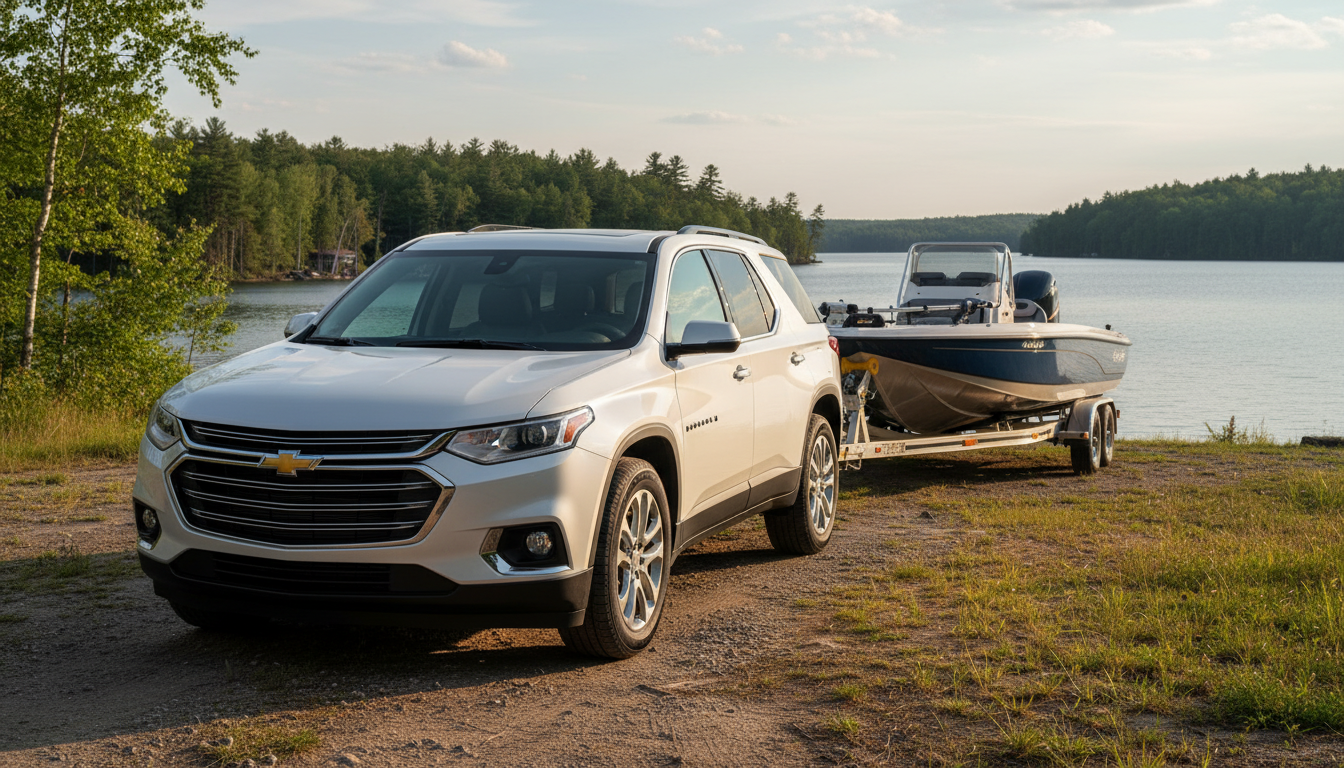
Recreation examples are straightforward. Common items include fishing boats, ATVs, motorcycles, and snowmobiles. When the loaded trailer stays under the rating, these fit well for short trips and lake weekends.
Camping and travel
Pop-up campers and some small campers or toy haulers can be realistic targets. Remember that dry weight is lower than the fully loaded figure. Add fuel, water, batteries, and gear when estimating the total.
Utility use
Small utility trailers suit home projects, furniture moves, and bulky cargo that would otherwise take several trips. Match the trailer’s loaded weight to what the vehicle can carry and tow together.
- Plan: weigh or estimate loaded trailer weight, including coolers and racks.
- Think holistically: people + cargo + trailer equals the real limit for safe hauling.
| Use | Typical loaded example | Why it fits |
|---|---|---|
| Fishing/boat | Rowboat or small bass boat with motor | Common weekend load when paired with light gear |
| Powersports | One or two ATVs or motorcycles | Compact footprint, easy to stay under the limit |
| Camping | Pop-up camper or small travel trailer | Works if packed carefully and dry weight checked |
| Utility | Small open trailer for furniture or landscape supplies | Practical for single trips instead of multiple loads |
Once owners know what fits, the next step is learning safe setup and driving technique for confident use.
Towing Safely and Confidently: Setup, Driving, and Planning
Safe trailering starts with a simple routine: hook up right, load smart, then drive with intent. Repeat this process so each trip becomes predictable and low stress.
Hitching basics
Match the tow receiver and ball to the trailer coupler size. Cross safety chains beneath the coupler so the trailer can’t drop free if separated.
Loading strategy
Keep heavy items low and slightly forward of the axle to avoid a tail-heavy setup. Secure cargo with straps to stop shifting during turns.
On-road technique
Increase braking distance and take wider turns to protect trailer fenders. Plan lane changes earlier and drive like you are heavier than usual for stability on the road.
Tech assists and quick test
Use Hitch View and Hitch Guidance on the 17.7-inch touchscreen plus the rear vision camera to make hookups easier. Always do a short neighborhood test to confirm lights, brakes, and that nothing clunks.
- Walk the driver through hookup, loading, and calm on-road habits.
- Use a brief pre-trip test to verify systems and safety.
- Adopt smoother throttle and steering inputs for steady control.
| Step | What to check | Why it matters |
|---|---|---|
| Hookup | Receiver, ball, chains | Secure connection under load |
| Load | Weight distribution, tie-downs | Prevents sway and shifting |
| Drive test | Lights, brakes, short run | Catch issues before highway travel |
Interior Space, Cargo Room, and Family Practicality While Towing
Interior design affects every trip, whether hauling a trailer or running errands. The cabin aims to be calm, organized, and ready for people and gear.
Comfortable seating and thoughtful layouts
Available seating for up to eight gives families flexibility for passengers and gear. Second-row seating configurations let owners slide or fold seats to balance passenger comfort with storage needs.
Cargo volume that complements a trailer
The vehicle offers best-in-class max cargo volume up to 98 cu. ft., so heavier or messier items can stay inside while the trailer carries large gear.
Hands-free convenience where it matters?
The AutoSense Power Liftgate unlocks easy loading at campgrounds and job sites. With full hands, owners can open the rear without setting down bags or tools.
- Daily livability: many owners tow part-time, so cabin comfort still matters every day.
- Packing tip: keep snacks, jackets, and small tools inside to avoid opening the trailer at every stop.
- Reduced fatigue: a roomy cabin and supportive seats help the driver stay alert on long hauls.
| Item | Benefit | Practical use |
|---|---|---|
| Seats for up to eight | More passenger room | Family outings without extra trips |
| Up to 98 cu. ft. cargo space | Store gear inside | Keep dirty or heavy items off the trailer |
| AutoSense Power Liftgate | Hands-free access | Quick loading at campsites and worksites |
One-vehicle solution: these interior features blend daily comfort and hauling utility so a single vehicle can handle family life and weekend gear.
Test Drive and Buying Checklist for Tow-Ready Traverse Shoppers
Smart shoppers validate hardware on the lot and confirm performance on the road. Start with the sticker, then use a short, focused test drive that mirrors real hauling conditions.
What to verify on the window sticker?
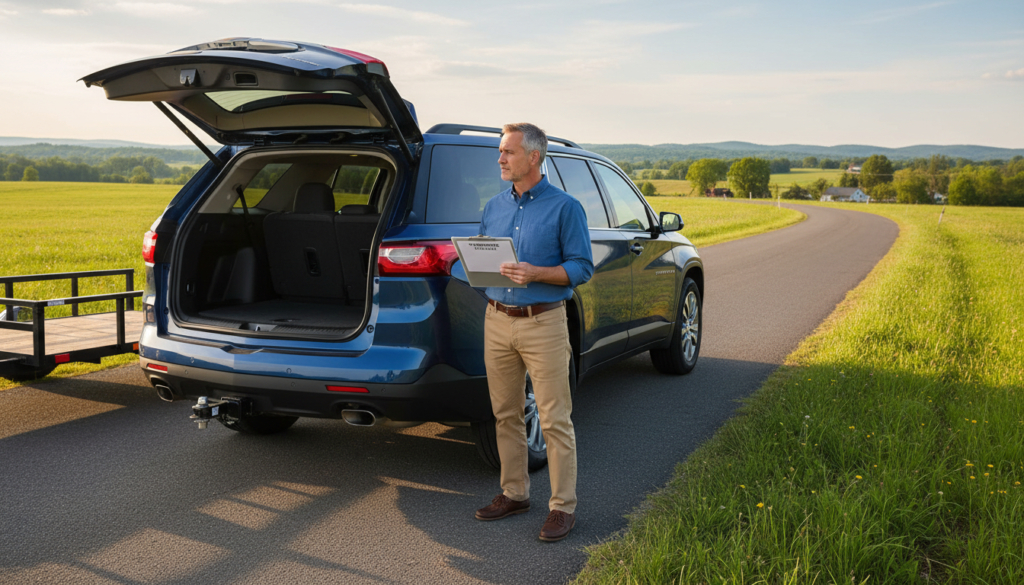
Look for the Trailering Package or similar line items. Confirm a rated hitch, wiring, and any listed camera or guidance systems.
Verify heavy-duty cooling, 220-amp alternator, Hitch View, and on-screen Hitch Guidance. These items show the vehicle is set up for dependable use.
Test-drive moments that matter
During the test, watch how the engine responds when you ask for power. Pay attention to turbo torque feel when merging and passing.
Check braking for steady, predictable stops. Note steering feel and whether small inputs feel stable.
Shopping tips and final checklist
- Imagine an extra few thousand pounds behind the vehicle to judge composure during the drive.
- Evaluate visibility: test rear vision clarity and mirror coverage in parking and backing maneuvers.
- Compare online inventory listings side-by-side and filter for trailering features before choosing trim or color.
| Item | What to check | Why it matters |
|---|---|---|
| Window sticker | Trailering package, hitch, wiring | Confirms factory or dealer-installed gear |
| On-road test | Acceleration, braking, steering | Shows how the vehicle will behave under load |
| Technology & cameras | Hitch View, Guidance, rear vision | Makes hookups easier and safer |
Conclusion
Choose a model that pairs real-world room and seats with the right hardware and technology for hauling. The chevy traverse puts a turbo engine and eight-speed automatic behind family-friendly space and up to 98 cu. ft. of cargo room.
Published capacity is a useful benchmark, but the driver must account for passengers, gear, and interior load. With proper equipment and Trailering features like Hitch View and Guidance, hooking up feels easier and backing is safer.
Compare trims, confirm trailering details on the sticker, and schedule a test drive to validate power and on-road behavior. Match the trailer to the vehicle, load carefully, and give yourself more space on the road for the best experience.
FAQ
What is the maximum tow rating for the Chevy Traverse when properly equipped?
The Traverse can tow up to 5,000 pounds when fitted with the correct trailering package and hitch. That figure applies across available drivetrains, but verify the vehicle’s window sticker and owner’s manual for exact limits on a specific trim.
What does “properly equipped” mean for towing comparisons?
Properly equipped means the vehicle has the factory trailering package, the correct hitch receiver, wiring harness, heavy‑duty cooling, and sometimes a higher‑output alternator. These options ensure electrical and cooling systems can handle sustained trailer loads.
How do passengers and cargo affect real-world towing capability?
Payload reduces how much you can safely tow. Add passengers, gear, and rooftop cargo and you subtract weight available for a trailer. Always calculate tongue weight plus vehicle cargo to stay within Gross Vehicle Weight Rating (GVWR).
Which engine supports towing and what are its outputs?
The turbocharged 2.5L engine delivers around 328 hp and 326 lb‑ft of torque, providing the power needed for midsize trailering. Paired with an eight‑speed automatic, it helps maintain smooth acceleration and engine braking while hauling.
Should I choose FWD or AWD for trailering?
FWD is lighter and can offer slightly better fuel economy, while AWD improves traction in wet, snowy, or uneven conditions. For mountain roads or unpaved launch sites, AWD adds confidence; for mostly highway towing, FWD suffices if properly equipped.
What trailering equipment and systems help with hookup and backing?
Look for a factory hitch, hitch cover, Hitch Guidance and Hitch View on the 17.7‑inch touchscreen, plus rear vision cameras and trailer sway mitigation. These systems make lining up a trailer and monitoring it on the road much easier.
How does the heavy‑duty cooling system and 220‑amp alternator help when towing?
A heavy‑duty cooling system prevents overheating during sustained towing, while a 220‑amp alternator ensures sufficient electrical supply for trailer lights, brakes, and accessories without draining the battery.
Which trim is best for buyers who plan to tow frequently?
The Z71 package adds rugged gear and trailering‑friendly components for tougher conditions. Higher trims like LT, RS, and High Country offer different equipment and comfort trade‑offs—choose based on needed tech, towing options, and interior features.
What kinds of trailers and gear fit within a 5,000‑pound limit?
Typical loads include small fishing boats, ATVs, motorcycles, snowmobiles, pop‑up campers, and light utility trailers. Always check the trailer’s dry weight, cargo loaded on it, and tongue weight before hitching up.
What are key safety steps when setting up and driving with a trailer?
Match hitch class and coupler, secure safety chains, distribute cargo to balance tongue weight (typically 10–15% of trailer weight), and practice braking and turning with the trailer. Increase following distance and make wider turns at low speed.
How does interior space and cargo volume affect family trips while towing?
Seating for up to eight and up to 98 cu. ft. of cargo allows passengers and gear to travel comfortably while towing. Use the hands‑free liftgate to load heavier items easily, keeping the cabin organized for long hauls.
What should buyers check on a test drive for tow readiness?
Verify the trailering equipment on the window sticker, test acceleration with turbo torque under load, evaluate braking feel and visibility, and try camera views for hitching. Compare inventory and option packages that include the necessary towing systems.