Chevy Tahoe Years to Avoid: Don’t Buy Before Reading This
Shopping for a used full-size SUV?
It gives a quick, practical look at model trouble spots and how a buyer can sidestep costly surprises.
The Chevrolet Tahoe has run since 1994, and most examples are durable and tow-capable. Still, a handful of model runs show repeated failures and high complaint counts.
This page will list the main problem model runs, explain the signals used to flag those years owner reports, recall history, and reliability surveys and teach readers how to vet a specific used example.
Expect a short “avoid” list, a generation-by-generation check, test-drive red flags, and a compact inspection checklist. Remember: any used vehicle can be good if maintained, but certain Chevrolet Tahoe vintages are statistically more likely to bring expensive repairs.
The advice reflects the present U.S. used market, with attention to price, depreciation, and real-world mileage trends for shoppers.
The Chevy Tahoe Model Years Most Buyers Should Skip
Some model runs keep showing the same mechanical and electrical faults across many owner reports. Below is a short, high-risk list for fast reference, followed by a brief explanation.
Years to skip based on complaints, recalls, and reliability reports
- High-risk cluster: 1999, 2004–2005, 2007–2009, and 2015.
Why these specific model runs stand out?
These model years repeat the same fault categories across independent reports: engine oil consumption and low oil pressure, flaky climate control, failing interior accessories, and electrical glitches. High recall volume plus steady owner complaints raises the probability of expensive fixes.
If a flagged year is tempting because of price, require documented repairs, confirm that all recalls are closed, and budget for known weak points.
| Model years | Main issues | Buyer note |
|---|---|---|
| 1999 | Engine and intake gasket problems | Demand service records |
| 2004–2005 | Interior, gauges, and electrical | Check all accessories |
| 2007–2009 | Oil consumption, low oil pressure | Inspect engine logs |
| 2015 | High recall count, A/C and wiring faults | Verify recall completion |
Next: The following section breaks down the big reasons by year so readers can weigh cosmetic annoyances versus drivetrain risk.
Chevy Tahoe years to avoid: The Short List and the Big Reasons
D. Not every used example is equal; a small set of model runs brings more frequent failures and higher bills. Below is a tight, practical breakdown of what fails and why it matters so buyers can judge real risk.
1999 — engine failures and intake gasket trouble
What fails: Intake gasket leaks, loss of power on grades, and outright engine failures.
Why it matters: A leaking intake gasket can lower performance and let coolant or oil mix. That escalates from a nuisance to a safety concern on hills and can require major engine work.
Test-drive check: Watch for rough idle, power loss during acceleration, and any coolant smell or warning lights.
2004–2005 — interior defects and gauge/system glitches
What fails: Cracked dashboard, failing interior accessories, and erratic speedometer or system warnings.
Why it matters: These faults hurt daily use and may fail inspection. Replacing dashboards, door components, or clusters is costly and annoying.
Test-drive check: Verify gauges, lights, door locks, and climate controls work consistently.
2007–2009 — oil consumption, low oil pressure, costly engine fixes
What fails: Excessive oil burning and low oil pressure on 5.3L engines; piston/ring or engine replacement may be required.
Why it matters: Low oil pressure can cause catastrophic engine damage fast. The fixes are expensive—often involving piston or ring work or full engine replacement.
Test-drive check: Look for oil warnings, blue smoke, and check oil level before and after a short drive.
2015 — A/C failures, electrical issues, and high recall volume
What fails: A/C collapse near 50k miles, climate-control glitches, and assorted electrical faults tied to many recalls.
Why it matters: Multiple small issues create high-hassle ownership and add repair bills that erode value.
Test-drive check: Test A/C performance, confirm no stray warning messages, and verify recall completion on the VIN.
- Quick buyer tip: If a flagged example still seems attractive, demand service records, confirm recall closures, and budget for known fixes.
Deep Dive on the Worst Tahoe Years by Generation
Examining each generation clarifies which model year clusters are true problem hotspots versus one-off lemons.
Why generation mapping matters: Buyers should judge risk by design era, not assume every model in a generation shares the same faults. This keeps inspection focus practical and efficient.
First generation red flags
Most first-generation vehicles show low complaint volume. The 1999 model year is an exception because of concentrated engine and intake gasket failures.
That pattern points to a specific defect, not age alone. An owner should demand service records and compression checks for any 1999 example.
Second generation trouble spot
Within the second generation, 2003–2005 draws “clunker” attention for electrical and interior failures. It isn’t the redesign’s first year, but a mid-run batch had higher complaint counts.
Focus inspections on gauges, wiring, and accessory operation when evaluating these model year examples.
Third generation danger zone
The 5.3L V8 oil-consumption era (early third generation) created most engine-related reports. Not every third-generation vehicle is risky, but early 5.3L examples show the highest failure rate.
Check oil history, look for blue smoke, and verify oil-pressure logs before buying these model year units.
Fourth generation issues
Fourth-generation data highlights 2015 as an outlier with many A/C and electrical recalls. Models from 2016 forward saw technical updates and far fewer complaints.
When a 2015 example is tempting, confirm recall completion and factor repair downtime into your budget.
| Generation | Problem window | Primary risk |
|---|---|---|
| First (1995–2000) | 1999 | Intake gasket/engine |
| Second (2000–2006) | 2003–2005 | Electrical/interior |
| Third (2007–2014) | 2007–2009 | 5.3L oil consumption |
| Fourth (2015–2020) | 2015 | A/C and wiring faults |
Common Chevrolet Tahoe Problems Owners Report (What to Look For on a Test Drive?)
Most everyday problems show themselves quickly if you follow a short, focused test-drive routine. Use these checks to spot recurring issues in the interior, driveline, and systems before you negotiate.
Cracked dashboard, door locks, and interior accessory quality
What to do: Inspect the dashboard for hairline cracks and press on trim for looseness. Cycle each door lock and listen for the actuator—repeat several times.
A/C system not blowing cold and climate control failures
Run the air at max cool and note vent temperature. Listen for compressor engagement and watch for inconsistent fan speeds. Some A/C faults surface near specific miles on problem model runs.
Low oil pressure, excessive oil consumption, and check-engine warnings
Before driving, check oil level and look for fresh oil residue under the engine. During the drive, watch for low-oil messages, reduced power, or blue smoke.
“Service 4WD” messages and transfer case/selector switch faults
Shift into 4WD on a safe surface and confirm engagement. A persistent message may mean a selector switch or encoder sensor issue, but verify mechanical engagement regardless.
Brake and steering complaints
Test braking at moderate speed. Notice any pull, pulsation, long pedal travel, or unusual clunks. If anything feels vague, get a professional inspection before buying.
- Quick script: toggle locks, test A/C, watch dash messages, and drive both straight and turning to check brakes and steering.
| Area | Quick check | Reason |
|---|---|---|
| Interior / dashboard | Visual & touch inspection | Common wear and costly repairs |
| A/C system | Max cool & listen | Leaks or electrical faults |
| Driveline / 4WD | Engage 4WD and note messages | Selector or encoder faults |
Chevrolet Tahoe Years That Are Generally Safe to Buy Used
A solid used SUV can be found by focusing on model runs that showed steady reliability and fewer owner complaints. Below is a compact shopping shortlist and a practical inspection mindset for buyers.
Most recommended picks
Shortlist: 1995–1998, 2000–2003, and 2006 are widely suggested as value buys with fewer recurring faults.
Best later picks with fewer complaints
For more modern comfort and fewer surprises, 2010–2014 and 2016–2020 show better reliability and higher owner satisfaction in many ratings.
When “safe” still means inspect?
Condition beats calendar year. Even a well-rated model year can hide deferred work. Check service records, belts, fluids, tires, brakes, and rust-prone areas.
- Budget match: Older safe picks often cost less up front but may need suspension or rust work. Newer safe picks cost more but lower short-term repair risk.
- Inspection rule: If a safe model lacks service history or shows warning lights, treat the purchase as high risk until verified.
| Safe group | Why it’s safer | Buyer note |
|---|---|---|
| 1995–2006 (select) | Fewer systemic complaints | Watch for rust and maintenance |
| 2010–2014 | Proven mid-run reliability | Good balance of miles and quality |
| 2016–2020 | Updated systems, fewer recalls | Higher price, lower surprise repairs |
Use reliability as a probability tool, not a guarantee. For a final read on rating and long-term value, move to the next section that breaks down review scores and owner trends.
The Most Reliable Tahoe Model Years and What the Ratings Say
Objective scores and complaint trends can turn vague worry into clear buying rules. Start with published ratings, then check owner reports and recall history for the specific vehicle.
RepairPal context
RepairPal gives an average reliability rating of 3.5/5 and ranks the SUV 21 of 26 in its class. That “average” tag narrows choices but does not guarantee low repair bills.
Even an average full‑size, truck‑based SUV can cost more when failures happen. Budget for likely service if a listing has limited records.
J.D. Power and CarComplaints signals
J.D. Power quality scores help spot stronger models. For example, a Quality & Reliability score of 83/100 for 2014 and favorable marks for 2020 point buyers toward those model runs.
CarComplaints flags 2007 as a “Clunker” while showing 2010–2014 as relatively trouble-free. “Clunker” often maps to repeated, costly faults; “Awesome” means low complaint volume.
- How to use ratings: shortlist 3–5 model runs, then compare listings by service history, mileage, and inspection results.
- Triangulate: when RepairPal, J.D. Power, and complaint data align, treat that as a strong signal.
| Source | Key metric | Example |
|---|---|---|
| RepairPal | Reliability 3.5/5 | Rank 21 of 26 midsize SUVs |
| J.D. Power | Quality & Reliability score | 83/100 (2014); favorable (2020) |
| CarComplaints | Complaint badges | 2007 = Clunker; 2010–2014 = low complaints |
Chevy Tahoe Generations Explained for Used Buyers
Understanding each generation helps buyers decode listings and spot which design changes matter most.
First generation (1995–2000)
The first run is simple and durable. It favors basic powertrains and easy repairs.
Watch for rust, aging rubber parts, and deferred maintenance on older examples.
Second generation (2000–2006)
This era improved comfort and longevity. Build quality rose, but some model examples still show inconsistent trim and electrical issues.
Third generation (2007–2014)
The interior saw real upgrades and more features. Note the oil-consumption window on certain engines in early third-generation models.
Fourth generation (2015–2020)
Notable for fold-flat third-row seats and added technology. The 2015 model is an outlier with higher complaint counts; 2016–2020 are stronger overall.
Fifth generation (2021–present)
Independent rear suspension and major tech upgrades arrived here. Pricing is higher, and cautious buyers often prefer later 2022+ refinements.
Buyer-fit guidance: Tow heavy loads? Favor third or fourth generation with proven powertrains. Need family cargo and space? Fourth and fifth generations shine. City drivers may prefer later models for improved technology and ride comfort.
| Generation | Range | Key change | Buyer fit |
|---|---|---|---|
| First | 1995–2000 | Simple mechanics | Cheap repairs, check rust |
| Second | 2000–2006 | Comfort & longevity | Good value, inspect electrics |
| Third | 2007–2014 | Interior upgrades; oil risk | Towing strength, verify oil logs |
| Fourth | 2015–2020 | Fold-flat third row; tech | Family hauling; skip troubled 2015 |
| Fifth | 2021–present | Independent rear suspension; new tech | Best comfort and cargo; higher price |
Buying Used: Mileage, Depreciation, and What You Should Pay in the US?
Smart used-car shopping targets a sweet spot where price and remaining life meet. In plain terms, most depreciation happens in the first five years, so buying after that hit usually gives better value.
Depreciation sweet spot
Target: a 5–10 year old vehicle with under ~75,000 miles and full service records. CarEdge estimates about a 50% drop in value in the first five years, which makes this range attractive.
Price ranges by generation
- Gen 4 with under 100k miles: commonly around $25,000+, depending on trim and 4WD.
- Gen 5 under ~75k miles: roughly $40,000–$75,000 depending on equipment and configuration.
- Price swings come from 4WD vs RWD, trim, towing packages, engine and transmission choice, and condition.
Longevity and negotiation
Many of these vehicles reach 200,000–300,000 miles with proper maintenance. A higher-mileage car with documented oil and service history can beat a low-mileage unit with gaps.
| Factor | Buyer check | How it affects price |
|---|---|---|
| Mileage | Under 75,000 preferred | Lower immediate repair risk |
| Service records | Full history of oil, transmission, brakes | Boosts value and negotiation leverage |
| Inspection/recalls | Pre-purchase report; recall completion | Use findings to adjust offer |
Negotiation tip: Base offers on evidence recall status, inspection items, tire and brake wear, and service gaps rather than haggling blind. That wins fair price and lower post-purchase surprises.
Used Tahoe Inspection Checklist Before You Commit
A quick, methodical inspection separates a smart buy from a costly regret at the dealership or private sale. Start with paperwork, then move through visible systems and a focused test drive. Use this same‑day checklist and trust evidence over emotions.
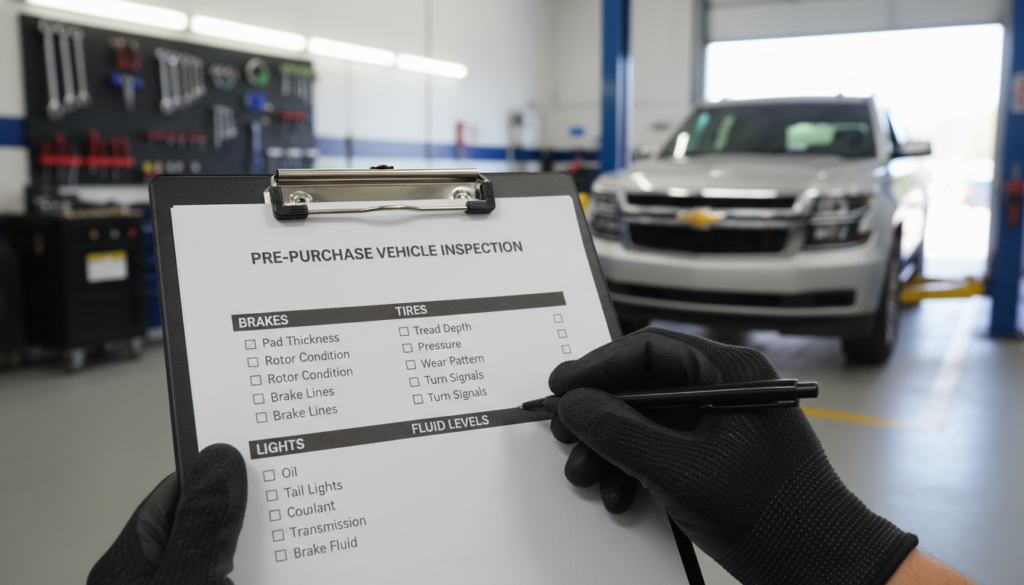
Vehicle history and recall verification
Pull a vehicle history report and confirm title status, accident records, and mileage consistency.
Check the VIN for open recalls. If any recall remains unresolved, require completion or adjust your offer accordingly.
Pre‑purchase inspection focus areas
- Engine: look for leaks, strange noises, and steady oil pressure behavior.
- Transmission: note harsh shifts, slipping, or delayed engagement during the drive.
- Suspension & 4WD system: listen for clunks, verify 4WD engagement, and watch for any “Service 4WD” warnings tied to selector sensors.
| Area | Quick check | Why it matters |
|---|---|---|
| Engine | Oil level, leaks, idle | Major repair risk |
| Transmission | Shift quality under load | High repair cost |
| 4WD system | Engage modes, warning messages | Selector/encoder faults common |
Interior and technology sweep
Inspect the dashboard for cracking and press trim for looseness. Cycle door locks and check infotainment, cameras, and sensors for intermittent faults.
Test‑drive cues and final decision rule
Watch for harsh shifts, wandering steering, brake pulsation, HVAC inconsistency, and persistent warning lights. These map directly to expensive fixes.
Decision rule: If inspection uncovers recurring low‑oil pressure, major transmission slips, or repeating electrical problems, walk away and keep shopping.
Conclusion
Use a checklist, run the VIN for open recalls, and hire a professional inspection before buying any used SUV.
Skip the high‑risk model runs identified earlier (1999, 2004–2005, 2007–2009, and 2015) and favor safer clusters like 2010–2014 and 2016–2020 when possible. This lowers the odds of major engine, climate, and electrical faults.
Focus on service history, completed recalls, and a clean vehicle report. Test drive with the red‑flag script in mind and get a paid inspection if the listing passes your checks.
The Chevrolet Tahoe remains a capable family and towing SUV, but smart year selection and proof of care are the easiest ways to protect your wallet. If a deal feels unusually cheap, use the checklist to find out why.
FAQ
Which model years should buyers be cautious about when shopping for a used Chevrolet Tahoe?
Buyers should watch out for 1999, 2004–2005, 2007–2009, and 2015. These model years show higher rates of engine problems, electrical and HVAC failures, oil consumption, and a larger volume of recalls and owner complaints compared with nearby years.
What specific engine or oil issues affected the 2007–2009 Tahoe models?
Many third‑generation SUVs with the 5.3L V8 developed excessive oil consumption and low oil pressure. That led to frequent top‑ups, warning lights, and in some cases expensive engine repairs or replacements if not addressed early.
Why is 2015 often singled out as a problematic model year?
The 2015 model combination of new electrical architecture and manufacturing teething issues produced a spike in A/C failures, infotainment glitches, and a higher recall count. Later fourth‑generation years corrected many of these faults.
What are the most common interior and accessory complaints to check on a test drive?
Inspect the dashboard for cracks, test door locks and power windows, verify climate controls cool properly, and try infotainment features. Owners also report poor fit-and-finish on trim and occasional electrical faults affecting accessories.
Which years are generally the safest choices if I want a reliable used SUV?
Safer picks include early first‑generation units from 1995–1998, many 2000–2003 examples, 2006, and later models like 2010–2014 and 2016–2020. Always prioritize vehicles with full maintenance records and lower miles.
How should I verify a used vehicle’s history and potential recall fixes?
Request a vehicle history report (Carfax or AutoCheck) and check the VIN against the NHTSA recall database. Confirm that recall repairs were completed at a dealer and get service invoices for major engine, transmission, or HVAC work.
What are key items for a pre‑purchase inspection specific to this full‑size SUV?
Focus on engine oil level and smell, transmission shifting, transfer case and 4WD selector operation, brake condition, steering play, suspension noise, and any warning lights. A trusted mechanic should scan for stored fault codes and inspect for oil leaks or evidence of past repairs.