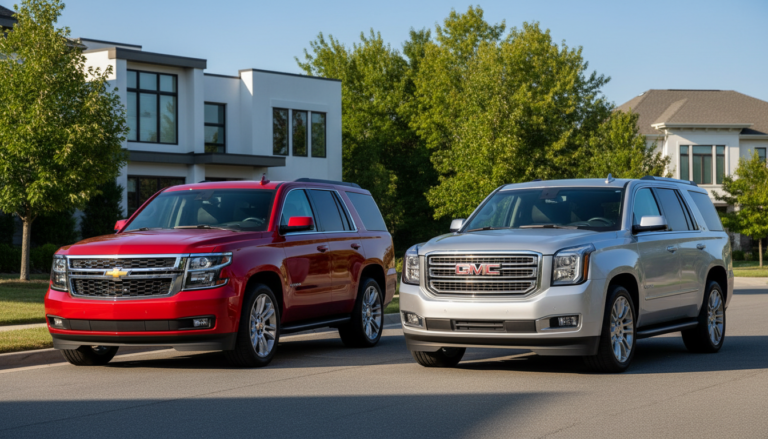
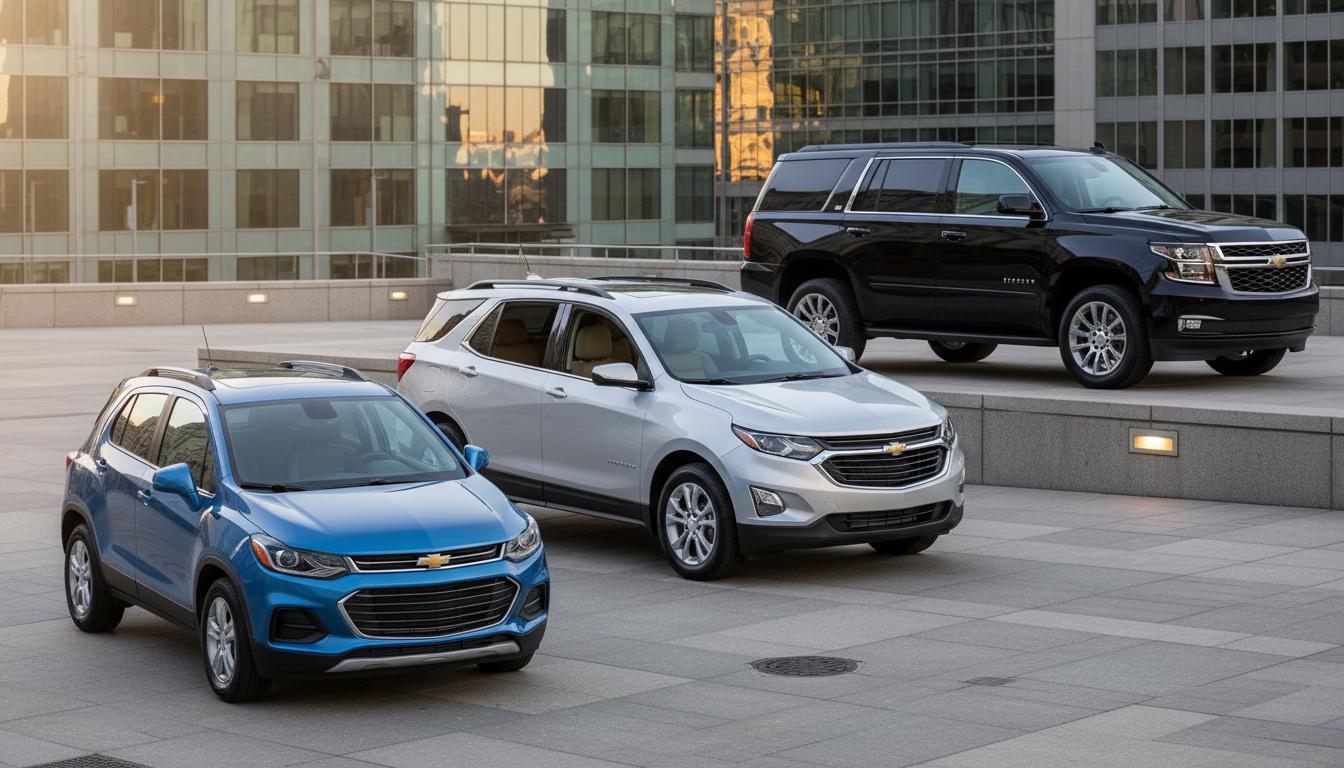
Chevy SUV Smallest to Largest Ranked by Size and Features
Navigating the 2025 Chevy SUV lineup? It spans nearly 5 feet of difference—from the city-friendly Trax to the massive Suburban.
If you need to know what fits in your garage versus what fits a hockey team, size matters. Here is the definitive smallest-to-largest breakdown by overall length:
1. Trax (Smallest)
2. Trailblazer
3. Equinox / Equinox EV
4. Blazer / Blazer EV
5. Traverse
6. Tahoe
7. Suburban (Largest)
Below, we dive into the real-world trade-offs: legroom, cargo space behind the third row, and the surprisingly tight battle between the Trax and Trailblazer.
What “Smallest to Largest” Means for a Chevy SUV Size Comparison?
This guide orders models by overall exterior length so shoppers can see how each fits real parking and garage spaces. It uses clear metrics so you judge practical usability, not just class labels.
Overall size: inches, width, and height
Length measured in inches most directly affects parking, turning radius, and garage fit. Width matters for narrow lanes and tight parking garages.
Height affects low-clearance storage and visibility when driving. Measuring all three gives a true picture of maneuverability.
Space where it counts: cargo volume and passenger capacity
Cargo volume is shown in cubic feet and answers the simple question: can I fit my gear? Shape and load-floor height change real-world usability.
Seating capacity defines daily use. A five-passenger layout suits solo commuters. Three-row models change family logistics and storage needs.
Powertrain matters: MPG vs MPGe without changing space
Gas models use MPG, electric alternatives use MPGe when comparing efficiency. Choosing an EV or gas engine usually does not force a space compromise.
Consider fuel and charging options alongside cargo and seating when you pick a model for your routine.
- How to use this page: start with length ranking, then check cargo capacity and passenger layout for your daily needs.
- Use width and height if garage fit or tight parking is a concern.
| Metric | Why it matters | Everyday impact |
|---|---|---|
| Length (inches) | Determines parking fit and turning space | Easier curb parking and garage clearance |
| Width (inches) | Tells you about lane and garage clearance | Less door dings in tight spots |
| Cargo volume (cubic feet) | Shows usable load space and shape effects | Fits bikes, strollers, or weekend gear |
| Fuel / efficiency | MPG for gas, MPGe for electric options | Running cost and range expectations |
Chevy suv smallest to largest: 2025 Chevrolet SUV lineup ranked by length
A clear length ranking helps buyers see which models fit tight city garages and which need more driveway space.
Full 2025 lineup by exterior length (inches)
- Trailblazer — 174.07 inches long
- Trax — 178.6 inches long
- Equinox — 183.2 inches long
- Equinox EV — 190.55 inches long
- Blazer — 191.8 inches long
- Blazer EV — 192.2 inches long
- Traverse — 204.5 inches long
- Tahoe — 211.3 inches long
- Suburban — 225.7 inches long
The Trailblazer is the shortest at 174.07 inches long, with the Trax close behind at 178.6 inches long. Both are strong urban choices for tight parking and narrow streets.
The Equinox represents the compact step up at 183.2 inches long. For drivers moving to electric, the Equinox EV stretches to 190.55 inches long, adding road presence without jumping a full size class.
Blazer and Blazer EV sit in midsize territory and are nearly identical in exterior length — 191.8 vs 192.2 inches long — showing how powertrain choice can change propulsion without large footprint shifts.
| Tier | Model | Length (inches) |
|---|---|---|
| Small | Trailblazer / Trax | 174.07 / 178.6 |
| Compact | Equinox / Equinox EV | 183.2 / 190.55 |
| Midsize | Blazer / Blazer EV | 191.8 / 192.2 |
| Three-row midsize | Traverse | 204.5 |
| Full-size | Tahoe / Suburban | 211.3 / 225.7 |
Traverse marks the three-row midsize pivot at 204.5 inches long. Move up from there and Tahoe and Suburban offer full-size room: 211.3 and 225.7 inches long, respectively, for maximum cargo and passenger space.
What to do next: once a size tier is identified, compare cargo volume, seating layout, and efficiency to match the model with daily needs.
Small Chevy SUVs for city driving: Trailblazer vs Trax
When curb cuts and narrow spots rule your route, these two compact models make daily life easier. Both aim at city drivers who need easy parking and usable hauling without stepping up a size class.
Chevrolet Trailblazer dimensions, seating, and max cargo capacity
chevrolet trailblazer measures 174.07 in long, 71.2 in wide and 64.2 in tall. It seats five and offers a 54.4 cubic feet max cargo capacity—enough for groceries, a stroller, and weekend bags.
Chevrolet Trax dimensions, seating, and max cargo capacity
chevrolet trax is slightly longer at 178.6 in, with a width of 71.8 in and height 61.42 in. It also seats five and delivers 54.1 cubic feet of max cargo—nearly identical hauling ability.
Trailblazer vs Trax: which fits tight spaces and daily cargo?
The shorter Trailblazer reduces parking stress. The Trax’s extra length feels more planted on faster roads. Both match city needs for cargo and passenger capacity.
- Decision rule: pick parking constraints first, then driving feel and features.
- Use cases: groceries + stroller, gym gear, small DIY runs, or two checked bags at the airport.
| Metric | Trailblazer | Trax |
|---|---|---|
| Length | 174.07 in | 178.6 in |
| Max cargo capacity | 54.4 cubic feet | 54.1 cubic feet |
| Seating | 5 | 5 |
Compact Chevy SUVs: Equinox vs Equinox EV for balanced space and efficiency
Buyers who want more room without moving into full midsize territory will find these two models hit the sweet spot. This section compares usable cargo and real-world efficiency so you can pick the one that fits daily life.

Chevrolet Equinox cargo space and footprint
The gas Equinox measures 183.2 inches long and seats five. It offers a 63.5 cubic feet max cargo capacity, a clear advantage for weekend gear and grocery runs.
Equinox EV dimensions and cargo volume
The Equinox EV is longer at 190.55 inches and also seats five. Its max cargo is 57.2 cubic feet, showing a modest packaging tradeoff for electric hardware.
Fuel vs electric efficiency
Gas models rate about 26/28/27 MPG (city/highway/combined). The EV shows 117/99/108 MPGe. MPGe expresses energy use for electric vehicles so you can compare running cost with MPG figures.
Best-use scenarios and quick decision framework
- Commuting: pick the EV if you have reliable charging and want lower running cost.
- Small family needs: gas Equinox gives the largest cargo capacity for strollers and weekend bags.
- Weekend gear: choose based on whether cargo capacity or efficiency matters more.
| Model | Length (in) | Max cargo (cu ft) | Efficiency |
|---|---|---|---|
| Equinox | 183.2 | 63.5 | 26/28/27 MPG |
| Equinox EV | 190.55 | 57.2 | 117/99/108 MPGe |
Midsize Chevy SUVs: Blazer vs Blazer EV vs Traverse for more passenger and cargo space
Midsize models sit between compact agility and full-size bulk. They give more shoulder room and cargo capability without the parking headaches of a larger vehicle.
Chevrolet Blazer dimensions and cargo capacity
The chevrolet blazer measures 191.8 inches long and seats five. It offers a useful 64.2 cubic feet max cargo capacity for road trips and Costco runs.
Chevrolet Blazer EV dimensions and cargo volume
The chevy blazer EV is nearly the same length (192.2 inches) but has different packaging and a wider stance. Max cargo volume is 59.1 cu ft, trading a bit of load room for electric hardware.
Traverse as the big midsize option
The chevrolet traverse is the long-bodied midsize step at 204.5 inches. It seats 7–8 and unlocks up to 98 cubic feet of cargo, making it a true family hauler.
- Two-row choice: Blazer or Blazer EV for simpler daily loading and sportier feel.
- Three-row choice: Traverse when family carpools, third-row use, and max cargo capacity matter.
| Model | Length (inches) | Seating | Max cargo (cu ft) |
|---|---|---|---|
| Chevrolet Blazer | 191.8 | 5 | 64.2 |
| Blazer EV | 192.2 | 5 | 59.1 |
| Chevrolet Traverse | 204.5 | 7–8 | 98 |
Chooser: pick a sporty two-row midsize for easier daily driving and loading. Choose the three-row traverse for family logistics and frequent passenger carrying.
Full-size Chevy SUVs: Tahoe vs Suburban for maximum cargo capacity and family hauling
Choosing a full-size model often comes down to how much luggage and legroom you need for longer journeys. Both the chevrolet tahoe and chevrolet suburban seat seven to eight and focus on three-row comfort. The main difference is length and usable cargo behind row three.
Tahoe: big capacity without the extra length
The chevrolet tahoe measures 211.3 inches long, seats 7–8, and offers 122.7 cubic feet of max cargo. It suits buyers who want abundant space while keeping parking and maneuvering easier than the longest models.
Suburban: class-leading cargo volume for long trips
The chevrolet suburban stretches to 225.7 inches long and delivers a class-leading 144.5 cubic feet of max cargo capacity. That extra room makes a clear difference for coolers, strollers, and multiple suitcases when the third row stays in use.
Which fits your needs and trims to consider?
- Needs rule: choose Tahoe for easier driveway and garage fit; choose Suburban for frequent long trips or larger households.
- Trim impact: higher trims, including High Country, add luxury, towing upgrades, and advanced tech that change comfort and hauling expectations.
- Practical step: measure garage depth and typical passenger+cargo loads before deciding.
| Model | Length (inches) | Seating | Max cargo (cu ft) |
|---|---|---|---|
| Chevrolet Tahoe | 211.3 | 7–8 | 122.7 |
| Chevrolet Suburban | 225.7 | 7–8 | 144.5 |
| Trim to watch | High Country (luxury + towing tech) | Improved comfort and towing features | |
Conclusion
This wrap-up shows how exterior length quickly narrows the right model tier for everyday parking and hauling.
From Trailblazer and Trax up through Equinox, Blazer, Traverse, Tahoe and Suburban, the suv lineup ranks neatly by inches and real cargo numbers. Use length first, then confirm seating (five vs. seven–eight) and cargo capacity.
If you drive mainly in the city, pick the compact choices. Balanced shoppers lean compact models. Growing families move to three-row models. Heavy haulers pick full-size options for max room and towing.
Fuel choice is layered on top: treat gas vs EV as an efficiency decision after you lock the right size. Measure your garage in inches and use this guide as a checklist when test-driving trims and configurations.
FAQ
How does “smallest to largest” affect real-world parking and maneuverability?
Overall length, width, and height determine how easy a model is to park and navigate in tight spaces. Shorter wheelbases and under-180-inch lengths like the Trailblazer and Trax make urban parking and narrow streets easier, while longer models such as Tahoe and Suburban need wider garages and larger parking spots. Check turning radius and curb-to-curb dimensions for precise guidance.
What cargo volume and passenger capacity should I prioritize for family use?
Prioritize cubic feet of cargo behind second and third rows plus total seating. Compact models offer around 50–65 cubic feet max and seat 5. Midsize three-row models like the Traverse provide up to about 98 cubic feet and seat 7–8. Full-size SUVs like the Tahoe and Suburban deliver the most room — over 120 to 144 cubic feet — for long trips and bulky gear.
Do electric versions change interior space or cargo capacity?
EV powertrains can alter cargo layout slightly due to battery placement. For example, Equinox EV and Blazer EV show modest differences in max cargo volume versus their gas counterparts. Overall passenger seating usually stays similar, but always compare published cubic feet figures when choosing between gas and electric models.
Between Trailblazer and Trax, which fits tight city parking while still carrying daily cargo?
Both are built for city life with compact footprints and similar max cargo around the mid-50s cubic feet. The Trailblazer is the shorter model, often easier for tight spots. If you need slightly more interior flexibility, compare rear-seat folding options and actual cargo-sill heights before deciding.
How do Equinox and Equinox EV compare for commuting and weekend gear?
The gas Equinox offers larger max cargo capacity and a slightly smaller footprint than the EV, while the Equinox EV trades some cargo volume for electrified range and a higher MPGe figure. Choose the gas model for maximum cargo, the EV for lower operating cost and instant torque—match trim features to your commute and weekend needs.
When should I choose Blazer, Blazer EV, or Traverse for passenger comfort and cargo?
Choose the Blazer for a sporty five-passenger midsize with about mid-60s cubic feet max cargo. Pick the Blazer EV for similar passenger space but electric efficiency and slightly different cargo numbers. Opt for the Traverse when you need true three-row capacity—seating for 7–8 and roughly up to 98 cubic feet for maximum family hauling.
Tahoe vs Suburban: which is better for long road trips and hauling equipment?
Suburban leads on cargo volume and overall length, offering the most room for luggage and long-trip comfort. Tahoe is a bit shorter but still seats 7–8 and provides substantial cargo (over 120 cubic feet). If you often carry lots of gear plus passengers, Suburban is the top choice; Tahoe balances size with easier handling.
How do trims like High Country affect interior space and features?
High Country and similar premium trims primarily add luxury features, technology, and materials rather than increase cargo volume. Dimensions remain the same across trims, so choose a higher trim for comfort and advanced driver aids, but compare standard and optional equipment lists to ensure you get the features you need.