Chevy Suburban vs Tahoe: Which SUV is Right for You?
We help drivers choose between two closely related full-size SUVs that share engines and basic hardware. The main choice comes down to size, day-to-day space and price.
Expect the real differences to show in parking, cargo room, and your budget rather than in how they drive. It will look at exterior dimensions, interior and cargo cubic feet, seating layouts, engine options, infotainment and safety tech, and trim pricing.
Think about your use case: a daily commute, school carpools, long road trips, or camping and towing on weekends. That will make one model fit your life better than the other.
Headline takeaway: the longer model usually wins for cargo and long-haul versatility, while the shorter one often wins for maneuverability and value. All numbers shown are U.S.-market (MPG, gallons, MSRP) and may vary by model year and package.
Quick Snapshot: Tahoe Suburban Similarities and Key Differences
These two full-size SUVs are built on the same foundations, so ownership feels familiar whether you choose the shorter or longer model. They share underpinnings, styling cues, and the same engine choices across many trims. That means similar driving position, tech layout, and core features for most buyers.
What links them: a common platform, similar interior design, and matching powertrains give both models a near-identical driving character. The equipment list often overlaps depending on trim level.
- Daily differences two shoppers notice: overall size, usable space, and a price step expect the larger model to cost roughly $3,000 more on comparable trims.
- Calling the Suburban the “longer Tahoe” is accurate in footprint, but the extra length changes parking, turning radius, and cargo habits.
- Who should lean which way: for easier maneuvering and value, pick the shorter model; for more cargo and long-haul flexibility, pick the larger one.
First exterior size, then interior cubic feet, seating practicality, power and MPG, and finally trims and cost.
Chevy suburban vs Tahoe Size Comparison: Wheelbase, Length, and Maneuverability
Length and wheelbase shape parking, cargo space, and how the vehicle behaves on tight streets.
Wheelbase is the distance between the front and rear axles. It affects ride smoothness, turning radius, and where interior room appears.
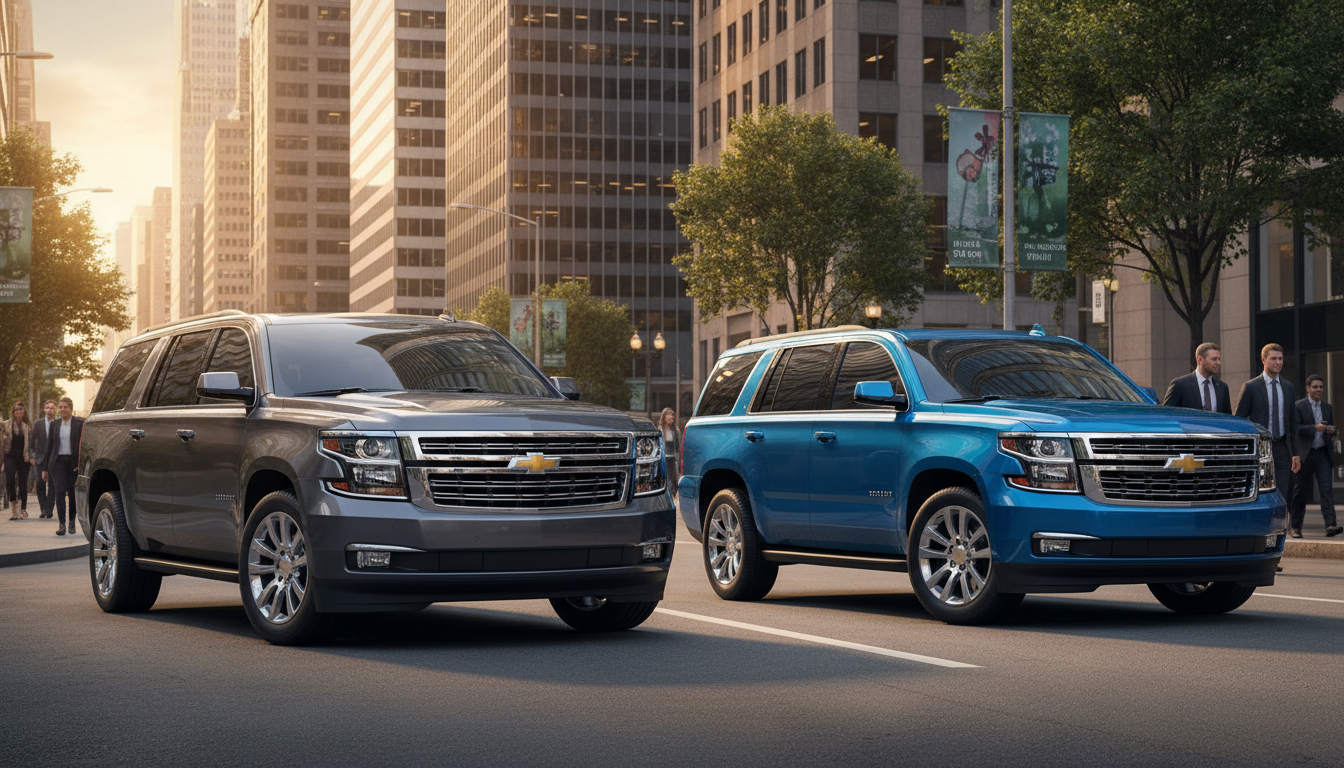
The longer model adds 15 inches to overall length and stretches the wheelbase by 13.2 inches. That extra length moves usable cargo and third-row space rearward.
Spotting and real-world tradeoffs
- The easiest exterior tip: look for the longer rearmost side window it signals the extended cargo area.
- Parking lot test: more rear swing when backing, and a longer body needs more garage depth to fit safely.
- Driving feel: the shorter model feels easier to tuck into tight spots; the longer tahoe feel rewards haul and range.
| Dimension | Shorter model | Longer model |
|---|---|---|
| Overall length | Standard | +15 inches |
| Wheelbase | Standard | +13.2 inches |
| Practical effect | Easier maneuvering | More cargo room, larger turning circle |
Interior Space and Cargo: Cubic Feet That Matter for Families and Road Trips
Interior cargo numbers tell the real story of how a full-size SUV performs for family life and weekend trips.
Third-row comfort
Small gains matter: the longer model adds about 1.8 inches legroom in the third row. That extra inches can make a real difference for teens and occasional adult passengers on long drives.
Daily cargo usability
With three rows up, trunk volume is the number that decides daily convenience. One model offers 42 cubic feet behind the third row while the shorter sibling provides 26 cubic feet.
Real-stuff translation: 42 cubic feet is enough for a stroller plus groceries, or two coolers and duffels, without folding seats. That kind of cargo space means less unpacking and better access while carrying passengers.
Max capacity for trips and projects
Fold the seats and the larger version reaches 145 cubic feet of max cargo. The shorter one tops out near 123 cubic feet. That extra cubic capacity helps for moving day or extended road trips.
- Rule of thumb: if the third row stays up most days, behind third row volume is the key number to compare.
- More rear space reduces the need for roof boxes and keeps gear within easy reach without blocking rearview sightlines.
| Measure | Larger model | Shorter model |
|---|---|---|
| Third-row legroom (approx) | +1.8 inches | Standard |
| Cargo behind third row | 42 cubic feet | 26 cubic feet |
| Max cargo (seats folded) | 145 cubic feet | 123 cubic feet |
Seating, Rows, and Passenger Capacity: Finding the Right Setup
Seating layout and row access shape daily routines like school runs and road trips. Choose the right setup and the vehicle fits family life with less fuss.
Common seating options
Buyers can pick seven- or eight-passenger layouts. A seven-passenger setup uses second-row captain’s chairs for easier walk-through to the third row.
An eight-passenger layout fits a full second-row bench for three-across seating. Some trims offer a three-person front bench, raising capacity to nine passengers but changing console and front comfort.
Second-row choices and daily use
Captain’s chairs make third-row access simpler and reduce seat folding during school drop-offs. A bench gains one extra seat across the second row and helps when three kids must sit abreast.
Car-seat practicality and anchors
LATCH anchors are most useful in the second row for regular child-seat installs. Tether anchors exist in multiple positions, but exact placement varies by trim and option packages.
| Setup | Seats | Best for |
|---|---|---|
| 7-passenger | Captain’s chairs + 3rd row | Ease of access, family comfort |
| 8-passenger | Second-row bench + 3rd row | Three-across second row, more passengers |
| Up to 9 | Front bench option | Maximum passengers, less front console space |
Bottom line: both models in the tahoe suburban family share similar seat designs and LATCH setups. The final choice comes down to how much space you need behind the third row and how often you move passengers between rows in daily life.
Engines, Towing-Ready Power, and MPG Compared
For many buyers, the engine lineup defines towing confidence, highway manners, and how often you stop for fuel. Start with the standard 5.3L V‑8, which delivers 355 hp and 383 lb-ft of torque. It offers solid merging and passing ability, even when the vehicle is loaded with passengers and gear.
Available upgrades
The optional 6.2L V‑8 boosts output to 420 hp and 460 lb-ft for stronger acceleration and towing assurance. A 3.0L turbo‑diesel inline‑six is the efficiency choice, improving highway mpg for long trips and heavy-mile drivers.
Transmission and drivetrains
A 10‑speed automatic is standard across the lineup. Rear‑wheel drive is the default; four‑wheel drive is an available option for slippery roads and rough trails. The Z71 package emphasizes 4WD hardware and off‑road-ready suspension for buyers who visit trailheads often.
Fuel economy and real-world range
Fuel economy ranges roughly from about 16 mpg combined with 4WD and the 6.2L, up to about 24 mpg combined with a 2WD diesel setup. That spread makes engine choice meaningful for long highway runs.
| Powertrain | Power / Torque | Combined MPG (approx) |
|---|---|---|
| 5.3L V‑8 (standard) | 355 hp / 383 lb-ft | Mid-teens to low-20s |
| 6.2L V‑8 (optional) | 420 hp / 460 lb-ft | Around 16 mpg (4WD) |
| 3.0L Turbo‑diesel (optional) | Efficient I‑6 | Up to about 24 mpg (2WD) |
Road-trip planners: the shorter model carries a 24‑gallon tank while the longer model holds 28 gallons. With similar mpg, the larger tank reduces fuel stops on long drives.
Towing note: match engine choice to trailer weight, terrain, and towing frequency. The 6.2L suits heavy or frequent towing; the diesel balances efficiency and highway range. Check the vehicle’s max tow rating for your trailer before finalizing the purchase.
Infotainment System, Safety Tech, and Comfort Features
Cabin tech now plays a leading role in how drivers judge comfort and convenience on long trips.
Both models share most cabin systems, so trim choice matters more than nameplate when it comes to screens and options.
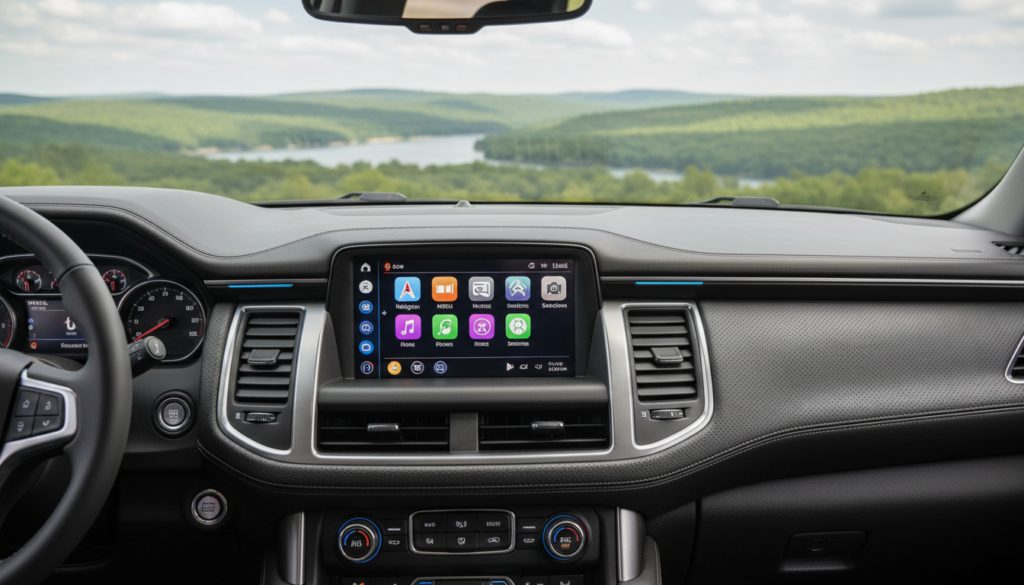
Display progression by trim
Entry trims use an 8.0-inch touchscreen as the base infotainment system. Move up and you get a 10.2-inch center display paired with a 12.0-inch digital gauge cluster on higher trims.
Usability and everyday value
Larger screens improve quick inputs, clearer backup-camera views, and easier audio control while driving. That can reduce distraction on the highway and in busy parking areas.
Driver assist and comfort highlights
Available Super Cruise offers hands-free highway driving where offered, which cuts fatigue on long interstate runs.
Important: driver assist supplements attentive driving and availability varies by trim and year.
- Higher trims add heated second-row seats, heated steering wheel, and premium audio.
- Pick the trim with the tech you’ll use daily for best value.
| Item | Base | Higher trims |
|---|---|---|
| Center screen | 8.0-inch | 10.2-inch |
| Cluster | Analog / basic | 12.0-inch digital |
| Notable features | Standard infotainment | Super Cruise, heated seats, upgraded audio |
Trim Levels, High Country Luxury, and Starting Price Differences
Trim choice defines how much luxury, capability, and storage you get for the money. The lineup runs LS, LT, RST, Z71, Premier, and High Country. Each step adds targeted gear: value, sport appearance, off-road hardware, or premium comfort.
What each trim means in plain English?
- LS / LT: core content and the best starting value.
- RST: sport styling and bolder looks.
- Z71: off-road suspension, skid plates, and traction upgrades.
- Premier / High Country: leather, advanced driver assists, and premium audio.
Pricing is consistent: the chevrolet tahoe typically starts about $3,000 less than the chevrolet suburban on comparable trims. Example MSRPs (2023): Tahoe LS $56,095 vs Suburban LS $59,095; Tahoe High Country $76,795 vs Suburban High Country $79,295.
| Trim | Focus | 2023 MSRPs (example) |
|---|---|---|
| LS | Value / basic features | Tahoe $56,095 • Suburban $59,095 |
| Z71 | Off-road gear | Mid-range pricing; add underbody protection |
| High Country | Top luxury features | Tahoe $76,795 • Suburban $79,295 |
What you buy with the Suburban price step: extra inches of body length and real cargo cubic feet for long trips and hauling. Prioritize safety and comfort features first, then choose between the two models based on daily storage needs.
Smart shoppers in the U.S. should watch incentives, dealer options, and local inventory they can erase or widen the starting price difference more than MSRP alone.
Conclusion
When choosing between these two full-size SUV options, the real decision rests on daily cargo and passenger needs rather than engines or tech.
Both deliver the same core vehicle experience. Focus on how often you carry three rows of passengers and how much trunk space you need behind the third row.
Profile: easier daily use the shorter model suits buyers who want big‑SUV capability with simpler parking and tighter turns.
Profile: more cargo room the longer model fits families that need extra space for strollers, gear, or luggage and value the added inches behind the third row.
Before you buy, park both in your usual spot, load real gear, and practice third‑row access. Once space needs are clear, trim and option choices become a straightforward next step.
FAQ
What are the main differences in size and wheelbase between the two full-size SUVs?
One model is longer by about 15 inches and rides on a wheelbase roughly 13.2 inches longer. That extra length translates into more rear-cargo space and slightly better third-row legroom, but it also increases the turning radius and can make urban parking and tight trails less convenient.
How much third-row legroom and cargo space behind the third row do each offer?
The extended-body model provides roughly 1.8 inches more third-row legroom. Cargo behind the third row is about 42 cubic feet in the longer version versus around 26 cubic feet in the shorter one, making the larger SUV noticeably more practical for strollers, coolers, and luggage.
What is the maximum cargo capacity with seats folded?
When you fold the rear seats the elongated version reaches about 145 cubic feet of cargo volume, while the shorter-bodied sibling tops out near 123 cubic feet. That extra capacity benefits long trips and hauling bulky items.
How many passengers can these SUVs carry and what seating layouts are available?
Both support seven- or eight-passenger configurations depending on second-row choices (captain’s chairs or bench). A front bench is available on some trims to enable up to nine seats. Families should weigh second-row access and aisle space when choosing between captain’s chairs and a bench.
What engines and drivetrains are offered and how do they affect MPG and towing?
The standard V-8 is a 5.3L that balances power and everyday drivability. Upgrades include a 6.2L V-8 and a 3.0L turbo-diesel inline-six. All pair to a 10-speed automatic; rear-wheel drive is standard with four-wheel-drive optional, and off-road Z71 packages are available. Fuel economy ranges roughly from the mid-teens combined with the 6.2L 4WD up to low-20s combined with the 2WD diesel. Fuel-tank sizes differ too, with the shorter-bodied SUV having a smaller tank than the longer-wheelbase model, affecting driving range.
What infotainment, safety, and comfort features separate trims?
Base trims start with an 8.0-inch touchscreen; higher trims add larger displays, premium audio, and upgraded climate controls. Available driver-assist tech includes adaptive cruise systems and, on certain trims, hands-free highway driving. Higher-level packages bring heated/ventilated seats, wireless charging, and larger navigation screens.
How do trim levels and pricing compare between the two and what does the price premium buy?
Both share the same trim ladder—LS, LT, RST, Z71, Premier, and High Country—but the longer-body model typically starts about ,000 higher than the shorter one at comparable trims. That premium pays for the extended wheelbase, added inches of third-row room, and greater cargo volume, useful for buyers who prioritize passenger comfort and long-haul utility.