
Chevy S10 Bolt Pattern (1982-2004): Lug Pattern & Wheel Specs Guide
Finding the correct Chevy S10 bolt pattern is essential for safe wheel upgrades and replacements. This comprehensive guide covers wheel fitment specs, lug patterns, center bore dimensions, and offset details to help S10 owners choose compatible rims and avoid costly fitment mistakes.
Whether you’re searching for a 1989 Chevy S10 lug pattern, 2000 Chevy S10 bolt pattern, or 2003 S10 wheel bolt pattern, this guide has you covered. The S10 bolt pattern remained consistent across many model years, making wheel swaps and upgrades straightforward once you know the specs.
Late-model S10s (1998–2003) typically use a 5×4.75 inch (5×120.7 mm) layout. This spec is commonly referred to as the Chevy S10 wheel bolt pattern, Chevy S10 lug pattern, or Chevy S10 rim bolt pattern. Earlier models from 1982–1997 used different configurations depending on whether they were 2WD or 4WD.
Typical OE wheel sizes for S10 trucks range from 14 to 16 inches. Common rim sizes include 7Jx15 and 8Jx16. Many 2000 S10s have a center bore near 70.3 mm, original wheel threads of M12 x 1.5, and a recommended tightening torque of approximately 129 Nm (95 ft-lb).
The following sections will clarify bolt pattern terminology, show how to measure a 5-lug wheel correctly, and explain offset, backspacing, spacers, and hub-centric fit. This information helps readers safely choose compatible rims, spacers, or adapters.
Understanding Wheel Bolt Patterns and Why They Matter?
Proper wheel fitment begins with understanding the bolt pattern—the number of lug holes multiplied by the diameter of the circle they form. For example, a five-lug wheel is listed as 5×4.75 inches or 5×120.7 mm when using PCD notation. This is the standard S10 wheel bolt pattern found on most models.
PCD stands for Pitch Circle Diameter and is commonly used on fitment charts to convert metric specs to inch-based measurements. The center bore (or hub bore) is another critical dimension that ensures proper wheel seating on the hub.
Using the correct S10 wheel lug pattern is essential for safety. An incorrect pattern can cause improper seating, leading to wheel wobble, uneven tire wear, and potentially dangerous wheel separation while driving.
The correct bolt pattern distributes the vehicle’s load evenly across all mounting points. This is particularly important for trucks like the S10 that carry cargo or tow trailers, where steady braking and steering response are critical.
Common Chevy Bolt Patterns
| Pattern | Metric Equivalent | Common Applications |
|---|---|---|
| 5×4.75″ | 5×120.7 mm | S10, Camaro, S10 Blazer |
| 5×5″ | 5×127 mm | Certain Blazer and Caprice years |
| 6×5.5″ | 6×139.7 mm | Colorado, Avalanche, Express light-duty |
| 8×6.5″ | 8×165.1 mm | Heavy-duty Express, larger Avalanche |
For S10 owners, the Chevy S10 stud pattern is just as important as bolt spacing. Stud length, thread pitch, and hub bore all affect whether a wheel can be safely reused or swapped.
Chevy S10 Bolt Pattern by Model Year
One of the most common questions S10 owners ask is “What lug pattern is a S10?” The answer depends on the model year and drivetrain configuration. Below is a comprehensive breakdown of the Chevrolet S10 bolt pattern across different generations.
1982–1993 S10 Models (First Generation)
The first-generation S10 used different bolt patterns depending on the drivetrain:
- 2WD Models: 5×4.75″ (5×120.7 mm)
- 4WD Models: 6×5.5″ (6×139.7 mm)
If you’re searching for a 1989 S10 bolt pattern, 1990 S10 bolt pattern, 1992 S10 bolt pattern, or 1993 S10 bolt pattern, first confirm whether your truck is 2WD or 4WD. The 1989 S10 lug pattern for 2WD models matches the 5×4.75″ specification, while 4WD versions use the larger 6-lug pattern.
The same applies to the 1990 Chevy S10 bolt pattern and 1990 Chevy S10 lug pattern—verify your drivetrain before ordering wheels.
For mid-80s trucks, the 87 S10 bolt pattern and 87 S10 lug pattern follow this same 2WD/4WD split. Always measure or check your VIN to confirm.
1994–2004 S10 Models (Second Generation)
The second-generation S10 standardized the bolt pattern for most configurations:
- 2WD and 4WD Models: 5×4.75″ (5×120.7 mm)
This means the 95 S10 bolt pattern, 95 Chevy S10 bolt pattern, 96 S10 bolt pattern, 98 S10 bolt pattern, and later models all share the same 5-lug configuration. The 93 S10 bolt pattern bridges both generations but typically follows the same pattern based on drivetrain.
Late Model S10 Bolt Patterns (1998–2003)
For owners of late-model trucks, here are the specific patterns:
| Model Year | Bolt Pattern | Notes |
|---|---|---|
| 1998 Chevy S10 wheel bolt pattern | 5×4.75″ | Standard across trims |
| 1999 Chevy S10 bolt pattern | 5×4.75″ | Includes 1999 Chevy S10 lug pattern |
| 2000 Chevy S10 bolt pattern | 5×4.75″ | See 2000 S10 bolt pattern details below |
| 2001 S10 bolt pattern | 5×4.75″ | Same as 01 S10 bolt pattern, 2001 S10 wheel bolt pattern, 2001 S10 lug pattern |
| 2002 Chevy S10 bolt pattern | 5×4.75″ | Includes 2002 S10 bolt pattern, 2002 S10 wheel bolt pattern, 2002 S10 lug pattern |
| 2003 Chevy S10 bolt pattern | 5×4.75″ | Also 03 S10 bolt pattern, 03 Chevy S10 bolt pattern, 2003 S10 bolt pattern, 2003 Chevy S10 lug pattern |
The Chevy S10 bolt pattern 5 lug configuration and Chevy S10 5 lug bolt pattern remained consistent throughout this era, making wheel interchangeability straightforward.
S10 Blazer Bolt Pattern
The S10 Blazer lug pattern mirrors the standard S10 pickup:
- 2WD S10 Blazer: 5×4.75″ (5×120.7 mm)
- 4WD S10 Blazer: 6×5.5″ (6×139.7 mm) for earlier models
The 2000 Chevy Blazer wheel bolt pattern for 2WD models matches the 2000 S10 wheel bolt pattern exactly, allowing wheel sharing between these vehicles.
2000 Chevy S10 Wheel Specifications and OE Fitment
The 2000 Chevy S10 wheel bolt pattern is 5×4.75″ (5×120.7 mm), consistent with other late-model S10 trucks. The 2000 model year offered several factory wheel options varying by trim level and configuration.
Factory Wheel Specifications
Understanding the 2000 S10 lug pattern and related specs helps ensure proper aftermarket wheel selection:
| Specification | Common Value | Notes |
|---|---|---|
| Bolt Pattern | 5×4.75″ (5×120.7 mm) | Standard 2000 S10 wheel bolt pattern |
| Wheel Diameters | 14″ – 16″ | Varies by trim |
| Common Rim Sizes | 7Jx15 (ET13), 8Jx16 (ET−6.4) | 7–8 inch widths typical |
| Center Bore | ~70.3 mm | Hub-centric fit critical |
| Thread Size | M12 x 1.5 | Standard lug thread |
| Tightening Torque | 129 Nm (95 ft-lb) | Verify in service manual |
| OE Tire Sizes | 205/75R15, 235/55R16 | Match to rim and load rating |
When searching for the 2000 Chevy S10 bolt pattern or 2000 S10 bolt pattern, these specs apply across most trim levels. The S10 5 lug pattern configuration makes finding compatible wheels relatively easy.
Center Bore and Thread Details
Center bore dimensions are critical for hub-centric mounting. The approximately 70.3 mm center bore on 2000 S10s determines whether hub-centric rings are needed to prevent vibration.
Thread size (M12 x 1.5) and recommended torque (129 Nm / 95 ft-lb) are essential for safe wheel mounting. Always verify these figures against your service manual before installation.
How to Measure Your Chevy S10 Lug Pattern Accurately?
Measuring the S10 wheel pattern correctly prevents fitment issues and ensures wheel safety. Whether you’re verifying a Chevy S10 wheel pattern or confirming specs for an aftermarket purchase, accurate measurement is essential.
Tools Required
- Tape measure or ruler for quick measurements
- Calipers for precise millimeter readings
- Wheel removal tools (if measuring on the hub)
- Marker to identify hole centers
Step-by-Step Measurement for 5-Lug Wheels
Understanding the bolt pattern for S10 trucks requires proper measuring technique:
- Clean the lug area so hole edges and centers are clearly visible.
- Mark the center of any one lug hole with a small dot.
- Measure from center to outer edge of the lug hole directly across the circle (this is the correct method for 5-lug patterns).
- Record the distance in both inches and millimeters.
- Convert to standard notation: number of lugs × circle diameter (example: 5×4.75″ or 5×120.7 mm).
- Use calipers for tight tolerances and compare results to a PCD chart.
Common Measurement Mistakes
| Mistake | Problem | Solution |
|---|---|---|
| Edge-to-edge measurement | Incorrect PCD reading | Measure center-to-opposite-edge for 5-lug patterns |
| Angled measurement | Skewed results | Keep tape/calipers aligned with wheel center plane |
| Visual comparison only | Assumes similar-looking wheels match | Always measure—some Chevy models look similar but have different PCDs |
When verifying the bolt pattern on Chevy S10 trucks, note both lug count and circle diameter. The bolt pattern Chevy S10 uses is consistent across most late-model years, but always confirm with measurement.
Chevy S10 Wheel Fitment Factors Beyond Bolt Pattern
Knowing the Chevy S10 rims bolt pattern is just the starting point. Proper fitment also depends on offset, backspacing, and center bore dimensions. These factors affect clearance, track width, and handling characteristics.
Wheel Offset and Clearance
Offset (ET) measures how far the wheel’s mounting surface is from its centerline:
- Positive offset: Moves the wheel inward toward suspension components
- Negative offset: Pushes the wheel outward toward the fender
When selecting wheels based on the S10 wheels bolt pattern, consider that changing offset affects track width and fender clearance. Extreme negative offset can cause fender rubbing at full steering lock, while excessive positive offset may interfere with brake calipers or suspension arms.
Backspacing and Suspension Clearance
Backspacing—measured from the mounting surface to the wheel’s inner edge—determines proximity to brakes and suspension components. When shopping for wheels matching the bolt pattern for Chevy S10 trucks, compare OE backspacing to aftermarket wheel specs.
Center Bore and Hub-Centric Rings
The center bore must match or exceed the hub diameter for proper seating. If an aftermarket wheel’s center bore is larger than the hub (~70.3 mm on many S10s), use hub-centric rings to center the wheel and eliminate vibration.
Key fitment considerations:
- Check ET and backspacing together for final stance and clearance
- Use hub-centric rings when center bore is oversized
- Verify brake caliper clearance with larger diameter wheels
Choosing Rims and Custom Wheels for Your S10
Selecting aftermarket wheels requires balancing aesthetics with proper fitment. Understanding the Chevy S10 rims bolt pattern specifications helps narrow your search to compatible options.
Material Options: Alloy vs Steel
| Material | Advantages | Disadvantages |
|---|---|---|
| Alloy | Lighter weight, better styling options, improved heat dissipation | Higher cost, more susceptible to damage |
| Steel | Durable, affordable, good for harsh conditions | Heavier, limited style options |
Recommended Sizes for Safe Fitment
Factory S10 wheels range from 14″ to 16″ diameter with 7–8 inch widths. When upgrading, stay within recommended ranges to maintain speedometer accuracy and proper tire fitment.
Upsizing to 17″, 18″, or larger diameters requires careful attention to offset, backspacing, and potential brake/suspension modifications. Always verify the S10 wheel bolt pattern matches before purchasing.
Lug Nut Compatibility
Matching stud thread size and lug seat profile is critical. Most S10s use M12 x 1.5 threads. Verify lug type (conical, ball, flat) matches your wheel requirements.
Using Wheel Spacers and Adapters on a Chevy S10
Spacers and adapters can solve minor fitment issues without purchasing new wheels. They’re useful for clearing brake calipers, widening track, or adjusting stance.
When Spacers Are Needed?
- Rims sit too close to inner fenders or suspension
- Installing deep-dish or wider wheels
- Fine-tuning offset after lift or lowering modifications
Compatibility Requirements
Ensure spacers match the Chevy S10 rim bolt pattern (5×4.75″) for correct lug alignment. Use hub-centric spacers matching the hub bore diameter. Avoid adapters that change lug count without proper load rating verification.
Safety Considerations
- Choose vehicle-specific spacers rated for automotive loads
- Torque all fasteners to manufacturer specifications
- Retorque after 50–100 miles of driving
- Verify sufficient stud thread engagement
Wheel Interchangeability and Common Bolt Pattern Swaps?
The Chevy S10 bolt pattern matches several other Chevrolet vehicles, opening up wheel swap possibilities. Understanding Chevy S10 wheel interchange options helps find unique or cost-effective wheel solutions.
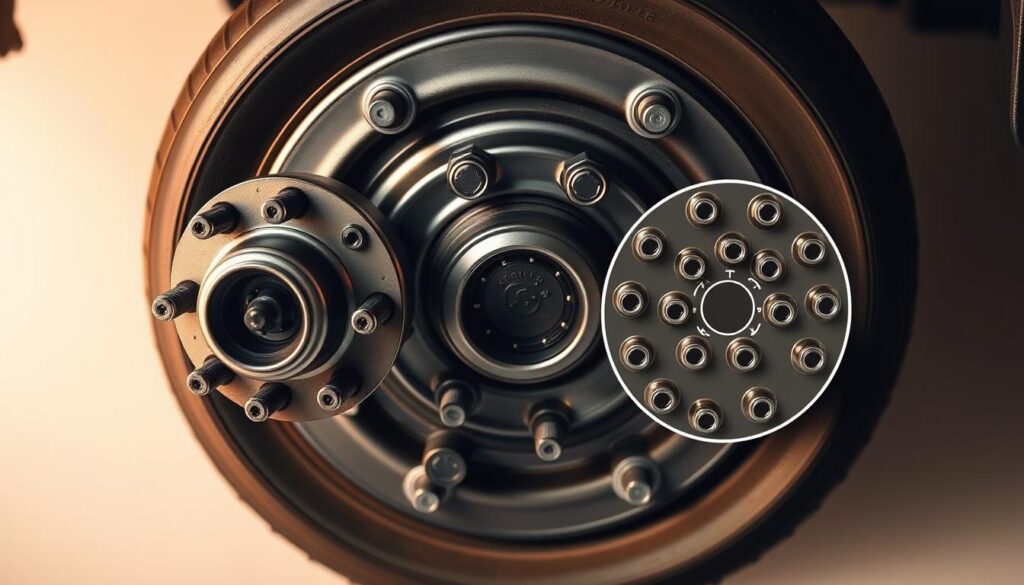
Which Chevrolet models share this 5×4.75 pattern?
Many Chevrolet cars and trucks have the same 5-lug, 4.75–4.8″ pattern. Older Camaro and some Corvette wheels might fit the S10. But, always check the offset and center bore before mounting.
Years and trims to watch for different lug counts or PCDs
Chevrolet changed lug counts and PCDs over the years. Some Blazer, Jimmy, and Express models went to 6-lug (6×5.5″) or 8-lug for heavy-duty use. Classic Caprice and Impala years used 5×5″ patterns. Always check the PCD and lug count before swapping wheels.
Vehicles Sharing the 5×4.75″ Pattern
Several Chevrolet models share the S10’s 5-lug pattern:
- Older Chevrolet Camaro models
- Some Corvette years
- Pontiac Firebird
- Various GM sedans and coupes
While bolt patterns may match, always verify offset, center bore, and brake clearance before installation.
Pattern Variations to Avoid
Not all Chevy 5-lug wheels interchange:
- 5×5″ (127 mm): Classic Caprice, Impala—will not fit S10
- 5×4.5″ (114.3 mm): Some import vehicles—incompatible
Conversion Considerations
Swapping between different PCDs requires stud conversion kits, adapter plates, or hub changes. These modifications affect offset and stud engagement. Always verify thread compatibility and rated capacity before performing conversions.
Impact of Wheel Offset and Fitment on Handling and Load Capacity
Wheel offset and fitment significantly affect how your Chevy S10 handles and carries weight. Even minor offset changes can alter steering response, suspension geometry, and brake clearance.
Offset Effects on Handling
- Positive offset: Reduces scrub radius, can dull steering feedback
- Negative offset: Increases track width and steering effort, puts additional stress on bearings
Load Capacity Considerations
Aftermarket rims must meet or exceed OEM load ratings. Light trucks like the S10 require wheels rated for cargo and potential towing loads. Always verify wheel load ratings against vehicle GVWR.
Diameter Changes
Larger wheels increase unsprung mass, affecting acceleration and ride quality. Stick close to OE overall tire diameter to maintain speedometer accuracy and proper load ratings.
Common mistakes S10 owners make when selecting wheels
Choosing new wheels for a Chevy S10 is exciting. But, bad choices can lead to fitment issues, drivability problems, and safety risks. A quick checklist can help avoid common mistakes.
Buying by Appearance Only
Many buyers select rims based on looks without verifying the bolt pattern for S10 compatibility. Always confirm bolt pattern, center bore, load rating, and offset match your truck’s requirements.
Assuming All 5-Lug Chevy Wheels Interchange
Chevrolet uses multiple 5-lug patterns across different models. A wheel may appear correct but not match the S10’s 5×4.75″ specification. Verify PCD and hub bore before purchasing.
Neglecting Hub-Centric Fit
Skipping hub-centric rings or using incorrect lug nuts causes vibration and potential safety issues. Follow proper torque values and retorque schedules.
Overlooking Clearance Issues
Wrong backspacing or extreme offset can cause tire-to-fender or tire-to-suspension contact. Test clearance with intended tire size before permanent installation.
Failing to recheck after installation
Some owners skip a follow-up inspection. Re-torque after 50–100 miles, check for runout, and ensure no rubbing under full suspension movement. Early checks can catch issues caused by subtle mistakes or missing hub-centric parts.
Maintenance and safety checks after installing new wheels on S10
After installing new wheels, a quick checklist ensures your truck stays safe and reliable. Start with the right torque and retighten later to avoid loose parts. Regular checks help spot wear early, saving you money.
Recommended torque and retorque schedule after driving
Follow the torque value given by the manufacturer for your chevy s10. For 2000-era S10s, it’s about 129 Nm (95 ft-lb). Tighten lug nuts in a star pattern to the correct value.
Retighten after driving 25–50 miles. Then, check torque at every oil change or when switching tires. If you have a chevy s10 wheel spacer, make sure its fasteners are tightened correctly and retighten often until it fits well.
Inspecting studs, lug nuts, and wheel mounting surfaces regularly
Look for corrosion, thread damage, and deformation on studs and lug nuts. Make sure they are fully threaded and seated right on the wheel face. Check the hub mounting surface for rust or pitting that could prevent a proper fit.
Keep hub-centric rings in place if you have them. Clean the surfaces before putting the wheel back on. Replace any damaged hardware.
How to spot vibration or fitment issues early?
Watch for vibration, wobble, or new sounds when driving. Uneven tire wear can mean offset or backspacing problems. Stop and check if you notice any of these signs.
Check lug nuts for looseness and make sure the wheel seats on the hub. Also, check if a chevy s10 wheel spacer is in place. If vibration doesn’t go away, get a wheel balance and hub runout checked by a pro.
| Check | When to do it | What to look for |
|---|---|---|
| Initial torque | At installation | Use specified chevy s10 wheel torque; tighten in star pattern |
| Retorque | 25–50 miles, then every oil change | Verify torque values, watch for changes after driving |
| Stud and nut inspection | Monthly or at every tire service | Corrosion, thread wear, full thread engagement |
| Hub and mounting surface | At wheel change or if vibration occurs | Rust, pitting, clean mating surfaces, proper hub-centric fit |
| Spacer/adapter check | After first 100 miles, then regularly | Fastener torque, cracks, movement, correct fit for chevy s10 wheel spacer |
| Vibration diagnostic | When feeling vibration | Balance, runout, lug torque, offset/backspacing issues |
Conclusion
This guide covers everything S10 owners need to select safe, compatible wheels. The standard Chevy S10 bolt pattern for most late-model trucks (1994–2004) is 5×4.75 inches (5×120.7 mm), with factory wheel sizes ranging from 14 to 16 inches.
Whether you’re searching for a 1989 Chevy S10 lug pattern, 2000 Chevy S10 wheel bolt pattern, 2002 S10 bolt pattern, or 2003 S10 wheel bolt pattern, the specifications covered here apply across most trim levels and configurations. Key specs include a center bore of approximately 70.3 mm and M12 x 1.5 lug threads torqued to 129 Nm (95 ft-lb).
Before purchasing custom wheels or spacers, verify your specific S10’s year, trim, and drivetrain configuration. Earlier 4WD models may use the 6×5.5″ pattern rather than the 5-lug configuration. Measure carefully, use hub-centric rings when needed, and follow proper torque procedures for safe, reliable performance.
Understanding the S10 wheel bolt pattern, Chevy S10 lug pattern, and related fitment factors ensures your wheel upgrade enhances both appearance and safety.
FAQ
What is the Chevy S10 bolt pattern?
The Chevy S10 bolt pattern is 5×4.75 inches. This is shown in metric as 5×120.7 mm. It means five lug holes on a 4.75-inch (120.7 mm) circle.
Is the 2000 Chevy S10 5×4.75″ as well?
Yes. Many sources say the 2000 S10 has a 5×4.75″ (5×120.7 mm) bolt pattern. But always check the axle and trim for sure.
What are the typical OE wheel sizes and rim widths for S10s?
OE wheel diameters are usually 14″ to 16″. Common sizes include 7Jx15 (ET13) and 8Jx16 (ET −6.4). Rim widths are often 7–8 inches.
What is the S10 center bore and do I need hub-centric rings?
Some 2000 S10s have a center bore of about 70.3 mm. If your wheel’s center bore is bigger, use hub-centric rings. They ensure a tight, vibration-free fit.
What lug stud thread size and torque should be used on an S10?
M12 × 1.5 stud threads and a torque of about 129 Nm (95 ft‑lb) are common. Always check your service manual for exact values and retighten after driving.
How do I measure a 5-lug bolt pattern accurately?
Mark the center of a lug hole, then measure to the opposite lug’s edge. Use calipers for best results. Convert to 5×4.75″ or 5×120.7 mm for clarity.
What common measurement mistakes should I avoid?
Don’t measure edge-to-edge or at an angle. Always measure center-to-opposite edge. Use PCD charts and keep tools straight for accuracy.
Will Camaro wheels fit an S10?
Some Camaro wheels fit S10s because of the 5×4.75″ PCD. But check center bore, offset, backspacing, and lug seat type for a proper fit.
How does wheel offset affect an S10’s fitment and handling?
Offset affects scrub radius and clearance. Match aftermarket offsets to OE ranges to avoid rubbing or bearing stress.
When should I use spacers or adapters on an S10?
Use spacers for offset differences or brake caliper clearance. Choose hub-centric spacers that fit the S10’s bolt pattern. Always follow torque specs and retighten after driving.
What lug nut seat type and stud engagement should I check for aftermarket wheels?
Make sure the lug nut seat matches the wheel. Confirm stud thread size and engagement. Incorrect fit can cause poor mounting.
Can I upsize to much larger wheels on an S10?
Upsizing is possible but requires checking diameter, offset, and load ratings. Larger wheels add mass and may need suspension and brake upgrades.
How do I spot fitment problems after installing new wheels?
Look for vibration, wobble, uneven wear, or rubbing noises. Check lug torque, hub-centric seating, and clearance. Early detection prevents stud stress.
Are all Chevy 5-lug wheels interchangeable with the S10?
No. Different Chevy models have different bolt patterns, center bores, offsets, or lug seats. Always confirm exact specifications before assuming interchangeability.
What routine checks should S10 owners do after wheel installation?
Retorque lug nuts after 25–50 miles, then check at oil changes or seasonal swaps. Inspect studs, lug nuts, and spacers for damage. Maintain manufacturer torque specs for safety.