Chevy Key Fob Replacement: Quick & Easy Solutions
So they avoid wasted orders and downtime. It explains what a key fob is: a small remote transmitter that handles door locks, alarm arming, and often push-button start on modern vehicles.
OEM versus aftermarket, matching features, and what programming means in real terms. It also shows the difference between swapping a shell or remote and needing a full replacement key, so you don’t end up with incomplete gear.
Compatibility depends on model and year, so gather VIN or basic identifiers before shopping. Costs vary with features like proximity sensing and remote start. Expect price differences between retailers and dealerships.
Practical steps follow: how to identify the correct item, where to buy in the U.S., and how to plan for programming and cutting if needed. The tone is practical and confidence-building to help readers act quickly.
Why a New Chevy Key Fob Matters for Your Vehicle?
When a transmitter fails, daily convenience and vehicle security both suffer. A quick fix restores normal use and reduces the risk of being locked out at an inconvenient time.
Common triggers include a lost remote, a cracked or water-damaged unit, worn buttons, or the desire to add a spare set. An extra set saves money over time by avoiding emergency towing or locksmith fees.
With the correct replacement, drivers regain reliable keyless entry, consistent lock/unlock response, and panic or alarm control where available. If the vehicle supports remote start, the proper unit restores cold-morning convenience and everyday ease of use.
- Triggers: lost remote, physical damage, intermittent range, or unresponsive buttons.
- Spare benefits: cuts emergency costs and protects money long-term.
- What you get back: dependable entry, alarm control, and, if supported, start convenience.
Not all remotes are equal. Basic remotes differ from proximity smart units, so matching features and security electronics is critical for the car to recognize the device.
Symptom checklist: weak range, busted buttons, visible water damage, missing emergency blade, or complete loss. A true replacement includes the right electronics, not just a new shell.
Next: buyers will weigh two main paths for a replacement: OEM-style options versus aftermarket remotes.
Chevy Key Fob Replacement Options: OEM vs Aftermarket
Deciding on an original versus aftermarket unit starts with matching electronics, not just button layout. Buyers should confirm part identifiers and vehicle fitment before ordering. Correct matching avoids programming issues and wasted purchases.
What “OEM quality” means and when it’s worth paying for?
OEM means built to original-equipment specs: consistent signal output, correct circuit board design, and durable housing. It’s often worth the cost for newer push-to-start models or higher-value vehicles where reliability matters.
Aftermarket options and what to verify
- Check FCC/part numbers and frequency match for your model and year.
- Verify button layout, remote-start support, and transponder compatibility.
- Look for clear fitment notes and seller support for programming.
Feature tiers and key types
Basic remotes handle lock/unlock and panic. Proximity smart units support push-to-start and passive entry. Listings may include transponder chips, blade inserts, or bundled emergency blades—confirm what’s included.
| Tier | Common Models | Typical Features |
|---|---|---|
| Basic Remote | Older models | Lock/unlock, panic |
| Smart Key | Push-start models | Proximity entry, emergency blade |
| Transponder | Immobilizer systems | Chipped security, cut blade |
Some remotes allow DIY programming; others need dealer tools. Prioritize listings with clear model fitment, programming notes, and bundled emergency blades for smart units.
How to Choose the Right Replacement Key Fob for Your Chevy Model and Year?
Start by matching your vehicle’s model and year to narrow compatible options quickly. Confirm trim and features like remote start or push-to-start so the unit matches both fit and function.
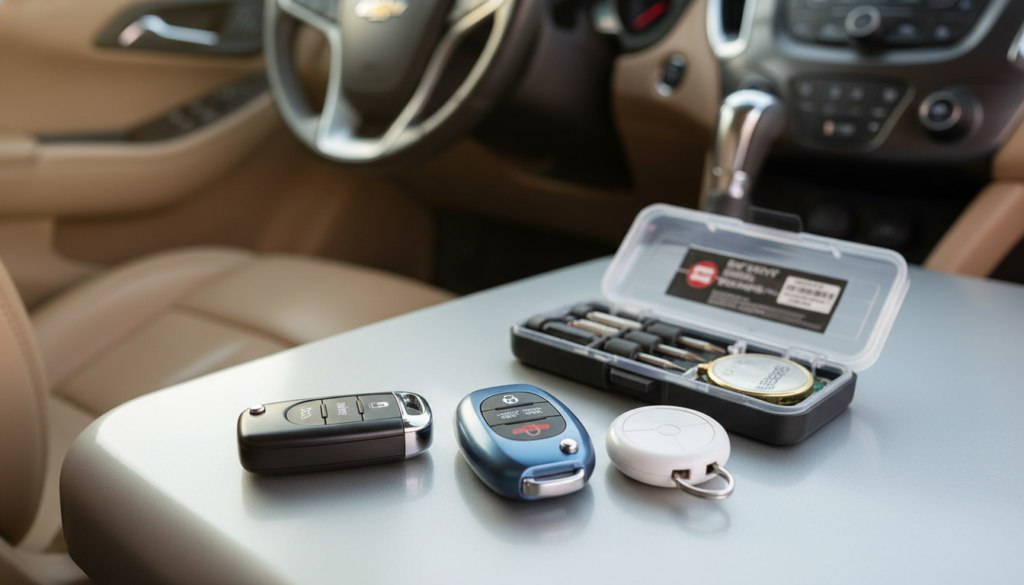
Confirm compatibility with model and year
Use the exact model and year when searching. Many listings require that info to show correct electronics and frequencies.
Match the fob to your current key remote
Compare button icons and count. Check any FCC or part number stamped on the back of an existing unit.
Frequency notes or seller specs are a good secondary check. These cues reduce the chance of ordering a visually similar but incompatible remote.
When you need a full replacement key versus a fob-only swap?
If the car requires a transponder chip or a cut blade, a replacement key with a programmed chip is needed. If the old transmitter still has the chip, a fob replacement may suffice.
Practical process to follow:
- Identify vehicle model, year, and trim.
- Verify button layout and any FCC/part numbers from an existing unit or paperwork.
- Buy a matching unit that notes programming requirements and includes clear instructions.
- Program per seller or dealer steps, then test every function: lock/unlock, trunk, panic, and remote start if present.
| Need | What to check | Typical outcome |
|---|---|---|
| Simple transmitter | Button layout, model/year fit | Fob replacement, DIY programming possible |
| Chip + blade | Transponder presence, cut blade required | Replacement key, professional cutting and programming |
| Lost original | VIN, owner docs, dealer records | Order by vehicle info; expect programming at shop |
Where to Buy and What You’ll Pay in the United States?
Price, convenience, and hands-on setup vary widely between dealers, web retailers, and locksmiths. Choosing the right channel affects total spend, speed, and how much help you get with programming or cutting.
Dealership vs online retailers vs locksmiths
Dealership offers in-house fitment and official service. It often has the highest prices but simplifies programming for many models and years.
Online retailers can save serious money some sellers advertise up to 70% less than dealership prices. Buyers must verify part numbers, model fit, and product selection before ordering.
Local locksmiths combine cutting, transponder pairing, and on-site service. This path is best when all originals are lost or when you need a replacement key with a cut blade.
| Channel | Strength | Typical cost factor |
|---|---|---|
| Dealership | Straightforward fit & programming | Higher prices, full service |
| Online | Wide selection, lower prices | Lower product cost, possible extra labor |
| Locksmith | Hands-on cutting & pairing | Variable service fees, local rates |
Tested remotes ready for programming means sellers verify the remote sends a signal before shipping. That reduces dead-on-arrival problems and saves money on returns.
- Confirm seller help with ordering and model/year fit.
- Ask if technicians answer programming questions and provide instructions.
- Check whether the product includes an emergency key or blade.
Summary: choose the dealership for simplicity, online for value, and a locksmith for hands-on service and fast cutting. This will help you plan costs and move to the conclusion.
Conclusion
Match the model and year, confirm part identifiers, and pick OEM or aftermarket based on the features you need. Plan for any required programming before you buy.
Verify whether the vehicle needs a chip-enabled unit or an emergency blade; a remote-looking unit may not include those electronics. Test every function after setup: lock/unlock, trunk, panic, and remote start where equipped.
When systems get complex, use a reputable service for cutting or programming to save time and risk. Gather VIN and model details, identify the correct remote, then choose the purchase channel that balances budget, timing, and support for the process.
FAQ
What should I do first if I lose my Chevy key fob?
Start by checking for a spare remote or emergency blade in your home or vehicle. If none exists, contact a reputable locksmith or the dealership with your vehicle identification number (VIN) and model year to confirm compatible options. Having the VIN speeds up ordering and programming.
Can I buy a cheaper aftermarket remote instead of an OEM one?
Yes. Aftermarket remotes often cost less and can work well if they match your model, FCC/part number, and frequency. Verify return policies, tested functionality, and that the device supports your vehicle’s features (remote start, proximity, etc.) before purchasing.
How do I know if I need a full key replacement or just a remote?
If the physical blade or transponder chip is damaged or missing, you’ll need a full key with a cut blade and programmed transponder. If only the remote functions fail, a fob replacement without cutting is usually sufficient. Compare your current remote’s buttons and FCC code to confirm.
Can a locksmith program a new fob, or is the dealership required?
Many automotive locksmiths can program remotes and transponder keys at lower prices than dealerships. Confirm the locksmith is equipped for your model year and supports keyless entry, proximity, or push-to-start systems as needed.
What information do I need to order a compatible remote online?
Provide the vehicle model, year, VIN, and the FCC or part number from your existing remote when possible. Photos of the current remote and its buttons help ensure feature matching and prevent ordering the wrong unit.
How much should I expect to pay for a new remote and programming in the U.S.?
Prices vary: dealerships typically charge more for OEM remotes plus programming, while online retailers and locksmiths often offer 30–70% savings. Expect a wide price range depending on features like proximity smart keys or remote start; always compare total cost including programming.
Is it possible to program a replacement remote myself?
Some basic remotes can be self-programmed using a sequence of ignition and button presses; however, push-to-start and encrypted proximity systems usually require professional tools. Check the manual for a DIY procedure only if it explicitly matches your model and year.
What features should I check when matching a replacement for an older model?
Confirm button layout, FCC/part number, frequency, and whether the remote supports alarm, trunk release, remote start, or panic functions. For smart-key systems, ensure the replacement includes an emergency blade and transponder if required.
Are refurbished remotes a safe option?
Refurbished units can be reliable if sold by a trusted seller with testing and a return policy. Verify the seller tests all functions, erases previous vehicle programming, and offers clear support for programming steps or professional assistance.
What questions should I ask when choosing between dealership, locksmith, and online options?
Ask about total cost (part + programming), warranty length, return policy, compatibility verification process, and whether professional programming is included or available. Also confirm availability of emergency blades, transponder chips, and support for remote-start or proximity systems.