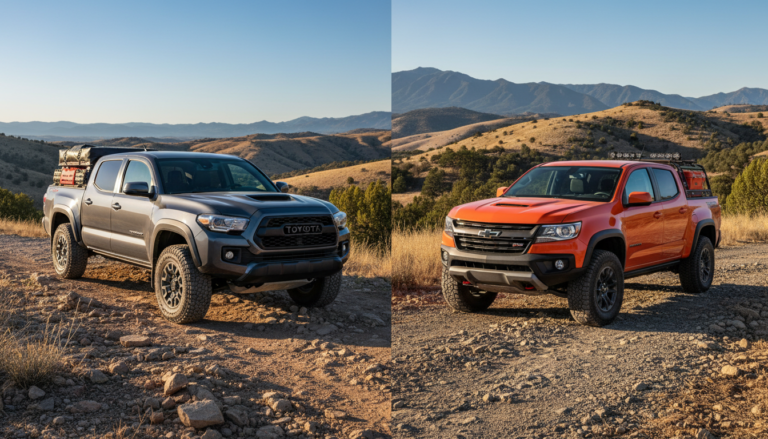
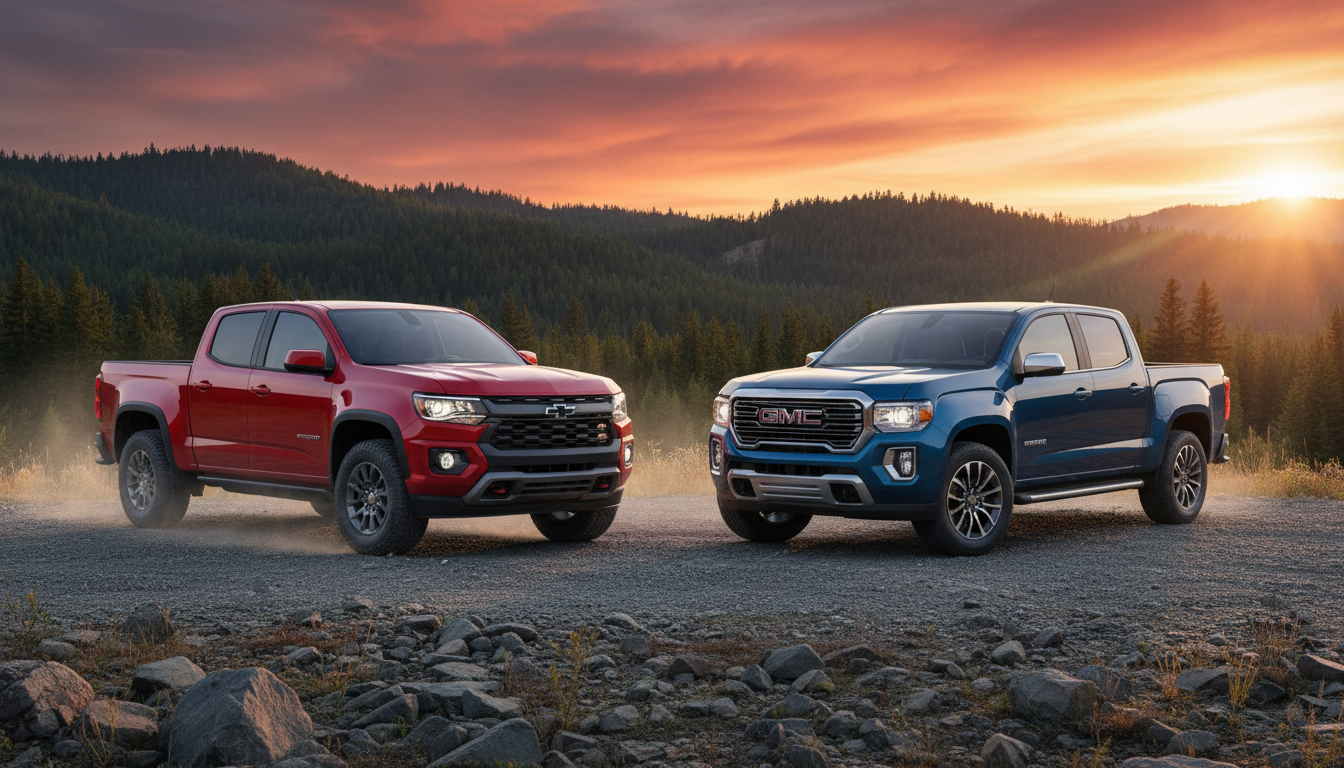
Chevy Colorado vs GMC Canyon: Midsize Truck Showdown
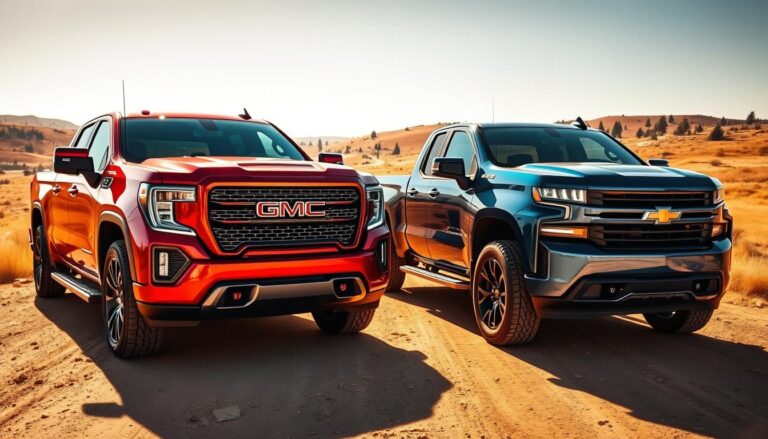
The matchup pits two closely related midsize trucks against each other, and the decision is a practical US shopping one. Both are GM-built pickups with shared engineering, yet they target different buyers.
How each model fits work days, commutes, off-road weekends, and budgets. Expect clear comparisons of performance feel, towing, trim lineups, interior tech, and safety.
Early separator: base price is a real difference the chevrolet colorado often starts lower, while the GMC alternative leans premium once trims and options are added. That affects monthly payment and features per dollar.
It will use real-world examples trailers, boats, and daily driving so you can narrow choices and avoid brochure noise. By the end, a simple “who wins for who” framework helps you pick a truck before scheduling a test drive.
Chevy Colorado vs GMC canyon: Key Differences That Matter to US Truck Buyers
For most buyers the choice shifts from engines to experience. Both trucks share the same chassis and the current-gen 2.7L TurboMax powertrain with an 8-speed automatic under the hood. That means reliability and basic driving feel start from a common baseline.
Think of them as “same bones, different vibe.” The mechanical sameness keeps towing, ride, and service circles similar. What changes is how each model presents itself.
- Exterior and styling cues — front and rear fascia, paint choices, and wheel designs.
- Interior materials — soft-touch finishes on the more upscale trims versus durable plastics on work-focused trims.
- Trim and options — packages, appearance bundles, and convenience features vary by model and price point.
The deciding factors for most US drivers are trim level, available options, and starting price. The rest of this guide digs into those trims and real-world trade-offs so you can pick the right build.
Performance and Powertrain: Engine, MPG, and Real-World Driving Feel
This section breaks down how the engine choices and chassis details shape daily driving and towing performance. Both midsize trucks use the same core hardware, so headline numbers sit close together.
Shared output highlights
When equipped comparably, the available 3.6L V6 produces about 308 hp and 275 lb-ft. That means acceleration and passing feel very similar between models.
Efficiency notes
Expect roughly 18–19 mpg city and about 25 mpg highway in typical gasoline layouts. The 2.8L turbo-diesel, where offered, improves efficiency to near 20 city / 30 highway and adds usable low-end torque for long hauls.
Ride, durability, and off-road protection
Both use a fully boxed frame for a steady, work-ready ride and long-term durability.
- Torque explained: lb-ft is the pull you feel when merging, climbing, or towing; both deliver usable low-end strength.
- Real-world drive: turbo response and transmission tuning shape everyday performance more than peak numbers.
- Trail insurance: one model includes skid plates and a recovery hook for off-road protection; the other has fewer protective features.
Buyer tip: Match the engine and powertrain to your weekly routine commute, jobsite, or adventure before worrying about headline specs.
Towing and Capability: Which Midsize Truck Pulls More?
When hauling matters, small differences in tow ratings can change the practical outcome.
Properly equipped, the GMC model posts a higher max tow of 7,700 lbs compared with 7,000 lbs for the Chevrolet alternative. That gap matters when payload and trailer weight are close to limits.
What “properly equipped” means?
“Properly equipped” refers to the exact cab, bed, axle ratio, hitch package, and cooling options needed to reach the published number. Buyers should verify the vehicle VIN and factory towing package before purchase.
Realistic tow examples
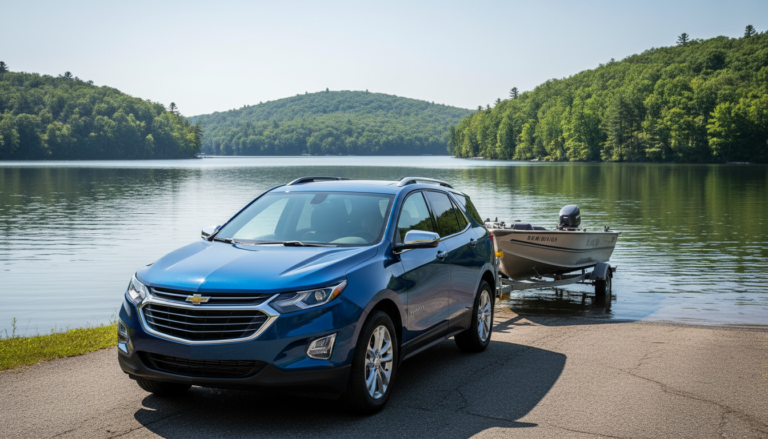
- Couple of jet skis or a small recreational boat.
- Lightweight travel trailer or small hardside RV.
- Utility trailer loaded with gear and tools.
| Metric | Higher-capacity model | Lower-capacity model | Practical note |
|---|---|---|---|
| Max towing (properly equipped) | 7,700 lbs | 7,000 lbs | Extra 700 lbs helps with heavier boats/campers |
| Weekend loads | Small RV, boat, jet skis | Light trailer, boat, tools | Both handle common weekend gear |
| Buyer tip | Frequent heavy towing | Occasional towing, budget focus | Choose based on tow frequency and margin |
For stability, use trailer brakes, check tongue weight, and distribute cargo so 10–15% of the trailer weight rests on the hitch. That improves control on grades and in crosswinds.
If you tow near the upper limit often, the higher-rated truck simplifies load planning. If towing is occasional and cost matters, the lower-rated model still covers most weekend uses.
Trims, Models, and Options: Colorado vs Canyon Lineup Breakdown
Lineup differences tell you who each model is built for work, weekend, or premium comfort. Understanding trims quickly narrows choices and keeps buying practical.
GMC lineup at a glance
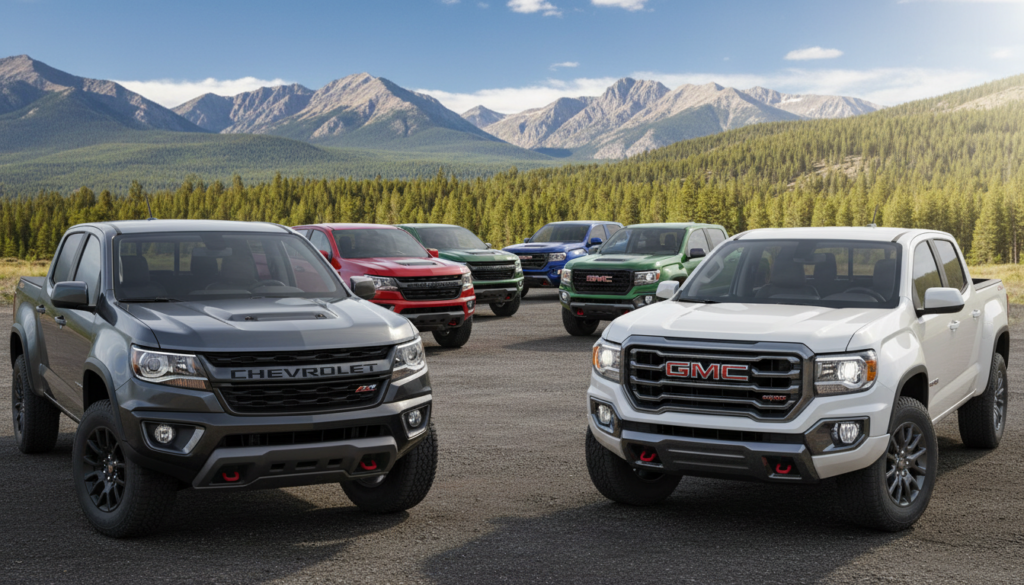
The gmc canyon arrives in three trims: Elevation, AT4, and Denali. Elevation suits daily driving and commuting.
AT4 adds off-road hardware and tougher suspension. Denali is the luxury flagship with premium materials and tech.
That three-trim strategy means higher baseline equipment and fewer low-cost blank-slate builds. Buyers get more standard features, but that often raises transaction price.
Chevrolet range and roles
The chevrolet colorado spans five trims: WT, LT, Trail Boss, Z71, and ZR2. WT targets fleet and jobsite duty.
LT balances comfort and value. Trail Boss and Z71 bring trail-ready protection, while ZR2 is for more extreme off-road use.
How to pick the right trim?
- Match must-haves: towing, off-road protection, interior comfort.
- Choose the trim that includes those features with the fewest added options.
- Cross-shop comparable builds (for example, AT4 vs Z71/Trail Boss) to compare exterior styling, wheels, and real-world equipment rather than badges.
| Buyer type | Trim to consider | Why it fits |
|---|---|---|
| Jobsite / fleet | WT | Durable materials, predictable cost |
| Weekend adventurer | AT4 / Trail Boss / Z71 | Skid plates, better tires, higher ride height |
| Luxury / tech | Denali | Upgraded interior and extras |
Quick tip: use the three must-have checklist and pick the trim that hits them with the fewest packages. That keeps price and complexity down while getting the gear you need.
Interior, Tech, and Safety Features: Screens, Materials, and Driver Confidence
What you touch and see inside the cabin shapes daily satisfaction as much as engine power. Buyers judge a truck by seats, screens, and the sense of safety the cabin provides.
Seats and comfort
Leather upholstery is available across more trims on the first model, while the Denali-level trim adds perforated leather and ventilated front seats on the other. Heated front seats are optional on both, which helps in cold climates. Ventilated seats aid long summer commutes and keep drivers comfortable on hot days.
Materials and design
Premium touch points soft dash surfaces and stitched trim make a cabin feel upscale. Durable plastics win for easy cleaning after work or outdoor trips. Choose based on daily use, not just looks.
Infotainment and navigation
Each model ships with a standard 7-inch screen and offers an 8-inch upgrade. Navigation is trim-dependent, so verify availability on the chosen build before you buy.
Safety and driver aids
Both models list Forward Collision Alert, Lane Departure Warning, and six standard airbags. Available extras include Rear Park Assist, Teen Driver, Tire Fill Alert, and TPMS. These systems boost confidence for family use and newer drivers.
| Focus | Why it matters | Available tech |
|---|---|---|
| Comfort | Reduces fatigue | Heated/ventilated seats, leather |
| Connectivity | Ease of use | 7″ standard, 8″ optional, navigation |
| Daily safety | Driver awareness | Forward Collision, Lane Departure, Rear Park |
Pro tip: schedule a test drive that focuses on visibility, seat comfort, screen usability, and how intuitive the safety alerts feel in traffic.
Conclusion
Deciding between these two midsize pickups comes down to how you plan to use the truck each week.
Buy by use: both models share core hardware, so choose based on towing priority, luxury preference, trim selection, and price.
The gmc canyon fits shoppers who want a more premium feel, simpler trim choices, and the higher 7,700-lb max tow when properly equipped.
The chevy colorado suits buyers who want more trim variety, stronger off-road hardware on some builds, and a lower starting price for better feature-per-dollar value.
Neither choice is wrong. Compare two real builds side by side equipment, tow package, and comfort then take short city and highway drives to confirm cabin feel and visibility.
FAQ
Which midsize pickup offers more towing capacity when properly equipped?
Both trucks share much of their powertrain architecture, but the GMC model typically posts a slightly higher maximum towing rating on comparable engines and configurations. Real-world towing depends on engine choice, axle ratio, cab/bed configuration, and installed towing package, so verify the specific trim’s tow rating and use a weight-distribution hitch for heavier trailers.
Do they use the same engines and frame?
Yes. They share a fully boxed frame and the same turbocharged powertrain options across many trims, delivering similar horsepower and lb-ft torque benchmarks. Differences come from tuning, exhaust, and available gear ratios that affect throttle response and towing behavior.
How do fuel economy and diesel options compare?
Fuel economy is close between the two for identical engines and drivetrains. A turbodiesel option improves highway MPG and towing range, but expect real-world numbers to vary with load and driving style. Check EPA ratings for the exact trim and configuration you’re considering.
Which model has a more upscale interior and leather seating availability?
The version positioned as the premium brand offers more upscale materials and standard leather on higher trims. The work-oriented sibling focuses on durable, practical plastics and cloth seats at lower prices, with leather and heated/ventilated options appearing on mid-to-top trims.
What off-road hardware and protections are available?
Both trucks can be ordered with off-road-oriented packages that add skid plates, upgraded suspension, and recovery points. Higher-tier off-road trims include features like locking differentials, all-terrain tires, and specialized shock tuning for better trail performance.
How do infotainment screens and safety tech differ across trims?
Base trims typically come with a 7-inch screen; an 8-inch unit and navigation are available on higher trims. Safety features such as Forward Collision Alert, Lane Departure Warning, and multiple airbags are common; additional driver-assist options like Rear Park Assist, Teen Driver settings, and advanced tire pressure monitoring are trim-dependent.
Which trim should I choose for work versus weekend off-roading?
For work use, choose the lower-priced, work-trim with durable bed options, basic towing package, and simple interior materials. For off-road weekends, select a dedicated off-road trim with lifted suspension, skid plates, aggressive tires, and protective hardware. Mid-level trims balance daily comfort with capability.
Are there meaningful differences in exterior styling and wheel options?
Styling and wheel designs are key brand differentiators. The premium-positioned model offers unique grille treatments, available larger alloy wheels, and more refined exterior accents. The work-focused version emphasizes functional styling and simpler wheel choices to keep price and maintenance costs down.
How does pricing compare between the two for similar equipment?
The premium-branded truck generally carries a higher starting price for comparable equipment due to upgraded materials, brand positioning, and extra standard features. Shopping similar option packages and dealer incentives will help pinpoint real price differences for the configuration you want.
What should drivers consider regarding towing accessories and real-world capability?
Match the truck’s rated towing capacity to your trailer’s gross vehicle weight, account for passengers and cargo, and select the correct hitch, wiring, and cooling upgrades. Use tongue weight scales, confirm axle ratios, and choose packages that include integrated trailer brake controllers and enhanced cooling for repeated heavy towing.