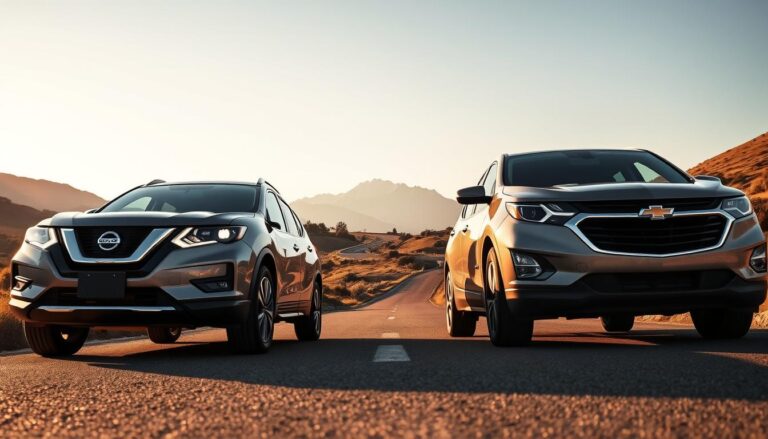
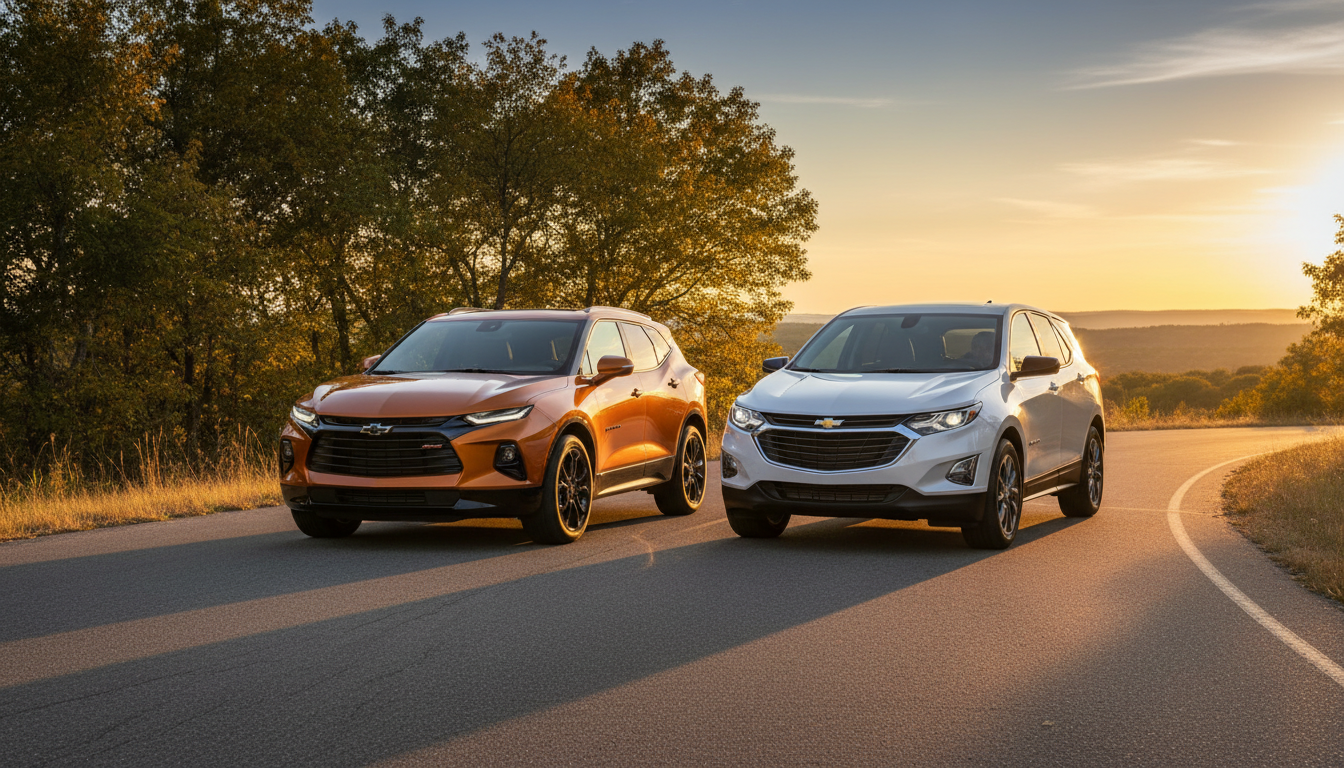
Chevy Blazer vs Equinox: Exploring the Differences
This helps US SUV shoppers answer the real question: which model fits daily driving, budget, and weekend plans?
It compares the 2025 editions head-to-head using measurable specs like inches, cubic feet, mpg, and towing capacity.
Expect a clear “quick take,” then chapters on space, performance, fuel economy, and features and safety tech. You will get of terms like wheelbase, torque, and curb weight with real examples for merging, parking, trips, and towing.
At a glance, one model leans sportier and more powerful, while the other aims for efficiency and city-friendly value. This comparison highlights those key differences and points you toward the trims that matter for your use case.
Compare trims later, and walk into a dealership knowing which specs affect your everyday life and long-term value.
Chevy Blazer vs Equinox: Quick Take for SUV Shoppers in the United States
It gives a no-nonsense snapshot to help shoppers choose between a sportier SUV and a commuter-friendly model. The aim is to deliver a clear recommendation fast, then explain the why in later sections.
Who the Blazer fits best: sporty drive, more power, more towing
Pick the Blazer if you want stronger acceleration and higher towing limits. It offers a 2.0T with 228 hp or an available 3.6L V6 at 308 hp. The V6 raises towing to as much as 4,500 lbs, which matters for small trailers and boats.
Who the Equinox fits best: fuel economy, city-friendly size, lower price
Pick the Equinox if fuel economy and a lower starting price matter most. The 1.5T makes 175 hp and posts about 26/29 mpg city/highway, while its MSRP starts roughly $5,500 below the sportier option.
At-a-glance highlights
| Model | HP | MPG (city/highway) | Towing / Starting MSRP |
|---|---|---|---|
| Blazer (2.0T) | 228 hp | 22 / 29 | 3,250 lbs / $36,295 |
| Blazer (3.6L V6) | 308 hp | 19 / 26 | 4,500 lbs / $36,295 (higher trims) |
| Equinox (1.5T) | 175 hp | 26 / 29 | 1,500 lbs / $30,795 |
Horsepower helps acceleration; torque affects how easily the SUV gets moving with a load. Towing ratings are the hard limits for trailers.
If you still feel torn, the next sections on space and daily usability usually make the final choice clear for most buyers.
Size, Dimensions, and Interior Space: Passenger Room & Cargo Capacity
How an SUV measures in inches and cubic feet matters for daily life. Smaller overall length and a tighter wheelbase make parking and city turns easier. A longer wheelbase usually feels more stable on the highway.
Exterior footprint and ride feel
The longer model measures 191.8 inches with a 113-inch wheelbase; the shorter one is 183.2 inches with a 107.5-inch wheelbase. Expect the longer model to track straighter at speed and the shorter one to fit tighter lots.
Cabin comfort and passenger room
Headroom and legroom are similar. Front headroom sits near 40 inches and rear headroom is about 38–39 inches. Front legroom approaches 41 inches; rear legroom is roughly 39–40 inches.
- Shoulder room: the longer model offers about 59.1/58.6 inches front/rear; the shorter one is narrower, which matters with three passengers in back.
| Spec | Longer model | Shorter model | Everyday note |
|---|---|---|---|
| Passenger volume | 107.8 cubic feet | 104.3 cubic feet | Feels slightly airier for families |
| Cargo (behind 2nd / max) | 30.5 / 64.2 cubic feet | 29.8 / 63.5 cubic feet | Behind second row is most used |
Real-world: similar max cubic feet, but width and shoulder room decide if a stroller or three backpacks load without awkward angles. For trips with four suitcases and rear passengers, prioritize the behind-second-row cargo number and shoulder room.
Performance, Engine Options, and Drive Modes
Understanding how engines, transmissions, and drive modes change real-world driving makes trim selection easier.
Engine lineups and what they mean
2.0L turbo: delivers 228 hp and 258 lb-ft for brisk city merges and confident highway passing. It uses a nine-speed automatic and feels eager without sacrificing too much economy.
3.6L V6: steps up to 308 hp and 270 lb-ft for effortless acceleration under load. Choose this if you tow often or want stronger passing power on two-lane roads.
1.5L turbo: a 175 hp, 203 lb-ft unit aimed at efficiency. In front-wheel models it pairs with a CVT for smooth cruising; all-wheel versions use an eight-speed automatic with firmer shift points.
Traction, drive modes, and everyday use
Both models offer FWD or AWD. FWD suits most paved commutes. AWD adds grip for snow, steep driveways, and gravel runs.
- Drive modes change throttle feel: sport tightens response, snow/ice eases power for traction, and tow/haul optimizes shift logic when pulling a trailer.
- Braking confidence can drop when towing. Buyers should plan for trailer brakes and proper hitch gear, not just the headline towing number.
| Engine | HP / Torque | Transmission | Max Tow |
|---|---|---|---|
| 2.0L turbo | 228 hp / 258 lb-ft | 9-speed auto | 3,250 lbs |
| 3.6L V6 | 308 hp / 270 lb-ft | 9-speed auto | 4,500 lbs |
| 1.5L turbo | 175 hp / 203 lb-ft | CVT (FWD) or 8-speed (AWD) | 1,500 lbs |
Match the engine and drive options to your days: choose the V6 for heavier towing or relaxed highway passing, the 2.0T for a balance of power and efficiency, and the 1.5L for budget-conscious, city-centered driving. Always confirm exact capability by trim and equipment when finalizing a build.
Fuel Economy, MPG City/Highway, and Cost-to-Drive
Real-world fuel use decides how often you stop at the pump and how much a month really costs. This section compares three powertrains so you can match engine choice to typical routes and load needs.
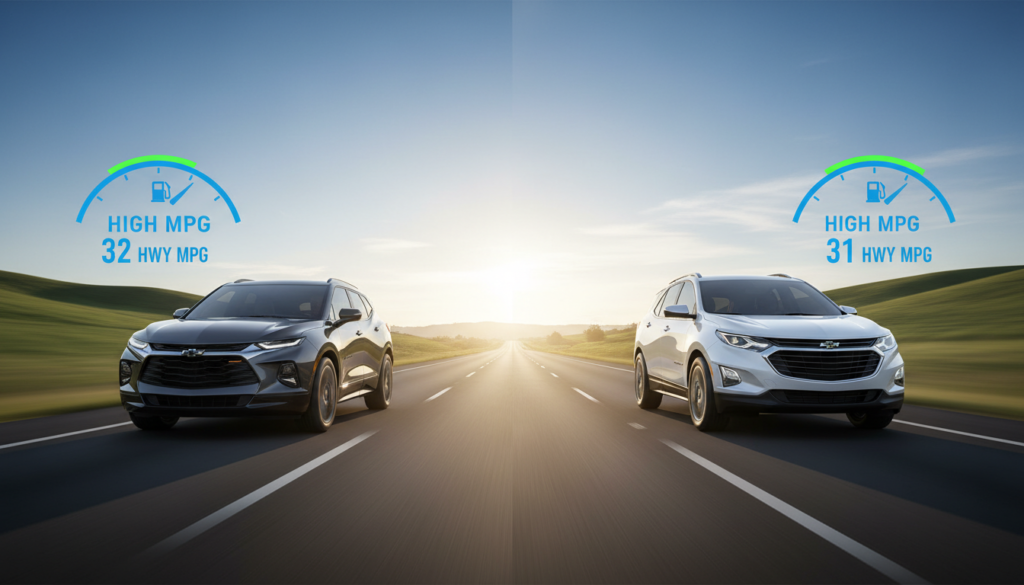
MPG comparison by powertrain
2.0T: 22 city / 29 highway — balanced for mixed commutes and steady cruising.
V6: 19 city / 26 highway — stronger performance and towing, but higher fuel use.
1.5T: 26 city / 29 highway — best city economy and lowest weekly fill-ups for urban drivers.
Highway vs city: who wins on economy?
For mostly highway miles, the 2.0T ties the economy leader at highway speeds and feels responsive. For short trips and stop-and-go traffic, the 1.5T clearly saves the most fuel and money each week.
Curb weight, engine choice, and cost-to-drive
- Heavier vehicles demand more energy to accelerate; that lowers real-world MPG.
- Choosing a V6 adds capability but increases fuel spend, especially in city driving.
- Think beyond MPG: consider trip length, fuel price sensitivity, and towing needs.
| Powertrain | City MPG | Highway MPG | When to pick |
|---|---|---|---|
| 2.0T | 22 | 29 | Mixed commute, highway-focused drivers |
| V6 | 19 | 26 | Towing, heavy loads, performance priority |
| 1.5T | 26 | 29 | Urban driving, tight budget for fuel |
Practical rule: prioritize the efficient 1.5T for city life; choose the V6 only if towing or performance outweighs added fuel cost.
Features, Seats, Infotainment, and Safety Technology
For many buyers, seating comfort and the infotainment system decide which SUV they drive every day.
Seat materials range from durable cloth to perforated leather and suede microfiber accents. Cloth wears well for active families. Evotex provides an easy-clean, leather-like option. Suede microfiber adds a premium touch where you sit most.
Comfort and cabin options
- Heated and ventilated front seats for seasonal comfort.
- Heated rear outboard seats and heated steering wheel for cold mornings.
- Dual-zone automatic climate control keeps driver and rear passengers happy.
Infotainment, connectivity, and audio
The smaller model uses a 10.2-inch touchscreen while the other offers an 11.3-inch display plus an 11-inch driver screen. Larger screens reduce glance time and make maps easier to read.
Both support wireless Apple CarPlay® and Android Auto™ and start with a six-speaker sound system. Buyers who value richer audio can opt for an available Bose® upgrade.
Safety and driver aids
Chevy Safety Assist is standard and includes automatic emergency braking (helps slow to avoid or reduce crash severity), lane-keep assist (helps you stay centered), and IntelliBeam® auto high beams.
| Feature | Availability | Why it matters |
|---|---|---|
| Adaptive cruise control | Standard on one model, optional on the other | Simplifies long highway drives and reduces fatigue |
| Automatic emergency braking | Standard | Helps avoid or mitigate frontal impacts |
| Lane-keep assist | Standard | Helps maintain lane position on long trips |
Families often prioritize rear seats and safety tech, while commuters may pick the larger screen and driver-assist options for daily highway comfort.
Conclusion
Match cargo and commute to find the best fit: prioritize daily routines, then compare trims that meet those needs.
Pick the blazer when added inches, available V6 power and towing capacity matter. That model favors drivers who load gear, tow, or want stronger performance on the highway.
Choose the smaller model when lower price, better city mpg, and easier maneuvering are top priorities. It wins on economy and urban-friendly space.
Make a shortlist of must-haves (AWD, adaptive cruise, seat material, screen size). Then test real cargo space with a stroller or cooler and take a short highway run to judge passing confidence.
Both models serve clear use cases. Rank price, mpg, power, and towing in that order to make the final decision simple and buyer-focused.
FAQ
Which SUV is better suited for drivers who want more power and towing capability?
The Blazer is aimed at buyers who prioritize a sportier drive and higher towing capacity. It offers stronger engine options—including a turbocharged four-cylinder and an available V6—that translate to quicker acceleration, better passing power, and towing ratings higher than the smaller model, making it a better pick for light towing and highway confidence.
Which option is more fuel-efficient for daily city driving and commuting?
The Equinox targets fuel economy and city-friendly use. With a smaller turbocharged 1.5L engine and efficient transmissions, it typically posts higher MPG in stop-and-go conditions and has a lighter curb weight, so it costs less to operate in daily urban driving compared with larger, more powerful powertrains.
How do the two models compare in passenger space and cargo capacity?
The larger model has a wider footprint and generally more passenger volume, with greater front and rear legroom and shoulder room. Cargo behind the second row and with seats folded favors the bigger vehicle for maximum cubic feet. The smaller vehicle, however, remains practical for everyday hauling and fits better in tight parking situations.
What are the real-world cargo considerations for road trips or moving bulky items?
Look beyond cubic feet numbers: check cargo opening width, load floor height, and the shape of the cargo area. The larger SUV usually handles wide or long items more easily and offers a flatter load floor with seats folded. The smaller one can still carry suitcases and groceries comfortably but may require creative packing for long items.
What engine and transmission choices affect on-road performance?
The performance-oriented model provides a turbocharged 2.0L and an optional 3.6L V6 for stronger horsepower and torque. The smaller SUV relies on a 1.5L turbo with either a CVT in front-wheel-drive versions or an 8-speed automatic for all-wheel-drive models. These choices influence acceleration, passing, and how much weight the vehicle can tow.
How do drivetrain and drive modes change driving behavior in different conditions?
Both vehicles offer FWD and AWD options. AWD improves traction in rain and snow. The larger model often includes selectable drive modes—such as Sport or Off-Road—which adjust throttle response, transmission shift points, and stability control for more engaging or capable driving. The smaller model focuses on efficiency-oriented tuning.
What are typical towing capacities for each model?
The sportier model can tow significantly more—up to around 4,500 lbs when properly equipped—suitable for small trailers and boats. The smaller SUV is rated closer to 1,500 lbs, enough for a small utility trailer or bike carrier but not heavy loads.
How do MPG numbers compare on highway and in the city by powertrain?
The smaller-engine model usually wins on city and combined MPG, especially in FWD form with the CVT. The 2.0L turbo delivers modest highway economy with stronger midrange power, while the V6 sacrifices MPG for performance. Real-world economy also depends on curb weight, load, and driving style.
Which vehicle provides a quieter, more comfortable ride for long highway trips?
The larger model tends to isolate highway noise better and offers a more planted feel at speed, especially with higher-spec suspension and tires tuned for comfort. Both can be comfortable, but the bigger SUV’s extra room and stability make long-distance driving easier for multiple passengers.
What seating and comfort upgrades are available?
Both offer cloth and upgraded materials like leather or Evotex. Available comfort features include heated and ventilated front seats, heated rear seats on select trims, and heated steering wheels. Higher trims add premium upholstery and more adjustable seats for improved long-ride comfort.
How do infotainment and connectivity compare between the two?
The smaller model can come with a large touchscreen and modern connectivity, while the larger one offers an available 10.2-inch screen (or comparable option) and premium audio upgrades like a Bose system. Both support wireless Apple CarPlay and Android Auto for seamless smartphone integration.
What standard and available safety systems should buyers expect?
Standard safety suites include automatic emergency braking, lane-keep assist, and automatic high-beam headlights. Adaptive cruise control may be standard on the smaller model and optional on the larger one. Advanced driver-assist features and parking aids are available on higher trims.
How do trim levels and pricing influence the choice between the two?
The smaller SUV starts at a lower MSRP and keeps ownership costs down with better base fuel economy. The larger model has higher starting prices but offers more powerful engines, towing capability, and premium features on upper trims. Choose based on budget and the list of must-have features.
What are the important interior dimensions to check when comparing them?
Key measurements include front and rear legroom, headroom, shoulder room, passenger volume in cubic feet, and cargo volume behind the rear seats and with seats folded. Compare wheelbase and overall length too, since they affect ride comfort and interior space.
How can curb weight and engine choice affect real-world fuel use?
Heavier curb weight increases fuel consumption, especially in city driving. Larger engines and AWD systems add weight and lower MPG. Selecting a smaller turbocharged engine with FWD will generally yield the best day-to-day economy.