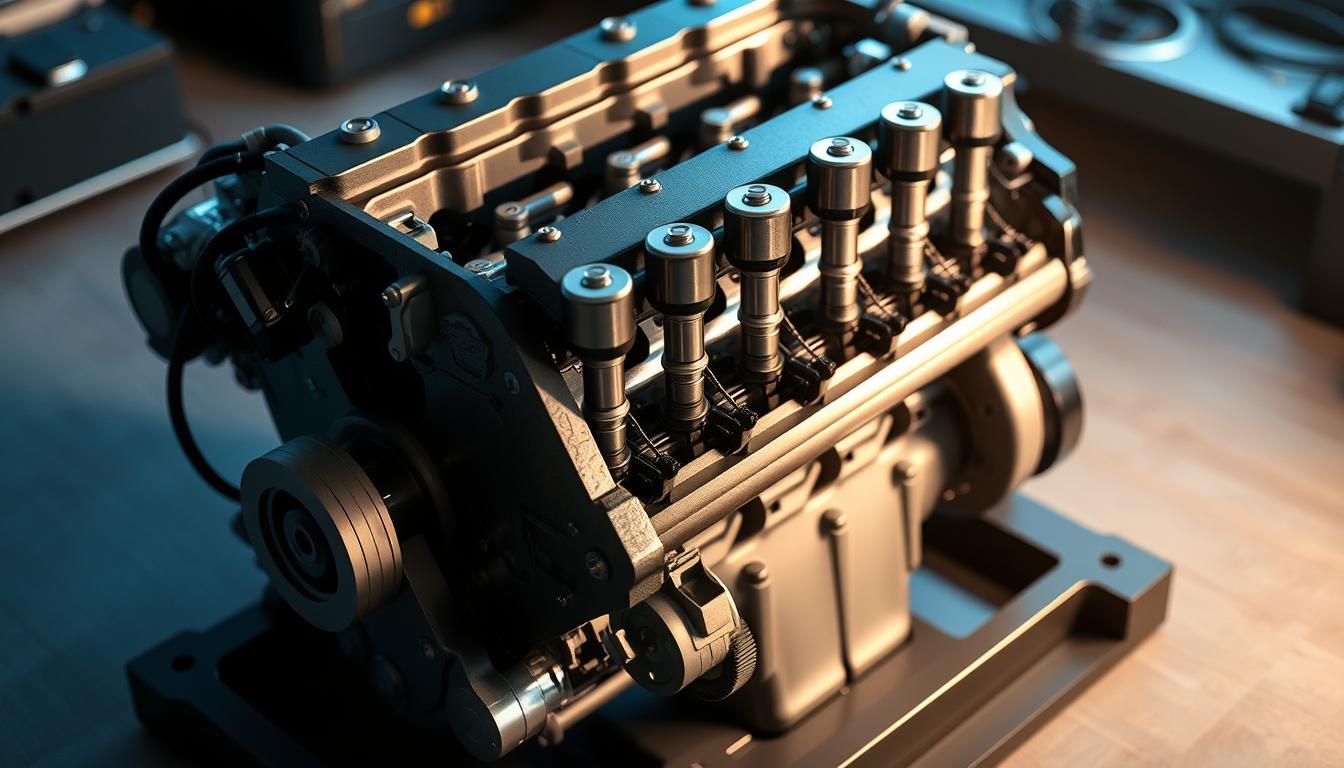
Chevy 6.0 Firing Order (1-8-7-2-6-5-4-3) & Cylinder Diagram [LS/Vortec]
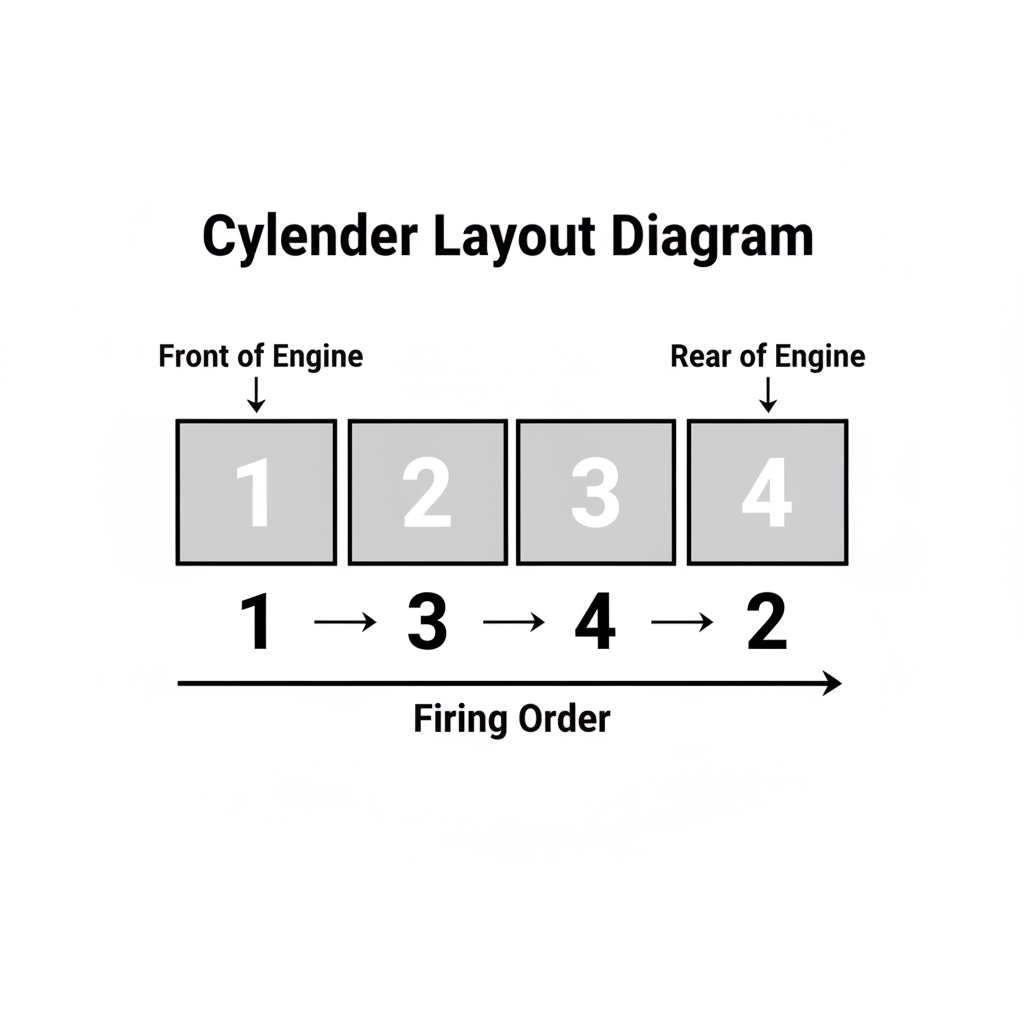
Chevy 6.0L V8 Firing Order & Cylinder Layout
Stop guessing. The correct firing order for the Chevy 6.0L Vortec (LS-based) engine—as well as the mechanically identical 4.8L and 5.3L truck engines—is:
1 – 8 – 7 – 2 – 6 – 5 – 4 – 3
Cylinder Layout (Bank Map):
- Driver Side (Bank 1): 1, 3, 5, 7 (Front to Back)
- Passenger Side (Bank 2): 2, 4, 6, 8 (Front to Back)
⚠️ Critical Tech Note: Unlike the old Small Block Chevys, this 6.0L LS engine does NOT use a distributor. It uses a Coil-Near-Plug system.
Why this matters: You can’t “cross wires” at a cap. Misfires are usually due to a bad coil pack, plug wire, or injector on a specific cylinder. Use the map above to identify which cylinder (e.g., P0301 = Cylinder 1) is failing.
🔧 Chevy 6.0L Fastener Torque & Tune-Up Specs
| Component | Specification | Notes |
| Spark Plug Gap | 0.040″ (1.02 mm) | Use Iridium plugs (ACDelco 41-110 or 41-162). Do NOT use platinum or copper. |
| Spark Plug Torque | 11 lb-ft (15 Nm) | CRITICAL: Cylinder heads are aluminum. Do not over-tighten! |
| Coil Pack Bolts | 89 lb-in (10 Nm) | Small 10mm bolts. |
| Valve Cover Bolts | 106 lb-in (12 Nm) | Tighten from the center working outward. |
| Intake Manifold | 44 lb-in (1st) -> 89 lb-in (Final) | Plastic intake; do not use air tools. |
- Pro Tip: Do not use anti-seize on modern ACDelco spark plugs. The metal shell is zinc-coated to prevent corrosion. Adding anti-seize changes the torque friction and can lead to stripped threads in the head.*
Overview of the Chevy 6.0 Engine and Why Firing Order Matters
The firing order of the Chevy 6.0 engine is key. It tells the ignition system when to fire each cylinder. This order helps distribute forces evenly, reducing stress on engine parts.
Introduction to the 6.0L Vortec/LS family
The 6.0L engine comes in Vortec and LS versions. Both are built for high torque and can be upgraded. They are strong for heavy use and good for performance tuning.
Which 6.0L Engine Do You Have? (RPO Codes)
The firing order 1-8-7-2-6-5-4-3 applies to all Gen III and Gen IV 6.0L blocks. Confirm your specific engine code (found on the glovebox sticker) below:
- Gen III (1999–2007):
- LQ4: The standard workhorse found in 2500HD Silverados and Express vans.
- LQ9: The high-output “Vortec HO” found in the Cadillac Escalade and Silverado SS.
- Gen IV (2007–2020):
- LY6 / L96: The heavy-duty iron-block engines with Variable Valve Timing (VVT).
- L76 / L77: The aluminum-block car engines (Pontiac G8, Chevy Caprice) which feature Active Fuel Management (AFM).
- LS2: The performance car engine (Corvette, GTO, Trailblazer SS).
Why the ignition firing order is critical for performance and longevity?
Getting the firing order right is important. It ensures balanced combustion, reducing vibration and wear. If it’s off, the engine may misfire and wear out faster.
How firing order affects power delivery, vibration, and exhaust note?
The right firing order gives smooth power and less vibration. It makes driving more comfortable. The engine’s sound also improves, giving a classic V8 sound.
Changing the firing order can mess up the engine’s sound. It might sound uneven or have strange noises. This is because the firing sequence affects the engine’s tone.
The Engineering Shift: Why GM Changed the Order
While the classic Small Block Chevy used the legendary 1-8-4-3-6-5-7-2 order for 40 years, the modern 6.0L LS/Vortec engine switched to 1-8-7-2-6-5-4-3.
Why the change? GM engineers swapped the firing position of cylinders 4/7 and 2/3. This wasn’t random; it was a specific calculation to manage Crankshaft Harmonics.
- Torsional Vibration: By altering the sequence, GM reduced the stress on the crankshaft bearings and main caps.
- High-RPM Stability: This smoother firing pulse allows the 6.0L block to rev higher and sustain heavier loads (like towing) without the crankshaft flexing, which was a limitation of the older 350 design.
In short: The 1-8-7-2… order is the secret sauce that makes the LS engine so durable under boost and heavy towing.
Chevrolet 6.0L V8 firing sequence and cylinder deactivation details
Knowing the chevy 6.0 firing sequence and how it deactivates cylinders is key. It helps solve issues with how the car drives and its fuel use. The engine’s timing is set to balance power and smoothness. The engine control module manages when to deactivate cylinders to save fuel without losing power.
⚠️ Tech Alert: Does My 6.0L Actually Have AFM?
Most Chevy 6.0L engines DO NOT have Cylinder Deactivation (AFM).
- Gen III (1999–2007): The LQ4 and LQ9 engines found in 2500HD trucks, vans, and the Cadillac Escalade strictly use all 8 cylinders all the time. They do not have AFM hardware.
- Gen IV Heavy Duty (2007+): The LY6 and L96 engines found in 2500HD/3500HD trucks have Variable Valve Timing (VVT) but NO AFM.
- The Exception: Only the L76 and L77 6.0L engines (found in the “VortecMax” half-ton trucks, Pontiac G8 GT, and Chevy Caprice PPV) are equipped with AFM.
If you have a 2500HD or 3500HD truck, you likely do not have this system.
The chevy 6.0 V8 fires in a pattern of 1-8-7-2-6-5-4-3. Each cylinder fires every 720° of crank rotation, 90° apart. This pattern spreads out the combustion pulses evenly between both banks. It keeps the engine vibration low and exhaust flow balanced.
In V4 mode, the ECM disables four cylinders under light load. The firing order stays the same. The controller stops fuel and spark to those cylinders but keeps the timing framework to avoid imbalance.
Deactivation uses a VLOM assembly with electrically operated solenoids and special deactivation lifters. Each lifter has a locking pin. The ECM controls all eight lifters to switch the engine between V8 and V4 states.
Switching to V4 takes less than 250 milliseconds. The control strategy limits continuous V4 operation to protect the engine. It forces V8 operation after a set period to allow for recovery.
The firing sequence stays the same even when deactivation is active. The ECM disables specific cylinders but keeps the timing balanced. This approach reduces torque swings and keeps the engine running smoothly when it switches modes.
| Item | Description | Impact on Operation |
|---|---|---|
| Standard sequence | 1-8-7-2-6-5-4-3 at 90° intervals | Smooth power delivery, balanced exhaust pulses |
| V4 activation method | VLOM solenoids and locking-pin lifters | Selective cylinder shutdown without mechanical swap |
| ECM control | Maps torque, load, rpm for mode transitions | Seamless switching, minimized driveline shock |
| Transition timing | Typically | Fast response with thermal and wear protection |
| Firing order while deactivated | Sequence preserved; specific cylinders disabled | Maintains balance, avoids misfire patterns |
Cylinder numbering and physical layout on the Chevy 6.0
The Chevy 6.0 engine has a simple numbering system. This makes it easier for service and diagnostics. Knowing the cylinder order helps avoid mistakes when working on the engine.
Driver side cylinders are odd numbers: 1, 3, 5, 7. Passenger side cylinders are even numbers: 2, 4, 6, 8. The numbering goes from front to back. So, the front driver cylinder is #1, and the front passenger is #2.
Understanding the layout makes tasks quicker. For instance, when dealing with a P0301 code, start with the front driver bank cylinder. This saves time and avoids wrong part swaps.
Knowing the correct numbering is key for the firing and spark plug orders. A single mistake in wiring can cause problems after repairs.
Here’s a quick guide for the V8:
| Bank | Front | Rear | Common Tasks |
|---|---|---|---|
| Driver (left facing forward) | #1 | #7 | Compression test, spark plug swap, coil harness routing |
| Passenger (right facing forward) | #2 | #8 | Injector checks, plug wire order, diagnosing P0302–P0308 |
Before reconnecting coils or plug wires, check the cylinder numbers. This prevents misfires from swapped wires.
Keep a labeled diagram in the engine bay or service notes. This helps keep the correct cylinder order for future maintenance.
Chevy 6.0 spark plug order and correct wire routing
Keeping a 6.0L engine running well means correct plug and coil setup. Chevy 6.0 owners should match coil outputs with cylinder numbers. This prevents issues like crossfire and misfires.
Mapping coil outputs to cylinder numbers
Most 6.0L V8s use coil-on-plug systems. There’s no distributor cap to look at. So, confirm the chevy 6.0 firing order—1-8-7-2-6-5-4-3.
Then, label each coil output to its matching cylinder. When replacing a coil pack, keep the factory numbering. Or mark each lead so it matches the right cylinder.
Routing best practices to avoid crossfire and misfires
Keep high-voltage leads apart when you can. Use clips and retainers on coil-on-plug harnesses to avoid exhaust header contact. If you must cross wires, do it at a midpoint away from heat.
Use protective sleeving on wires near exhaust or sharp edges. This helps avoid spark jumps to wrong cylinders and misfires.
Tools and tips: markers, Sharpie notes, and diagnostic aids
Use numbered wire markers or a plug-wire kit for traditional systems. For COP setups, write small, clear numbers on the valve cover or harness with a black Sharpie. Take photos of the original layout for reference.
Use an infrared thermometer to scan exhaust runners. A colder runner often means a misfiring cylinder. Always check against the chevy 6.0 spark plug order and firing order in the factory manual before reassembly.
Common symptoms and causes of an incorrect firing order
An incorrect ignition sequence can make a Chevy 6.0L run poorly. Drivers might hear odd noises, feel a loss of power, and notice the engine running unevenly. Spotting these signs early helps fix the problem faster.
Typical signs: rough idle, misfires, loss of power, backfiring
A rough idle and extra vibration happen when cylinders fire out of order. You might hear loud misfires, popping sounds, and backfiring. Because the fuel isn’t burning correctly, you may also notice a strong smell of raw fuel from unburnt combustion exiting the tailpipe. These signs mean the engine’s timing is off.
How wrong plug wire placement or swapped coils produce these symptoms?
Swapping a plug wire or coil between cylinders messes up the firing rhythm. This mistake makes cylinders ignite at the wrong time. It looks like a failing spark or low compression.
Damage to boots, frayed wires, or loose coil connectors can cause intermittent misses. Swapping the wrong wire or coil can often fix the problem quickly.
When misfires point to wiring vs ignition module or compression problems?
First, check for codes like P030X and note the cylinder number. If moving the suspect wire or coil fixes the misfire, it’s an electrical issue. But if the same cylinder misfires after fixing the wiring, look for compression, valve timing, injector faults, or ignition module problems.
Use an infrared gun or compression tester to find warm or cold cylinders. This helps pinpoint the problem before replacing parts.
| Symptom | Likely cause | Quick check |
|---|---|---|
| Rough idle | Swapped wire, loose connector, degraded coil | Inspect wiring, wiggle boots, swap coil to another cylinder |
| Frequent misfire codes (P030X) | Ignition sequence error or failing coil | Compare chevy 6.0 firing order to installed layout, swap components |
| Popping/backfiring | Out-of-sequence ignition or timing issue | Verify chevy 6.0 firing sequence, check timing and intake leaks |
| Loss of power, poor MPG | Intermittent spark, bad wiring, injector or compression problem | Use IR thermometer for hot spots, perform compression and fuel checks |
| Engine cranks but won’t start | Severely incorrect firing order or main ignition failure | Confirm distributor/coil outputs match chevy 6.0 firing order and test ECM outputs |
Step-by-step troubleshooting for firing order problems
Begin by staying calm and methodical when fixing chevy 6.0 firing order issues. First, collect your tools: the service manual, a timing light, an IR thermometer, and a compression tester. Keeping good records and labeling parts helps save time and avoid mistakes.
How to verify firing order against factory specs?
Check the factory chevy 6.0 firing sequence in your service manual. Look at coil-pack pinouts and any distributor rotation notes. Before you start, mark the current spark plug order on the engine with tape or a numbered tag.
Using a timing light, IR thermometer, and compression tester to localize issues
First, use a timing light to ensure ignition pulses match the crank position. An IR thermometer helps find cold cylinders by scanning exhaust ports or headers.
Next, use a compression tester or leak-down tester on any cold cylinder. Low compression points to mechanical issues, not ignition wiring. Keep a record of each reading for comparison.
Wire-by-wire checks, swapping suspect wires, and re-checking cylinder temperatures
Label every ignition lead and connector, then check for corrosion, loose pins, or damaged boots. Reconnect them in the 1-8-7-2-6-5-4-3 order. If a cylinder misfires, swap its coil or wire with a known-good one.
After swapping, briefly run the engine and scan exhaust temperatures with the IR thermometer. If the misfire moves with the coil or wire, replace it. If it stays on the same cylinder, look for mechanical issues.
Recommended process flow
- Inspect connections and label all parts.
- Verify ECM mapping and coil-to-cylinder assignments.
- Run an IR scan to find cold cylinders.
- Perform compression or leak-down tests on suspect cylinders.
- Swap coils or wires methodically to isolate faults.
- Clear codes, test drive, and recheck temperatures and timing.
Keep steps short and traceable to reduce downtime. Measured swaps help avoid unnecessary part changes. This approach confirms if the issue is electrical or mechanical, making troubleshooting focused and efficient.
Firing orders across Chevrolet engine families for quick reference
Knowing how firing orders differ in Chevrolet engines helps avoid mistakes. It also speeds up finding problems. This guide shows the patterns for small block, big block, LS/Vortec, and inline-six engines. It’s useful for swaps, restorations, or routine tune-ups.

The classic Chevrolet small block and big block V8 pattern is 1-8-4-3-6-5-7-2. This pattern was used for decades. It’s good for engines with distributors and is often seen in vintage restorations and hot rod projects.
The LS/Vortec family uses 1-8-7-2-6-5-4-3. This change came with the move to distributorless ignition and coil-on-plug setups. It was done to reduce internal harmonics and improve high-RPM performance. This is why the LS firing order is different from older small block patterns.
Inline-six Chevrolet engines usually have a firing order of 1-5-3-6-2-4. This layout helps keep firing intervals even for smooth operation in trucks and cars. Knowing this order helps avoid wiring mistakes when swapping harnesses or coils.
| Engine Family | Common Firing Order | When to Use |
|---|---|---|
| Small block / Big block V8 | 1-8-4-3-6-5-7-2 | Older GM V8s, distributor ignition, classic restorations |
| LS / Vortec V8 | 1-8-7-2-6-5-4-3 | Modern 5.3L and 6.0L engines with coil-on-plug systems |
| Inline-six | 1-5-3-6-2-4 | Chevy six-cylinder trucks and older passenger cars |
Always check the engine family before wiring or swapping coils. A quick comparison of chevy 6.0 firing orders can prevent misfires and save time. Keep diagrams in your glove box or service folder for easy access during repairs.
Maintenance checklist to keep the Chevy 6.0 firing order correct
Regular care stops misfires and keeps the engine smooth. This checklist offers simple steps for owners or techs to follow. It ensures ignition timing and long-term reliability by focusing on inspections and documentation.
Regular spark plug inspection and replacement intervals
Check spark plugs as the manual suggests. Modern iridium or platinum plugs last 60,000–100,000 miles. Copper plugs need more attention, around 30,000 miles.
Remove a plug for a rough idle or misfires. This helps check for fouling, oil, or wear. Replace a worn or fouled plug right away.
Bad plugs can look like wiring or coil issues. This can lead to unnecessary part changes. Keep a record of plug type, gap, and install date for easier future diagnosis.
Inspecting and replacing ignition wires, coils, and connectors
Look for cracks, melted insulation, or corrosion on coil boots, spark plug wires, and connectors. Heat damage is common near headers and exhaust ports. Check routing during every oil change.
Replace wires around 60,000 miles or sooner if resistance rises or insulation degrades. On coil-on-plug systems, test coil output and swap coils between cylinders to find weak units.
Retorque and secure electrical connectors to avoid intermittent faults. Replace any harness clips or grommets that no longer hold wiring away from hot or moving parts.
Documenting wiring layout and keeping a labeled diagram for future work
Label each coil harness and plug wire when servicing them. Mark the #1 cylinder on the intake or valve cover and photograph the coil-to-cylinder mapping. A clear diagram saves time and prevents swapped connections that lead to misfires.
Store the diagram with service records in digital or printed form. When engine work is delegated to a shop, hand over the labeled photo to ensure consistency during repairs.
Routine checks and preventive steps
- Visually confirm wires do not rub on headers, pulleys, or sharp edges.
- Use dielectric grease on boots to prevent moisture intrusion and corrosion.
- Replace damaged grommets and harness clips to keep routing stable.
- Check resistance of wires and continuity at connectors if misfires appear.
Quick reference checklist
| Item | When to Check | Action |
|---|---|---|
| Spark plugs | 30k–100k miles or on misfire | Inspect for gap, deposits, wear; replace if fouled |
| Ignition wires / boots | Every service or 60k miles | Replace if cracked, high resistance, or heat damaged |
| Coils | When misfire codes appear | Swap coils to test, replace faulty units |
| Connectors & clips | Each inspection | Clean, retorque, or replace to prevent intermittent faults |
| Wiring diagram / labels | After any service | Photograph and label coil-to-cylinder mapping; store with records |
Following this checklist supports solid chevy 6.0 maintenance and reduces firing-order related failures. Clear labeling and timely spark plug work keeps the chevy 6.0 spark plug order consistent. Regular care protects engine performance and lowers repair time when issues arise.
Performance considerations and how modifications can affect firing order behavior?
Upgrading a Chevy 6.0 engine for better performance is complex. It’s not just about adding parts. Changes in camshaft profiles, header design, and ignition systems affect how the engine burns fuel and exhausts gases. These changes don’t alter the firing order but can expose weaknesses in wiring, timing, or valvetrain performance.
How camshafts, headers, and ignition upgrades interact with firing sequence?
A more aggressive camshaft can change how cylinders fill and overlap. This affects torque and vibration at certain speeds. Long-tube headers alter backpressure and scavenging timing, affecting exhaust pulses.
High-output coils and an aftermarket ignition controller increase spark energy and timing. It’s important to keep the correct coil-to-cylinder mapping. This ensures the firing order remains correct, preventing misfires.
Risks and rewards of custom firing-order-related modifications
Some builders try nonstandard firing orders for unique sounds or quick throttle response. Small gains in sound or response are possible with careful design. But, there are risks.
These include increased stress on the crankshaft and valvetrain, unpredictable harmonics, and drivability issues. Poorly done modifications can shorten component life and cause hard-to-find failures.
When to consult an engine builder or tuner before changing components?
Plan to consult a professional for cam swaps, ignition control changes, or major exhaust work. An experienced builder or tuner can help model load, pulse timing, and thermal effects. They can suggest compatible hardware and calibration.
This approach reduces the risk of needing expensive rework after upgrades. For street and track builds, plan upgrades as a system. Match cam profile, headers, intake, and ignition for predictable engine performance. This careful planning preserves reliability and maximizes the value of performance parts.
Real-world repair tips and quick reference fixes for common mistakes
Working on a Chevy 6.0 can lead to simple mistakes causing big problems. This guide offers practical tips and quick fixes to save time in the garage.
Simple fixes: re-seating wires, replacing worn caps, and using wire markers
Begin with the basics. Tighten loose connections and ensure spark plug boots fit fully. Replace damaged boots, corroded caps, or brittle wires. Use numbered sleeves or color-coded markers to keep the chevy 6.0 spark plug order fixes in place.
If a coil pack or connector shows burn marks, replace it instead of testing for hours. Burn marks often signal an impending failure. Keep spare coils or plugs ready for quick repairs.
Diagnosing intermittent misfires caused by wiring or degraded coils
Use OBD-II codes to identify misfiring cylinders. Check exhaust runner temperatures with an IR thermometer. A colder runner often indicates the problem cylinder. Swap the suspect coil and wire to a known good cylinder. If the misfire persists, replace the part.
For wiring issues, inspect connector pins and grounds. Clean corrosion and ensure tight engine-ground straps. These small fixes prevent recurring intermittent faults.
When to replace parts vs when to perform deeper engine diagnostics?
Replace ignition wires, coils, or plugs when they show visible damage or when swapping parts identifies the fault. These tips reduce diagnostic time and restore driveability quickly.
If a cylinder continues to misfire after electrical parts are checked, move to compression and valve-timing tests. Test injectors for flow and pulse if compression is good. If multiple cylinders fail, inspect ECM, fuel pressure, and common ground points before disassembling the engine.
Use the quick reference below when deciding next steps.
| Symptom | Quick fix | Next diagnostic step |
|---|---|---|
| Single-cylinder misfire code (P030X) | Swap coil and wire; check spark plug and boot | Compression test, inspect injector pulse |
| Intermittent misfire under load | Check connectors, engine grounds, and fuel pressure | IR scan of exhaust runners, swap parts to isolate |
| Multiple cylinders misfire simultaneously | Inspect ECM connectors and fuel rail/fuse/relay | Fuel flow test, scan for communication errors |
| Visible coil or boot damage | Replace damaged coil/boot and reseat wiring | Verify no secondary damage to plug or plug tube |
| Miswire or swapped plug wires | Relabel wires and set correct chevy 6.0 spark plug order fixes | Confirm firing order with a timing light and run test |
Conclusion
The Chevy 6.0 firing order is 1-8-7-2-6-5-4-3. Keeping this order right is key for smooth running. It stops misfires, cuts down vibration, and guards the engine’s parts.
Labeling the coils and harnesses makes repairs quicker and safer. This is important for service.
For diagnosing, use tools like an IR thermometer and a compression tester. They help find misfire causes before you spend a lot on parts. A careful method helps figure out if the problem is electrical, mechanical, or with the wiring.
Following the right firing order and factory specs can save you from costly repairs. This is very important.
Regular maintenance is vital. Check spark plugs, inspect coils, and clean connectors. Having a clear wiring diagram or photo helps with future repairs. With proper care and the right firing order, your engine will run well and last long.
FAQ
What is the Chevy 6.0 firing order?
The Chevy 6.0L V8 engine, part of the LS/Vortec family, follows the firing order 1-8-7-2-6-5-4-3. This pattern is used for both modern distributorless and coil-on-plug engines. It’s key for proper spark distribution and ignition timing.
How are cylinders numbered on the Chevy 6.0?
Cylinders are numbered with odd numbers on the driver’s side and even numbers on the passenger side. The numbering goes from front to rear. So, the front driver-side cylinder is #1, and the front passenger-side is #2.
How does the 1-8-7-2-6-5-4-3 firing order affect engine balance and NVH?
This firing order spreads combustion pulses evenly across both banks at 90° crank intervals. It reduces stress on the crank, smooths torque delivery, and decreases vibration (NVH). It was chosen to improve high-RPM durability compared to older Chevy patterns.
What are common symptoms of an incorrect firing order or swapped coil/wire routing?
Signs include a rough idle, intermittent or persistent misfires, and loss of power. You might also see backfiring through intake or exhaust, poor fuel economy, or an engine that won’t start. Misfire trouble codes like P030X can help find the problem cylinder.
How can a technician quickly diagnose whether a misfire is wiring-related or mechanical?
First, check the coil-to-cylinder mapping and look for any damage on boots and connectors. Swap the suspect coil or wire with a known-good one. If the misfire stays on the same cylinder, it’s likely a wiring issue. If it moves, test for mechanical problems with compression or leak-down tests.
Does cylinder deactivation (V4 mode) change the firing order on 6.0L engines?
No, it doesn’t. When the ECM deactivates cylinders for V4 mode, it keeps the firing sequence and timing the same. The ECM controls solenoids and deactivation lifters to maintain balance and drivability during transitions.
What tools are most useful when verifying the Chevy 6.0 firing sequence?
Use a timing light, infrared thermometer, or thermal imager for exhaust runner checks. A compression tester or leak-down kit is good for mechanical diagnosis. Wire markers help ensure correct routing. These tools help verify timing, detect cold or non-firing cylinders, and prevent wiring mistakes.