Chevy Equinox Oil Type: Find the Right Oil
The phrase Chevy equinox oil type means more than a brand on a shelf. It refers to the correct viscosity grade (for example 0W-20 or 5W-30) plus any required approval or specification stamped on the bottle.
Different engines and model years can call for different fluids, even under the same nameplate. For instance, many modern models use full synthetic; some 1.5L turbo years list SAE 0W-20 while other engines commonly take SAE 5W-30.
This short guide shows owners how to identify what their vehicle needs, match that spec to a product on the shelf, and keep the level correct between services. The fastest way to avoid guesswork is simple: check the owner’s manual and the under-hood fill cap for exact markings.
Focus: everyday driving in the United States and long-term reliability, not racing or builds. Next up: a clear breakdown of exact specifications to look for, including dexos markings on the fill cap.
Chevy Equinox Oil Type: What Your Equinox Engine Actually Requires?
Knowing the correct engine fluid starts with understanding viscosity and manufacturer specs.
SAE viscosity basics: 0W-20 vs 5W-30
SAE ratings tell you how oil flows in cold starts and at operating temperature. The “0W” or “5W” part shows cold-flow. The “20” or “30” number shows thickness at running temperature.
Thinner oil flows faster at start. Thicker oil keeps a stronger film when hot. That balance matters in a turbocharged engine.
Engine-specific recommendations
Wallace Chevrolet lists the 2.0L turbocharged engine as requiring SAE 5W-30 full synthetic. Some 1.5L turbocharged model years call for 0w-20 full synthetic.
Why full synthetic oil is preferred?
Full synthetic oil offers a consistent base and additives that resist heat and shear. That helps turbocharged engines handle higher temperatures and maintain oil film strength.
Look for dexos oil and confirm the specification
“dexos oil” is GM’s approval standard. Many fill caps and under-hood labels show that mark alongside the viscosity. One forum user found “DEX-OS 0-20” on the cap of a 2023 1.5L, which matched the manual.
- Check the owner’s manual for the official oil specification.
- Read the under-hood label and oil fill cap for dexos oil wording.
- Match the exact viscosity and specification on the bottle before you buy.
| Engine | Common Specification | Why it matters |
|---|---|---|
| 1.5L turbocharged | SAE 0W-20 full synthetic, dexos oil | Cold flow for start-up and adequate protection during normal driving |
| 2.0L turbocharged | SAE 5W-30 full synthetic, dexos oil | Stronger film at higher temps in turbocharged engine operation |
| Verification | Owner’s manual & fill cap | Confirms exact oil specification for your model year |
Once the correct oil specification is known, choose a bottle that matches it exactly. That avoids risky substitutions and keeps the engine protected.
How to Choose the Right 0W-20 Full Synthetic (or 5W-30) for Best Engine Protection?
Start shopping with the specification from your manual and look for that exact label. Confirm the bottle shows the SAE grade (0W-20 or 5W-30) and the dexos approval when required.
Match the bottle to the spec:
- Front label must list the SAE viscosity and dexos or GM approval.
- Check product details online if the label is unclear.
- When in doubt, buy a reputable brand and keep the receipt for records.
Why exact specs matter: modern engines rely on specific additive chemistry. A close-but-not-exact product can harm emissions systems and reduce engine protection.
| Benefit | Practical outcome | When it helps |
|---|---|---|
| Reduced wear | Smoother cold starts | Short trips and stop-and-go driving |
| Stable film | Better turbo heat resistance | Highway loads and hot climates |
| Less breakdown | Longer service intervals | Normal driving, save for severe conditions |
When to change sooner: frequent short trips, heavy commuting, towing, dusty roads, or repeated hot-idle use justify shorter intervals even with full synthetic. Whether DIY or using oil changers, document each change to protect your warranty and track maintenance.
Once the right product is chosen, the next step is setting a regular change rhythm and checking the level so the engine never runs low.
Oil Change and Oil Level Maintenance for Chevy Equinox Owners
Following a sensible change rhythm and quick level checks saves time and repair costs.
Recommended service interval
Many owners can plan an oil change every 7,500 10,000 miles when using full synthetic. Adjust the interval for harsh driving, towing, or lots of short trips.
Use the oil life monitoring prompts
The dashboard oil life and the “Change Oil Soon” message are primary cues. Treat the oil life monitoring system as your guide, then factor in real use before scheduling service.
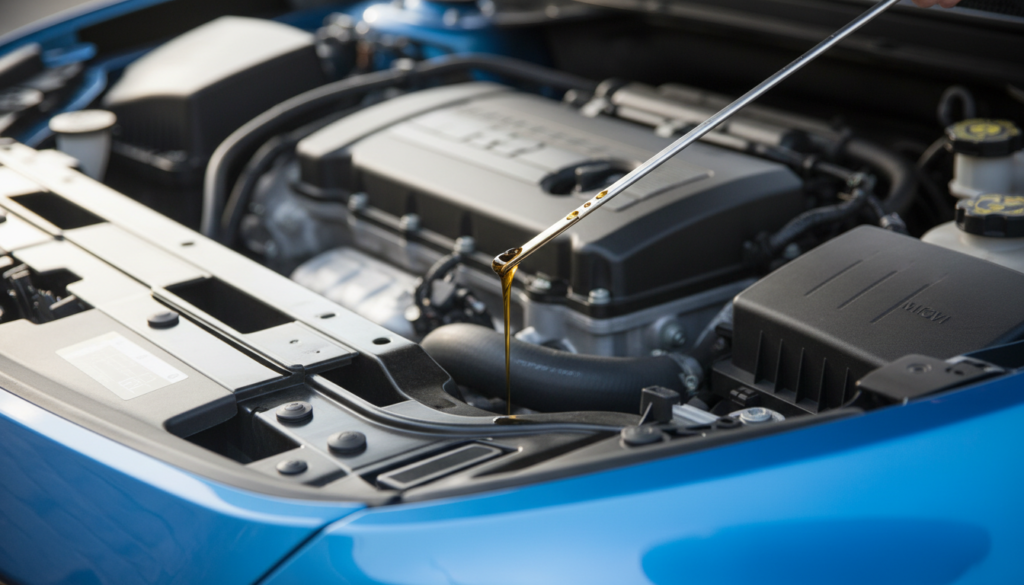
How to check oil level — quick steps?
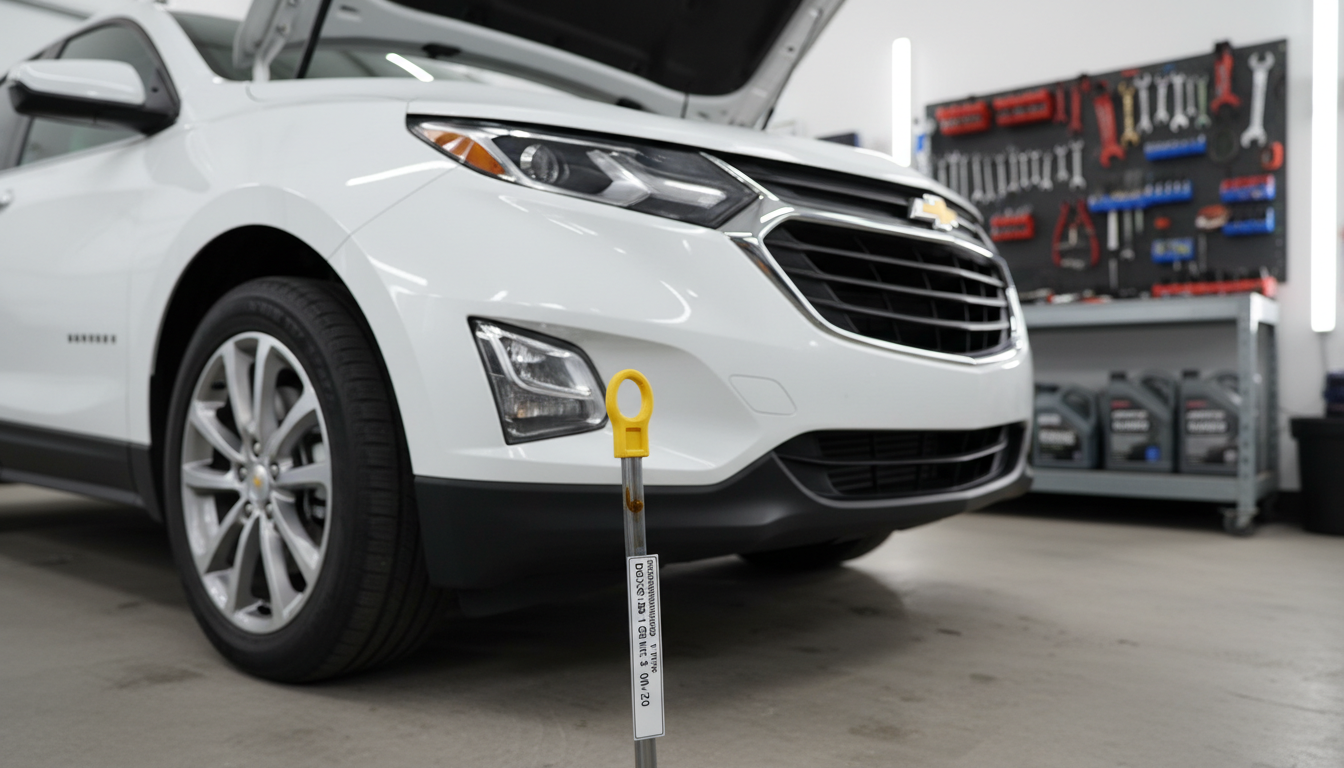
- Park on level ground and shut the engine off.
- Wait a few minutes for oil to settle.
- Pull the dipstick, wipe it, reinsert, then read the mark.
- Top to reach the safe range if the level is low.
Color, texture and warning signs
Amber oil is normal; dark color alone does not force an immediate change. Gritty texture or a metallic sheen is a stronger sign to change oil now.
| Symptom | What it may mean | Recommended action |
|---|---|---|
| Noisy engine | Possible low or degraded fluid | Check oil level and schedule service |
| Repeated low level | Leak or burn-off | Inspect for leaks and monitor more often |
| Excess exhaust smoke | Oil entering combustion | Have a technician diagnose promptly |
Treat level checks as routine maintenance between oil changes. Verify the spec, follow oil life prompts, and keep the level in range to avoid most common issues.
Conclusion
Use the vehicle’s own documentation and under-hood labels to pick the exact product your engine requires.
Step-by-step: confirm the required viscosity and manufacturer spec, then buy a product that matches both labels exactly.
Correct selection matters as much as correct weight. This is especially true for turbocharged engines that need precise protection and stable performance.
Follow the dash oil-life prompts, keep regular change intervals, and check the level between services. These simple habits extend service life and reduce risk.
Owners don’t have to guess. The manual, cap, and labels tell you what to use. Follow those cues for consistent protection and peace of mind.
FAQ
What viscosity should I use for my Equinox engine?
Most models call for SAE 0W-20 full synthetic for best fuel economy and cold-start protection. Some older or non-turbo variants may accept SAE 5W-30. Always confirm the exact spec in the owner’s manual or on the under-hood oil fill cap.
Why is full synthetic recommended for modern Equinox engines?
Full synthetic delivers more stable viscosity, better protection against wear, and improved performance in hot and cold conditions. It helps protect turbocharged engines and extends drain intervals when used with the vehicle’s oil life monitoring system.
What does dexos approval mean and why does it matter?
Dexos is GM’s oil specification. A dexos-approved label means the lubricant meets GM tests for deposit control, wear protection, and fuel economy. Look for dexos certification on the bottle when matching the SAE grade.
How do I match a bottle to the required specification?
Choose oil labeled “SAE 0W-20 full synthetic” or “SAE 5W-30” with dexos approval if your manual requires it. Check the API and dexos logos on the container and compare to your owner’s manual recommendation.
How does synthetic oil help in extreme temperatures?
Synthetic formulations flow more easily at cold temperatures for faster lubrication on startup, and they resist thinning at high temps to maintain film strength. That reduces wear during cold starts and prevents overheating-related breakdown.
When should I change oil more often than the monitor suggests?
Increase frequency if you drive frequently in extreme heat, heavy towing, lots of short trips, or dusty conditions. Under those severe-use cases, intervals shorter than the typical 7,500–10,000 miles help protect the engine.
What is the recommended oil change interval?
With full synthetic and normal driving, most Equinox models use about every 7,500–10,000 miles guided by the oil life monitoring system. If you follow severe operating conditions, shorten intervals to protect engine components.
How does the oil life monitoring system work and when will it alert me?
The system tracks driving conditions, engine temperature, and other parameters to estimate oil degradation. The dashboard will display “Change Oil Soon” when remaining oil life is low. Replace oil when prompted or at the recommended mileage.
How do I check the engine oil level with the dipstick?
Park on level ground, warm the engine then turn it off and wait a few minutes. Pull the dipstick, wipe it clean, reinsert fully, then remove it to read the level. It should sit between the low and full marks; add recommended oil only if needed.
What can oil color and texture tell me about condition?
Fresh synthetic is amber and clear. Darkening is normal with use, but gritty texture, strong fuel smell, or milky appearance (indicating coolant contamination) signal problems and warrant inspection.
What warning signs indicate a problem with lubrication?
Listen for unusual engine noise, check for low level on the dipstick, watch for excess exhaust smoke, and heed oil pressure or temperature warnings. Address these immediately to prevent serious engine damage.