
Engine Power Reduced Chevy Equinox: Causes & How to Fix?
The message “engine power reduced chevy equinox” can startle any driver. It means the vehicle’s computer has detected a fault and is limiting output to protect parts.
It focuses on the Equinox but notes the same basic strategy applies across many vehicles. Reduced output is a protective response, not a random glitch.
Drivers usually notice slow acceleration, a limp feel, or warning lights on the dash. The article previews the main cause buckets: airflow and throttle issues, sensor input faults (MAF/TPS), fuel delivery, and wiring or connection problems.
Simple DIY checks that avoid a full shop visit, and clear signs to stop driving. A clear “fix vs. reset” theme helps you avoid mistaking a temporary restart for a true repair. Later sections cover model-year notes on turbo and charge-air plumbing patterns and related codes.
🆘 Emergency Roadside Reset: Try This First
If you are currently stranded on the side of the road, follow this specific “Hard Reset” procedure. This forces the Equinox’s computer (ECU) to re-check all sensors and often clears a temporary “glitch” so you can limp home.
- Pull Over Safely: Get off the road and put the vehicle in Park.
- Turn Off the Engine: Remove the key (or press Stop).
- OPEN THE DRIVER’S DOOR: (Crucial Step) GM vehicles have “Retained Accessory Power” (RAP) that keeps the computer awake even after the key is out. Opening the door cuts this power immediately.
- Wait 3-5 Minutes: Do not touch the pedals. Let the computer completely power down.
- Restart the Engine: Turn the key. If the message is gone, drive gently to a shop. If the “Check Engine” light stays on but full power returns, you are safe to drive home.
Note: This does not fix the broken part; it just resets the safety logic. The warning will likely return if you accelerate hard.
What “Reduced Engine Power” Means on a Chevy Equinox Today?
A sudden dashboard notice that limits acceleration can feel alarming on any modern SUV.
Limp mode is the vehicle computer stepping in to keep the car drivable while lowering the risk of further damage. It limits speed and throttle response so serious faults don’t get worse.
The control module watches several things before it acts. It compares airflow measurements to throttle requests. It checks fuel delivery and key sensor signals for plausibility. If data looks wrong, the system trims performance to protect components.
Drivers may see similar wording like “reduced acceleration” or a warning that the vehicle has lowered output. The driving feel can be nearly the same even when triggers differ. A check engine light or related message often appears too.
- The alert is protective, not dramatic.
- Stored diagnostic codes matter more than the exact dash text.
- Next: safety steps, symptom checks, then cause tracing.
| What the Module Monitors | Why It Matters | Typical Result |
|---|---|---|
| Airflow vs. throttle command | Ensures correct air-fuel mix | Lowered output to avoid misfires |
| Fuel delivery | Prevents lean or rich running | Limited acceleration until fixed |
| Sensor plausibility | Detects faulty or missing signals | System falls back to safe mode |
Safety First: What to Do Immediately When Power Drops?
When your SUV starts hesitating under load, it’s a cue to slow down and plan the next move.
Stay calm and control the vehicle. Signal early, lift off the throttle, and increase following distance. Avoid sudden lane changes or aggressive moves.
Handling a loss while merging or at highway speed
If acceleration falters when merging, aim for the shoulder or next exit instead of forcing into traffic. Let other drivers adjust; don’t try to beat gaps with limited thrust.
Climbing hills and worsening symptoms
On grades, reduce load by turning off A/C and extra electronics. Watch for surging, misfire sensations, or new dash warnings. Those signs mean stop sooner.
When to pull over, limp home, or call a tow?
- Limp home if idle is stable, throttle feels predictable, and there is no overheating.
- Call a tow if the vehicle stalls, shows repeated warnings, or has a severe drop that affects safe driving.
- Document speed, conditions, warning messages, and the exact time; that snapshot helps technicians diagnose and plan repairs.
Safety before fixes: repeated reduced engine events create real risk in traffic. Make conservative choices and get professional help if trouble keeps returning.
Common Symptoms That Usually Show Up With Reduced Engine Power
Many owners spot slower acceleration or odd hesitation well before a warning light shows. These early signs help narrow down likely causes and guide safe next steps.
Slow or weak acceleration and throttle response delays
Slow acceleration feels like the vehicle won’t pull when you press the pedal. The computer may limit torque, so pedal travel does not equal normal thrust. That delay often points to airflow limits, fuel delivery issues, or a throttle-related fault.
Rough idle, hesitation, stalling, and trouble maintaining speed
Rough idling or sudden stalls mean the condition is worsening. When idle is unstable, stop driving sooner rather than later. Trouble holding highway speed, especially on hills or with cargo, is classic limp-mode behavior.
Check engine light, warning messages, and noticeable performance changes
A check engine lamp plus a reduced message almost always means stored diagnostic codes will exist. Those codes guide repairs and distinguish a one-time hiccup from persistent problems.
- Common seat-of-the-pants cues: weak pull (airflow), surging or lean feel (fuel), or inconsistent readings (sensor disagreement).
- One-off hiccups may clear after a restart; repeating symptoms need a scan and diagnosis.
| Symptom | Likely Cause | Action |
|---|---|---|
| Slow accel / lag | Throttle or airflow constraint | Scan codes, inspect intake and throttle body |
| Rough idle / stall | Fuel delivery or sensor fault | Stop driving if repeated; seek service |
| Can’t hold speed | Module limiting output (limp mode) | Reduce load, exit safely, get diagnosis |
Engine power reduced Chevy equinox: The Most Common Root Causes
Throttle body issues rank high on the list. Carbon buildup and dirt can stick the butterfly or restrict airflow. Electronic throttle control faults also make the module limit output as a safety step.
Throttle position sensor problems
A failing position sensor can send incorrect throttle position readings. If the computer mistrusts the pedal input, it will cut thrust to prevent unsafe behavior.
MAF contamination or failure
The mass airflow sensor measures incoming air. Contamination skews calculations and causes hesitation, weak acceleration, and warning messages.
Fuel system problems
Low fuel pressure from a weak pump, a clogged filter, or dirty injectors can starve the engine when load rises. Those fuel system problems often show up as poor acceleration under stress.
Vacuum leaks and unmetered air
Split hoses or intake leaks let extra air enter unseen. That unmetered air upsets the mixture and can trigger limp-mode logic.
Electrical issues
Corroded connectors, damaged wiring, or blown fuses interrupt sensor signals. Intermittent faults like this commonly cause sporadic reduced-thrust events.
| Cause Category | Typical Symptom | Quick Check |
|---|---|---|
| Air-in (throttle body, MAF) | Hesitation, lag | Inspect and clean intake and throttle body |
| Fuel delivery | Loss under load | Check fuel pressure and filter |
| Electrical / sensors | Intermittent warnings | Scan codes, inspect connectors |
Equinox-Specific Known Issues, Model Years, and Technical Bulletins
Some model years have distinct patterns that make diagnostics faster for technicians.
2018–2022 vs 2023–2025: Older models usually see general airflow, sensor, or fuel wear. Newer 2023–2025 turbo 1.5L models add an underboost pathway tied to turbo plumbing. Underboost means the turbo system is not making expected pressure, so the vehicle feels stuck and won’t accelerate.
Charge-air plumbing and common leaks
GM bulletin PIP5927B highlights the charge air inlet pipe and the charge air cooler outlet tube as repeat fail points. Cracks or loose clamps let boost escape, lower intake pressure, and often trigger limp-mode logic.
Codes to watch and what they point to
- P0237 — turbo/MAP low circuit
- P0101 — MAF performance
- P1101 — intake airflow/system plausibility
- P0299 — turbo underboost
| Model Years | Likely Issue | Common Codes | Service Tip |
|---|---|---|---|
| 2018–2022 | Airflow/sensor wear, throttle deposits | P0101, P1101 | Inspect MAF, clean intake and throttle body |
| 2023–2025 | Charge-air leaks / underboost | P0237, P0299 | Check intercooler pipes, clamps, and replace damaged tubes |
| All years | Electrical connectors and grounds | P0101, P1101 | Scan codes and verify connector integrity |
❄️ 2.4L Ecotec Special Case: The “Frozen PCV” Issue
If you drive a 2010–2017 Equinox with the 2.4L engine and experience “Reduced Engine Power” during freezing winter temperatures, the cause is often a frozen PCV system.
- The Problem: The PCV (Positive Crankcase Ventilation) orifice in the intake manifold gets clogged with ice/sludge.
- The Result: Crankcase pressure builds up instantly. This often blows out the Rear Main Seal, causing a massive oil leak and triggering Limp Mode to save the engine from seizing.
- The Fix: GM released an updated Vented Oil Filler Cap (Part # 12642530) to prevent this pressure buildup. If you live in a cold climate, upgrading to this cap is cheap insurance.
⚠️ The “Big Two” Codes: P2135 & P2138 Explained
While air leaks are common, two specific electrical codes trigger “Engine Power Reduced” on the Equinox more than any others. These indicate a disagreement between what your foot is doing and what the engine is seeing.
1. P2135 – Throttle/Pedal Position Sensor A/B Correlation
- What it means: The computer (ECU) sees two different voltage signals from the throttle body assembly and doesn’t know the actual position of the butterfly valve. To be safe, it cuts power.
- The Fix: On 2010–2017 Equinox models, this is often a failed Throttle Body Position Sensor (built into the throttle body). Cleaning it rarely fixes a P2135; usually, the entire throttle body assembly must be replaced.
2. P2138 – Accelerator Pedal Position (APP) Sensor Correlation
- What it means: The gas pedal has two internal sensors for redundancy. If Sensor 1 says “50% throttle” and Sensor 2 says “10% throttle,” the ECU assumes the pedal is broken and ignores it, forcing the engine to idle.
- The Fix: This is frequently caused by water or corrosion in the Kick Panel Connector (where the wiring harness connects near the driver’s left foot).
- DIY Check: Check the wiring harness near the accelerator pedal for moisture (especially in winter/salty roads). Sometimes, simply unplugging and reseating this connector clears the code.
Recall vs TSB: No specific recall for a “reduced engine power” message does not mean no known fix exists. TSBs and dealer service guidance can still identify matching patterns and approved repairs.
Bring stored codes and freeze-frame data to service. That data speeds diagnosis and helps determine whether a known bulletin applies.
Step-by-Step Troubleshooting You Can Do Before Scheduling Repairs
A simple OBD-II scan plus a few visual checks can narrow down most drivability faults fast.
Scan for trouble codes and capture freeze-frame data
Start with a scanner. Pull stored codes and freeze-frame data (RPM, load, temperature). That snapshot shows the exact conditions when the fault occurred and points the next tests.
Inspect and clean the throttle body safely
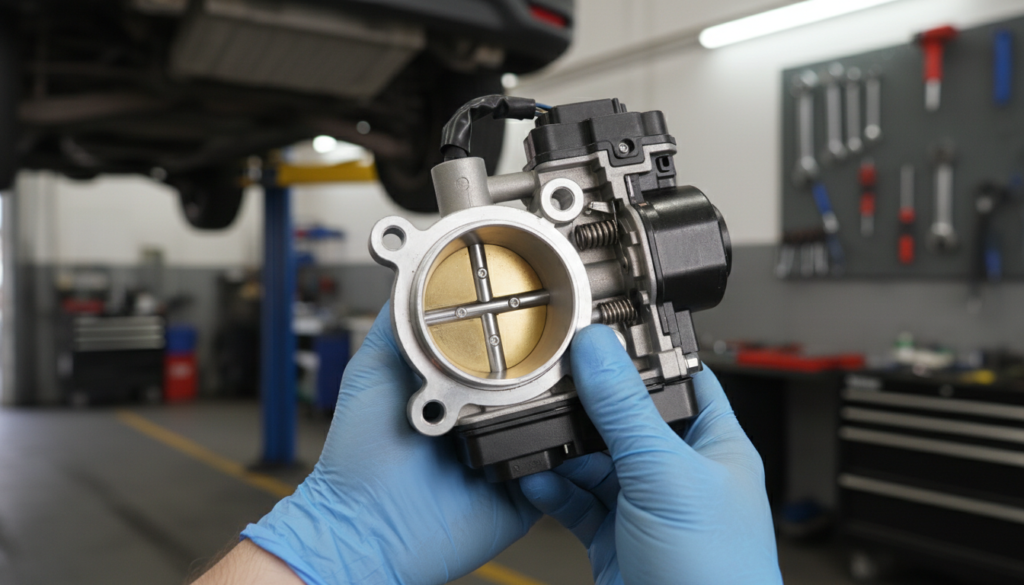
Open the intake and look for carbon or sticky buildup on the throttle blade. Use a throttle-body cleaner and a soft cloth; avoid spraying electrical connectors. If the throttle body shows mechanical wear or sensor faults, cleaning won’t fix the issue.
⚠️ CRITICAL WARNING: Do Not Push the Butterfly Valve by Hand!
Modern Equinox models use an Electronic Throttle Body (Drive-By-Wire). Inside the housing, there are plastic gears and a sensitive position sensor.
- The Risk: If you forcibly push the metal flap (butterfly valve) open with your fingers to clean behind it, you can strip the internal plastic gears or decalibrate the idle position.
- The Correct Way: To clean the back of the plate, turn the ignition key to “ON” (do not start the engine) and have a helper press the gas pedal to the floor. The motor will open the valve for you safely.
Check the MAF and intake tract
Locate the mass airflow sensor in the intake tube. Dirt, oil, or loose clamps downstream can skew readings and mimic a failed sensor. Clean gently with an approved MAF cleaner and retighten all clamps.
Evaluate the TPS and connectors
Inspect the throttle position sensor connector for corrosion, bent pins, or loose fit. A flaky position sensor signal often makes the vehicle go into a safe-limited state.
Spot vacuum leaks and split hoses
Visually check all vacuum lines for splits, crushed tubing, or disconnected fittings. Unmetered air will upset fuel trim and trigger limp behavior.
Quick fuel-system reality checks
Note long crank times, loss under load, or misfire-like symptoms. Those signs point to filter restriction, weak pump, or injector problems and guide whether to test fuel pressure next.
Battery, grounds, and wiring sanity checks
Measure battery voltage, clean battery terminals, and check engine-ground straps. Inspect harnesses for rubbed insulation and blown fuses. Many intermittent issues trace back to simple wiring or electrical faults.
| Action | What to look for | Next step |
|---|---|---|
| Scan | Freeze-frame, fault IDs | Targeted test per code |
| Throttle body | Carbon buildup, sticky blade | Clean or replace if damaged |
| MAF / intake | Contamination, loose clamps | Clean MAF, secure clamps |
| Electrical | Low voltage, corroded pins | Clean terminals, repair wiring |
Resetting Reduced Engine Power Mode vs Actually Fixing the Problem
A simple reboot may let you drive on for a while, though it rarely fixes the real malfunction.
What a reset does: Restarting the vehicle or clearing codes can remove the dash message if the fault is not currently active. The control module may stop showing the alert, but logged history and the underlying condition often remain.
Why the warning often returns?
The vehicle’s computer monitors sensor signals and control behavior. If readings go back out of range, the system re-enters limited output to protect components. That repeats until the true causes are fixed.
Why clearing codes can be misleading?
Erasing faults also removes freeze-frame data. Technicians lose the snapshot of conditions when the issue occurred. That loss can delay correct diagnosis and extend repair time.
- Treat a reset as a temporary step to drive safely.
- Use a scan tool to capture codes before clearing.
- Repeat events mean deeper testing is needed.
| Action | Short-term Effect | Recommended Next Step |
|---|---|---|
| Ignition cycle / restart | Clears message briefly | Scan for active & historic codes |
| Clear stored codes | Removes clues and freeze-frame | Only clear after recording data |
| Repair-first approach | Fixes root causes | Restore reliable performance |
When to Take Your Equinox to a Professional Technician?
Persistent dashboard alerts or sudden severe loss of drive ability are clear signs to stop driving and seek pro help. Small hiccups can be harmless, but repeat warnings mean the system keeps detecting faults.
Red flags that mean you should stop driving
- Repeated warnings in a short span.
- Stalling at stops or while idling.
- Severe loss of acceleration that makes merging unsafe.
- Worsening rough running or new noises under load.
What a shop will test first?
A trained technician uses live-data scans and bidirectional tools to verify the throttle and sensor signals. They will:
- Scan for stored and live faults and capture freeze-frame data.
- Check throttle operation and sensor plausibility (MAF, TPS, MAP).
- Inspect wiring, connectors, grounds, and fuses to avoid unnecessary repairs.
- Measure fuel pressure and run smoke tests to find hidden intake leaks.
Turbo-specific checks and outcomes
On turbo models, the shop inspects charge-air tubes, clamps, and boost leaks and will test underboost conditions linked to P0299. Some problems clear with cleaning or connector repair. Others need component replacement or software updates.
| Shop Step | Why It Matters | Typical Outcome |
|---|---|---|
| Live-data scan | Shows real-time sensor and throttle behavior | Targets specific repairs, avoids guesswork |
| Throttle / sensor test | Verifies pedal response and signal plausibility | May need cleaning, recalibration, or replacement |
| Boost / leak inspection | Finds cracks or loose clamps on turbo models | Repair or replace tubing and restore performance |
| Electrical check | Prevents repeated faults from bad connectors | Cleaning or wiring repair often solves the issue |
How to Prevent Reduced Engine Power From Coming Back?
Preventing repeat limp-mode events starts with steady, simple maintenance that targets airflow, sensors, and ignition. Small habits reduce the chance of another warning and save time and money.
Keep the intake and throttle system clean
Replace the air filter on schedule and inspect the throttle body for deposits. Cleaning the throttle blade and nearby body parts prevents gradual buildup that hurts response.
Use sensor-friendly service practices
Avoid over-oiling aftermarket filters. Keep the intake tract sealed when servicing to protect the mass airflow sensor and maintain accurate airflow readings.
Mind fuel quality, filters, and ignition parts
Use good fuel and change the fuel filter per intervals. Replace worn spark plugs and coils to prevent misfires that mimic loss of drive and can trigger a reduced engine power alert.
Check hoses, clamps, and software
Visually inspect hoses, clamps, and charge-air tubing especially on turbo models to catch small leaks early. Also, schedule dealer checks for software updates that improve detection and drivability.
| Preventive Step | What to Inspect | Benefit |
|---|---|---|
| Throttle body cleaning | Throttle blade & intake body | Restores smooth throttle response |
| Air filter & MAF care | Filter element, clamps, mass airflow sensor | Keeps airflow readings accurate |
| Fuel & ignition maintenance | Fuel filter, fuel quality, plugs, coils | Prevents hesitation and misfires |
| Hoses, clamps & software | Charge-air plumbing, connectors, ECU updates | Stops leaks and improves control logic |
Follow the schedule, keep things clean, and get periodic software checks. These steps greatly lower the odds that a reduced engine power event returns.
Conclusion
A dashboard warning that limits vehicle output signals the control module is protecting internal parts. This alert often shown as reduced engine power or a similar message is a safeguard to avoid further damage and should be taken seriously.
Prioritize safety, note symptoms, and scan for codes. Then inspect airflow, throttle and sensor links, fuel delivery, vacuum hoses, and wiring before changing parts. A methodical approach helps find the real problem and leads to the right fix.
Model years matter. Newer turbo variants commonly point to under boost and charge-air plumbing leaks, while older years more often show sensor or intake wear. Adjust diagnosis accordingly.
Next step: capture stored codes and freeze-frame data, perform the basic DIY checks, or schedule a professional diagnosis to restore full engine power reliably.
FAQ
What does “Reduced Engine Power” mean on a Chevy Equinox?
It’s the vehicle’s limp mode. The engine control unit limits output to protect components when it senses a fault — often related to the throttle system, sensors, or air/fuel problems. Expect limited acceleration and warning messages until the issue is fixed.
How is “Reduced Engine Power” different from a “Check Engine” light or reduced acceleration?
A check engine light is a general fault indicator. “Reduced Engine Power” is a specific protective response. You can have a check engine light without limp mode, but limp mode usually appears when the ECU judges continuing full operation could cause damage.
What immediate steps should a driver take when power drops while merging or on the highway?
Stay calm. Move to the right lane if safe, reduce speed gradually, and avoid hard acceleration. If the vehicle maintains a safe, slow speed, limp home or to a shop. If it stalls, loses steering assist, or you feel unsafe, pull over and call for a tow.
What common symptoms usually accompany the warning?
Typical signs include sluggish throttle response, delayed acceleration, rough idle, hesitation, occasional stalling, and dashboard messages about reduced output. Diagnostic trouble codes may be stored in the vehicle’s system.
What are the most common root causes of this issue?
Frequent culprits are throttle body contamination or electronic throttle control faults, faulty throttle position sensor (TPS), contaminated mass airflow (MAF) sensor, fuel delivery problems (weak pump, clogged filter), vacuum leaks, and electrical issues like corroded connectors or damaged wiring.
Could model year or known Equinox issues affect the problem?
Yes. Some newer turbo 1.5L models can show underboost-related low-output symptoms. Charge air inlet or cooler outlet tube problems and specific DTCs such as P0237, P0101, P1101, and P0299 are commonly reported on certain model years.
What basic troubleshooting can a driver do before visiting a shop?
Scan for trouble codes with an OBD-II reader and note freeze-frame data. Inspect and carefully clean the throttle body if soiled. Check the MAF sensor and intake for dirt or leaks, verify TPS connectors, look for split vacuum hoses, and confirm battery voltage and ground integrity.
Will restarting the vehicle or clearing codes permanently fix the problem?
Restarting or clearing codes can temporarily remove the warning, but it won’t fix the underlying cause. If the fault remains, the warning usually returns. Proper diagnosis and repair are required for a lasting fix.
When should the vehicle be taken to a professional technician?
Take it in if warnings recur, the vehicle stalls, or there’s a severe loss of speed or drivability. A shop will test throttle operation, sensor signals, boost/underboost, fuel delivery, and electrical integrity to identify the root cause.
What maintenance will help prevent this problem from returning?
Regular throttle body and intake cleaning, timely air filter and fuel filter changes, using quality fuel, proper ignition maintenance, and checking electrical connectors help. Also keep software updated per dealer recommendations to address known system issues.