Where Are Chevy Trucks Made? Discover the Production Locations
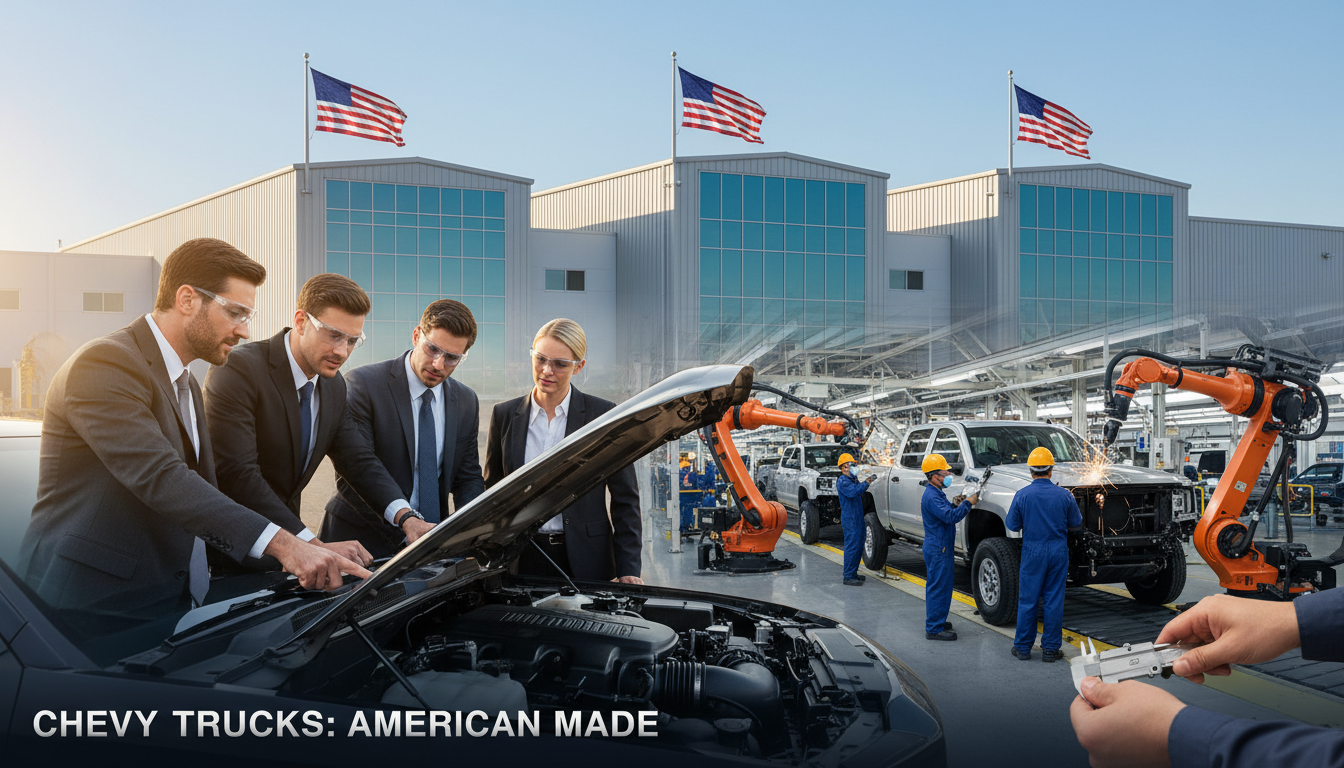
Final assembly for many Chevy trucks happens across North America. Plants in the United States, Mexico, and Canada handle final builds, while parts come from a wide supplier network.
It previews how breaks production down by country, plant, and model. It explains final assembly versus parts content in plain terms. You will learn specific plant names and what each facility builds.
The Chevrolet brand, part of General Motors, matters to owners for trust, perceived quality, and service part access. Expect notes on the Silverado and Colorado models, and how assembly can differ by configuration and year.
Later there is a quick how-to that shows where to find the label and VIN so you can confirm your vehicle’s origin without guesswork.
Chevrolet trucks and the GM manufacturing network in the United States
Chevrolet sits inside General Motors, a company headquartered in Detroit’s Renaissance Center in the united states. That connection anchors the brand in U.S. auto history and links strategy across plants and suppliers.
GM runs a broad network so chevrolet vehicles can meet spikes in demand and shifting market needs. Multiple assembly lines cut bottlenecks and let the company move output when one plant slows.
Final assembly means the last major build stage where a vehicle gets its engine, cab, and trim. People often use that step to decide origin, but many parts still ship from global suppliers. “American-made” today usually denotes U.S. assembly plus a mix of international components.
- Location choices hinge on workforce, logistics, and supplier proximity.
- Capability depends on tight tolerances and quality controls, not just an address.
| Country | Role | Example Plant |
|---|---|---|
| United States | Final assembly | Flint |
| Mexico | Production support | Silao |
| Canada | Assembly & supply | Oshawa |
Next, it maps current North American production for key Chevrolet models across the U.S., Mexico, and Canada.
Where are chevy trucks made in North America today?
Here’s a quick map of the key assembly hubs that handle Chevrolet pickup output across the continent. The focus is on final assembly locations and how they share production duties for popular models.
United States assembly plants that build key models
U.S. plants include Fort Wayne (IN), Flint (MI), and Wentzville (MO). These plants run multiple lines so popular models stay in market during demand swings.
Mexico production facilities supporting Silverado output
Mexico hosts Silao (Guanajuato) and Ramos Arizpe (Coahuila). These facilities support overall Silverado volume and help balance continent-wide production.
Canada’s role in Silverado supply
Oshawa (Ontario) adds capacity for the Chevrolet Silverado when North American demand rises. That helps dealers get supply faster during peak buying seasons.
| Country | Key Plants | Main Role |
|---|---|---|
| United States | Fort Wayne, Flint, Wentzville | Final assembly for multiple models |
| Mexico | Silao, Ramos Arizpe | Support Silverado production and volume balance |
| Canada | Oshawa | Supplemental Silverado assembly for North America |
Final assembly happens at specific locations, while parts and subassemblies can travel across borders. The Chevrolet Silverado illustrates this multi-site approach well.
Major Chevy truck assembly plants by model and location
The following breakdown ties specific models to the plants that assemble them, so you can trace origin by model.
Fort Wayne Assembly — Roanoke, Indiana
Fort Wayne builds the chevrolet silverado 1500 and serves as a core site for half-ton demand. It helps meet volume needs across North America.
Flint Assembly — Flint, Michigan
Flint handles the Silverado HD lineup. Heavy-duty production uses specialized tooling and strict quality steps for larger payloads and towing.
Silao Assembly — Guanajuato, Mexico
Silao also produces the silverado 1500, forming part of GM’s integrated continental production strategy. It balances capacity with Fort Wayne.
Oshawa Assembly — Ontario, Canada
Oshawa resumed silverado output to supplement supply. Canadian manufacturing supports overall availability without creating a different vehicle for U.S. buyers.
Wentzville, Arlington and Ramos Arizpe
Wentzville assembles the Chevrolet Colorado for mid-size demand. Arlington builds full-size SUVs that share many components with trucks. Ramos Arizpe adds flexible production capacity and helps GM shift production when markets change.
| Plant | Main models | Role |
|---|---|---|
| Fort Wayne | Chevrolet Silverado 1500 | High-volume half-ton production |
| Flint | Silverado HD | Heavy-duty specialization |
| Silao | Silverado 1500 | Volume balance |
| Oshawa | Silverado | Supplemental assembly |
| Wentzville / Arlington / Ramos Arizpe | Colorado / SUVs / flexible lines | Mid-size, shared components, flexible capacity |
Note: Plant assignment can vary by year and trim. Use the verification steps later to confirm a specific truck’s origin.
Where Chevy truck parts come from and how manufacturing is distributed?
Parts flow across borders long before final assembly, shaping the truck you buy.
Final build location is only one step. Most vehicles mix parts from many suppliers. That means assembly city does not equal 100% local sourcing.
Sources report a baseline of at least 50% U.S. components overall. The Colorado built in Wentzville shows about 71% U.S./Canada parts content. The Silverado is cited at a minimum of 62% U.S./Canada content.
Some pieces still travel farther. Infotainment modules, sensors and semiconductors often come from Japan, China, Brazil and France. Certain interior features and electronics follow these global supply chains.
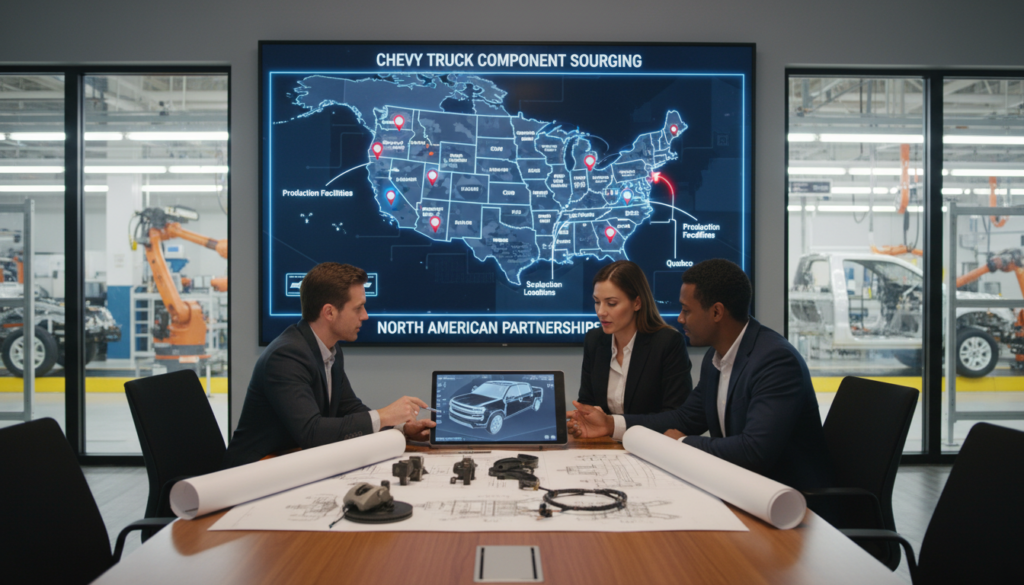
GM-owned facilities and about 38 U.S. supplier companies work with international partners to keep quality steady. Standardized checks and shared specs help keep production consistent across plants.
- What matters to owners: broad supplier networks boost long-term serviceability and parts availability in the U.S.
| Item | Typical origin | Why |
|---|---|---|
| Powertrain components | U.S./Canada | High-volume local supply |
| Electronics | Japan / China / France | Specialized tech and chips |
| Interior trim & features | Mixed global | Design and cost factors |
How to identify where your specific Chevy truck was made?
Start by checking the documents and labels that travel with the vehicle to pinpoint its assembly origin.
Look first in the owner’s manual or the buyer’s guide. Those booklets often list the plant or country of assembly for the model and trim.
Next, open the driver-side door and read the door jamb label. This label shows manufacturing data and the assembly plant in a standard format.
Use the VIN for a quick country check
Find the VIN on the dash near the windshield or in the owner’s manual. The first character tells you the country of origin:
- 1 / 4 / 5 = United States
- 2 = Canada
- 3 = Mexico
Other codes include J (Japan), K (South Korea), S (England), and W (Germany). For a deeper history, run the VIN through a decoder such as FAXVIN.
Quick checklist
- Check owner’s manual or buyer’s guide for assembly notes.
- Read the door jamb label for plant details.
- Locate the VIN (windshield dash) and read the first character.
- Use a VIN tool for full vehicle history and component details.
| Step | Where to look | Why it helps |
|---|---|---|
| Paperwork | Owner’s manual / buyer’s guide | Lists model and trim origin |
| Label | Driver door jamb | Standard manufacturing data |
| VIN | Windshield / manual | First character = country |
Note: Because trim, options, and model year assignments can shift between plants, confirm the specific vehicle for the most accurate result.
Conclusion
North American network links U.S., Mexico, and Canada facilities so production can match demand. Different plants handle specific models and trim levels to keep supply steady.
The phrase chevy trucks made best describes final assembly plus a broad parts ecosystem. Many components come from U.S./Canada suppliers, while electronics and interior pieces can be global. That mix supports consistent quality across the brand.
For owners, this matters for resale, preference, and service. Verify your vehicle using the door label and VIN for exact origin. In every case, GM’s manufacturing controls and supplier standards aim to deliver reliable chevrolet vehicles to the U.S. market.
FAQ
Where are Chevrolet trucks produced within the United States and North America?
Chevrolet pickups are built across a network of GM plants in the U.S., Canada, and Mexico. Key U.S. sites include Fort Wayne Assembly (Indiana) for the Silverado 1500, Flint Assembly (Michigan) for heavy-duty Silverados, Wentzville (Missouri) for the Colorado, and Arlington (Texas) for full-size SUVs that share many truck components. Canada’s Oshawa facility and Mexico plants such as Silao and Ramos Arizpe also play major roles in Silverados and model support.
Is Chevrolet considered an American brand and how does it fit into General Motors?
Chevrolet is an American brand within General Motors, headquartered in Detroit. GM manages a multinational manufacturing footprint, but Chevrolet remains a core U.S. marque, with design, engineering, and major assembly operations located in North America to serve domestic and export markets.
Why do manufacturers spread truck production across multiple plants?
Spreading production helps GM match regional demand, balance capacity, reduce shipping costs, and use specialized equipment at each plant. It also improves flexibility: if one facility needs updates or downtime, others can absorb some output to keep deliveries on schedule.
What qualifies a vehicle as “American-made” today?
“American-made” usually refers to where a vehicle is assembled and the percentage of U.S./Canadian parts content, measured under regional trade rules. A truck assembled in the U.S. with a high share of North American parts typically meets most consumer and regulatory expectations for American content.
Which GM plants in Mexico contribute to Silverado production?
Silao Assembly in Guanajuato and Ramos Arizpe in Coahuila are key Mexican facilities supporting Silverado production and flexible platforms. These plants supply vehicles for both local and export markets and integrate parts from global suppliers and North American sources.
How does Canada factor into Silverado and truck production?
Oshawa Assembly in Ontario has historically supported Silverado production and component assembly. Canada contributes parts, engineering talent, and assembly capacity to the North American supply chain, boosting overall production resilience.
Where do most truck components come from, and which items are often sourced internationally?
Many structural and drivetrain parts come from U.S. and Canadian suppliers, while electronics, infotainment modules, and specialized interior trim may come from global partners. GM-owned facilities and tier-one suppliers work to standardize quality across regions.
How do supplier partners and GM facilities maintain consistent truck production?
GM coordinates engineering standards, quality systems, and logistics with supplier partners. Shared platforms, common tooling, and centralized quality checks help ensure consistent fit, finish, and performance across plants.
How can an owner identify where their specific Chevrolet truck was assembled?
Check the door jamb label or the owner’s manual for assembly plant information. The VIN also encodes the country of manufacture—use a VIN decoder or dealer to confirm U.S., Canada, or Mexico origin.
What resources can buyers use to verify a truck’s origin and parts content?
Buyers can review the Monroney sticker (window label), VIN reports, the owner’s manual, and manufacturer documents that list parts content. Federal trade and consumer sites also explain North American content calculations for vehicles.