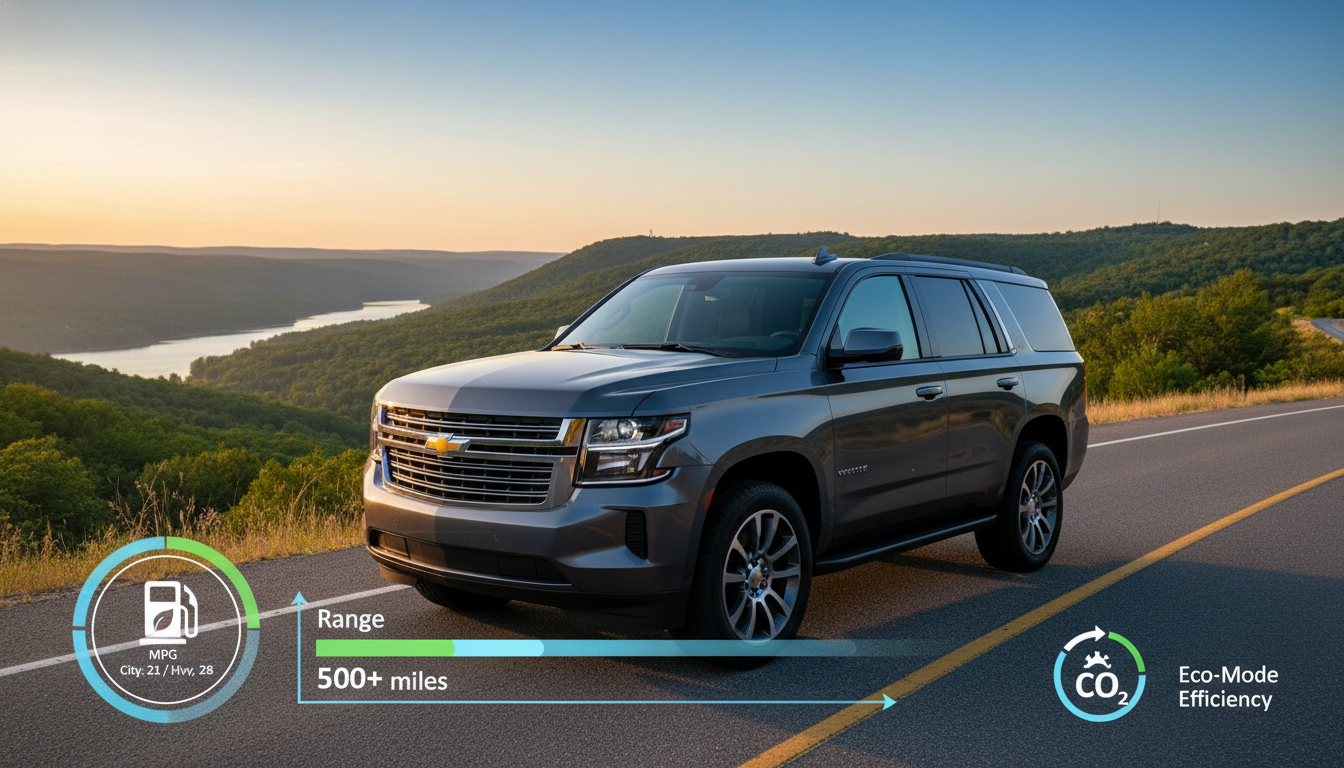
Chevy Tahoe Gas Mileage Guide: What MPG to Expect & How to Improve It?
The term chevy tahoe gas mileage helps U.S. shoppers compare MPG, driving range, and how different setups change results. This guide defines those numbers and explains why configuration matters for everyday costs.
As a body-on-frame full-size suv, this model favors towing, cargo space, and durability. Expect higher consumption when prioritizing capability; design choices affect fuel use more than in smaller cars.
There are three powertrain paths: two V-8 gas engines and an available diesel. The diesel often leads in fuel economy, while V-8s deliver power for heavy loads. EPA ratings and road tests will be separated so readers can plan real fuel costs.
This section previews engine-by-engine MPG and range per tank, notes how drivetrain, tires, trim, cargo, speed, and towing swing results, and promises practical tips to help drivers get the best everyday efficiency from their vehicle.
What to Expect From Tahoe Fuel Economy in Today’s Full-Size SUV Market?
Large, truck-based SUVs often trade peak efficiency for capability and strength on the road.
Why the vehicle’s size, power, and capability shape MPG?
Weight and frontal area increase aerodynamic drag, especially at highway speeds. Taller ride height and a boxy profile raise wind resistance, so steady high-speed driving costs more fuel.
Capability hardware adds mass. Towing mounts, heavier cooling systems, and truck-based components help durability and trailering, but they also lower reported economy.
Engine tuning favors smooth, effortless acceleration in heavy models. Gearing and torque maps trade a bit of efficiency for stronger on-demand performance when the vehicle is loaded.
2025 refresh and 2026 carryover: what that means for efficiency?
Car and Driver notes modest updates in 2025 and expects little change for 2026. That means shoppers should plan for similar real-world results across these model years, not a sudden jump in economy.
- Compare V‑8s and diesel for on-paper versus real driving differences.
- Remember speed, load, and drivetrain choices change what you actually see at the pump.
Chevy Tahoe gas mileage: EPA Ratings vs Real-World Results
EPA stickers give a baseline, but real-world driving reveals how those numbers hold up on the road.
| Powertrain | mpg city | mpg highway | Combined |
|---|---|---|---|
| V‑8 (gas) | up to 15 | up to 20 | 17 |
| Duramax (diesel) | up to 22 | up to 26 | 24 |
- EPA definitions: “City” reflects stop-and-go driving, “highway” models steady cruising, and “combined” blends both to suggest typical daily use.
- “Up to” matters: the ceiling figures assume a particular drivetrain, tires, and trim; different configs will change real output.
- Diesel advantage: turbo diesels often return better numbers under steady loads because of higher torque and thermal efficiency.
- Real-world tests: road checks show variance Car and Driver recorded a 6.2L 4WD hitting 20 mpg during a 75-mph highway test, a useful anchor for expectations.
Next, breaks down how each engine, drivetrain, and trim nudges results above or below these figures so readers can pick the setup that fits their driving mix.
Tahoe MPG by Engine Option
Three different powerplants create clear tradeoffs between everyday responsiveness and long-range efficiency.
5.3L EcoTec3 V8 with Dynamic Fuel Management
The 5.3L V8 produces about 355 hp and pairs with a 10-speed automatic transmission for balanced drivability.
This engine is the mainstream choice. It blends low-end torque for towing with reasonable fuel economy for its class.
Dynamic Fuel Management and the 10-speed benefit
Dynamic Fuel Management uses cylinder deactivation to cut consumption during light loads. It works automatically and needs no input from the driver.
The 10-speed automatic keeps RPMs low at highway speeds while keeping close gear ratios for quick acceleration. That helps efficiency without hurting performance.
6.2L EcoTec3 V8
The 6.2L delivers about 420 hp. It feels stronger in everyday driving, yet EPA estimates can stay similar thanks to gearing and calibration choices.
Duramax 3.0L turbo-diesel inline-six
The optional Duramax diesel engine makes roughly 305 hp and an impressive 495 lb-ft of torque. It usually leads in real-world mpg, especially on long highway runs.
Practical guidance
- Choose the 5.3L for balanced family use and occasional towing.
- Select the 6.2L if you want top acceleration and maximum power.
- Pick the diesel for long commutes or frequent highway travel to maximize fuel economy.
Rear-Wheel Drive vs Four-Wheel Drive: How Drivetrain Changes MPG?
Choosing between rear-wheel and four-wheel drive shapes both fuel use and day-to-day capability. Rear-wheel drive is standard on most models, while 4WD is an available option and often bundled with off-road gear like the Z71’s two-speed transfer case.
Why rear-wheel drive typically returns the best mileage?
Rear-wheel drive uses fewer drivetrain parts. That means less rotating mass to spin, lower friction, and reduced weight. The result is modestly better efficiency on highway runs and city driving alike.
Where 4WD/AWD is worth the tradeoff?
Adding 4WD or AWD brings extra differentials, a transfer case, and more driveshafts. Those parts increase mechanical drag and weight, which usually lowers MPG slightly.
Still, 4WD pays off in certain situations:
- Snowbelt winters and icy roads where traction is limited.
- Muddy job sites, rocky access roads, and off-grid campsites.
- Launching boats or trailering where low-speed control matters.
Think about how you use the vehicle. If it spends most of its life on dry pavement, rear-wheel drive is the efficiency-first pick. Choose 4WD when extra traction and control deliver real value, knowing MPG is the tradeoff.
| Drivetrain | Typical effect on MPG | When to pick it |
|---|---|---|
| Rear-wheel drive | Best for fuel economy | Mostly dry pavement, daily commuting |
| 4WD / AWD | Small MPG penalty | Winter, off-road, towing and heavy loads |
Gas Tank Capacity and Driving Range per Fill-Up
How far one tank will carry you depends on both the fuel tank and the real-world mpg you see. The Tahoe uses a 24-gallon fuel tank across trims, which gives long stretches between stops for most drivers.
Estimating your range
To estimate range, multiply tank size by the mpg you expect. For example, 24 gallons × 20 mpg equals about 480 miles per tank. This simple math helps personalize planning for trips and towing.
Practical highway reference points
A reasonable highway planning number for the V‑8 models is about 480 miles per tank under favorable conditions. The diesel option extends that range significantly.
Manufacturers and dealers offer two commonly cited diesel figures: Chevrolet lists up to a 624-mile EPA highway range, while some dealer guides note up to 672 miles based on higher real-world highway mpg estimates. Use these as planning guides, not guarantees.
Why range estimates differ?
EPA methodology, vehicle configuration, speed, wind, and tire choice all change results. Treat published numbers as tools to plan stops, especially on remote routes where fuel stations are sparse.
| Parameter | Typical figure | When it applies |
|---|---|---|
| Fuel tank | 24 gallons | All models and trims |
| Gas model highway range | ~480 miles | Steady highway driving, favorable conditions |
| Diesel highway range | 624–672 miles (commonly cited) | Long highway runs; higher mpg assumptions |
Real-World MPG: What Road Tests and Driving Conditions Reveal?
A steady interstate cruise at higher speeds exposes how aero and weight drive fuel use.
Independent road tests help translate EPA numbers into practical expectations. In one 75-mph test, a 6.2L 4WD car returned 20 mpg. That same loop showed a diesel variant doing 27 mpg in 2021, a clear real-world advantage on long runs.
Why speed matters?
Above typical EPA highway speeds, aerodynamic drag rises quickly. A large SUV needs more energy to cut wind, so fuel burn climbs disproportionally with speed.
City vs highway in everyday terms
mpg city reflects stop-and-go use: school drop-offs, lights, and short errands. Highway figures apply to steady cruising on interstates.
- Cold starts, short trips, elevation, headwinds, and hard passing can lower results.
- Track fuel economy over several tanks for an accurate picture, not just a single trip readout.
| Context | Route | Observed mpg |
|---|---|---|
| 6.2L 4WD | 75-mph highway test | 20 |
| Diesel (2021) | Same highway loop | 27 |
| Typical use | City vs highway | Varies by drive |
Trim Levels and Options That Can Impact Fuel Economy
Trim choice changes more than looks. Bundled equipment, wheel size, and drivetrain options all shift real-world consumption.
Where efficiency tends to land across common trims?
LS and LT usually use simpler wheels and fewer heavy features. They often return the best economy for daily driving.
Higher-spec trims and capability-focused models
RST and Premier add cosmetic and comfort features that can add weight but have modest MPG impact.
tahoe z71 and tahoe high country bring heavier hardware. Z71 adds off-road tires and skid plates. High Country commonly includes the 6.2L V8, which changes fuel use.
Wheels, tires, and suspension choices
Larger wheels and all-terrain tires raise rolling resistance and often reduce economy. Magnetic Ride Control or air suspension improves ride and can adjust ride height, which helps balance comfort and drag.
- Pick trims and options to match your commute, towing needs, and off-road plans.
- Choose lighter wheels and highway tires if fuel economy matters most.
| Trim | Notable features | Expected MPG effect | When to pick |
|---|---|---|---|
| LS / LT | Simpler wheels, less added weight | Neutral to positive | Daily commuting, cargo hauls |
| RST / Premier | Comfort and tech features | Slight reduction | Luxury focus, mixed driving |
| Z71 | 20″ wheels, all-terrain tires, skid plates | Noticeable reduction | Off-road weekends |
| High Country | Premium kit, standard 6.2L V8 | Lower due to powertrain and features | Towing, premium buyers |
Z71 vs High Country vs RST: Picking the Right Model for Your Driving Mix
Model choice boils down to three profiles: rugged trail gear, premium power, or sporty value. Match the trim to daily routes, weekend plans, and the weather you face most often.
Z71: off-road equipment that influences mpg
tahoe z71 brings a two-speed transfer case, all-terrain tires, and underbody protection. Those parts boost capability but add weight and rolling resistance.
Expect a small MPG penalty from the tires and 4WD hardware. Choose Z71 when trail access or rough roads justify the tradeoff.
High Country: premium focus and the 6.2L V8
High Country centers on interior comfort and straight-line power. The tahoe high country ships with the 6.2L V8 standard, which raises performance more than efficiency.
It suits buyers who value luxury cues and towing feel over peak economy.
RST: sporty value and flexible options
RST sits between the two. It offers sporty styling, strong feature content, and sensible options that keep costs and weight moderate.
Available upgrades engine, suspension, and wheels can change how the vehicle drives and how much fuel it uses. Spec with intent.
- Best for city commutes: RST for balance of looks and economy.
- Best for trails/weekends: tahoe z71 for capability despite an MPG tradeoff.
- Best for premium performance: High Country when power and comfort matter most.
| Trim | Key features | Fuel & performance notes |
|---|---|---|
| tahoe z71 | 2-speed transfer case, all-terrain tires, skid protection | Higher rolling resistance; better off-road control |
| High Country | 6.2L V8 standard, premium interior, towing kit | Strong performance; lower MPG versus smaller engines |
| RST | Sport styling, mid-level tech, upgradeable options | Balanced economy and features; flexible for families |
Towing, Payload, and Fuel Economy Tradeoffs
Towing changes more than load it reshapes how the vehicle uses power and burns fuel. Pulling a trailer raises aerodynamic drag and adds weight, so expected mpg and fuel economy drop, sometimes dramatically.
Car and Driver lists max tow figures by setup. With the 5.3L V8 and rear-wheel drive, max towing is up to 8,400 pounds. The 6.2L V8 rates up to 8,300 lb, and the diesel comes in near 8,200 lb.
The 5.3L can top the chart because ratings depend on gearing, cooling, and tow packages as much as peak power. Proper hitching, brakes, and packages tune the vehicle for sustained loads.
Payload, passengers, and the same fuel story
More cargo or people adds mass. Extra weight needs more energy, especially in stop-and-go driving, and lowers economy on short trips.
Trailering tech that helps control fuel use
Available features include trailer-tire monitoring, boat-ramp assist, and navigation that plans routes by trailer size. These systems improve control and reduce wasted corrections that cost fuel.
- Reduce speed on highways and keep steady cruise to limit drag losses.
- Leave extra following distance to avoid hard accelerations.
- Trim payload where possible and stow loose items to cut weight.
| Configuration | Max Tow (lb) | Why it matters |
|---|---|---|
| 5.3L + rear-wheel drive | 8,400 | Balanced gearing and tow equipment raise rating |
| 6.2L V8 | 8,300 | More peak power but different config and cooling |
| Duramax diesel | 8,200 | High torque; slightly lower published tow than 5.3L |
When shopping this model, factor towing needs into engine and package choice. Smart trailering and steady driving make every tow more efficient on the road.
Interior Space and Cargo Space: How Loading Up Can Lower MPG
How a family packs passengers and gear changes real-world fuel consumption more than many expect. The SUV’s interior is built for people and stuff, but extra weight and roof racks change efficiency on long runs.
Seating and practical load limits
Most models offer three-row seating for 7–8 people. An available front bench raises capacity to as many as 9. More passengers mean more weight and lower mpg, especially in city driving.
Cargo volume and third-row tradeoffs
With rear rows folded, cargo space reaches about 123 cubic feet (122.7 cu. ft. listed). With the third row up, usable cargo shrinks and bulky items force roof storage or tighter packing.
Smart loading to protect fuel economy
- Distribute weight evenly and keep heavy items low to help stability and reduce rolling resistance.
- Avoid permanent roof racks; a box or rack adds aerodynamic drag on the highway and costs mpg more than many expect.
- Remove seasonal roof accessories when not in use for a quick efficiency gain.
| Item | Effect on mpg | When it matters |
|---|---|---|
| Full passenger load (7–9) | Lower mpg | Daily commutes, long trips |
| Max cargo (rows folded ~123 cu ft) | Neutral to lower mpg (depends on weight) | Moving, hauling gear |
| Roof rack/box | Noticeable mpg drop | Highway cruising |
How to Choose the Best Tahoe Engine for Your Budget and Mileage Goals?
Engine choice should match your commute, towing habits, and yearly miles. Start by noting annual miles, the percent of highway driving, and whether towing is frequent.
Best choice for road trips and long commutes: the diesel engine
Diesel engine is the top pick for long-distance work. Dealers and reviews show it returns the best highway economy and longest driving range.
Best choice for balanced family duty: the 5.3L V8
5.3L V8 balances power, cost, and availability across trims. It suits daily driving and occasional towing without complex tradeoffs.
Best choice for quick acceleration: the 6.2L V8
6.2L V8 delivers the strongest on-road performance. Car and Driver recorded a 2025 tahoe High Country with this engine at 0–60 mph in 5.8 seconds, which proves its straight-line pace.
When “cheaper fuel” doesn’t mean “lower cost per mile”?
Fuel price plus real-world mpg determines cost-per-mile. A cheaper per-gallon price can still cost more if the engine returns fewer mpg on your routes.
Run a simple annual estimate: (miles per year ÷ mpg) × local fuel price. Use that number when choosing a model and powertrain.
- Under 10k miles and mostly city — pick the 5.3L.
- Over 15k miles with long highway runs — choose the diesel engine.
- Frequent towing and need for quick acceleration — consider the 6.2L for performance.
| Situation | Recommended powertrain | Why it fits |
|---|---|---|
| Long commutes / road trips | Diesel engine | Best highway economy and range |
| Everyday family use | 5.3L V8 | Balanced cost, towing, and availability |
| Performance-focused driving | 6.2L V8 | Strong acceleration (0–60 in 5.8s tested) |
Test Drive Checklist: Verifying MPG, Comfort, and Performance Before You Buy
A short, repeatable route helps buyers verify on-paper economy and everyday comfort in familiar conditions. Use a loop that includes both stop-and-go city streets and a steady highway segment to mirror your usual driving.
Plan a city + highway loop and reset the trip computer
Start in traffic for five to ten minutes, then head to the interstate for a 10–20 minute steady run. Before you go, reset the trip computer so displayed MPG reflects this single test.

Check braking feel and controlled stopping
Perform a controlled stop at moderate speed. Note pedal firmness and how confidently the vehicle slows. Heavier SUVs can need firmer input than smaller cars; Car and Driver reported a firm pedal on a Z71 test car.
Evaluate cabin noise and interior comfort at speed
On the highway, listen for road and wind noise. A quiet cabin reduces fatigue on long trips even when MPG looks good. Check seats, visibility, and driver-assist features that affect long-run comfort and control.
Inspect tires and cycle drive modes
Look at the exact tires mounted on the test vehicle. All-terrain or oversized wheels change ride, rolling resistance, and fuel use.
Switch drive modes where available. Note throttle response and shift points in each mode they alter efficiency and behavior under load.
- Reset trip computer and compare MPG for city vs highway segments.
- Do a firm but safe braking check to judge pedal feel and confidence.
- Assess cabin noise at 65–75 mph and evaluate interior comfort.
- Inspect tire type and tread; oversized tires often lower economy.
- Cycle through drive modes and note changes in throttle and control.
| Check | What to note | Why it matters |
|---|---|---|
| Trip computer | Reset before each loop | Shows real test MPG |
| Braking | Pedal firmness and stopping confidence | Safety and towing control |
| Tires & modes | Type, size; behavior in each drive mode | Affects ride, rolling resistance, and fuel use |
Tips to Maximize Chevy Tahoe MPG Over the Life of the Vehicle
A few low-effort routines will protect fuel economy and keep performance steady as the vehicle ages. These steps are practical and easy to add to weekly habits.
Smoother acceleration and earlier braking
Teach smoother acceleration and earlier braking. Gentle starts cut wasted energy in a heavy SUV. Anticipate traffic and coast when possible to save fuel.
Tire pressure and alignment
Check tires weekly and keep them at recommended PSI. Underinflation and misalignment increase rolling resistance and quietly lower mpg over time.
Smart highway habits and load control
Use cruise control on the highway when safe. Steady speeds keep the engine in efficient ranges. Remove roof racks and reduce unnecessary cargo to cut drag and weight.
Routine maintenance and sensible options
Stay current with oil, filters, and scheduled service. Clean air filters and correct fluids help the engine and transmission maintain control and efficiency.
- Smooth driving and proper tire care deliver the biggest long-term gains.
- Remove exterior accessories when not needed to lower drag at highway speeds.
- Pick options that match real needs; avoid feature packs that add weight without value.
| Action | Expected effect | Why it matters |
|---|---|---|
| Smoother acceleration | Improves mpg | Reduces wasted energy during starts |
| Tire PSI & alignment | Maintains mpg | Less rolling resistance and wear |
| Remove roof racks | Better highway economy | Reduces aerodynamic drag |
Conclusion
Your best choice depends on how you drive, tow, and pack the vehicle across city errands and highway trips. Match model and trim to your weekly routine to get the most from engine choices and available features.
mpg and fuel economy hinge on engine, drivetrain, trim levels, and real-world use. Pick the diesel for max range and highway efficiency, the 5.3L for balanced ownership, or the 6.2L for added power.
Remember the interior and cargo space tradeoffs third-row fit can limit cargo. Do a test drive on a familiar route, compare configurations side-by-side, and use simple range math to choose the right model for your life.
FAQ
How do engine choices affect real-world MPG?
Larger V8 engines deliver stronger acceleration and towing capability but usually return lower economy than the inline-six diesel. The 5.3L V8 with Dynamic Fuel Management provides a practical balance for daily driving, while the 6.2L emphasizes power. The Duramax 3.0L turbo-diesel typically yields the best fuel figures and longest range per tank.
Does rear-wheel drive really improve fuel efficiency compared with 4WD/AWD?
Yes. Rear-wheel drive reduces mechanical drag and weight compared with full-time four-wheel or all-wheel systems, so it generally posts the best EPA and real-world MPG. Choose 4WD/AWD if you need better traction for weather, off-road use, or trailering; expect a modest fuel penalty.
What range can owners expect from a full tank?
Most models use a roughly 24-gallon tank. With highway-oriented fuel economy, a gasoline V8 can approach 450–500 miles per fill, while the diesel often stretches to the 620–670-mile range under steady highway conditions.
How much do wheels, tires, and trim options change MPG?
Larger wheels, aggressive all-terrain tires, and heavier trim levels increase rolling resistance and aerodynamic drag, lowering fuel economy. High-end trims with larger standard wheels or off-road hardware tend to sacrifice a few MPG versus lighter, more aerodynamic configurations.
Will carrying cargo or using a roof rack noticeably reduce efficiency?
Yes. Heavy loads and rooftop luggage increase vehicle weight and drag. Filling all seating or adding roof-mounted gear can reduce highway MPG by several miles per gallon, especially at highway speeds where aerodynamics matter most.
How does towing affect fuel use and which engine is best for trailering?
Towing increases fuel consumption significantly. The 5.3L RWD setup offers the highest rated towing (around 8,400 pounds) and is efficient for many users, while the 6.2L and diesel deliver different tow ratings and performance. Use trailer-specific features, proper gearing, and conservative driving to limit fuel penalties.
What practical steps help maximize long-term fuel economy?
Maintain proper tire pressure and alignment, use smooth acceleration and braking, favor steady highway speeds with cruise control, remove unused roof racks or carriers, and follow routine maintenance. These habits keep rolling resistance and drivetrain efficiency optimized for better economy.