Chevy 2.7 Turbo & TurboMax Problems: Is It Reliable?
Can a 4-cylinder really handle a modern pickup truck? That is the question haunting every buyer looking at the Chevy 2.7L Turbo (RPO L3B and L2R), officially rebranded by GM as the ‘TurboMax.’
On paper, it’s an absolute beast, pushing out 310 horsepower and 430 lb-ft of torque. But asking a small displacement engine to do a traditional V8’s job comes with a major hidden cost: high mechanical stress.
Whether you are driving a 2021 Silverado 1500 or researching Chevy Colorado 2.7 turbo problems before buying a 2024 or 2025 model, you need to know what you are getting into.
While GM built the bottom end of this engine incredibly tough using diesel-like architecture, the complex bolt-on components are a different story.
Below, we break down the real-world reliability of the 2.7 Turbomax, separating isolated incidents from the high-cost, recurring failures you actually need to worry about.
(Note: This guide focuses strictly on the 2.7L truck engines, not the smaller 1.2L or 1.5L Ecotec engines found in GM’s crossover SUVs).
Is the Chevy 2.7 Turbo (TurboMax) Reliable?
If you are searching the forums asking, “Is the Chevy 2.7 turbo reliable?” the short answer is: Yes, but it requires much stricter maintenance than a traditional naturally aspirated V8.
Overall 2.7 TurboMax reliability is heavily dependent on how the truck is used and how religiously you change the oil. The engine block and rotating assembly are remarkably durable.
However, the complex systems attached to it—specifically the Active Fuel Management (AFM) lifters, the high-pressure fuel pump (HPFP), and the direct-injection delivery—are highly sensitive to wear, heat, and fuel contamination.
Does Vehicle Weight Matter? (Silverado vs. Colorado)
It’s important to note where this engine is mounted. A common trend in GM service bays is that Chevy 2.7 turbo engine problems can occasionally surface faster in the full-size Silverado 1500 than in the mid-size Chevy Colorado or GMC Canyon.
Because the Silverado is significantly heavier, the engine spends more time under heavy boost to get the truck moving. This constant load generates immense heat, which can accelerate turbocharger wear, degrade engine oil faster, and put additional strain on the valve train over time.
Overview of the Chevy 2.7 Turbo Engine and Common Failure Points
The 2.7L inline-four is GM’s compact, turbocharged engine. It’s known as RPO L2R and the higher-output L3B “TurboMax.” You can find it in the 2023+ Chevrolet Silverado 1500 and Colorado, as well as GMC Sierra and Canyon models. The TurboMax 2.7 aims to offer V6-like power while saving fuel and space.
Design choices affect reliability. Direct injection boosts efficiency but can lead to intake-valve carbon buildup. This is because fuel no longer cleans the valves. Active Fuel Management, GM’s cylinder-deactivation system, helps save fuel but has its own failure points. These include lifters and solenoids that can cause oil use and drivability issues.
The high-pressure fuel pump is key for direct injection. It runs at very high pressures and can be sensitive to contamination or wear. This can cause hard starts or stalling when it fails. Turbocharger hardware provides quick low-end torque but faces risks from impeller damage, bearing wear, oil leaks, and thermal stress in heavy-duty use.
Owner reports and service bulletins highlight common issues. These include AFM failures, valve carbon, injector flow issues, HPFP faults, turbocharger wear, higher-than-normal oil consumption, and premature spark plug wear. A few 2023 engines had casting cracks, leading to GM recalls and customer programs.
| Component | Typical Faults | Symptoms Reported |
|---|---|---|
| Active Fuel Management (AFM) | Lifter or solenoid failure, wiring/sensor faults | Rough running, oil consumption, misfire codes |
| Direct Injection / Intake valves | Carbon buildup from lack of port-fuel washing | Rough idle, misfires, loss of power |
| High-Pressure Fuel Pump (HPFP) | Wear, contamination, pressure loss | Hard starts, stalling, low power |
| Turbocharger | Impeller damage, bearing wear, oil leaks | Reduced boost, whining, smoke |
| Injectors & ignition | Flow variation, premature plug wear | Poor economy, misfires, increased emissions |
| Engine block (limited cases) | Casting cracks reported on some 2023 blocks | Coolant loss, coolant-in-oil, check-engine light |
For those tracking chevy 2.7 turbo engine issues, keep an eye on service bulletins and recall updates. Enthuasiasts looking into turbomax 2.7 applications will see a trade-off. This trade-off is between compact output and component sensitivity, as shown in owner feedback and technical advisories.
Chevy 2.7 turbo problems
The Chevy 2.7 Turbo engine is powerful in many Chevrolet models. Yet, owners face several common issues. These problems can affect how well the car runs and how reliable it is. This section will cover the main issues, their symptoms, and steps to troubleshoot before taking it to a mechanic.
Active Fuel Management (AFM) System Failures
While GM’s Active Fuel Management (AFM) system is great for saving gas by shutting down cylinders under light loads, it introduces a ton of mechanical complexity to the valve train.
To make this cylinder deactivation work, the 2.7L relies on oil-pressure-actuated lifters and electronic solenoids.
The reality? These components are notorious for wearing out prematurely. Because they rely on incredibly precise oil pressure, even slightly degraded oil or microscopic debris can clog the lifter passages.
When these AFM components fail, you aren’t just looking at a simple check engine light. Drivers usually experience sudden power loss, severe hesitation during acceleration, and a noticeably rough idle.
Worse yet, a failing AFM system can lead to excessive oil consumption, which often masks deeper engine wear like failing piston rings or valve seals.
If your truck feels sluggish or you are suddenly burning through a quart of oil between fill-ups, your first step should be scanning for AFM-specific diagnostic trouble codes (DTCs) and checking for localized oil leaks.
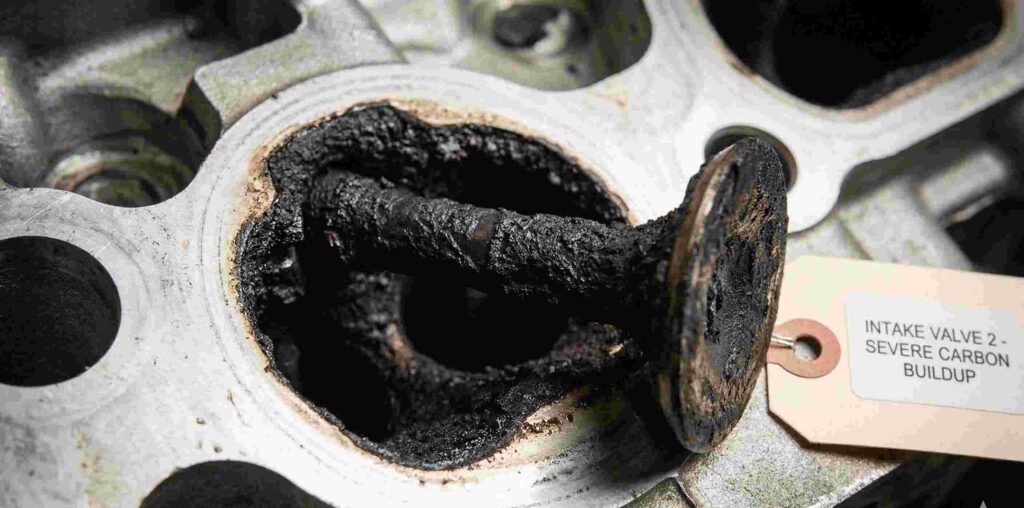
Carbon buildup on intake valves: causes and driving patterns that accelerate it
Direct injection puts fuel inside the engine, not on the valves. This leads to carbon buildup over time. Oil vapors and blow-by add to the problem.
Short trips and engines that don’t get hot enough speed up buildup. Bad fuel quality also makes it worse.
Signs include a rough idle, misfires, and poor fuel economy. To prevent it, drive longer distances and use good fuel and oil.
Injector problems, HPFP failure, and turbocharger wear summarized
Fuel injectors on the 2.7 work at high pressure. Problems like contamination or wear can cause misfires and poor running. GM has fixed some 2023 injector issues with service actions.
The high-pressure fuel pump (HPFP) can also fail. Symptoms include hard starts and poor acceleration. It often needs to be replaced when problems are found.
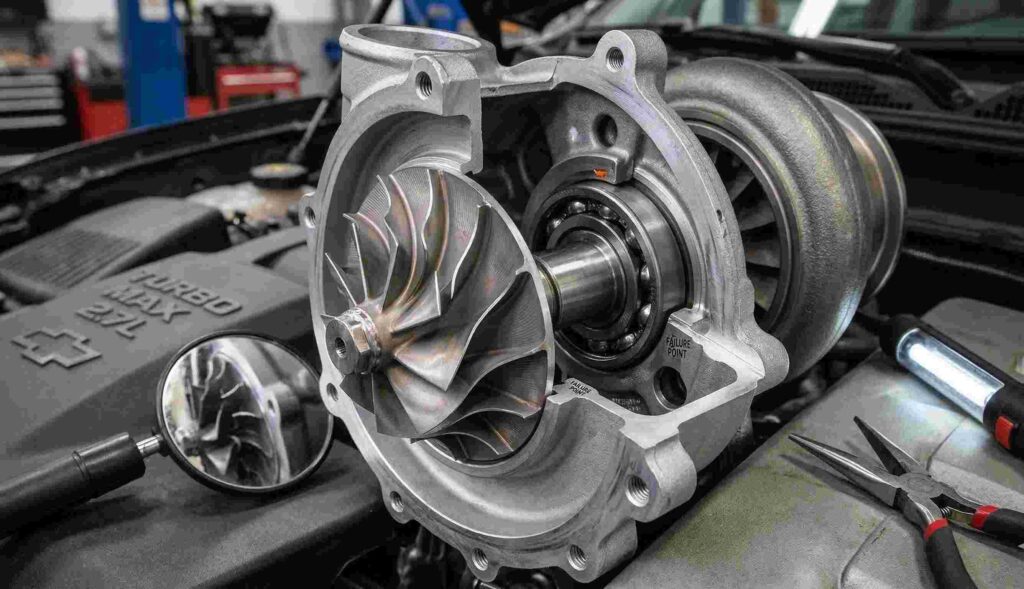
Turbocharger issues include damaged impellers and worn bearings. These problems can reduce boost and cause noises. Regular checks for oil leaks and supply issues help catch problems early.
Active Fuel Management (AFM) System Failure: Causes, Symptoms, Fixes
The AFM system in the 2.7L Chevrolet turbo engine turns off fuel to some cylinders when the engine is light. This saves fuel but adds extra parts like lifters and solenoids. These parts need clean oil and precise electrical control.
Wear and tear, or oil contamination, can cause problems. Faulty control modules or wiring can also lead to issues.
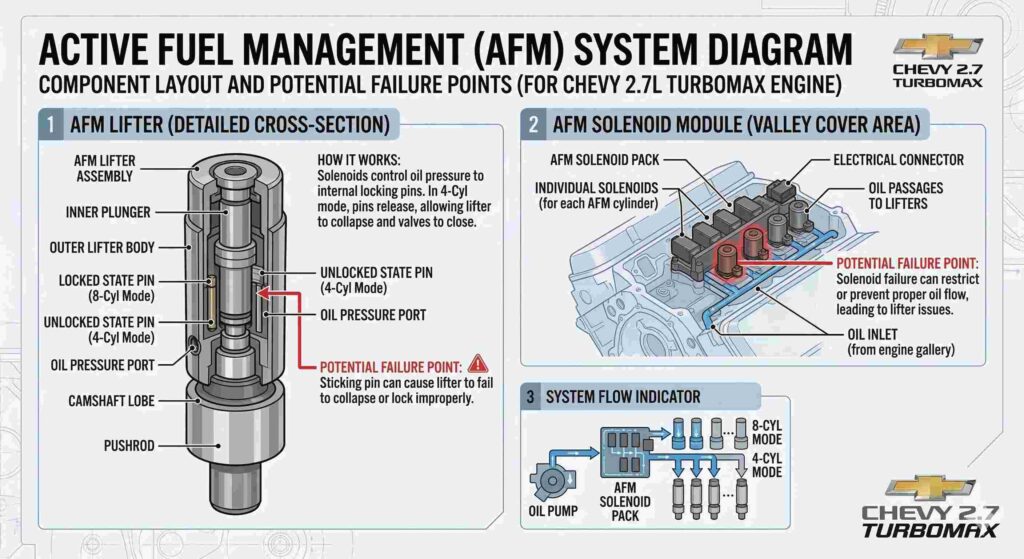
How AFM is supposed to work and why it can fail on the 2.7L?
AFM uses oil-pressure actuated lifters and solenoids controlled by the engine control unit. It’s meant to switch between four- and eight-cylinder modes smoothly. But, the 2.7L engine faces stress from heat, oil breakdown, and debris.
These can foul lifter passages. Faulty solenoids, degraded oil, or worn lifter mechanisms can cause AFM failure. This happens when cylinder deactivation doesn’t work right.
Symptoms to watch for: excessive oil consumption, power loss, stalling, hesitant acceleration
Look out for rapid oil loss and a check engine light. Drivers might notice reduced power and a rough idle. Sudden stalling at idle and hesitant acceleration are also signs.
Specific DTCs related to AFM often show up. These codes help identify AFM as the main problem with the 2.7 engine.
Diagnostic steps and repair options, including AFM component replacement or disabling AFM
Begin with a full scan for DTCs and freeze-frame data. Check AFM solenoids, wiring connectors, and lifter operation. Make sure to inspect the oil level and quality, and review the service history.
Perform a compression or leak-down test if oil consumption is high. These steps are key in troubleshooting the 2.7 turbo AFM.
A repair might include replacing faulty AFM lifters, solenoids, or wiring. Cleaning the oil can also help if contamination is the problem. Some owners choose to disable AFM for a simpler system, even if it means less fuel efficiency.
Eligible repairs under warranty or GM programs can cover the cost of replacement. This is if the dealer has the necessary records.
| Issue | Diagnostic Step | Common Fix | Trade-off |
|---|---|---|---|
| Erratic AFM operation | Scan for AFM DTCs; inspect wiring | Replace solenoid or re-pin connector | Restores function; cost varies |
| Excessive oil consumption | Oil analysis; compression/leak-down test | Replace lifters; refresh oil and filter | Higher repair cost; preserves AFM |
| Persistent misfires or stalling | Live data on cylinder deactivation; inspect valve train | Replace lifters and worn valve components | Comprehensive repair; best long-term result |
| Recurring AFM faults after repair | Review service history; consider software/hardware updates | Disable AFM via reflash or aftermarket kit | Eliminates AFM failure chevy 2.7 turbo problems; lowers mpg |
Carbon Buildup and Direct Injection Concerns
The Chevy 2.7 Turbo engine uses direct injection for better fuel efficiency and power. This design keeps fuel out of the intake tract. But, it lets oil vapors and blow-by deposit soot on intake valves.
Over time, these deposits form hard carbon layers. These layers change airflow and valve sealing. Owners and technicians often see this as a common maintenance item on modern turbocharged engines.
Why intake-valve deposits form on the 2.7 Turbo?
Direct injection sprays fuel straight into the combustion chamber. No fuel washes the intake valves. PCV oil vapors and crankcase blow-by carry hydrocarbons that stick to valve surfaces.
Heat bakes the film into carbon. Over months, this film grows. It restricts flow and upsets the air–fuel mix.
Signs to watch for
Carbon buildup often shows as a rough or inconsistent idle. Misfires can appear, mostly on cold starts. Drivers report reduced acceleration and loss of peak power.
Fuel economy drops when valves no longer seal or flow correctly. These symptoms usually surface slowly, then become more noticeable under load.
Prevention and remediation options
Good habits reduce carbon buildup chevy 2.7 turbo problems. Use top-tier fuel with detergents. Include periodic longer highway runs to raise combustion temperatures.
An oil catch can helps limit oil vapor reaching the intake. Follow maintenance tips for chevy 2.7 turbo to cut recurrence and extend service intervals.
When deposits are present, professional walnut blasting or media-assisted valve cleaning is the most effective remediation. Chemical cleaning can help lighter deposits. Severe cases may need injector cleaning or intake-component service.
Regular chevy 2.7 turbo diagnostics will catch early signs. This makes cleaning less invasive and less costly.
Fuel System Failures: Injectors and High-Pressure Fuel Pump (HPFP)
Fuel problems on the 2.7L twin-scroll turbo start quietly. They grow into issues like rough idle and loss of power. Faulty fuel injectors and the high-pressure fuel pump are often to blame. Spotting these issues early can save time and prevent damage to the turbo and catalytic converters.
Common injector failure modes and impact
Injectors can clog, leak, or flow unevenly due to contamination or wear. Clogged nozzles cause misfires and rough running. Leaky injectors lead to rich zones that foul plugs and increase emissions.
Uneven flow rates make the engine run lopsided. This triggers check-engine lights and failed emissions tests. GM has issued campaigns for incorrect injector flow in some 2023 engines. Owners should check if their engine is affected before replacing parts.
HPFP failure symptoms
The HPFP runs at very high pressures. Wear or contaminated fuel quickly degrades its output. Symptoms include hard starting, stalling under load, and poor acceleration.
Hesitation during throttle input is common when the pump can’t maintain steady pressure. These signs often appear before any obvious fuel smell but demand prompt attention.
Service strategies: cleaning, testing, and replacement guidance
For injectors, flow testing and ultrasonic cleaning can salvage units contaminated by debris or varnish. When flow rates differ beyond specs or a recall mandates new parts, replace the entire set to restore balance. Use OEM or reputable aftermarket injectors to avoid fitment and calibration issues.
HPFP issues warrant inspection of fuel quality and filters first. Persistent symptoms usually lead to pump replacement. Follow dealer guidance and warranty coverage when available. GM service bulletins outline procedures and specification checks for affected engines.
Practical chevy 2.7 turbo repair solutions combine accurate diagnosis with targeted action. Cleaning and flow testing can be cost-effective for isolated injector contamination. Complete replacement proves best when flow variance or recall concerns exist. For HPFP chevy 2.7 engine issues, replacement is common once pump wear or internal contamination is confirmed.
- Signs to log: hard starts, misfires, uneven idle, hesitation under load.
- Short-term fixes: injector cleaning, fuel filter change, quality fuel.
- Long-term fixes: replace all injectors if flows vary, follow GM guidance for HPFP replacement.
Turbocharger Problems and Performance Issues
The turbocharger on the 2.7L engine boosts low-end torque and highway power. Owners should know common failure modes and how to protect the system. Signs of trouble often appear before a major failure if issues are fixed early.
Typical faults and how they start
Impeller damage can happen from swallowed debris or broken clamps. Bearings wear out if oil is dirty or lacking. Leaks in oil lines let contaminants into the system.
High exhaust temperatures can damage the turbine housing.
How problems show up on the road?
Drivers often notice reduced boost and engine power loss. A high-pitched whine or siren noise may be heard. Smoke or a rough exhaust indicates oil leaks into the turbine.
Diagnostic trouble codes for boost or turbo efficiency may show up on the dash.
Maintenance and repair paths
Preventing problems starts with oil care. Regular oil changes with GM-recommended viscosity and quality filters keep bearings healthy. Check the air intake and intercooler for debris.
On failure, compare a professional rebuild with a quality replacement. Confirm upstream causes like oil contamination or HPFP faults before replacing the turbocharger.
Quick owner actions and workshop checks
- Check for oil leaks at feed and return lines.
- Listen for unusual turbocharger whine during spool up.
- Scan for boost-related codes before deciding on replacement.
- Inspect intercooler and piping for debris and oil residue.
Practical maintenance tips
Stay current with scheduled oil and filter service. Use high-quality oil and change it at recommended intervals. Use clean air filters and secure intake clamps to prevent damage.
When replacing a turbo, have a technician check oil supply and fuel-system issues to prevent recurrence.
Other Reliability Concerns: Oil Consumption, Spark Plugs, and Engine Block Issues
Many owners and mechanics have found other issues that affect the car’s long-term use. These problems might not always be listed in service bulletins. Yet, they play a big role in how reliable the Chevy 2.7 turbo engine is seen to be.
Elevated oil consumption: diagnosis and common causes
Fast oil loss in 2.7L engines can be due to several reasons. These include worn-out Active Fuel Management lifters, piston rings, valve seals, or a faulty PCV system. Regular oil checks can help catch these issues early.
Experts suggest doing compression and leakdown tests to figure out the cause. They look for signs like lifter noise, misfires, or cylinder-deactivation faults. These can indicate oil use problems.
Spark plug wear and replacement guidance
Turbocharged engines run hotter, which can wear out spark plugs faster. This can lead to premature erosion, fouling, or electrode melting.
It’s best to use OEM or premium plugs made for turbocharged engines. Follow the manufacturer’s recommended replacement schedule. Check plugs regularly and replace them if you notice overheating, misfires, or deposit buildup.
Engine block casting concerns and GM service programs
GM found rare cracks in some 2023 L3B TurboMax engines. These cracks can affect the main oil gallery. Symptoms include low oil pressure, coolant contamination, or engine noise.
GM has programs and campaigns for these defects. They offer engine replacement for eligible VINs. Reports and recalls show GM is taking action on issues like oil consumption and block integrity.
Quick owner checklist
- Check the oil level regularly to catch oil consumption issues early.
- Keep track of spark plug condition and use OEM recommended plugs for turbocharged engines.
- Check if your VIN is eligible for dealer programs if you notice block casting cracks or recall notices.
These reliability issues are important when deciding to buy a car or plan for maintenance. Keeping accurate records and catching problems early can help reduce repair costs. It also helps owners work better with dealer repair programs.
Recalls, Customer Satisfaction Programs, and Legal Options
It’s important for car owners to understand how recalls and legal actions work together. In 2024-2025, General Motors took action on the 2.7L family. They fixed engine block issues and injector problems for certain engines. Knowing what each recall covers helps you deal with any problems.
GM had a few key actions. They fixed cracked oil galleries in some L3B engines and recalled fuel injector issues in L2R and L3B engines. Fixes range from replacing injectors to swapping out the engine if cracks are found. Knowing your VIN and the recall windows is key for owners.
Checking your VIN is the first step. You can use GM’s recall lookup, the NHTSA portal, or talk to a Chevrolet dealer. Keep your repair records handy. GM’s Owner Center and CoPilot apps can send recall alerts and show your campaign status.
If problems keep coming back after repairs, you might want to talk to a lawyer. Lemon laws vary by state and depend on repair attempts and defect severity. A lawyer can explain your options, like getting a new car or money back. Many lawyers work on a no-win, no-fee basis and can help with what you need.
Keep detailed records of every repair visit. Ask for detailed repair orders and written confirmation of fixes. Good records help with claims and checking if you qualify. For safety issues, contact the dealer right away and follow up with GM’s customer care.
| Issue | Campaign Type | Typical Remedy | Owner Action |
|---|---|---|---|
| Engine block casting defect (cracked oil gallery) | Customer Satisfaction Program (L3B) | Engine replacement for confirmed cracks | Check VIN eligibility; schedule dealer inspection; retain repair records |
| Fuel injector flow-rate inconsistency | Recall covering L2R and L3B engines | Injector replacement to restore correct flow | Use GM or NHTSA lookup; request injector flow test results |
| Recurring safety or performance failures after repairs | Not a campaign; potentially a legal claim | Repurchase, replacement, or compensation under state lemon laws | Contact lemon law attorney; compile repair history and communications |
If you’re looking into legal action for your Chevy 2.7 turbo, act fast. Quick VIN checks, keeping good records, and clear communication with dealers can help. Use official tools and keep copies of all documents when dealing with recalls.
Maintenance and Troubleshooting Tips for Owners
Regular care keeps the 2.7L Turbo running smoothly. It also reduces surprise repairs. Here’s a checklist and some hands-on checks to spot trouble early. These steps help avoid AFM, injector, HPFP, and turbo issues.

Routine maintenance checklist
- Follow GM oil-change intervals using OEM-recommended oil and a high-quality filter. This protects AFM components and turbo bearings.
- Use top-tier fuel to reduce intake-valve deposits on the direct-injection 2.7L. Change the fuel filter as scheduled to protect the HPFP and injectors.
- Replace spark plugs with turbo-rated types on a tight schedule if miles or symptoms suggest early wear.
- Consider an oil catch can to lower oil vapor reaching intake valves and slow carbon buildup.
Simple diagnostic steps owners can take
- Read and record diagnostic trouble codes with an OBD-II scanner. Note freeze-frame data when available.
- Monitor oil level weekly and log any sudden consumption. These notes help technicians narrow down causes.
- Visually inspect intake piping, intercooler, and turbo hoses for oil, loose clamps, or boost leaks.
- Write down symptoms with context: cold start, hot run, under load, or during idle. Observed timing narrows chevy 2.7 turbo diagnostics.
Preventative upgrades and useful tools
- Oil catch cans and high-quality intake filters reduce contamination and prolong injector life.
- Upgraded turbo inlet hoses and reinforced clamps lower the chance of boost leaks that mimic turbo faults.
- Use smartphone apps like GM Owner Center or third-party services to track recalls and service history for warranty support.
- Keep a dedicated log of dealer visits and repairs to support any future warranty claim or lemon-law review.
What to tell your technician?
- Provide the OBD-II codes, oil-level log, fuel grade used, and symptom timing. Clear notes speed accurate repair selection.
- Mention any recent repairs or part swaps, such as new spark plugs or catch cans, so diagnostics do not repeat prior steps.
- If a fault is intermittent, offer a short drive profile that reproduces the issue when possible.
Quick reference: common owner actions vs shop tasks
| Owner Action | What It Helps Detect | When to Visit a Shop |
|---|---|---|
| Check oil level weekly and log consumption | Flags excessive oil use from AFM or ring wear | When oil drops more than one quart between fills or warning lamp appears |
| Scan and record OBD-II codes | Provides direct clues for AFM faults, misfires, or fuel pressure problems | Bring codes and freeze-frame data to a technician for targeted chevy 2.7 turbo diagnostics |
| Visual hose and intercooler inspection | Reveals boost leaks, oil leaks, or loose fittings that affect turbo performance | If you find oil saturation, torn hoses, or loose clamps |
| Use premium fuel and change fuel filter | Reduces carbon build-up and protects HPFP and injectors | Follow recommended intervals or sooner if performance drops |
| Install oil catch can and log results | Shows reduced oil vapor to intake, slowing valve deposits | If misfires or rough idle continue after maintenance |
By taking these steps, owners can fix minor faults at home. They also give technicians focused information. Clear notes and basic checks cut diagnostic time. This leads to more precise chevy 2.7 turbo repair solutions when professional work is needed.
Conclusion
The Chevy 2.7 Turbo family offers great on-road performance. But, it also has some reliability concerns that owners should watch out for. Issues like Active Fuel Management failures and carbon buildup are common.
Other problems include faulty injectors, turbocharger wear, and high oil consumption. Sometimes, the engine block can also be damaged. GM has fixed some of these issues through recalls and customer programs.
It’s important to check if your vehicle is eligible for these fixes. Keeping your service records up to date is also key.
Knowing the common issues with the Chevy 2.7 Turbo helps set realistic expectations. Regular checks and timely maintenance can prevent expensive repairs. Using quality oil and fuel is a good start.
Also, keep an eye on your oil level and watch for any symptoms. Cleaning the intake when needed can help prevent valve deposits.
If problems keep coming back after repairs, you might want to consider legal action. Lemon law claims could be an option, depending on your repair history and local laws. The 2.7 Turbo is a powerful engine, but it needs care to stay reliable.
FAQ: Troubleshooting Chevy 2.7 Turbo & TurboMax Engines
Is the Chevy 2.7 Turbo (TurboMax) reliable long-term?
Yes, the Chevy 2.7 Turbo is generally reliable if rigorously maintained. Because GM overbuilt the internal engine block using diesel-grade architecture, catastrophic bottom-end failure is rare. However, its long-term reliability heavily depends on strict adherence to oil change intervals to protect sensitive bolt-on components like the turbocharger and AFM lifters.
What are the most common GM 2.7 Turbo engine problems?
The most frequently reported GM 2.7 Turbo engine problems include Active Fuel Management (AFM) lifter failure, heavy carbon buildup on the direct-injection intake valves, premature wear of the high-pressure fuel pump (HPFP), and inconsistent fuel injector flow rates.
Are Chevy Colorado 2.7 turbo problems different from the Silverado?
Mechanically, the L3B engines are identical across both platforms. However, Silverado 2.7 turbo problems can sometimes surface earlier in the vehicle’s lifespan. Because the full-size Silverado is significantly heavier, the engine operates under continuous heavy boost to move the truck, accelerating wear on the turbocharger and valve train compared to the lighter Chevy Colorado.
What are the main GM L3B engine problems for 2023 and 2024 models?
For 2023 and 2024 Chevy 2.7 Turbo problems, the primary issues revolve around official GM actions. These include a known recall for fuel injector flow-rate inconsistencies and a Customer Satisfaction Program (N232415060) addressing rare, but severe, engine block casting cracks (specifically a cracked main oil gallery).
How can I prevent 2.7 TurboMax engine issues?
To prevent TurboMax engine issues, ignore the extended dashboard oil monitor and change your oil using full synthetic every 5,000 miles. Furthermore, exclusively use top-tier fuel, replace turbo-rated spark plugs strictly on schedule, and consider installing an aftermarket oil catch can to minimize intake carbon buildup.
Does the Chevy 2.7 Turbo have oil consumption issues?
Yes, excessive oil consumption is a known issue, typically stemming from failing AFM components or worn piston rings. If you notice a sudden drop in oil levels between fills, technicians recommend performing a leak-down test and scanning for AFM-specific diagnostic trouble codes to pinpoint the exact failure.